The U.S. government isn't doing enough to fight the surge in cyberscams, and partnerships with the private sector remain fragmented and voluntary, an investigation into the global scam industry led by the Joint Economic Committee of the U.S. Congress has found.
The government doesn't even have a unified accounting of how much money has been seized from overseas scam compounds, nor how much has been returned to victims, according to the report, released Tuesday by ranking Democrats Sen. Maggie Hassan and Rep. Don Beyer.
Citing findings from a yearlong investigation into global scams by The Associated Press and FRONTLINE, the report called for greater collaboration across agencies, support for victims, and deeper private sector engagement.
“Transnational criminal organizations run massive compounds that exploit U.S. technology, including AI, to carry out scams against Americans with devastating consequences,” Hassan said in an email. “The scale of this exponentially growing challenge requires Congress, the Administration, and the private sector to all strengthen their efforts.”
The report, which the AP obtained before its release, made clear how hard it is for scam victims to get their money back, despite the quickening pace of seizures announced by a variety of U.S. government agencies.
The FBI told the committee that it returned $336 million to scam victims in 2025.
The Federal Trade Commission reported that it had returned $1.83 billion to fraud victims in fiscal year 2025, but couldn't determine how much of that money had been lost to overseas scam compounds.
The U.S. Secret Service returned more than $770 million in seized assets to fraud victims in fiscal years 2024 and 2025, but noted the money had come from a range of fraud schemes.
The U.S. State Department said that foreign law enforcement agencies that receive support from the department had seized proceeds “in the low hundreds of millions of dollars,” but told Congress to ask the Departments of Justice, Homeland Security and Treasury for details.
Taken together, that only adds up to a fraction of what victims have lost. Americans reported cyberfraud losses of nearly $18 billion — that’s more than $2 million an hour — last year to the FBI. Many don’t even report the crime.
The report also expressed concern that even as criminal scam networks expand into more countries, U.S. State Department cutbacks eliminated at least one anti-scam program in Bangladesh, which had been training local law enforcement to conduct cyberfraud investigations.
Bangladesh is an emerging hub for global scam operations, according to a report last month by the United Nations Office on Drugs and Crime that was funded by the European Union.
The U.S. State Department, which said it has 60 employees in the U.S. and Asia who dedicate significant time to fighting overseas scam compounds, told the committee that it “has the tools it needs to combat the threat internationally.”
The report urged Congress to pass pending legislation that would mandate a unified federal strategy to combat scams and establish a central location for victims to report losses and seek help. The White House has also advocated for greater federal coordination.
Several Justice Department officials told Congress that private sector companies should focus more on scam prevention, but U.S. regulators and lawmakers have so far not created clear incentives for them to do so. Unlike the 27-nation EU, the United Kingdom, Australia and Singapore, the United States has stopped short of holding technology, telecommunications or financial services companies potentially liable if they fail to do enough to protect consumers from scams.
Kate Griffin, a director at the Aspen Institute’s financial security program, said that there has been important progress, but the U.S. still lacks “durable, sustainable scam prevention.”
“We don’t see that showing up yet in reduced victimization,” she said. “And that’s what really needs to happen.”
This story is part of an ongoing collaboration between The Associated Press and FRONTLINE (PBS) that includes the documentary “Scammed.” Watch the documentary at pbs.org/frontline, in the PBS App and on FRONTLINE’s YouTube channel.
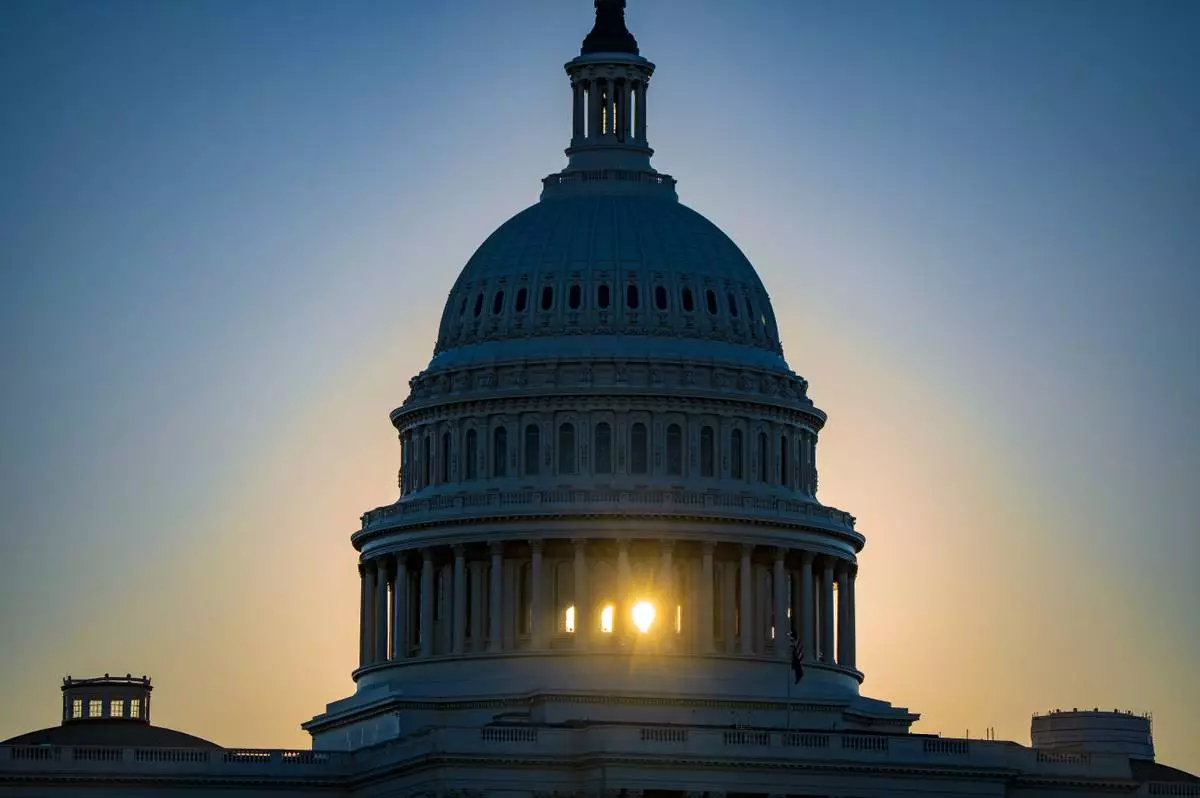
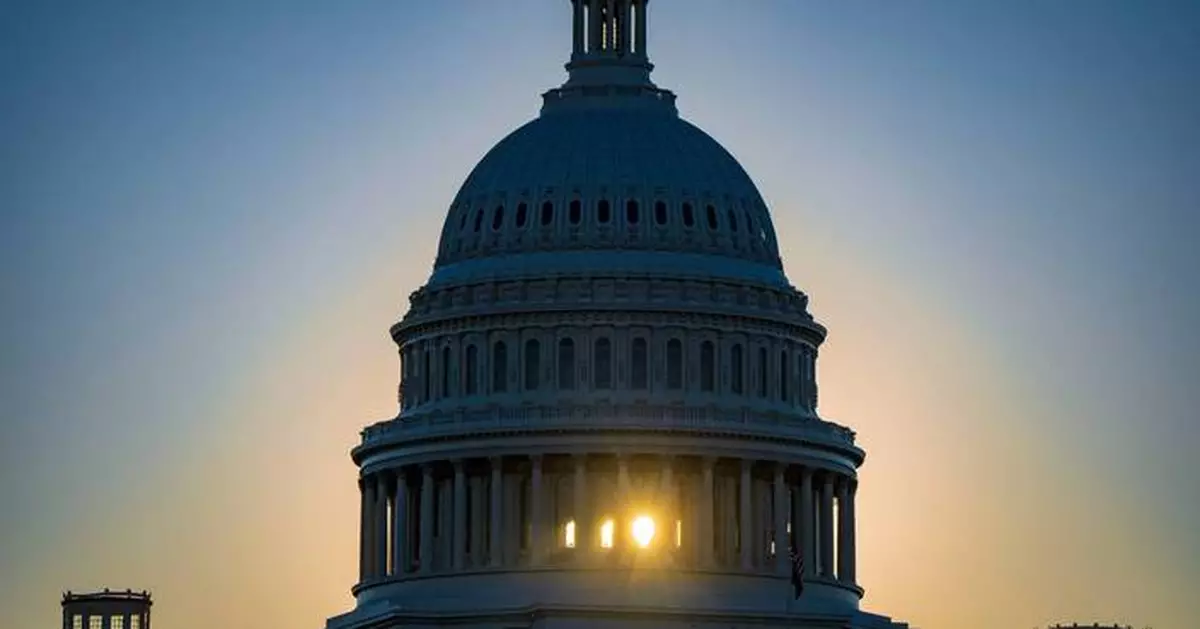
The sun rises behind the Capitol Dome in Washington, Tuesday, Oct. 20, 2026, two weeks before the midterm elections that will determine political control of Congress. (AP Photo/J. Scott Applewhite)
HELSINKI (AP) — Finland's president and Norway's prime minister have spoken on the phone with Russian President Vladimir Putin.
THIS IS AN APNewsAlert. Check back for updates. AP's earlier story is below.
Russia and Ukraine began observing a localized ceasefire in a devastated southern Ukrainian city Tuesday, before a planned humanitarian mission brokered by U.S. first lady Melania Trump, but Moscow kept up its deadly missile attacks on other cities in the meantime.
The local pause in fighting started at 3 a.m. to allow an aid mission into the Russia-occupied city of Oleshky later this week. The situation in Oleshky is desperate, with food and medical supplies running perilously low for the up to 2,000 people still there, as drones and land mines restrict movement.
Deep mistrust between Russia and Ukraine, as Moscow's full-scale invasion nears the five-year mark in February, has undermined previous attempts at limited ceasefires, which quickly unraveled or never took hold.
The humanitarian truce was a high-stakes operation for both Moscow and Kyiv, with both sides keen to win U.S. President Donald Trump’s favor.
Russian and Ukrainian negotiators as well as the militaries of the two countries confirmed in separate statements that the Oleshky ceasefire had begun.
According to her office, Melania Trump led talks with civilian negotiators from Russia and Ukraine after meeting with U.N. officials who briefed the American first lady on the situation in Oleshky.
Up to 2,000 people are stranded in the city, unable to leave because of explosive mines and drone attacks in the area, according to the U.N. The partly occupied Kherson region of Ukraine where Oleshky is located is notorious for the dangers of Russian drone attacks on soldiers and civilians.
Kremlin spokesman Dmitry Peskov said Tuesday that “so far there have been no reports of violations.”
Pope Leo XIV spoke earlier this month with Ukrainian President Volodymyr Zelenskyy and Russian President Vladimir Putin, urging them to allow humanitarian aid into Oleshky and the safe evacuation of civilians, the Vatican said.
Negotiators involved in the aid mission said doctors, medicines, food supplies and water would be taken to Oleshky before evacuation corridors are opened.
The Kremlin said at the time that Putin voiced support for the Vatican’s plea, and an agreement was reached to coordinate efforts in this regard.
Moscow and Kyiv have blamed each other for the humanitarian crisis.
Russia, as the occupying power, must under international law ensure that civilians under its occupation live safely. Ukraine has repeatedly tried to negotiate a humanitarian corridor for evacuations and aid delivery with Moscow.
The aid mission is planned ahead of a new round of U.S.-brokered talks between delegations from Russia and Ukraine expected next month that will seek to lay the groundwork for detailed peace negotiations later.
The local ceasefire is due to last through Saturday, or longer if needed. Its geographical scope was unclear, though it was centered on Oleshky and other nearby parts of the Kherson region.
Oleshky is about 550 kilometers (340 miles) southeast of Kyiv, where the Dnipro River separates Russian and Ukrainian forces. Oleshky sits across the Dnipro River from the city of Kherson, the region’s administrative capital. Russian forces seized Kherson in the early stages of the 2022 full-scale invasion, but retreated across the river several months later.
The Ukrainian-held side of the Kherson region was quiet Tuesday. Only Russian reconnaissance drones were in the sky, local authorities said, though they cautioned it was too early to draw any conclusions and that they didn't trust Russia.
“It’s too early to say. Let’s wait and see, because you can’t trust the enemy, especially the Russians,” Yaroslav Shanko, head of the Kherson city administration, told The Associated Press.
“There have been previously announced ceasefires more than once, and they had no effect on Kherson … and, let’s say, a lull like this is sometimes even frightening.”
Shanko acknowledged the situation was unusual. He typically travels with a portable drone detector that constantly picks up drones overhead, but it had gone silent, though he said he still kept glancing at it, but it showed nothing.
The quiet stands in contrast to daily life in the city, where people are wounded or killed nearly every day, he said.
City services plan to use the pause to carry out utility work that is usually too dangerous because of constant drone activity.
Minutes after 3 a.m., multiple ballistic missile explosions shook Kyiv and air alerts sounded in multiple parts of the country.
Late Monday, the capital also came under attack, when Russian ballistic missiles damaged the grounds of a university in Kyiv, killing one person and leaving 10 injured, city officials said. In Kharkiv, Ukraine's second-largest city, authorities said attacks late Monday killed two people and injured four.
“It is important that the world sees that Russia is showing nothing but a desire to kill and continue waging war,” Zelenskyy wrote in an online post shortly afterward.
Susie Blann and Derek Gatopoulos contributed to this report from Kyiv.
Follow the AP’s coverage of the war in Ukraine at https://apnews.com/hub/russia-ukraine
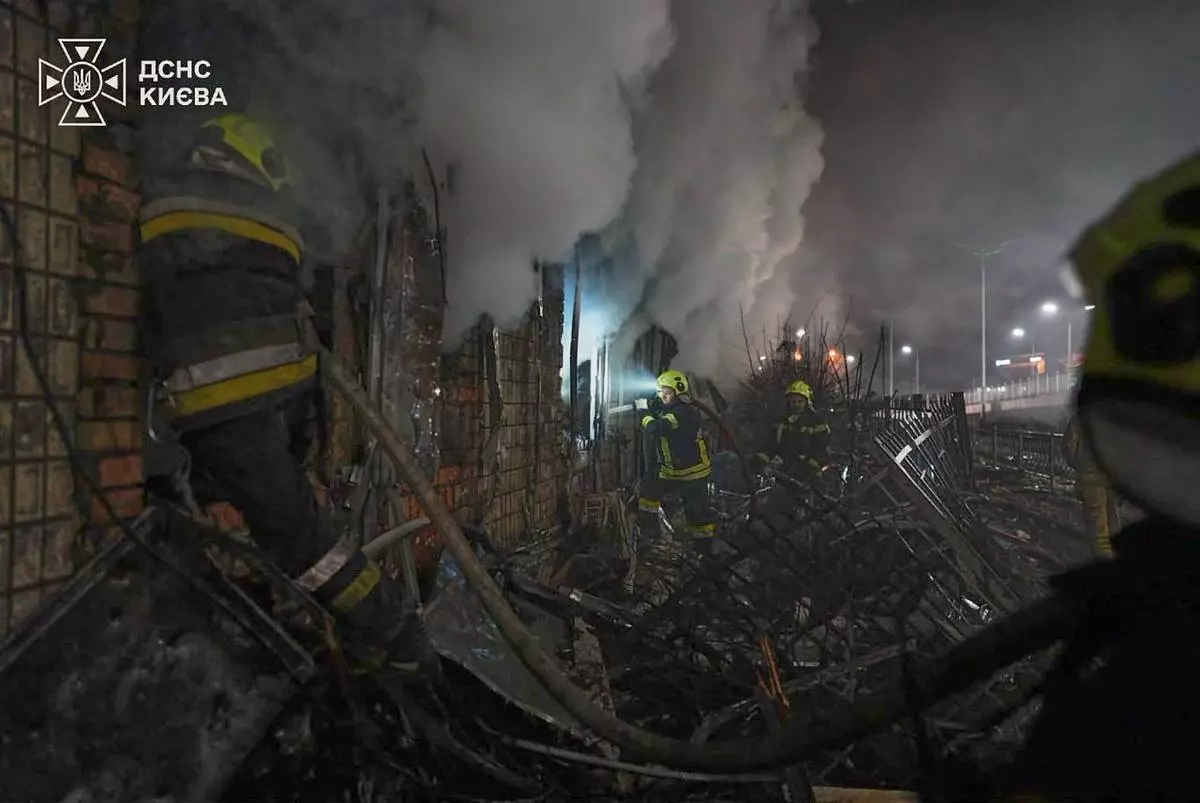
In this photo provided by the Ukrainian Emergency Service, emergency services personnel work to extinguish a fire following Russian missile attacks in Kyiv, Ukraine, Tuesday, Oct. 27, 2026. (Ukrainian Emergency Service via AP)
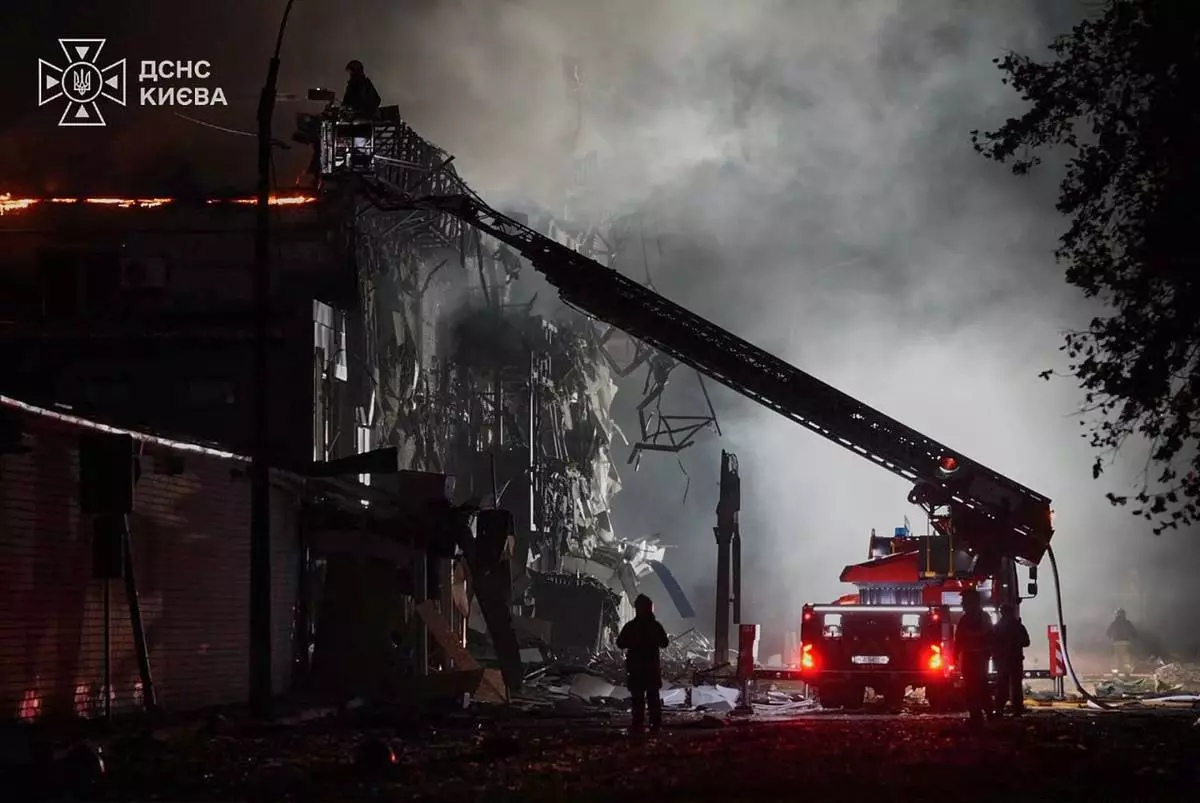
In this photo provided by the Ukrainian Emergency Service, emergency services personnel work to extinguish a fire following Russian missile attacks in Kyiv, Ukraine, Tuesday, Oct. 27, 2026. (Ukrainian Emergency Service via AP)

FILE - First lady Melania Trump speaks in the Rose Garden of the White House, Oct. 19, 2026, in Washington. (AP Photo/Mark Schiefelbein, File)
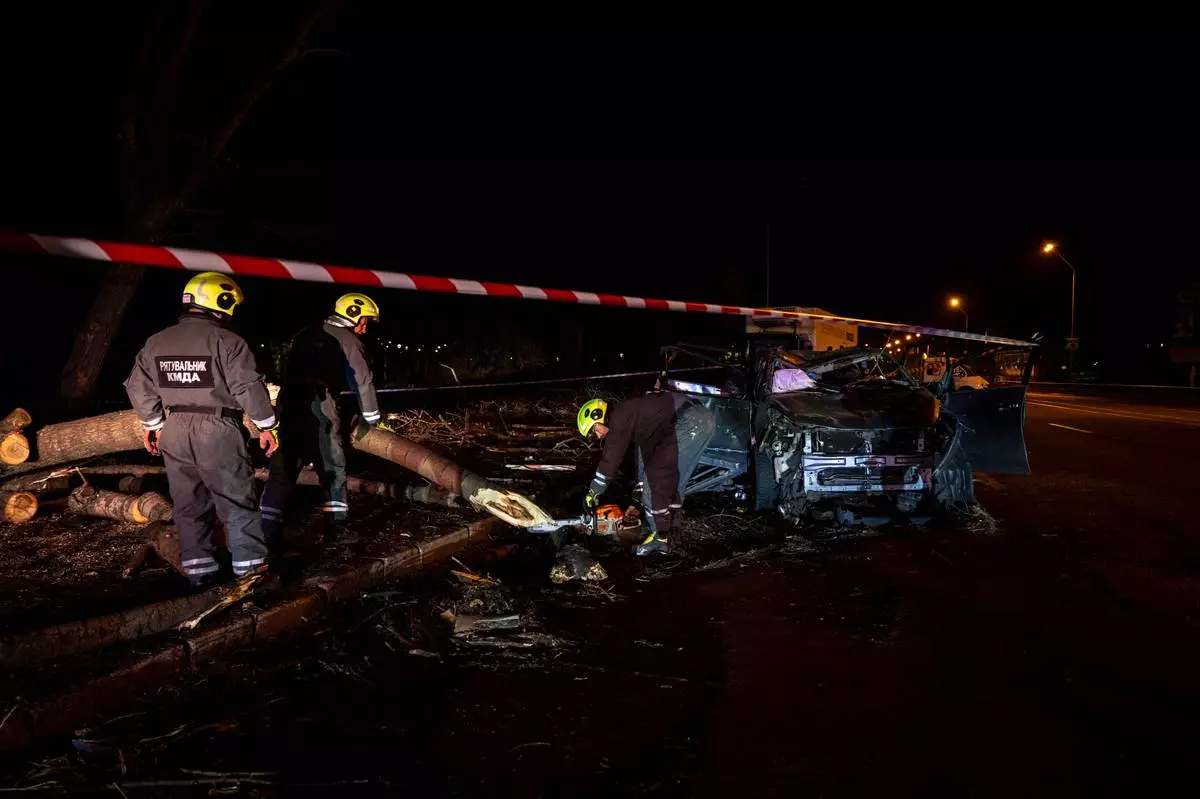
Emergency workers clear debris and damaged road infrastructure near a destroyed car following a Russian overnight strike in Kyiv, Ukraine, Tuesday, Oct. 27, 2026. (AP Photo/Dan Bashakov)
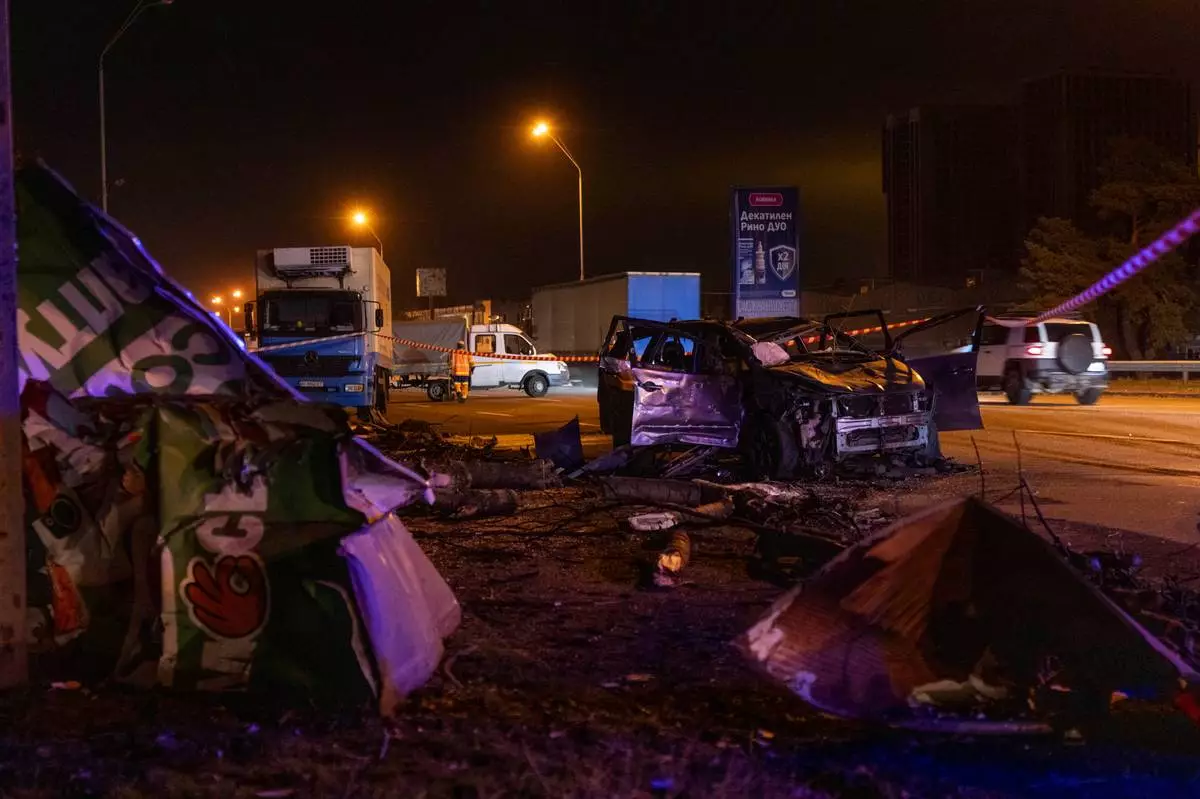
Emergency workers clear debris and damaged road infrastructure near a destroyed car following a Russian overnight strike in Kyiv, Ukraine, Tuesday, Oct. 27, 2026. (AP Photo/Dan Bashakov)
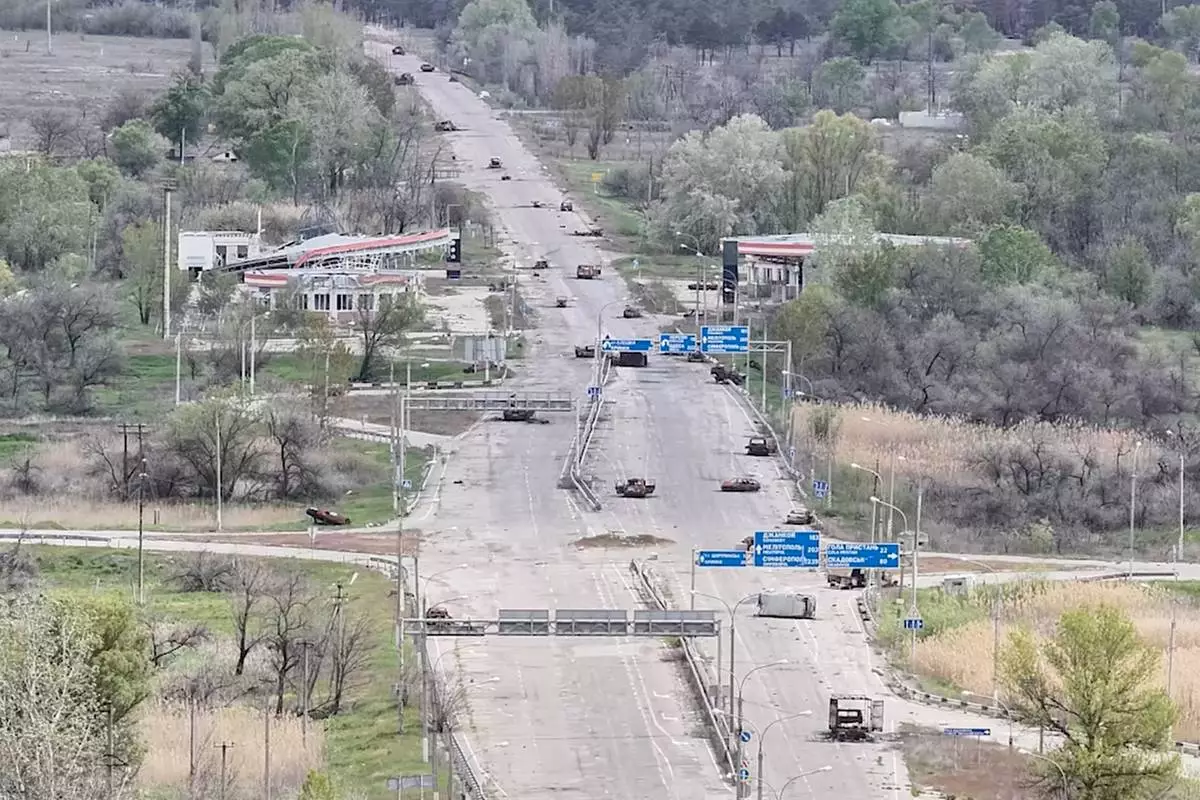
In this undated image from video provided by the Ukrainian 34th Separate Marine Brigade "Borysfen" on Sept. 30, 2026, destroyed cars are seen on a highway from the Russian-occupied city of Oleshky in the Kherson region of Ukraine. (Ukrainian 34th Separate Marine Brigade "Borysfen" via AP)
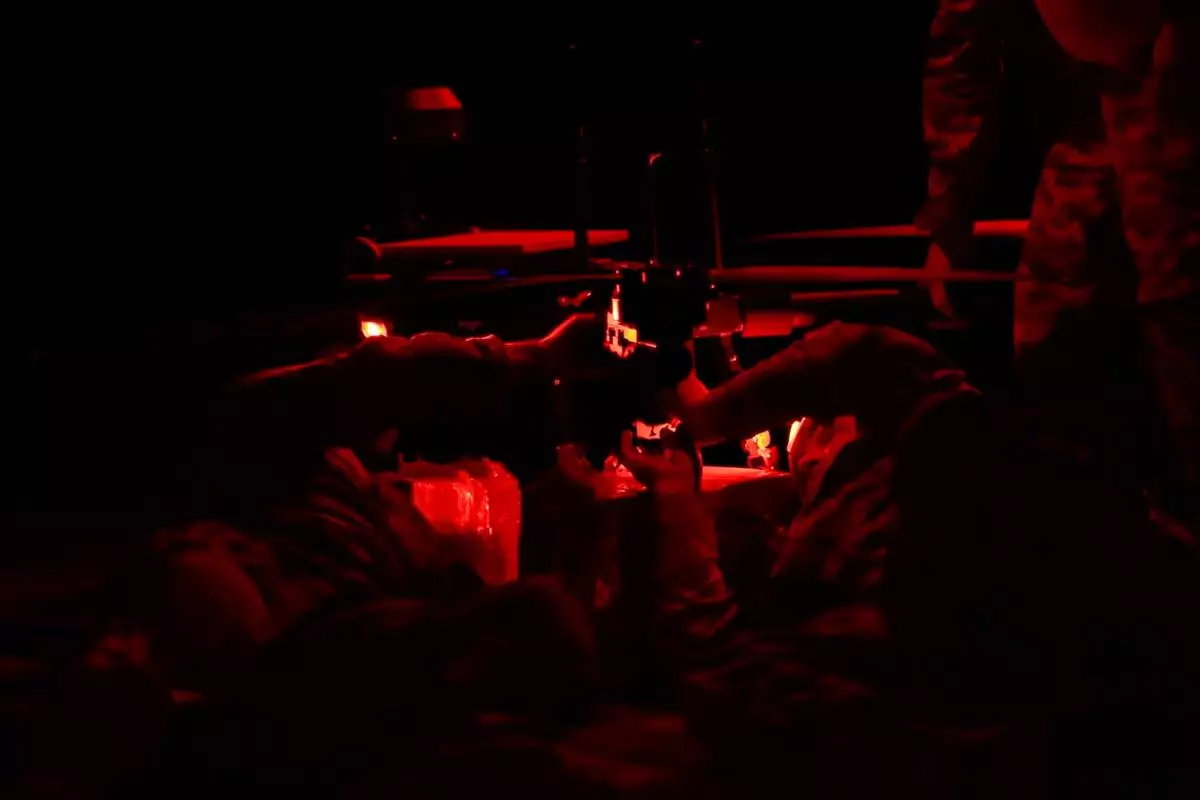
In this undated image from video provided by the Ukrainian 34th Separate Marine Brigade "Borysfen" on Oct. 4, 2026, Ukrainian soldiers at an undisclosed location in the Kherson region of Ukraine attach a parcel of supplies to a drone before a flight to the Russian-occupied city of Oleshky. (Ukrainian 34th Separate Marine Brigade "Borysfen" via AP)
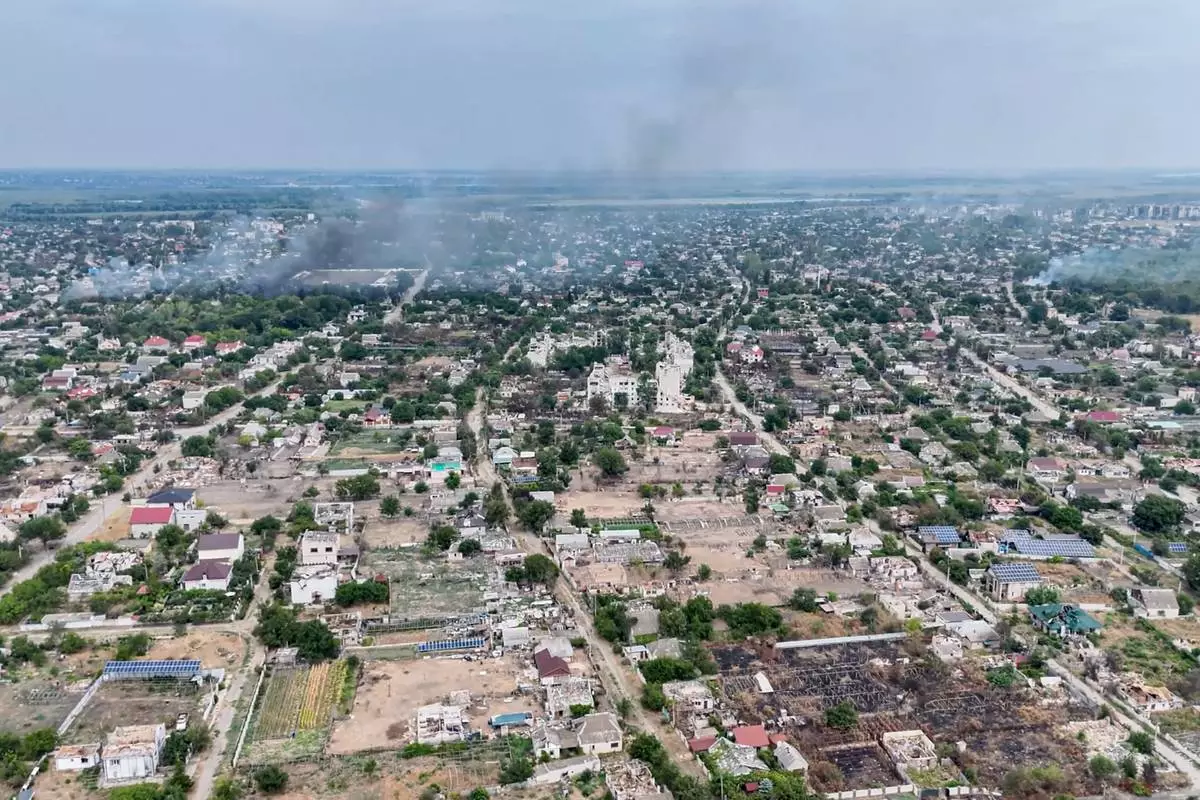
In this undated image from video provided by the Ukrainian 34th Separate Marine Brigade "Borysfen" on Sept. 22, 2026, smoke rises from a residential neighborhood in the Russian-occupied city of Oleshky in the Kherson region of Ukraine. (Ukrainian 34th Separate Marine Brigade "Borysfen" via AP)

President Donald Trump, left, and first lady Melania Trump listen to a question from a reporter after casting their early-voting ballots for the 2026 midterm elections at the Palm Beach County Library in West Palm Beach, Fla., Saturday, Oct. 24, 2026. (AP Photo/Mark Schiefelbein)