LOS ANGELES--(BUSINESS WIRE)--Oct 27, 2026--
Angeles Equity Partners, LLC ("Angeles"), a private investment firm focused on niche manufacturing, critical industrial services, and specialty distribution businesses, today announced the appointment of Jacques Retief as Chief Executive Officer of Custom Goods, LLC ("Custom Goods"), an asset-light third-party logistics (“3PL”) provider headquartered in Carson, California. Custom Goods specializes in complex warehousing & fulfillment, transportation, and value-added logistics for Fortune 500 customers with demanding supply chain requirements, as well as U.S. Customs exam services. Retief will lead Custom Goods through its next growth phase, focusing on expanding its customer base, improving operational performance, and accelerating development of its national logistics platform.
This press release features multimedia. View the full release here: https://www.businesswire.com/news/home/20261027438390/en/
"Jacques brings an exceptional combination of global logistics expertise, operational leadership, and a track record of building and scaling complex contract logistics businesses," said Matt Hively, Operating Partner at Angeles Operations Group.
"Custom Goods' asset-light model, national footprint, and specialized capabilities, Angeles believes, position the company well to capitalize on continued demand for outsourced logistics services. We believe Jacques is the right leader to build on that foundation, expand the company's capabilities, and accelerate its growth," said Sam Heischuber, Managing Director at Angeles Equity Partners.
Retief brings more than two decades of global logistics and supply chain leadership experience to Custom Goods. He began his career with UTi Worldwide, where he held leadership positions in contract logistics and distribution in Johannesburg and Chicago. He has also served as President, North America Road Group at DSV, and led Contract Logistics for the Americas at DB Schenker. Most recently, Retief served as Chief Operating Officer of Neovia Logistics.
"Custom Goods has built a strong platform by combining flexible warehousing and fulfillment capabilities with specialized services that address complex customer requirements,” said Jacques Retief, Custom Goods CEO. “I look forward to working with the Custom Goods team to build on that foundation, enhance our operational capabilities, and deliver even greater value to our customers as we continue to grow."
About Custom Goods
With nearly 10 million square feet across 37 facilities nationwide, Custom Goods is an asset-light, third-party logistics provider offering warehousing, transportation, value-added distribution, packaging, kitting, assembly, U.S. Customs and Border Protection bonded warehousing, Foreign-Trade Zone services, and freight forwarding to a diversified base of Fortune 500 customers. Custom Goods was named to the Transport Topics2026 Top 100 Logistics List *. Learn more online at www.custom-goods.com.
About Angeles Equity Partners, LLC
Angeles Equity Partners, LLC is a Los Angeles-based specialist private investment firm that partners with niche manufacturing, critical industrial services, and specialty distribution businesses in order to realize their full potential. Angeles’ expertise in operational transformation and strategic repositioning drives the firm’s investment philosophy. Learn more online at www.angelesequity.com.
* Transport Topics ranked Custom Goods in April 2026. No compensation was paid in connection with such ranking.
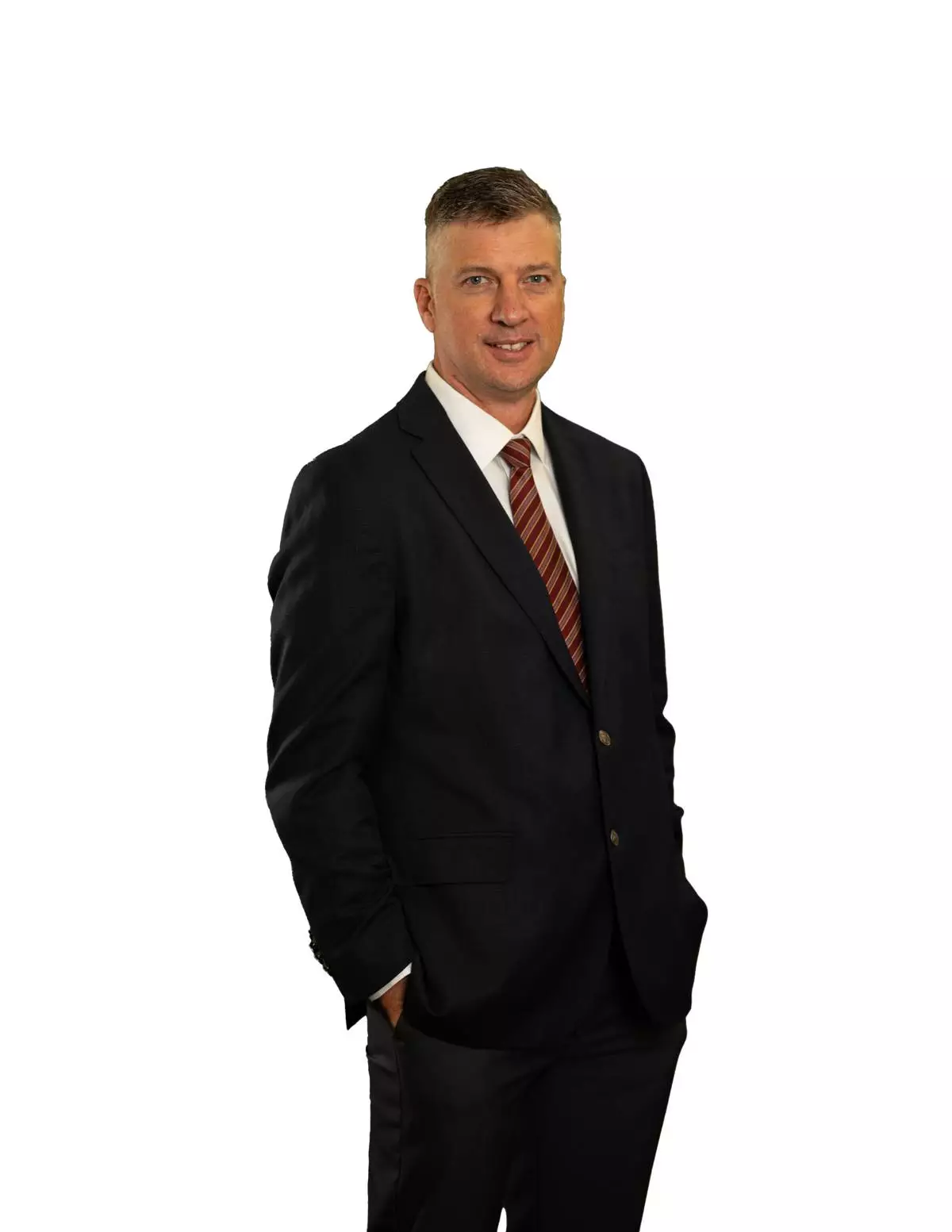
Custom Goods CEO Jacques Retief
Polling stations in Israel will close on Tuesday evening, but it could be weeks before Benjamin Netanyahu or one of his opponents will be declared the next prime minister.
It might even require another election.
That's because Israelis vote for parties and not candidates. None of the several main parties is expected to win anywhere close to a 61-seat majority in Israel's parliament, known as the Knesset. So the next prime minister will have to cobble together a coalition.
Polls show a tight race between coalitions supporting Netanyahu and his main opponent, retired Gen. Gadi Eisenkot. In the end, both could fall short of a 61-seat majority, meaning another election would be held in the coming months with Netanyahu's government staying on as a caretaker.
Here's a look at the process.
Shortly after polls close at 10 p.m. local time (2000 GMT), Israel's three main television broadcasters will release exit polls estimating how many seats were won by each party.
The exit polls usually provide a good indication of how people have voted. But they also could vary and may not be borne out by the official results, which will be released in the coming days.
The Associated Press calls thousands of elections in the United States, but doesn't declare winners in foreign elections.
If, as expected, neither coalition pulls off a clear victory, then the coming weeks will see intense negotiations and bargaining among party leaders as they try to get to 61 seats.
Israel's largely ceremonial president, Isaac Herzog, will hold consultations with all the party leaders after the election and ask the candidate who appears most likely to form a coalition to do so. If that candidate is unable to assemble a majority within a maximum of six weeks, then others could be given a shot.
The process gives outsized power to smaller parties that can often provide a crucial margin. The leaders of the bigger parties typically woo them with promises of Cabinet positions, budgets or specific policies.
This election could in theory be decided by Arab-led parties.
Both Netanyahu and Eisenkot have so far ruled out any partnership with them. But they could allow Eisenkot to form a minority government by backing him from outside the coalition or even just abstaining from the Knesset vote to seat the next government.
If, after all the negotiations, no one is able to form a majority, a new election would be held in the next few months and the process would repeat itself.
Netanyahu's government would remain as a caretaker and public services wouldn't be affected. But it would lack the authority to enact major policy changes.
Even another election may not resolve matters.
The last national election held in Israel, in November 2022, was the fifth in 3½ years.
This story has been corrected to show that polls close at 2000 GMT, not 1900 GMT.

The Israeli flag flies along a seaside promenade as pedestrians pass by, Sunday, Oct. 25, 2026, in Tel Aviv, Israel. (AP Photo/David Goldman)

People cross a bridge beneath an election campaign billboard featuring Gadi Eisenkot, leader of Yashar ("Straight") party, ahead of Israel's general election in Ramat Gan, Israel, Sunday, Oct. 25, 2026. (AP Photo/Oded Balilty)
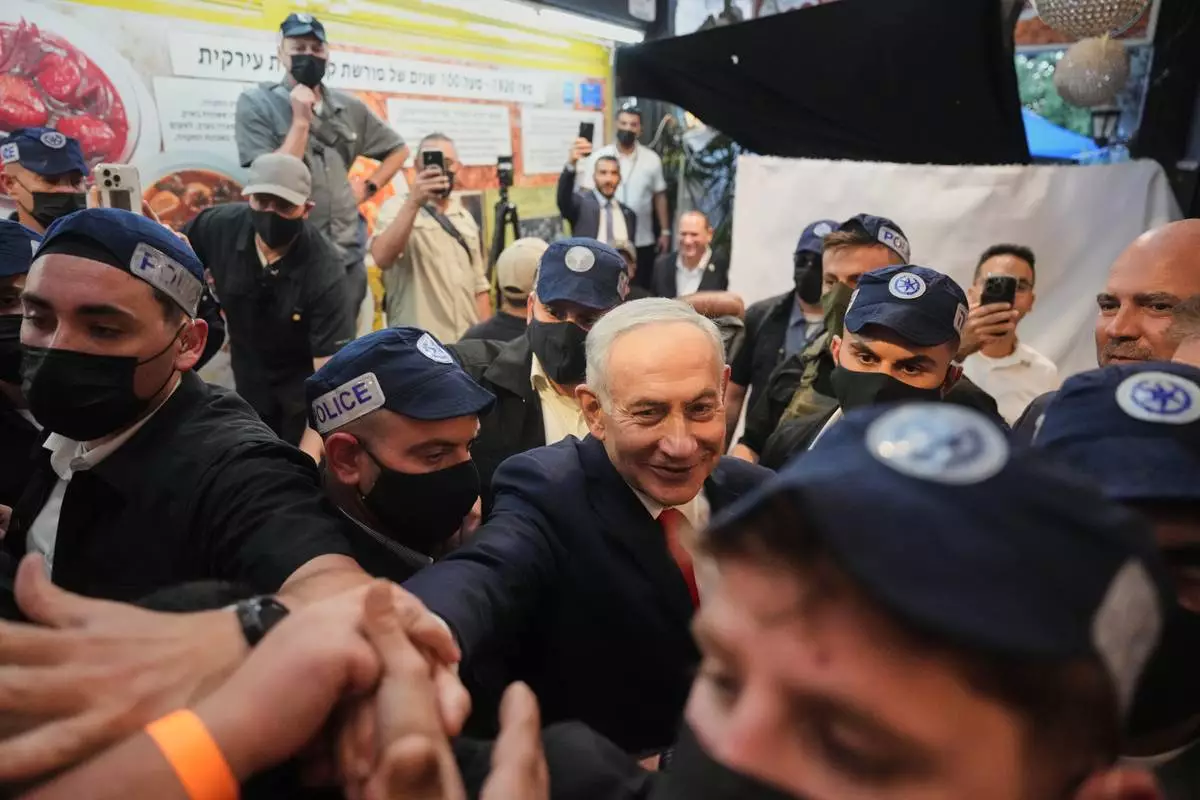
Israeli Prime Minister Benjamin Netanyahu, leader of the Likud party, gestures to supporters as security personnel surround him during a campaign appearance at a market in Tel Aviv, Israel, Thursday, Oct. 22, 2026, ahead of the country's general election. (AP Photo/Ariel Schalit)

An audience member looks on as Gadi Eisenkot, leader of the Yashar ("Straight") party speaks at a campaign rally ahead of Israel's general election, Sunday, Oct. 25, 2026, in Tel Aviv, Israel. (AP Photo/David Goldman)