BOULDER, Colo.--(BUSINESS WIRE)--Oct 27, 2026--
Enveda, a biotechnology company using AI to translate nature’s chemistry into new medicines, today announced results from its collaboration with Anthropic to streamline critical documentation processes in drug development. Working with Claude, Enveda developed AI-enabled workflows to review Good Manufacturing Practice records and draft significant portions of an Investigational New Drug application while maintaining expert oversight and existing quality controls.
Click to Gallery
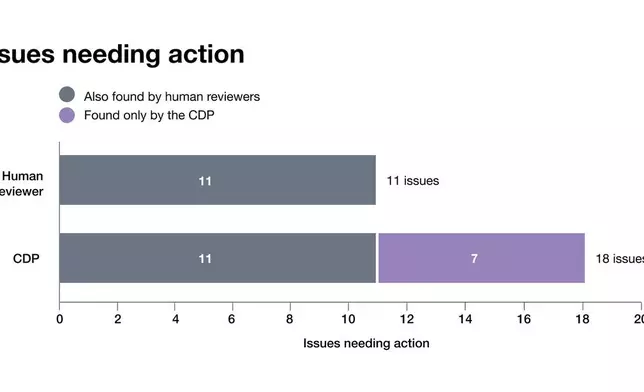
The Claude-enabled CDP identified every actionable issue human reviewers raised, plus seven more actionable issues relevant to an auditor
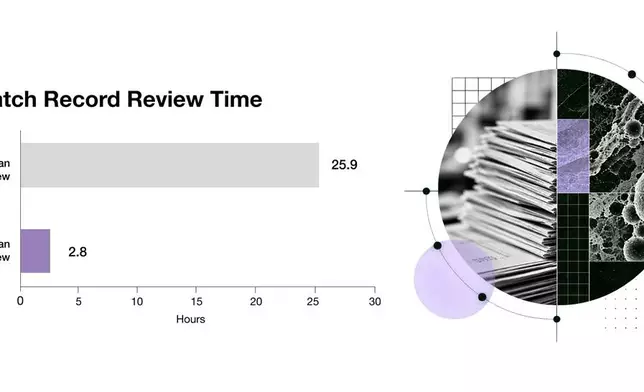
The Claude-enabled CDP reduced review of drug batch records by 89%
This press release features multimedia. View the full release here: https://www.businesswire.com/news/home/20261027361937/en/
The collaboration focuses on an essential part of bringing a medicine to patients: preparing and reviewing regulatory and quality documentation. Drug-development teams review thousands of pages of manufacturing, laboratory, and clinical records, with every figure accurately documented and traceable to its source. These processes can take months and constrain even highly productive drug-discovery platforms.
“Enveda was founded to search nature at a scale that was previously impossible and turn its chemistry into better medicines faster,” said Viswa Colluru, Founder and CEO at Enveda. “Our work with Anthropic shows that AI can also help remove downstream bottlenecks in development. By giving scientists tools that make complex regulatory work faster and more reliable, we can spend more time advancing medicines for patients.”
Working with AI to Support the Quality Review of Drug Batch Records
Enveda developed the CMC Document Processor, or CDP, an application built around Claude that flags possible issues for the company’s reviewers, who decide what to do about each one. The CDP understands document types, their relationships, applicable technical and regulatory requirements, and the history of a development program. It uses this context to provide inline reviews designed to reflect what an auditor would look for to identify issues that could place a program at risk.
Enveda evaluated the CDP using 1,061 pages of batch records from a Phase 2 manufacturing campaign. Four internal reviewers and a team of experienced external consultants independently reviewed the same records, after which a member of Enveda’s Quality team adjudicated every comment based on whether an auditor would be expected to raise the issue.
Across its runs, the CDP identified all 11 actionable issues found during the human review. One timed run also raised seven additional issues relevant to an auditor, which Enveda's Quality department resolved with the manufacturer before the batch was released. These included a process step that exceeded its agreed limit and a test marked “FAIL” without a recorded result.
The system made one error after misreading a handwritten note, but appropriately classified the interpretation as requiring verification rather than presenting it as fact. Across the evaluation, Enveda’s review did not detect any hallucinated findings in the CDP.
The timed run also reduced total review time from almost 26 hours for Enveda’s four reviewers to just under three hours, including human adjudication, representing an 89% reduction for this use case. Enveda's Quality team still carries out its own final review of every record before any batch is released.
In a separate program, the CDP identified the rapid accumulation of an impurity in a non-GMP demonstration drug batch, an issue human reviewers had missed. Detecting such risks earlier can help prevent batch loss and avoid clinical delays, which can be costly.
A preprint documenting Enveda’s CDP process can be found here: https://enveda.com/cmc-document-processor/
Building Regulatory Applications from a Single Source of Truth to Accelerate IND Generation
Enveda also worked with Claude to prepare significant portions of Module 2 of an Investigational New Drug application. Rather than generating the application directly from study reports, the workflow first extracted structured facts from toxicology, bioanalytical, and pharmacokinetic source documents into a shared data layer.
This single source of truth let Enveda use consistent, traceable information throughout the application. When a source fact or analysis required refinement, the team could update it across every relevant section of the draft.
To check the work, Enveda compared Claude's draft with a Module 2 its team had already written by hand. After reviewing the draft, Enveda's Drug Development and Quality teams deemed it comparable to work produced by professional medical writers, and would have felt comfortable submitting it had the human-written version not already been sent to the publishers. Claude generated the first draft in four hours, compared with approximately three months to write a comparable first draft manually at Enveda. Neither figure includes time for expert review.
In parallel, Claude drafted an Investigator’s Brochure using the same underlying source materials. Enveda reviewers only identified one minor unit-conversion error, and after fixing that error, Enveda submitted the Investigator’s Brochure to the FDA as part of the full IND.
"We believe AI has the potential to accelerate drug development. To do this though, bottlenecks in the process, from manufacturing to clinical trials, must be addressed. Enveda has demonstrated how Claude can help people address the critical but often time consuming part of documenting each part of the work, and preparing it for final review and approval. By building these AI approaches to work, people can focus on the research that can help treat patients faster," said Aris Theologies, Lead of Life Sciences at Anthropic.
In both projects, Claude supported Enveda’s experts rather than replacing established quality processes. The system never wrote directly to a regulated GxP record. Enveda personnel reviewed and approved every finding and draft, while the company’s validated document-management system remained the system of record.
About Enveda
Enveda is a biotechnology company using AI to translate nature’s chemistry into new medicines. Enveda’s platform identifies and characterizes molecules produced by living organisms, creating new opportunities to develop treatments for conditions with significant unmet need. Since 2019, Enveda has produced 17 drug candidates, including three now in clinical trials. Learn more at enveda.com.
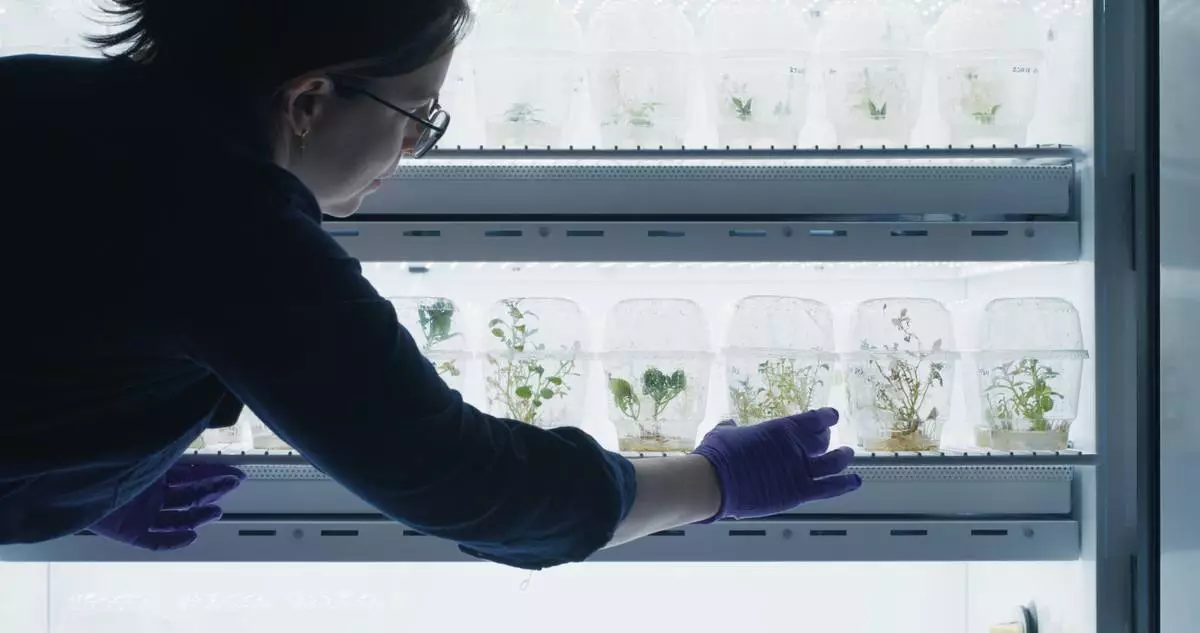
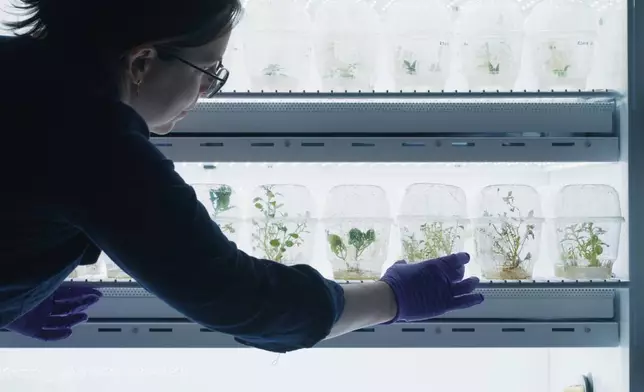
Enveda HQ Labs
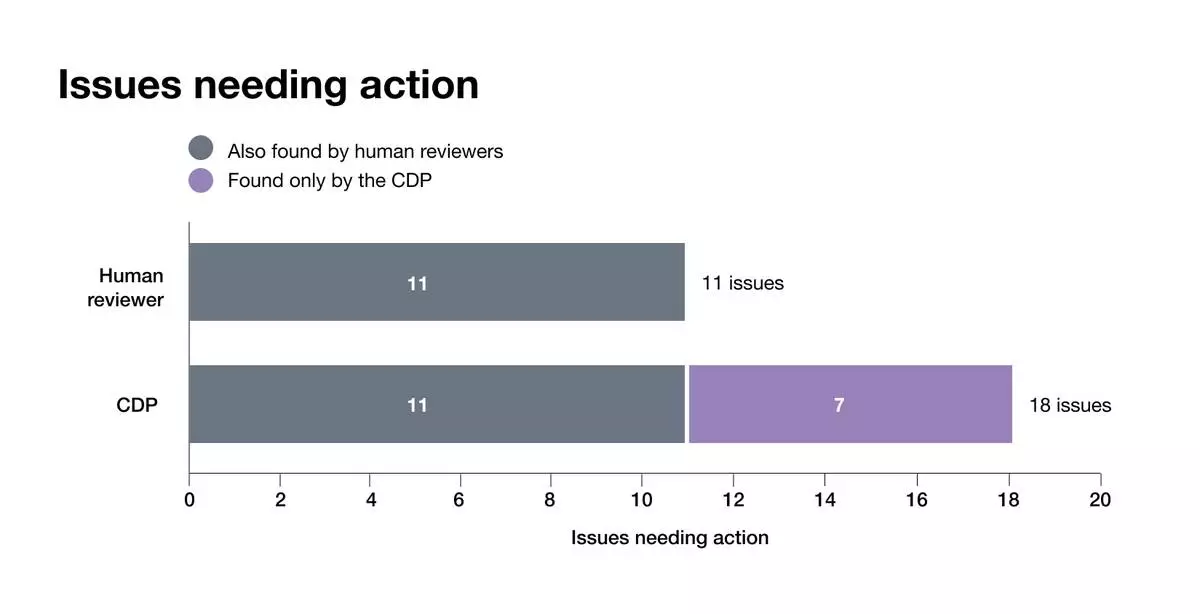
The Claude-enabled CDP identified every actionable issue human reviewers raised, plus seven more actionable issues relevant to an auditor
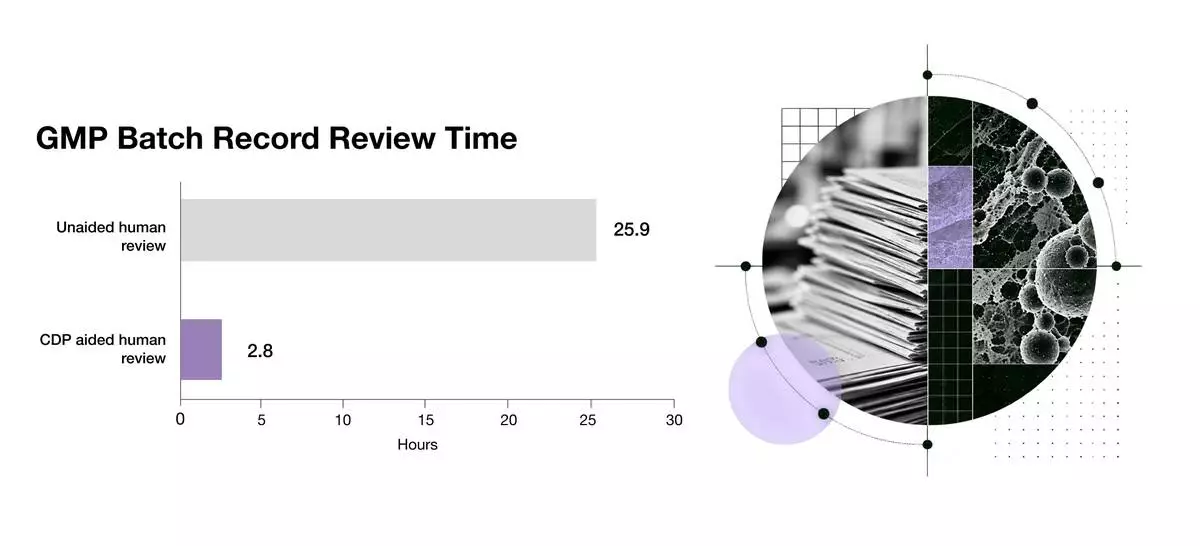
The Claude-enabled CDP reduced review of drug batch records by 89%

Enveda x Anthropic
WASHINGTON (AP) — A federal judge on Tuesday scolded the Justice Department for its unorthodox handling of a criminal case against two former FBI officials accused of making false statements to Congress about their knowledge of a laptop the Justice Department says belonged to Hunter Biden, the son of former President Joe Biden.
U.S. Magistrate Zia Faruqui struck from the record an amended criminal complaint filed overnight by the Justice Department that added a new obstruction charge against the two former officials, Nikki Floris and Bradley Benavides, after concluding that it was improperly submitted.
Such charging documents require sign-off from a judge that probable cause exists to believe a crime was committed by a defendant, but this complaint was filed straight to the docket with no court approval.
The development was an embarrassing setback for a Justice Department that has employed unusual maneuvers during a series of splashy and politically charged investigative actions before next week’s midterm elections. Newly unsealed documents in a separate case, for instance, revealed that prosecutors are attempting to again prosecute former FBI Director James Comey, an outspoken critic of President Donald Trump, in a manner that Comey's lawyers say is legally invalid.
Faruqui said he had never before seen a prosecutor file an unsigned criminal complaint, describing it as “inappropriate” given defendants’ presumption of innocence. He ticked off several atypical aspects of the case, including the decision to charge the former FBI officials via criminal complaint, which the judge noted is more often used when the government has disrupted an active crime or needs to take a defendant into custody immediately because of a potential danger to society.
“Everything is a little sideshow on top of a sideshow,” the judge said, telling prosecutors that they appeared to be throwing “gas” on defendants’ assertions that there is nothing typical about this case.
Assistant U.S. Attorney John Borchert defended the prosecutors’ move, saying they believed court rules allowed for the filing of the new complaint despite no sign-off from the judge because the government isn’t seeking to arrest the former FBI officials.
Faruqui was unmoved. “It is not our court’s practice — and I think it is appropriately not our practice — that unsigned complaints are filed on the docket,” Faruqui said.
He later added: “I want to know why the United States is reticent or averse to putting before me a probable cause determination that you must believe is righteous. Why today on this one case have you changed the entire history of how you charge cases?”
Mary Dohrmann, an attorney for Floris, told the judge that whether it was the result of “incompetence, recklessness or cruelty,” it was inexcusable for prosecutors to file a criminal complaint without a probable-cause sign-off from a magistrate judge.
Describing that as the “elephant in the room,” Dohrmann told the judge that “evidence is mounting that this prosecution is about some political football.”
Even so, the judge proceeded with a preliminary hearing Tuesday.
The case, announced Friday, accuses the former officials of falsely playing down their knowledge about a laptop the Justice Department says Hunter Biden abandoned at a computer repair shop in 2019.
Prosecutors say they claimed to have no independent insight into the FBI's recovery of the laptop while being interviewed in 2023 in a separate congressional Republican investigation into the Biden family. In reality, according to the criminal complaint, the two participated in numerous discussions about the laptop in their capacity as leaders of the since-disbanded FBI Foreign Influence Task Force that was set up to monitor foreign influence.
The Justice Department contends that the defendants' professed lack of knowledge misled the congressional investigation and impeded their efforts to scrutinize Biden family business dealings.
But Ronald Safer, a lawyer for Benavides, challenged that assertion during the hearing Tuesday as he questioned an FBI agent who investigated the case against the former officials. He also pointed out that Benavides, in 2023, was asked about events that occurred several years earlier, casting doubt on whether anything his client said was intentionally false.
“What evidence have you uncovered that in September of 2023, Mr. Benavides remembered the correct answers, in your view, to the questions asked about Hunter Biden but gave knowingly incorrect answers?” Safer asked.
The prosecution, a rare Justice Department criminal case against a former employee, revisits a tangled saga that roiled the final weeks of the 2020 race after the New York Post revealed the existence of a laptop it said had been dropped off by the younger Biden at a Delaware computer repair shop about a year earlier.
The Post said it had obtained a hard drive of the laptop from Rudy Giuliani, a close ally of President Donald Trump, and reported on some of the contents of the computer, including emails that appeared to show some of Hunter Biden's foreign business dealings.
The curious circumstances of the laptop’s discovery raised concerns among Democrats and former intelligence officials about the possibility of Russian involvement, particularly when the Trump administration’s own intelligence community had assessed that Moscow was attempting to undermine the candidacy of Democratic nominee Joe Biden, who went on to defeat Trump in 2020, and as Giuliani had traveled abroad looking for dirt on the Bidens.
But Trump's then-national intelligence director, John Ratcliffe, quickly sought to quell speculation about the laptop's provenance by saying there were no signs it had anything to do with Russian actors. The FBI said it had nothing to add to Ratcliffe's statement and investigated the younger Biden on gun and tax charges that later resulted in felony convictions. President Joe Biden pardoned his son in late 2024.
The FBI officials under scrutiny, Floris and Benavides, were leaders of the Foreign Influence Task Force, which was established in the first Trump administration to police influence campaigns staged by Russia and other nations aimed at sowing discord, undermining democracy and spreading disinformation.
In that capacity, the FBI officials briefed Republican Sens. Chuck Grassley and Ron Johnson in August 2020 as the lawmakers were doing their own investigation into Hunter Biden’s work in Ukraine. News of the briefing leaked, and the senators lashed out at the FBI, saying their efforts to scrutinize the Biden family had been discredited and falsely linked to Russian disinformation.
The criminal complaint accuses them of lying to lawmakers in 2023 by denying contemporaneous knowledge of the Biden laptop or participating in internal FBI conversations about it. Their lawyers have denied any allegations of wrongdoing.
The task force was disbanded in February 2025 by then-Attorney General Pam Bondi.
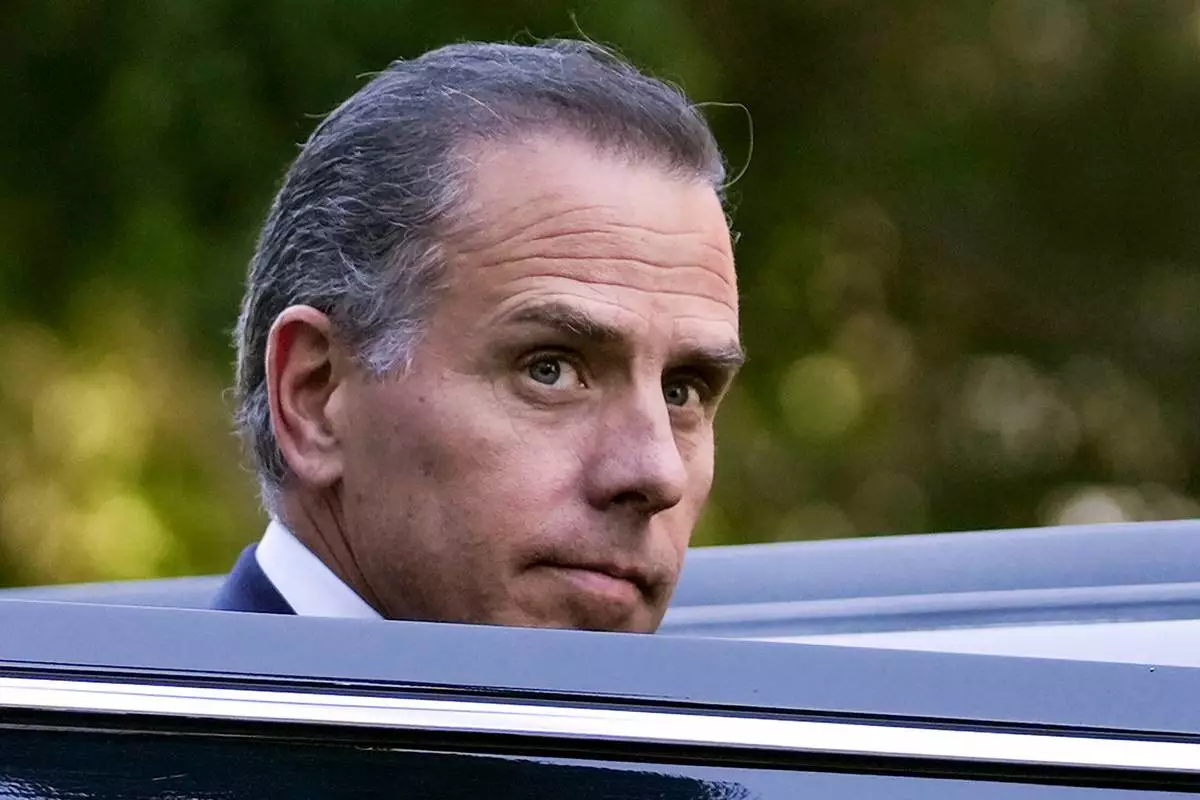
FILE - Hunter Biden steps into a vehicle as he leaves federal court, Sept. 5, 2024, in Los Angeles. (AP Photo/Eric Thayer, File)
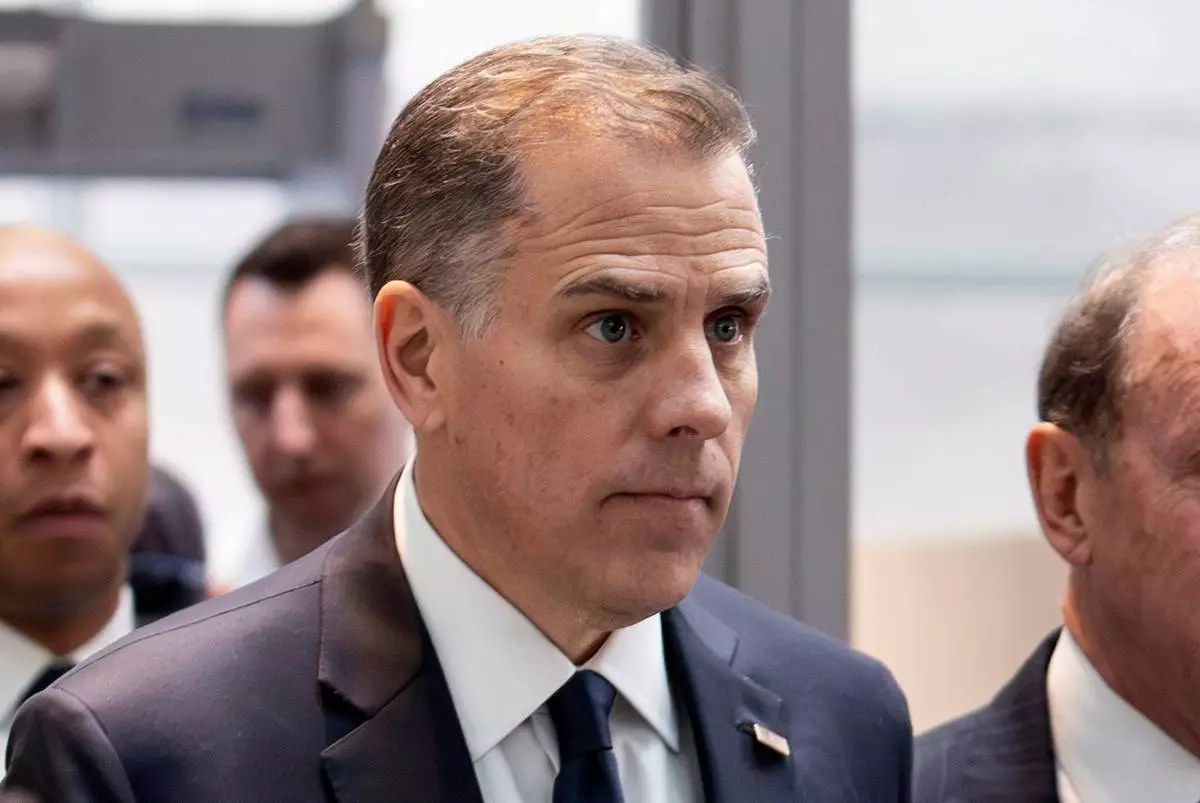
FILE - Hunter Biden arrives for a closed-door deposition on Capitol Hill in Washington, Feb. 28, 2024. AP Photo/J. Scott Applewhite, File)
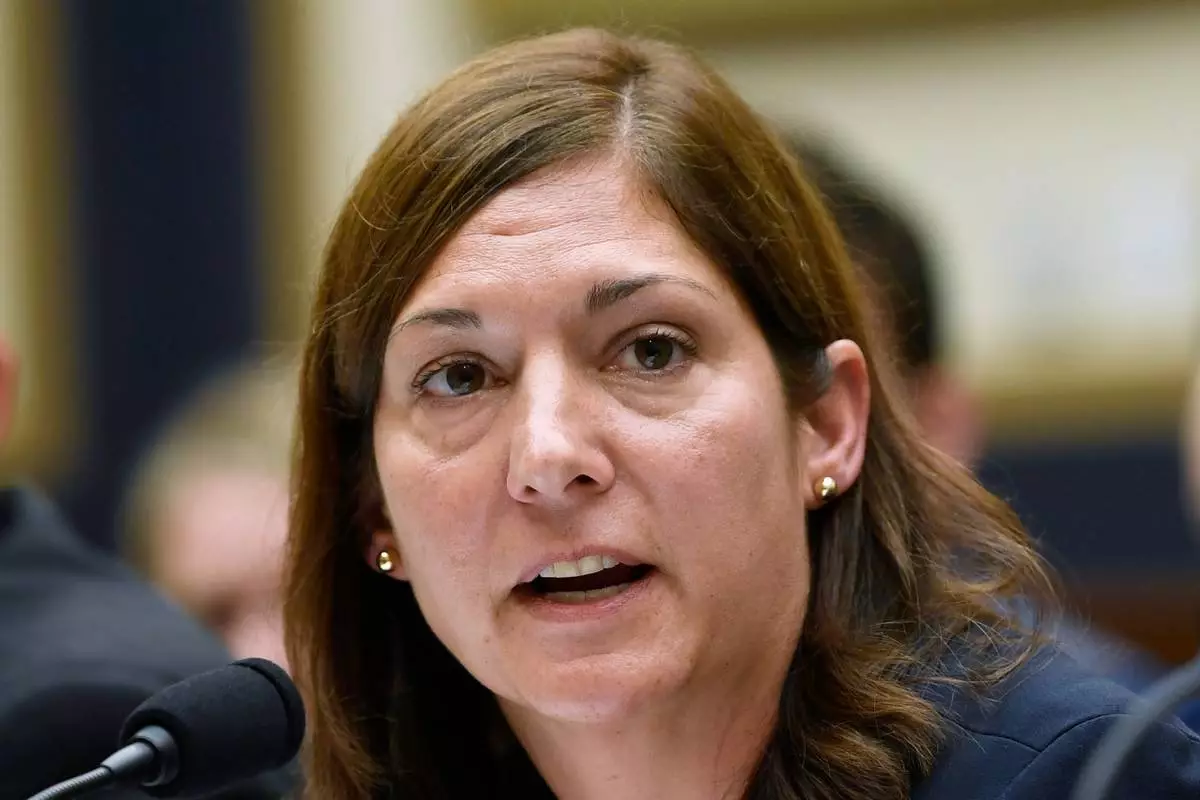
FILE - Deputy Assistant Director for Counterterrorism at the FBI Nikki Floris, testifies before the House Judiciary Committee hearing on Capitol Hill in Washington, Oct. 22, 2019. (AP Photo/Susan Walsh, File)