Israeli Prime Minister Benjamin Netanyahu's right-wing bloc fell behind an opposition alliance led by former military chief Gadi Eisenkot in Tuesday's parliamentary election, but neither side secured a majority, according to exit polls released Tuesday night by three major television networks.
Exit polls by public broadcaster Kan and commercial TV Channel 13 projected 53 seats for Eisenkot's bloc against 50 for Netanyahu's, while Channel 12 gave Eisenkot's bloc 52 seats and Netanyahu's 50.
Arab-majority parties, the Joint List and the Muslim Ra'am party, were projected to win 17 to 18 seats in the 120-member Knesset or parliament, potentially holding the balance of power. Both Netanyahu and Eisenkot have ruled out forming a governing coalition with the Arab parties.
With neither bloc reaching the 61 seats needed for a parliamentary majority, the results point to potentially prolonged coalition negotiations and political instability.
The exit polls are preliminary, with final official results expected in the coming days or even weeks.

Exit polls show Israeli election deadlock
U.S. stocks closed higher on Tuesday, as chip stocks rallied on the Broadcom-Anthropic financing deal.
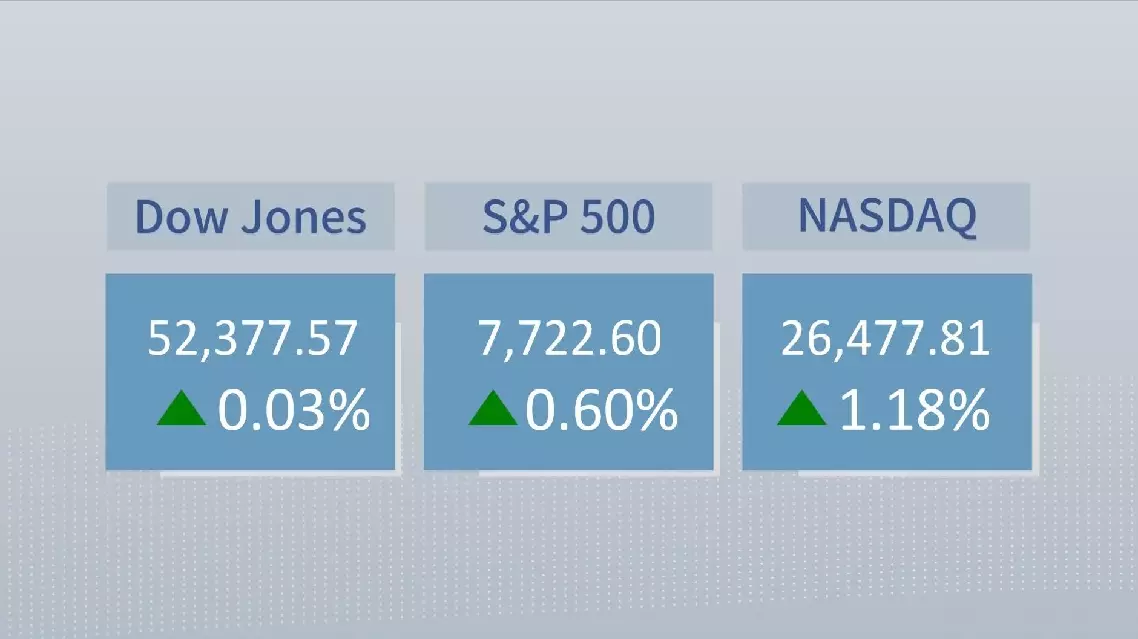
The Dow Jones Industrial Average rose 15.99 points, or 0.03 percent, to 52,377.57. The S and P 500 added 45.83 points, or 0.60 percent, to 7,722.60. The Nasdaq Composite Index gained 308.43 points, or 1.18 percent, to 26,477.81.
Six of the 11 primary S and P 500 sectors ended in the green, with technology leading the gainers by adding 1.49 percent and consumer discretionary up 1.36 percent. Meanwhile, energy led the laggards, falling 2.2 percent, and real estate fell 0.91 percent.
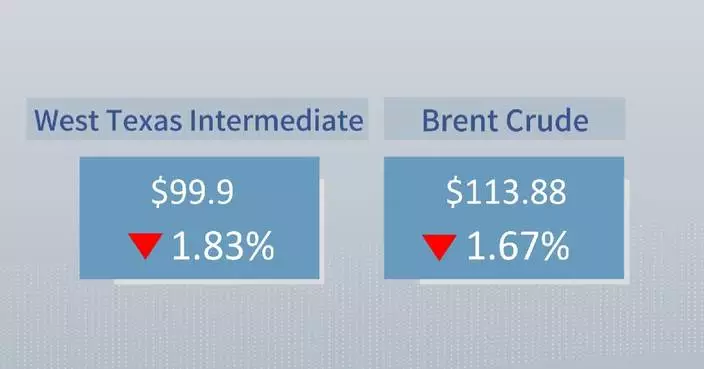
Oil prices fell for a second straight day as diplomatic efforts raised hopes of easing Middle East tensions. West Texas Intermediate crude for December delivery settled at 99.9 U.S. dollars a barrel, down 1.8 percent, while Brent crude for December delivery settled at 113.88 dollars a barrel, down 1.67 percent, its largest one-day decline since Oct. 5. However, UBS said it expects Brent prices to stay near 110 dollars a barrel through the end of the year. On the corporate front, Broadcom rose four percent after D.A. Davidson upgraded the stock to "Buy" from "Neutral" and raised its price target to 400 dollars from 350 dollars, citing Anthropic's initial public offering (IPO).
Broadcom on Monday disclosed a 63-billion-dollar financing deal with Bank of America, Blackstone, Citigroup and Morgan Stanley to fund purchases of its artificial-intelligence chips and networking equipment for Anthropic, whose filing put its equipment lease commitments to Broadcom at 161.2 billion dollars.
"If Anthropic's IPO goes well, and it is able to raise the capital, we expect the path will be paved for OpenAI to do the same next year," said Gil Luria, an analyst at D.A. Davidson.
Meanwhile, Boeing fell over 10 percent, the worst performance in the Dow, after reporting a third-quarter adjusted loss of 34 cents a share, wider than the 21 cents expected, on revenue of 24.19 billion dollars.
The planemaker said it will miss its target of about 500 Boeing 737 deliveries this year, with a stable rate of 47 jets a month now expected in early 2027. Boeing cut its 2027 free cash flow outlook to about 3 billion dollars, well below the 5.5 billion dollars analysts expected.
JetBlue jumped nearly 19 percent on projected expansion of profit margin, and General Motors gained 5.54 percent after announcing a move to switch listing from New York Stock Exchange to Nasdaq.
Coca-Cola beat expectations and raised its outlook for a third straight quarter. United Parcel Service delivered a beat and raised its full-year revenue outlook to about 92.6 billion dollars.
On the economic front, U.S. consumer confidence rose to 91.7 in October from 84.2 in September, beating expectations of about 81. Meanwhile, new orders for manufactured durable goods rose 1.8 percent to 345.4 billion dollars and new-home sales ran at a 676,000 annual pace.
The Federal Reserve will announce its policy decision on Wednesday, with traders pricing about a 90-percent chance policymakers hold rates steady at 3.75 percent to 4 percent, according to CME FedWatch.
U.S. stocks extend gains driven by tech rally