Skip to Content Facebook Feature Image

UN reports a sharp rise in Afghanistan poppy cultivation despite a Taliban ban

News

UN reports a sharp rise in Afghanistan poppy cultivation despite a Taliban ban
News

News

UN reports a sharp rise in Afghanistan poppy cultivation despite a Taliban ban

2026-10-29 15:56 Last Updated At:16:00

KABUL, Afghanistan (AP) — Poppy cultivation and opium production in Afghanistan rose sharply over the past year, the United Nations Office on Drugs and Crime said on Thursday, describing it as the first significant increase since the country’s Taliban rulers imposed a narcotics ban in 2022.

The agency attributed the rise to deepening poverty, which it said has driven some farmers to cultivate opium clandestinely. It called on the international community to provide greater support to farmers to help curb reliance on illicit crops.

Afghanistan was the world’s biggest opium producer and a major source of heroin in Europe and Asia when the Taliban seized power in August 2021. They pledged to wipe out the country’s drug cultivation industry and imposed a formal ban in April 2022, dealing a heavy blow to hundreds of thousands of farmers and day laborers who relied on proceeds from the crop to survive.

The U.N. agency said cultivation was up 330% and production rose by 400% compared to last year. Cultivation rose to more than 43,000 hectares (106,000 acres) in 2026 from 10,000 hectares (24,700 acres) a year earlier, it said.

Farmers were concealing small poppy plots within cereal fields or inside walled compounds to evade detection, the report said.

“The fourfold increase in opium poppy cultivation shows the difficulty in sustaining decreases in illicit opium cultivation when poor farmers have no alternatives to feed their families,” a statement quoted the agency’s executive director, Monica Juma, as saying.

“The (Taliban authorities) and the international community need to work together to support farming communities by investing in livelihoods, farming infrastructure and access to markets,” she added.

The U.N. agency said that while cultivation and production remained below levels prior to the 2022 narcotics ban, the increase was the highest since the ban came into effect. The agency said that continued monitoring was required as it was too early to determine whether the increase was temporary or an indication of the resurgence in opium cultivation and production.

Foreign Minister Amir Khan Muttaqi on Tuesday described the fight against narcotics as one of the Taliban administration’s greatest achievements. He however, also said the international community has a role to play to keep the drugs issue under control.

“An effective fight against this phenomenon is a shared responsibility of both Afghanistan and the international community,” Muttaqi said. “It is essential alongside security measures to support alternative livelihoods for farmers, provide treatment for those struggling with addiction, and enhance regional and international cooperation against drug-trafficking networks.”
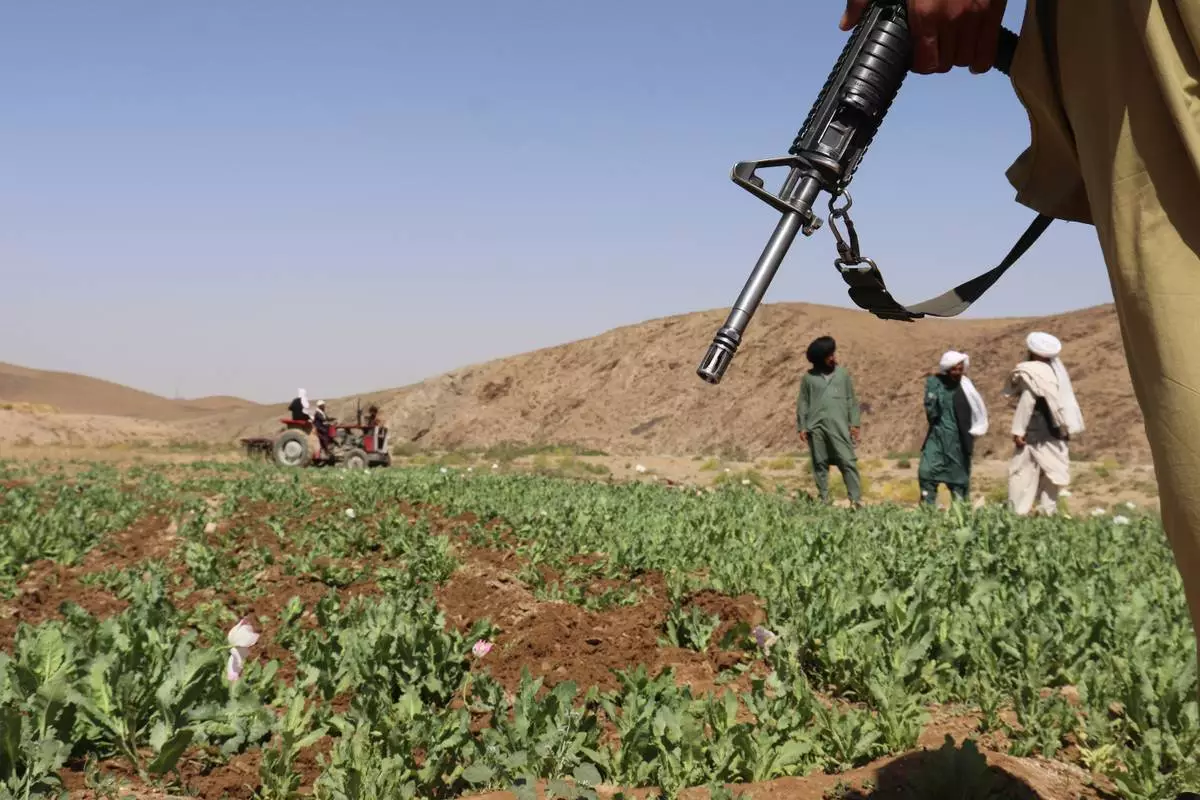
FILE -Taliban eradicate a poppy field in Washir, district of Helmand province, Afghanistan, May 29, 2022. (AP Photo/Abdul Khaliq, File)

FILE -Taliban eradicate a poppy field in Washir, district of Helmand province, Afghanistan, May 29, 2022. (AP Photo/Abdul Khaliq, File)
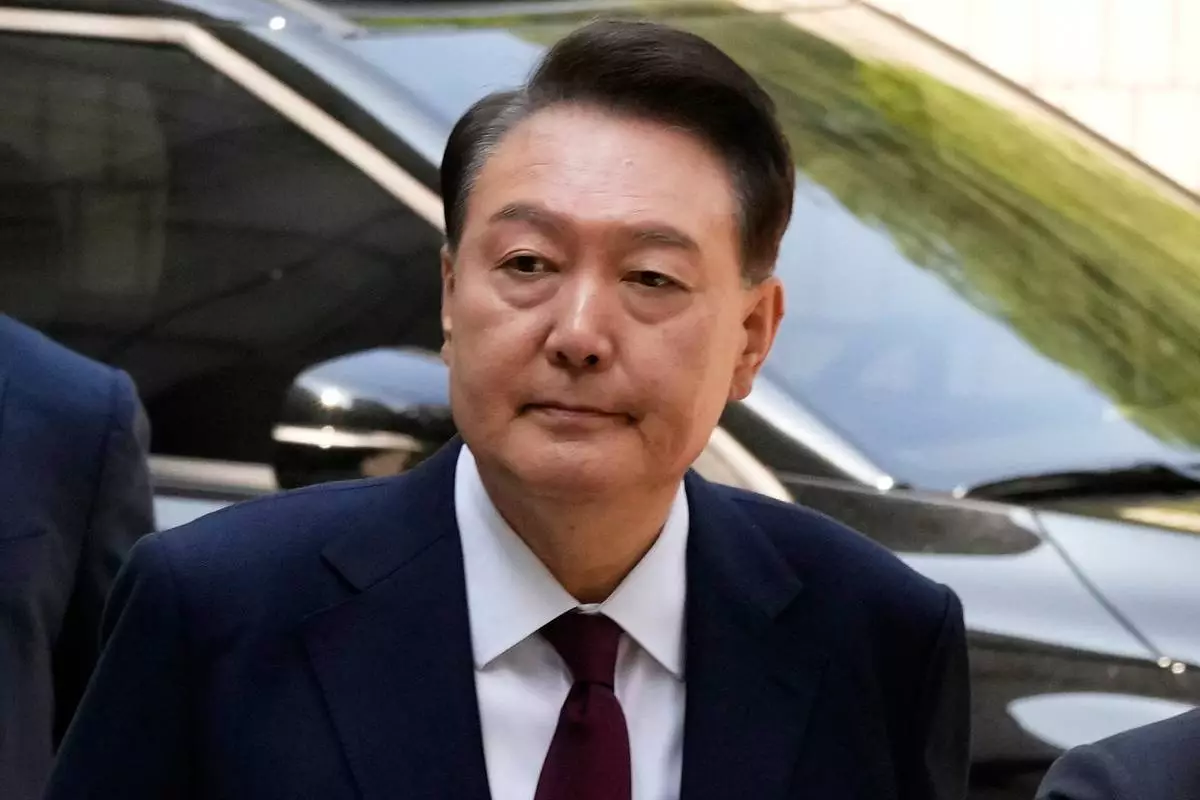
SEOUL, South Korea (AP) — A South Korean special prosecutor on Thursday demanded the death penalty for ousted President Yoon Suk Yeol, ahead of an appeals court verdict on rebellion charges over his brief imposition of martial law in December 2024.

The Seoul High Court has yet to set a date for a verdict on Yoon's appeal of a life sentence handed down in February by the Seoul Central District Court. The court found that he illegally mobilized troops and police to seize the legislature, arrest political opponents and establish unchecked rule for a “considerable time.”

Investigators led by Special Prosecutor Cho Eun-suk also appealed the ruling, arguing Yoon deserves the death penalty because his actions posed a grave threat to the country’s democracy. An execution would be unlikely. South Korea has not executed anyone since 1997, effectively maintaining a moratorium on capital punishment following calls for its abolition.

During the hearing at the high court, Cho’s team said only the death penalty could fully hold Yoon accountable for a crime as serious as orchestrating a rebellion and that the country’s long-standing pause on executions should not prevent courts from imposing death sentences.

Yoon’s legal team told reporters that prosecutors were repeating an argument “devoid of evidence and legal logic” and claimed that Yoon’s martial law was intended to raise public awareness about what he called attempts by the opposition-led legislature to paralyze state affairs. It said Yoon had no intention of causing harm or establishing authoritarian rule.

Yoon’s martial law decree, announced late at night on Dec. 3, 2024, lasted only hours until a quorum of lawmakers broke through a blockade of heavily armed soldiers and police at the National Assembly and voted to overturn it, forcing his Cabinet to lift the measure.

Yoon was suspended from office on Dec. 14, 2024, after being impeached by the liberal-led legislature and was formally removed by the Constitutional Court in April 2025. He was re-arrested in July 2025 and has faced multiple criminal trials over the martial law debacle and other allegations, with the rebellion charge carrying the heaviest punishment.

In addition to appealing his life sentence for rebellion, Yoon has also appealed a 30-year prison term in a case accusing him of ordering drone flights in 2024 to deliberately heighten tensions with North Korea and create a pretext for martial law at home. Yoon’s lawyers said the drone flights were a response to North Korea flying thousands of trash-carrying balloons into the South.

FILE - South Korea's ousted former President Yoon Suk Yeol arrives to attend his trial at the Seoul Central District Court in Seoul, South Korea, May 12, 2025. (AP Photo/Ahn Young-joon, Pool, File)

FILE - South Korea's ousted former President Yoon Suk Yeol arrives to attend his trial at the Seoul Central District Court in Seoul, South Korea, May 12, 2025. (AP Photo/Ahn Young-joon, Pool, File)

Recommended Articles