NEW YORK (AP) — Airbnb plans to dedicate $500 million to its philanthropic arm over the next five years to increase temporary housing support for medical travelers and disaster survivors.
The short-term rental platform will fund the expansion by donating 10 cents from every booking and make up any shortfall, according to Airbnb CEO Brian Chesky. Airbnb.org, the independent nonprofit whose operating costs are already covered by the company, aims to scale up to eventually provide 1 million nights of free housing each year.
The pledge, announced Wednesday, arrives at an uncertain time for corporate philanthropy overall. Most companies reduced their giving over the past five years, according to a recent survey by Chief Executives for Corporate Purpose. Tax law changes have prompted businesses to reconsider their charitable strategies.
Airbnb.org's new funding model has resurfaced questions about the charitable endeavors of a corporation criticized by some affordable housing advocates for worsening the supply of lower-cost, residential housing. The affordable housing crisis — which critics say is exacerbated by Airbnb — means less housing is available for people displaced by disasters.
Should a for-profit enterprise use its philanthropy to offset less desirable business impacts? Leading artificial intelligence companies, currently sketching out plans to share some of their wealth, say yes.
For Chesky, the answer is emphatically “no.” He denied Airbnb is “the contributor of the reason cities are expensive” but acknowledged some hosts take a small fraction of their area's housing off the market. This week's commitment is about doing the “right thing” with the company's “natural superpower,” he said.
“I don’t like this idea that somehow you create a nonprofit to make up for or apologize for your core business," Chesky told The Associated Press. "Our core business, independently, is gonna affect a lot more lives than this organization. And our core business needs to be responsible. And if we’re doing something that’s not responsible, we need to correct it.”
Many governments, including the country of Spain and the city of New York, have recently moved to curb short-term rentals. The company could use its growing philanthropic footprint to legitimize the presence of short-term rentals as its model is contested, according to Karolina Mikołajewska-Zając, a postdoctoral fellow at Copenhagen Business School who researches the societal impacts of digital platforms. She cautioned the humanitarian sector against growing too dependent on commercial platforms.
Airbnb recently committed $250 million to unlock $5 billion in capital for more housing — a move Chesky said “gets the ball rolling” on addressing the global housing crisis.
Murray Cox, the founder of the data activist project Inside Airbnb, noted that “crisis” was missing from the nonprofit's list of emergency housing interventions.
“There’s also the housing crisis that’s occurring around the world,” Cox said. “And, although they’re not causing the housing crisis, they’re contributing to it by taking millions of housing units -- residential houses -- off the housing market.”
Airbnb.org is squarely focused on short-term emergency housing.
Launched formally in 2020 as the San Francisco-based company went public, the nonprofit uses company-donated credits to book stays on its platform for those experiencing crises. Since then, the nonprofit reports having provided 1.6 million nights of free, temporary housing in nearly 140 countries. Fees are dropped and hosts are compensated. The nonprofit also provides credits for other relief organizations to book stays.
Beneficiaries include people recovering from natural disasters, families traveling for medical care and survivors escaping domestic violence. When Washington state wildfires forced tens of thousands of evacuations in August, Airbnb.org said it provided more than 1,400 nights of free housing in the disaster's early days.
Christoph Gorder, executive director of Airbnb.org, compares the nonprofit to “the ambulance that'll get you to the hospital.” Short-term housing is a “great product-market fit," he said, because they're able to quickly house people “with an enormous amount of flexibility to meet their particular needs.”
He emphasized the new funding mechanism will provide a “lot more money” that the nonprofit can depend on each year. “It’s not just shuffling the deck chairs around,” he said.
The $500 million five-year injection would more than double the total contributions reported by Airbnb.org between 2021 and 2025. The company would have to register 5 billion bookings over the next five years to reach that figure through the donated sliver of each booking.
Chesky emphasized that the commitment will be completed regardless of business outcomes.
“We felt like this is a responsible number where it’s sufficiently big to make a difference in the world," Chesky said. “But it’s also a number shareholders can be comfortable with.”
Short-term assistance from nonprofits such as Airbnb.org and government entities such as the Federal Emergency Management Agency are “key for preventing that initial displacement,” according to Noah Patton, the director of disaster recovery at the National Low Income Housing Coalition. That's especially so as an AP analysis showed President Donald Trump takes longer to approve disaster aid and denies a greater percentage of requests than his predecessors.
But Patton said there's a need for more lasting solutions so “folks have homes to return back to."
“It's a Band-Aid if you don't also focus on the long-term aspect of this,” he said.
Airbnb.org will also expand its medical stays program to 20 countries by the end of the year.
The nonprofit partners with medical relief organizations to provide housing for families traveling to get treatment. Airbnbs, according to Gorder, allow families to bring additional relatives and pets that some alternatives don't allow. Amenities such as kitchens, sometimes not available in hotels or hospital lodgings, give the option to cook patients' favorite foods.
“And then they just have a quiet place at the end of the day,” Gorder said. “So, it's a lot more than four walls and a roof.”
In Mexico, where the program was piloted last fall, Airbnb.org says it has housed medical travelers for nearly 1,500 nights. Its first partner, Vuela Fundación, supports children diagnosed with cancer. Many of the Mexico City-based organization's clients travel from poor rural towns and lack access to the country's social security system.
Diego Parada Herrera, the co-founder and CEO, said it's not uncommon to see families camping in tents or sleeping in parked cars outside of hospitals because they couldn't afford to stay anywhere else.
“The need was there. And we were conscious of it,” he said. “But we didn't know how to address it.”
Airbnb.org now provides his organization with credits that case managers use to complete bookings for families in need. Some hosts offer discounted rates, he said. Vuela Fundación stocks fridges with ready-to-cook food packages.
The challenge, he's found, is that many families aren't technologically savvy. Some aren't familiar with Airbnb's business model and struggle to grasp that they'll be staying in someone else's home. His nonprofit created instructional videos and shows them how to use the platform.
Chesky said the company will likely “keep going” based on how this expansion goes.
“Whatever people think of us, we’re doing this for decades,” he said. “It’s up to them to judge us and our motivations. And it’s up to us to have a commitment that’s a decade-long commitment.”
Associated Press coverage of philanthropy and nonprofits receives support through the AP’s collaboration with The Conversation US, with funding from Lilly Endowment Inc. The AP is solely responsible for this content. For all of AP’s philanthropy coverage, visit https://apnews.com/hub/philanthropy.
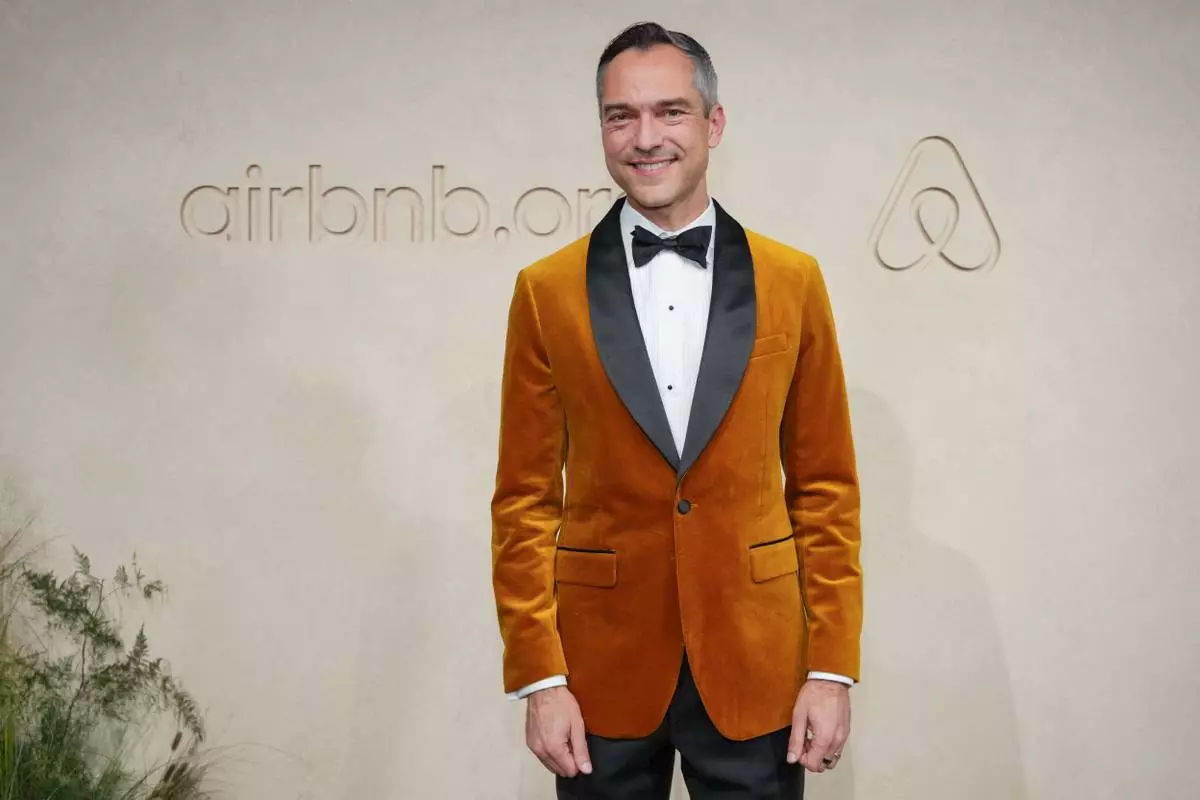
Airbnb Co-founder Nathan Blecharczyk arrives at the Airbnb Gala on Wednesday, Oct. 28, 2026, at Milk Studios in Los Angeles. (Photo by Jordan Strauss/Invision/AP)

Airbnb CEO Brian Chesky arrives at the Airbnb Gala on Wednesday, Oct. 28, 2026, at Milk Studios in Los Angeles. (Photo by Jordan Strauss/Invision/AP)
WASHINGTON (AP) — The Justice Department is escalating a criminal investigation over an Alaska Senate candidate who shares a name with the Republican incumbent Dan Sullivan, issuing a raft of new grand jury subpoenas, a person familiar with the matter told The Associated Press on Thursday.
Subpoenas seeking grand jury testimony or documents, along with records preservation demands, were issued after The New York Times reported that Democratic candidate Mary Peltola’s campaign appeared to be involved in recruiting Dan J. Sullivan Jr. as part of an alleged effort to confuse voters in the hotly contested race.
More subpoenas were expected to be sent Thursday, according to a person briefed on the investigation who spoke on the condition of anonymity because they were not authorized to publicly discuss the ongoing probe. Neither the recipients of the subpoenas nor the total number of them were immediately clear.
It's the latest aggressive move by the Justice Department in a politically sensitive matter in the weeks leading up to Tuesday's midterm elections. The Justice Department has historically avoided taking overt investigative actions against candidates in the weeks before an election, or other public steps that could be perceived as attempting to influence a political outcome.
Election law experts said they were unaware of what federal law would justify the investigation.
“I don’t know what they’re putting out subpoenas to investigate because I don’t know what federal violations are implicated that DOJ would have jurisdiction over,” said Justin Levitt, a former Department of Justice official under President Joe Biden. “Sure makes it seem like the point of the investigation is to become the story.”
The information came to light the same day that the U.S. Justice Department issued subpoenas to California officials in an escalation of its scrutiny of local election administration. Earlier Thursday, a federal judge in California appointed a special master to evaluate claims by the Trump administration that the state has some 20,000 noncitizens on its voter rolls. That action came less than 24 hours after the judge rejected the Justice Department’s demand that California sequester the ballots until citizenship can be verified, a ruling the department immediately appealed.
For months, the Justice Department has been looking into allegations that Dan J. Sullivan Jr. entered the race to mislead voters and help Peltola’s campaign. The potential targets of the Justice Department’s investigation are unclear, but President Donald Trump earlier this week called for the criminal prosecution of Peltola and her campaign.
The new subpoenas were confirmed by a person briefed on the investigation who spoke on condition of anonymity because they were not authorized to publicly discuss the ongoing probe.
Attorney General Todd Blanche in a Fox News interview on Wednesday said he wouldn’t discuss any criminal investigations, but accused Democrats of “cheating.”
“They are trying to take votes away from the incumbent, not by running an election, not by running on issues but by putting up a person with the same name,” Blanche said.
The race is among a handful of Senate contests this year expected to determine control of the chamber. Trump had previously directed his Department of Justice to sue to block certification of the Senate race should Democrat Mary Peltola defeat Republican Sen. Dan Sullivan.
In an updated filing Thursday, the government said the details in the Times story contradicted statements given earlier by attorneys for Democrats and the Peltola campaign, in which they said they “lack knowledge” of how Dan J. Sullivan came to run for the office.
Dan J. Sullivan has long denied he was running at Democrats’ behest and has said he had no contact with Peltola’s campaign. “Zero, none, zilch,” he said in June after announcing his run.
Separately, Republican Alaska Gov. Mike Dunleavy has ordered an investigation into Peltola, saying the newspaper's reporting “reveals disturbing new evidence of an organized effort to manipulate Alaska’s elections.”
“Deliberately tricking voters into casting their ballots for someone else strikes at the integrity of our elections,” Dunleavy added, noting that the reporting “substantially supports” earlier findings by the state’s elections board into the matter.
Trump on Thursday cast doubt on whether Peltola would be seated in the Senate even if she won the election. “Well, you’re going to have to see what happens," the president told reporters on his way to a rally in South Carolina. "It’s hard to believe that she could even be allowed to run.”
Later, as he rallied for GOP Sen. Darline Graham, Trump said he felt Peltola “actually should be removed from the ballot and prosecuted."
Peltola’s campaign didn’t immediately respond to a message Thursday seeking comment on Dunleavy’s order. But during a campaign stop in Soldotna, Peltola, a former congresswoman, suggested the Times’ report was a “distraction” from issues such as Sen. Sullivan’s support of the war in Iran.
“This is just another distraction. It’s another diversion,” she said in a video posted online. “This is all stuff to sell newspapers. This is all stuff to get subscriptions.”
The Democratic Senatorial Campaign Committee, which The New York Times' story alleges was involved in the effort to recruit the other Dan Sullivan, didn't immediately respond to a request for comment.
The situation in Alaska isn't that unusual. Political parties often support extra candidates on ballots to try to pull votes from their rivals. If state courts allow it, legal experts say, the federal government has no role challenging the results.
In Ohio’s Senate race, Republicans have been tied to an effort to boost a socialist on the ballot who would pull votes from the Democratic candidate challenging Sen. Jon Husted.
On Thursday, Vice President JD Vance didn’t go as far as Trump did in calling for Peltola to be prosecuted but said he supported a probe into possible election fraud.
“I mean, she is a person who, for months now, has pretended that she has had nothing to do with the fact that they have put a fraudulent person, a person explicitly designed to confuse Alaska voters, on the ballot,” Vance told reporters ahead of a campaign trip to Texas. “She is trying to steal a Senate seat from the voters of Alaska, and it’s disgraceful.”
Earlier this year, a top state elections official ruled Daniel J. Sullivan Jr., a retired schoolteacher, ineligible for the primary ballot, concluding that his declaration of candidacy was filed “with a purpose to confuse or mislead and to thereby compromise the ballot’s fairness or neutrality.”
The case went to the Alaska Supreme Court, which ruled he was qualified to run. Alaskan voters will see “Dan S. Sullivan” identified as a “registered Republican” and “incumbent” on their ballots, while “Daniel J. Sullivan Jr.” will not have a party affiliation.
The New York Times reported that interviews, text messages and documents prepared for a potential lawsuit showed Peltola’s team aimed to coax candidates into the race, with the aim of splitting support for the GOP senator.
Asked about the reporting on Wednesday, Trump told journalists, “I think they should be prosecuted.”
Meg Kinnard can be reached at http://x.com/MegKinnardAP. AP writers Seung Min Kim, Nicholas Riccardi and Ali Swenson contributed to this report.

President Donald Trump speaks with reporters before boarding Air Force One, Thursday, Oct. 29, 2026, at Joint Base Andrews, Md. (AP Photo/Alex Brandon)

Vice President JD Vance speaks to the media before boarding Air Force Two for Texas, at Joint Base Andrews, Md., Thursday, Oct. 29, 2026. (Evan Vucci/Pool Photo via AP)

FILE - This combination photo shows Sen. Dan Sullivan, R-Alaska, left, in Palmer, Alaska, Aug. 17, 2026, and a candidate in Alaska's Senate race, Dan Sullivan, right, in Petersburg, Alaska, July 3, 2026. (AP Photos/Mark Thiessen/Becky Bohrer, File)
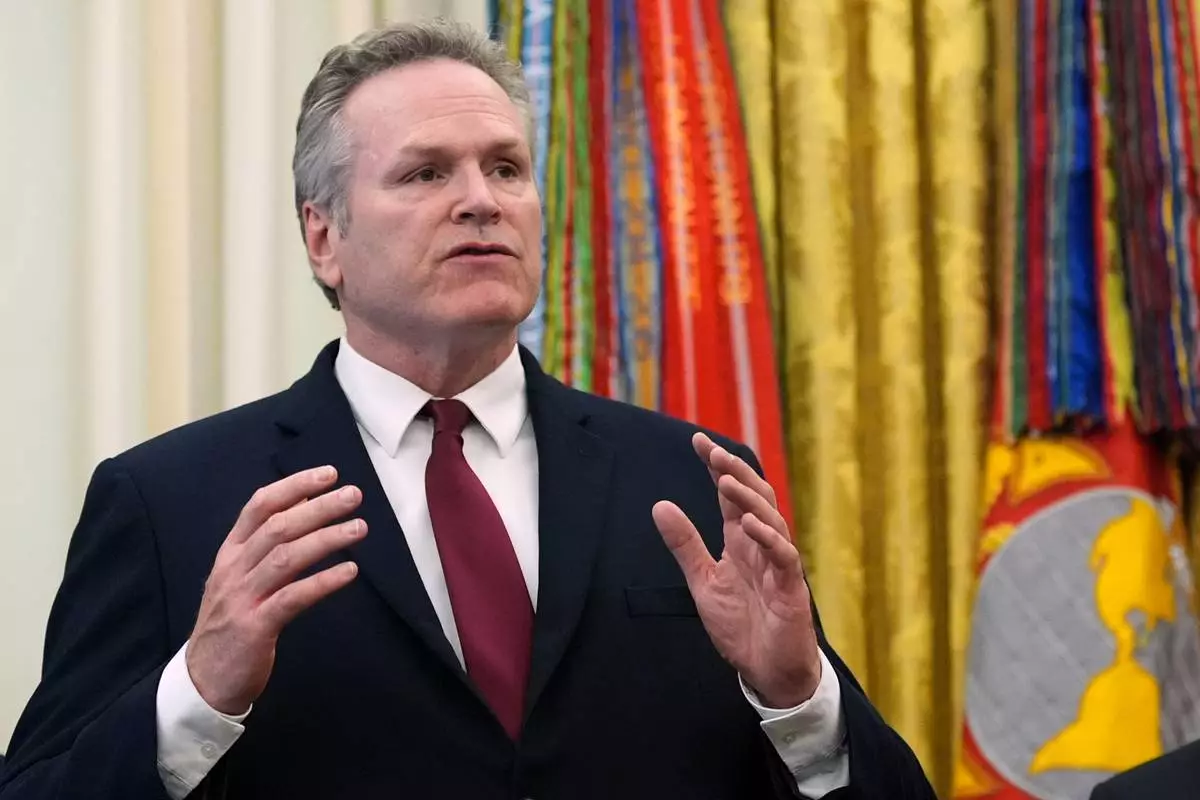
FILE - Alaska Gov. Mike Dunleavy speaks in the Oval Office of the White House during an event with President Donald Trump, Sept. 30, 2026, in Washington. (AP Photo/Alex Brandon, File)
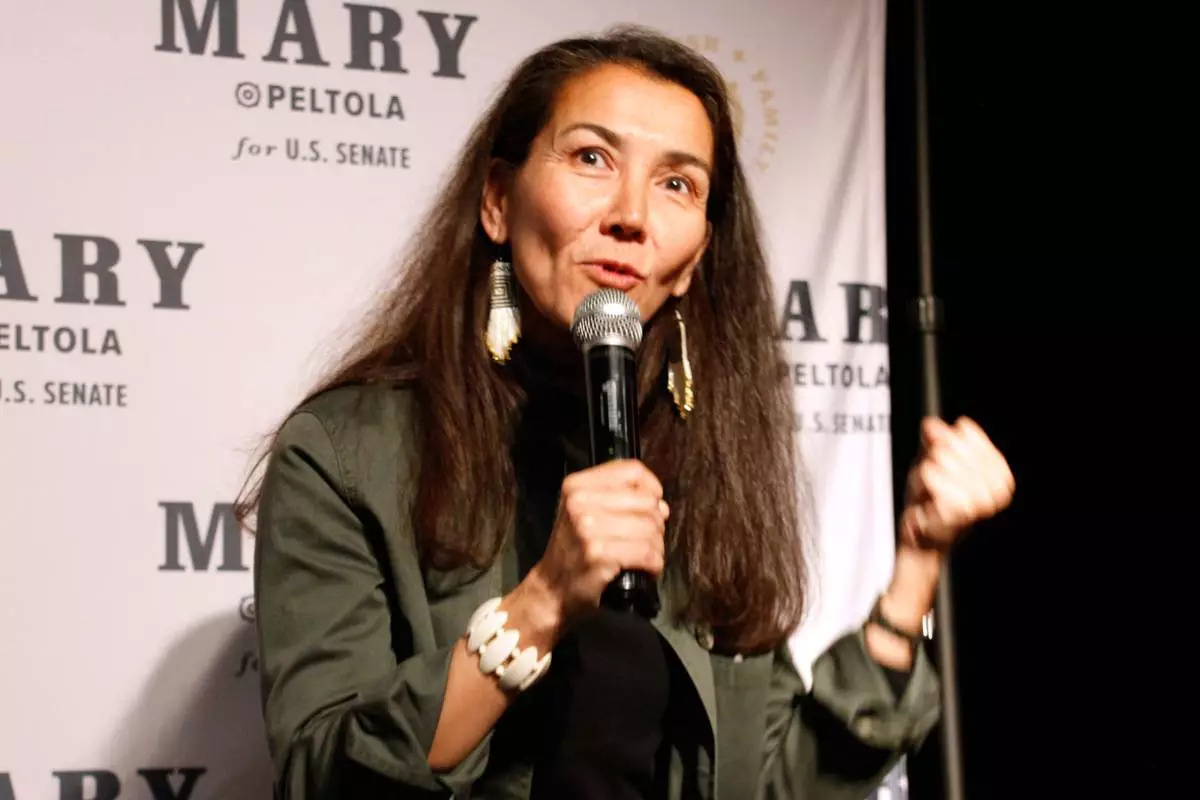
FILE - Mary Peltola, a Democrat running for the U.S. Senate seat in Alaska, addresses supporters at an election watch party on Aug. 18, 2026, in Anchorage, Alaska. (AP Photo/Mark Thiessen, File)