GEORGETOWN, Guyana (AP) — King Charles III arrived Thursday in Guyana, a former British colony that was the site of one of the biggest slave revolts in the Caribbean during the colonial era.
Charles landed in the South American country following an invitation from Guyanese President Irfaan Ali, who has publicly requested an apology as some Caribbean leaders press for slavery reparations.
Charles, who is on a nine-day official trip in the Caribbean, descended from the plane in a tan suit and greeted Ali, who was wearing an all-ivory Jodhpuri suit.
Guyana is a diverse country of some 840,000 people that recently became one of the world’s largest offshore oil producers after massive oil deposits were discovered off its coast more than a decade ago.
About 36% of Guyana’s population is Black while 50% is East Indian, descended from indentured servants from India brought to the South American country after slavery was abolished.
Charles last visited Guyana in 2000 as a prince.
He is scheduled to meet with Ali, business owners and elected leaders of Amerindian villages known as “toshaos” during his two-day stay in Guyana.
Hilary Beckles, head of the Caribbean Reparations Commission, said at a recent press conference that the region has never been better prepared to confront Britain and the monarchy about its links to slavery.
“The region is mobilized, the governments are mobilized," he said.
The commission was established by regional governments to make Britain and other former European slave-trading nations pay reparations for their role.
In a recent interview with ITV News, Ali said Charles has “rightfully recognized slavery as the darkest days in human history.”
“Moving to the apology is the next step,” he added. “You exploited the region. You destroyed lives. You created underdevelopment.”
The British government has consistently rejected demands for either an apology or reparations.
Charles was previously in the Bahamas and is scheduled to arrive Friday in Antigua and Barbuda for the Commonwealth Heads of Government Meeting and meet with leaders of 56 member states. Talks are expected to focus on climate, trade and development, but some Caribbean leaders have said slavery reparations should dominate conversations.
Coto reported from San Juan, Puerto Rico.
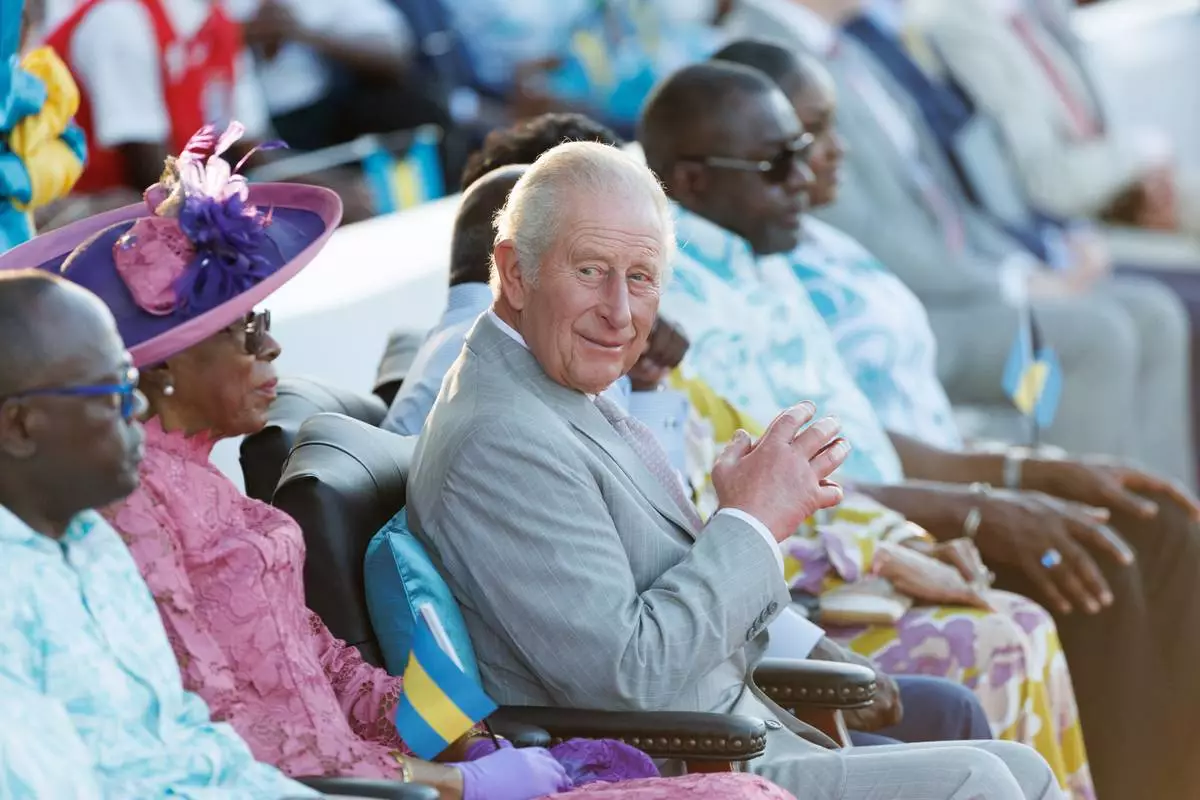
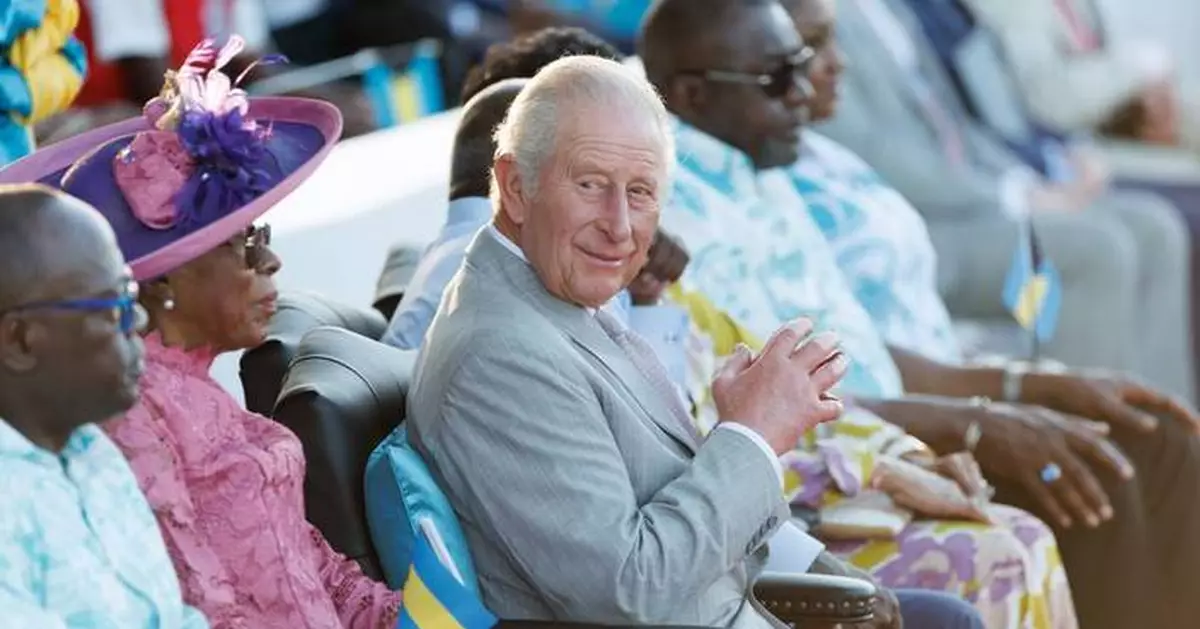
Britain's King Charles III watches a youth performance at The Future Bahamas Youth Rally and Exhibition at Clifford Park in Nassau, Bahamas, Tuesday, Oct. 27, 2026. (AP Photo/Tim Aylen)
Democrats, election officials and voting rights groups have long wondered whether President Donald Trump, upon his return to the Oval Office, would again attempt to overturn an election when his party is trailing.
It's no longer hypothetical.
Trump's Department of Justice issued subpoenas in probes of a Democratic Senate candidate in Alaska on Thursday, and subpoenas were issued Oct. 21 and Oct. 24 to election officials in California. The agency had already pursued civil actions there that were roundly criticized by legal analysts and, in California, by multiple judges.
The Republican president previously told his lawyers to sue to block a possible win by Democrat Mary Peltola in Alaska's Senate race because of the presence of a second candidate on the ballot with the same name as the Republican incumbent, Sen. Dan Sullivan. After a New York Times report Wednesday that the Peltola campaign appeared to be behind the second Sullivan candidacy, Trump told reporters she should be prosecuted.
Trump for years has claimed elections are rigged when he or his party loses, and this time is no exception. He has used his midterm rallies to say Democrats cheat, criticize election officials by name and call the ranked choice voting system in Alaska, which might hold the key to Senate control, a scam.
But the use of his power to pursue criminal penalties against candidates running against his party — or who simply run elections and tally the votes — elevates Trump’s crusade beyond mere rhetoric. His recent actions indicate that he is willing to use the power of the presidency to try to reverse a possible loss as the GOP struggles to hold its control of Congress in Tuesday's elections.
“For at least the last year and a half, they've been laying that groundwork,” said Theresa Lee, a senior attorney with the ACLU. “We've been preparing for just as long, if not longer.”
In California, the Department of Justice sued to require election officials to set aside ballots from up to 20,000 people the administration said were possible noncitizens, though the state said the list appeared riddled with errors. First, a panel of appellate judges and then, on Wednesday, a federal judge refused to order local election officials to do so, saying forcing them to change procedures in response to unproven federal allegations would risk the Constitution’s guarantee of state control of elections.
“If the Executive can discount votes and threaten an ongoing election due to unproven allegations, then our democracy is in danger,” District Court Judge David O. Carter wrote as he rejected the Trump administration’s request. “This Court declines to be a party to such process.”
Trump told reporters this week that he would accept the election results, but with his typical caveat: “If they’re honest elections,” he said.
That follows a pattern. Trump has preemptively claimed that upcoming elections will be rigged and labeled elections he's lost as stolen. It started with the 2016 Republican Iowa caucuses, when he came in second to Texas Sen. Ted Cruz.
“Ted Cruz didn’t win Iowa,” Trump said at the time. “He stole it.”
Democrats and other groups that oppose Trump have been concerned that his words would turn into directives to have his administration interfere in the midterms. They have been running exercises for months and have lawsuits pre-written. They also plan to have tens of thousands of people monitoring the polls on Election Day.
So far, early voting has been quiet, with about 35 million people already casting ballots without any notable disruption.
In that respect, this year's election so far resembles 2025's off-year elections in New Jersey, Virginia and a handful of other states. Democrats braced for possible Trump action then, but the election proceeded with no major issues. But the Justice Department's more aggressive actions already make 2026 different from any election in recent memory.
Even before this week, the Justice Department seized ballots and election records related to the 2020 presidential election in Georgia’s Fulton County, and the administration launched a sweeping investigation of that vote, though it has yet to turn up evidence supporting Trump's false claims of fraud.
It's in Alaska, where the Senate race could determine which party controls the chamber, that Trump has been most aggressive.
Scholars believed Trump's lawsuit seeking to stop a certification of a Peltola win until it could be determined whether voters were confused was the first time the federal government tried to intervene in local approval of an election since the Civil Rights era.
While controversial, the dynamic in Alaska is not that unusual. Political parties often support extra candidates on the ballot to try to pull votes from their rivals. If state courts allow it, legal experts say, the federal government has no role in challenging the results.
Derek Muller, a Notre Dame law professor, wrote that the Alaska lawsuit's legal argument to halt certification was “one of the worst ones I’ve ever seen.” He said that should reassure the public that Trump won't be able to change election outcomes.
“The notion that there's going to be something systemic that's going to thwart the will of the voters seems much more speculative," he said. “A lot of the conduct seems impulsive rather than strategic and planned.”
On Thursday afternoon, after Trump's subpoenas against California became public, Muller added: “It's trying to show force against California, to pick on Democrats in one state. But it's not designed to win any elections or election litigation.”
The courts have repeatedly rebuffed the administration, in many cases because the Constitution gives the president no direct power over how elections are run. Courts put on hold two Trump executive orders seeking to change voting procedures. The administration also has lost more than two dozen cases trying to get detailed voter information from the states.
That resembles 2020, when Trump and his allies tried to overturn his loss to Democrat Joe Biden and in the process lost dozens of lawsuits.
Pat McCrory, a former Republican governor of North Carolina, is part of Right Count, a group of conservatives pushing back against election conspiracy theories and intervention in local elections. He said he's confident the system will hold.
“The only thing that protects us from anarchy is this thin piece of paper called the Constitution,” McCrory said. “That thin piece of paper is, to me, a cement wall.”
It's one that many analysts expect will continue to stymie Trump in the courts.
“The courts are likely to throw most, if not all, of these charges out,” said Matt Dallek, a political historian at George Washington University. “But this is a way of intensifying the signal to Trump’s supporters that the elections are rigged.”
The Justice Department in 2020 refused to join Trump's allies in litigation. In his second term, Trump has pushed out career staff and stocked his administration with people who helped him challenge the 2020 election. That's led to mounting concern he could deploy immigration agents, the FBI or even the military to the polls or seize ballots or voting machines, although multiple administration officialshave denied they have such plans.
All of that could happen before courts even have a chance to weigh in, said Brendan Nyhan, a Dartmouth political scientist.
“The threat is that he'll take actions that can't be undone,” Nyhan said.
This story has been updated to correct that Matt Dallek is a political historian at George Washington University, not a political scientist at Georgetown University.
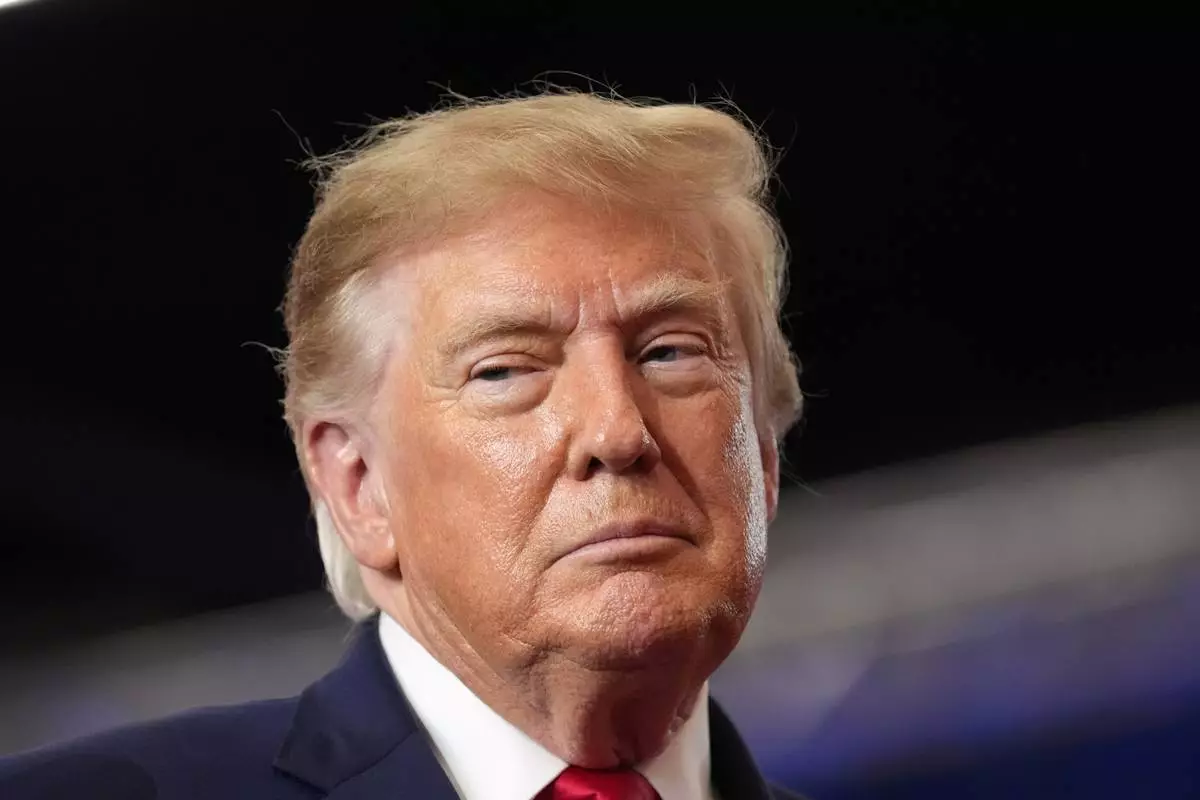
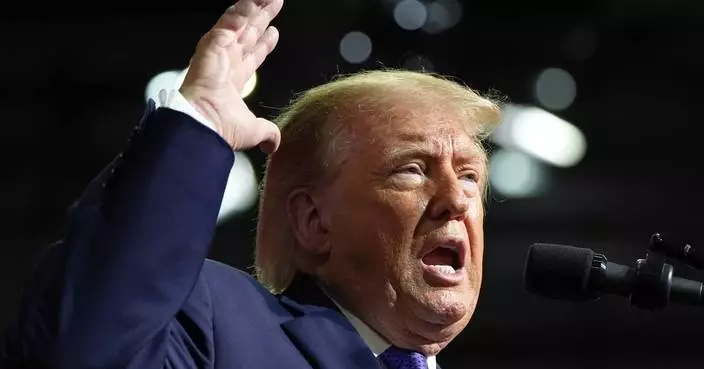
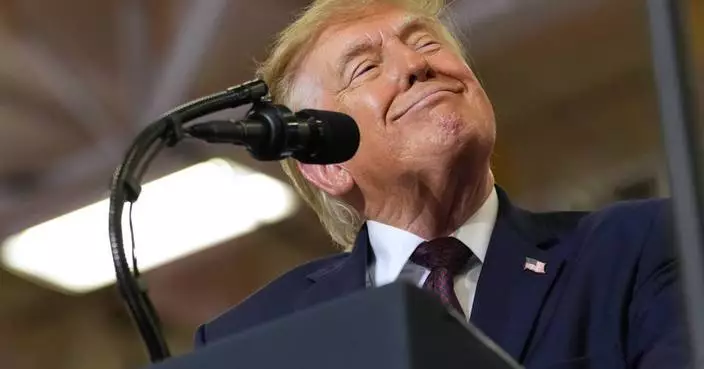
President Donald Trump speaks at a campaign rally at the Lubbock Memorial Civic Center, Tuesday, Oct. 27, 2026, in Lubbock, Texas. (AP Photo/Alex Brandon)

A woman feeds her ballot into a scanning machine at an early voting site in Haverstraw, N.Y., Monday, Oct. 26, 2026. (AP Photo/Seth Wenig)
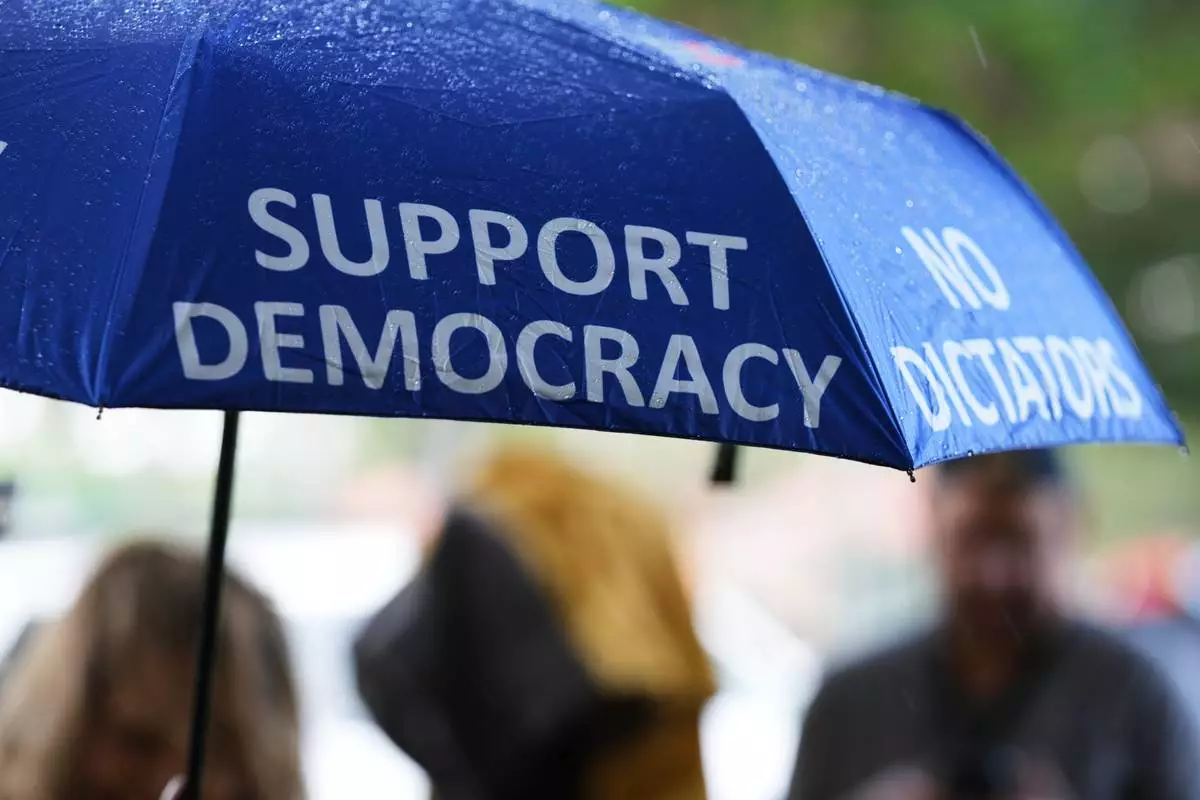
A person carries an umbrella outside a polling location during early voting in the 2026 midterm elections, Tuesday, Oct. 27, 2026, in Coral Gables, Fla. (AP Photo/Lynne Sladky)

Homeland Security Investigations task force officers escort a suspect accused of illegally registering to vote during a federal operation in Commerce, Calif., Monday, Oct. 19, 2026. (AP Photo/Jae C. Hong)