TOKYO (AP) — Asians shares were trading mixed early Friday, as worries about the future of artificial intelligence grew after Alphabet's stock drop dragged on U.S. markets.
Japan's benchmark Nikkei 225 dropped 2.6% to 62,960.60. The Bank of Japan is closing a two-day monetary policy board meeting, but most analysts expect no action this time around after the central bank raised its benchmark rate to 1.25% last month.
The U.S. has also been pressuring Japan to raise rates because of concerns about the weakening yen. In currency trading, the U.S. dollar fell to 157.50 Japanese yen from 157.65 yen. The euro cost $1.1197, up from $1.1181.
Australia's S&P/ASX 200 rose 0.5% to 8,937.60. South Korea's Kospi declined 5.4% to 5,618.76, as shares in SK Hynix and Samsung Electronics both slipped in morning trading.
Shares related to the great market interest in AI have tended to be volatile, because some issues, including chip makers, get pushed up because of that interest, but then may decline because of worries about supplies, for instance.
Hong Kong's Hang Seng added 1.2% to 23,225.69, while the Shanghai Composite lost 0.9% to 3,618.14.
On Wall Street, the S&P 500 fell 0.3% for its first loss in four days, even though the wide majority of stocks rose within the index and across Wall Street. The Nasdaq composite tumbled 1.4%, while the Dow Jones Industrial Average dropped 132 points, or 0.3%.
Alphabet is one of the most influential stocks on Wall Street because it’s one of the largest, and the Class A shares of its stock fell 12.6% for their worst day since they began trading more than 20 years ago.
All told, the S&P 500 fell 23.59 points to 7,720.39 Thursday. The Dow Jones Industrial Average dropped 132.54 to 52,342.56, and the Nasdaq composite tumbled 365.13 to 26,184.72.
In the bond market, the yield on the 10-year Treasury fell to 4.94% from 5.05% late Wednesday. It’s been generally pulling back since it topped 5.30% earlier this month and touched its highest level since 2002.
In energy trading, benchmark U.S. crude gained 2.80% to $104.86 a barrel. Brent crude, the international standard, edged up 2.54% to $117.80 a barrel.
AP Business Writer Stan Choe contributed to this report.
Yuri Kageyama is on Threads: https://www.threads.com/@yurikageyama

FILE - Traders Drew Cohen, left, and Dylan Halvorsan work on the floor of the New York Stock Exchange, Monday, Jan. 26, 2026. (AP Photo/Richard Drew, File)
JERUSALEM (AP) — Final election results have been released in Israel, leaving uncertainty since neither Prime Minister Benjamin Netanyahu's bloc nor the main opposition's has a won a majority in parliament.
Weeks of negotiations to build a majority coalition and name a prime minister likely lie ahead, with another election possible if they fail. One scenario would be Jewish and Arab-led parties opposed to Netanyahu joining forces, a rare and politically controversial move. Another would be some parties that campaigned on ousting Israel’s longest-serving prime minister teaming up with him instead.
Both possibilities have prompted bitter debate in an already deeply divided country.
Here’s what to know about what comes next:
The final vote count released by the Central Elections Committee showed Netanyahu’s bloc won 53 seats in the 120-member Knesset, well below the 68 seats it had controlled at its peak in the previous parliament.
His main opposition, led by Yashar, the party of former military chief of staff Gadi Eisenkot, won 48 seats and Arab-led parties secured the other 19. The count is complete, though the results still need to be certified and submitted to the country’s president by Wednesday.
The election was widely seen as a referendum on Netanyahu, even though Israelis vote on parties, not individuals. His party, Likud, received the most votes overall, but lost support compared with the previous election in 2022. Voter turnout was nearly 78%, the highest since 1999.
Israel's president soon will task someone with forming a government. If multiple attempts fail, the country could have new elections early next year.
Arab-led parties were clear winners in Tuesday’s elections, significantly increasing their total representation in the Knesset and potentially becoming kingmakers in the wrangling to form a governing coalition.
Eisenkot has left the door open to partnering with them under certain conditions, including recognition of the Gaza-based Hamas as an extremist group, but some of his other likely partners have ruled it out.
Netanyahu has refused to form a government relying on Arab parties. Now he and Likud are amplifying allegations they are stealing the election and have asked the elections committee to investigate. Likud has not shared evidence supporting the claim.
Separately, the elections committee has asked the Shin Bet intelligence service to investigate allegations of unspecified foreign interference. While the letter making the request does not mention the Arab-led parties, Netanyahu cited it in arguing that no party should cooperate with them.
Netanyahu's opponents have accused him of using scare tactics and trying to create a narrative to further discrimination against Arab-led parties and Israel’s Arab citizens, who are 20% of the population.
It was not clear who made the latest interference allegations. But Qatar issued a sharp statement denying it had funded “any activities intended to influence” the elections' outcome. Many Israelis see the energy-rich Gulf Arab country as a patron of Hamas, and allegations of its influence have roiled Israeli politics in other cases.
The election was held against the backdrop of the trauma of the Hamas-led attack on Oct. 7, 2023, when militants killed 1,200 people, mostly civilians, and abducted 251 others, and the ensuing wars in Gaza and beyond.
The deadliest day in Israel’s history featured prominently in the campaigns. Israelis tended to be focused on the security failures surrounding Oct. 7 rather than on the humanitarian situation in war-devastated Gaza.
Netanyahu has rejected an investigation into Oct. 7. His supporters say he led the country back from that difficult day and scored important achievements in wars in Gaza, Lebanon and Iran.
Some of Netanyahu’s opponents have said creating a commission of inquiry would be among their first acts in power.
Especially since Oct. 7, many Jewish Israelis view their Arab fellow citizens with suspicion because of their sympathies with other Palestinians.
The country also has been deeply divided by exemptions from military service granted to the rapidly growing ultra-Orthodox population. The exemptions are especially contentious after three years of wars, with nearly 1,000 soldiers and reservists killed.
Netanyahu’s governing coalition has long relied on ultra-Orthodox Jewish parties that have demanded the exemptions remain in place. Eisenkot, who lost his son to combat in Gaza, has vowed to end the exemptions.
Associated Press journalist Cara Anna contributed from Jerusalem.

Pedestrians walk along the waterfront in the old port of Jaffa, a mixed Jewish-Arab neighborhood in Tel Aviv, Israel, Thursday, Oct. 29, 2026. (AP Photo/David Goldman)
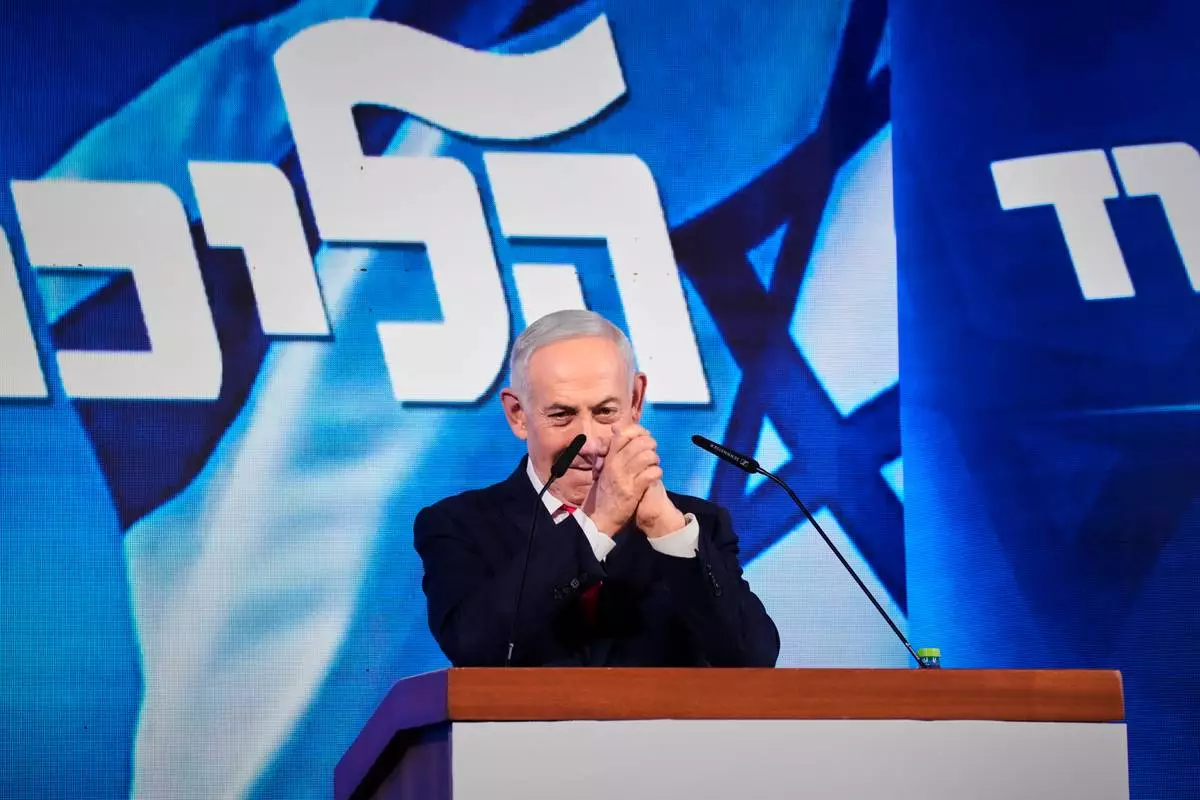
Israeli Prime Minister Benjamin Netanyahu greets his supporters at Likud party headquarters in Jerusalem after the release of the first exit poll results in Israel's general election, Wednesday, Oct. 28, 2026. (AP Photo/Ohad Zwigenberg)
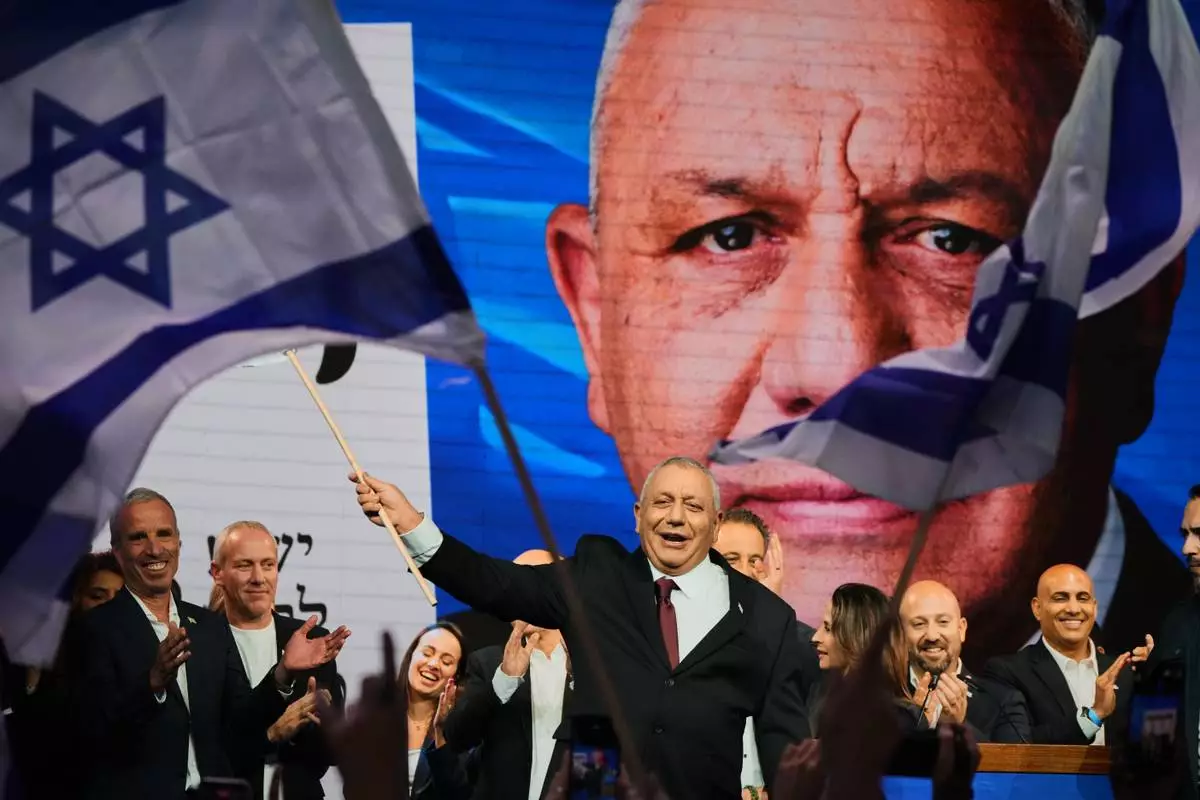
Gadi Eisenkot, leader of the Yashar ("Straight") party, waves an Israeli flag onstage following the release of the first exit poll results in Israel's general election in Tel Aviv, Israel, Wednesday, Oct. 28, 2026. (AP Photo/Ariel Schalit)

Supporters of Israeli lawmaker Mansour Abbas's Raam party applaud and wave party flags after the release of the first exit poll results in Israel's general election, in Sakhnin, Israel, Tuesday, Oct. 27, 2026. (AP Photo/Mahmoud Illean)
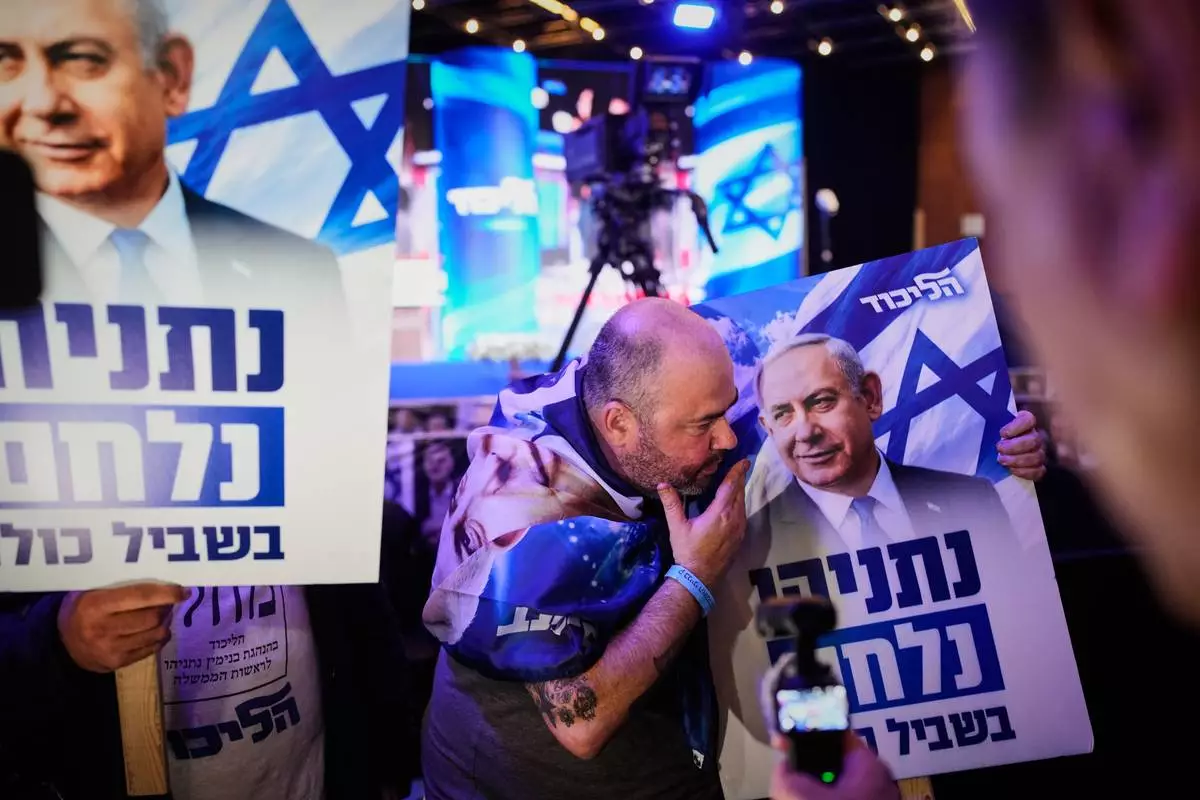
Supporters of Israeli Prime Minister Benjamin Netanyahu react to the release of the first exit poll results in Israel's general election in Jerusalem on Tuesday, Oct. 27, 2026. (AP Photo/Ohad Zwigenberg)
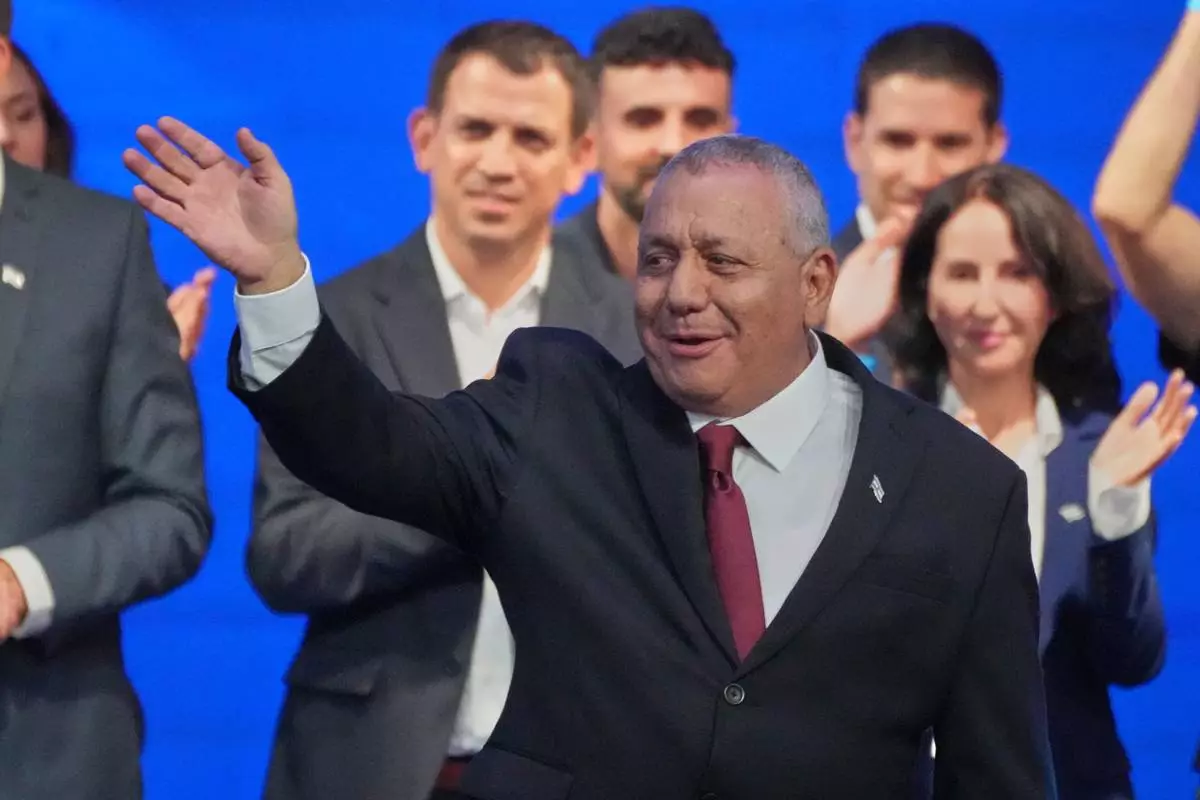
Gadi Eisenkot, leader of the Yashar ("Straight") party, waves to supporters after the release of the first exit poll results in Israel's general election in Tel Aviv, Israel, Tuesday, Oct. 27, 2026. (AP Photo/Ariel Schalit)
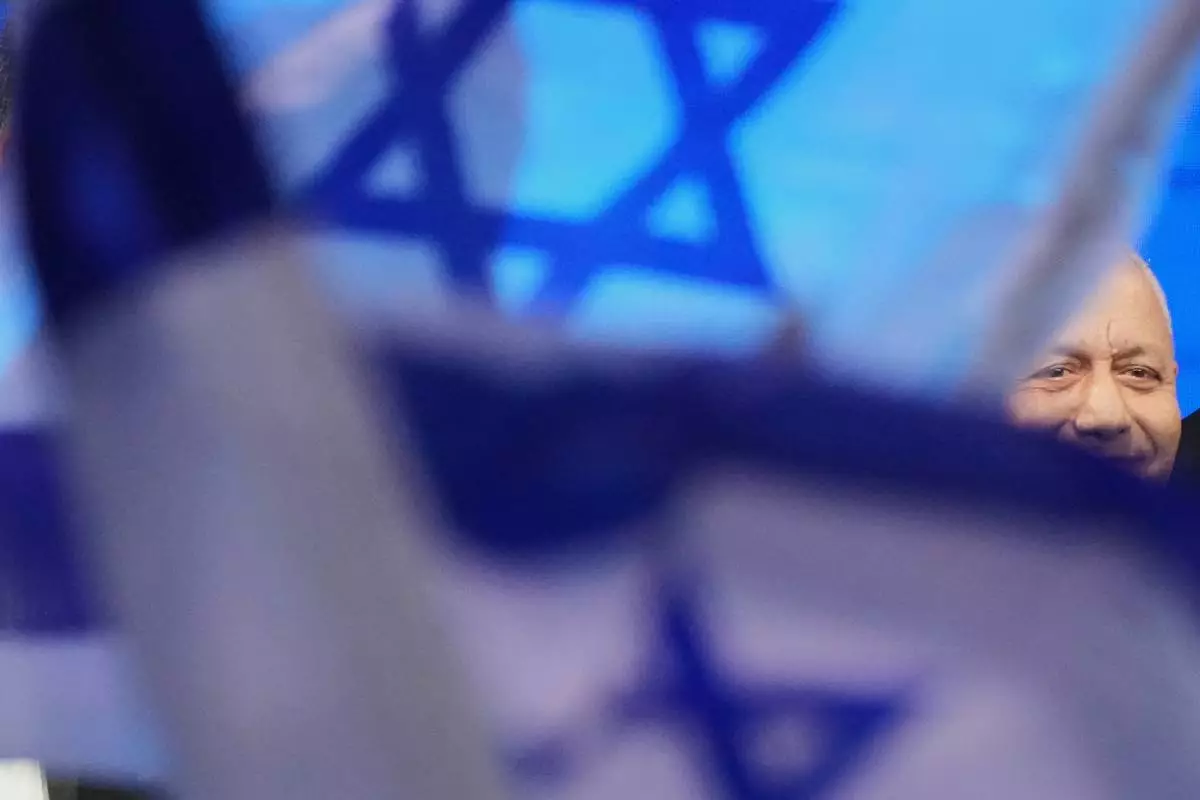
Gadi Eisenkot, leader of the Yashar party, is partially obscured by Israeli flags as he greets supporters after the release of the first exit poll results in Israel's general election in Tel Aviv, Israel, Tuesday, Oct. 27, 2026. (AP Photo/Ariel Schalit)

People embrace and wave flags amid falling confetti as they celebrate early exit poll results for Israel's general election in Tel Aviv, Israel, Tuesday, Oct. 27, 2026. (AP Photo/Oded Balilty)

Supporters of Gadi Eisenkot, leader of the Yashar ("Straight") party, react after the release of the first exit poll results in Israel's general election in Tel Aviv, Tuesday, Oct. 27, 2026. (AP Photo/Ariel Schalit)
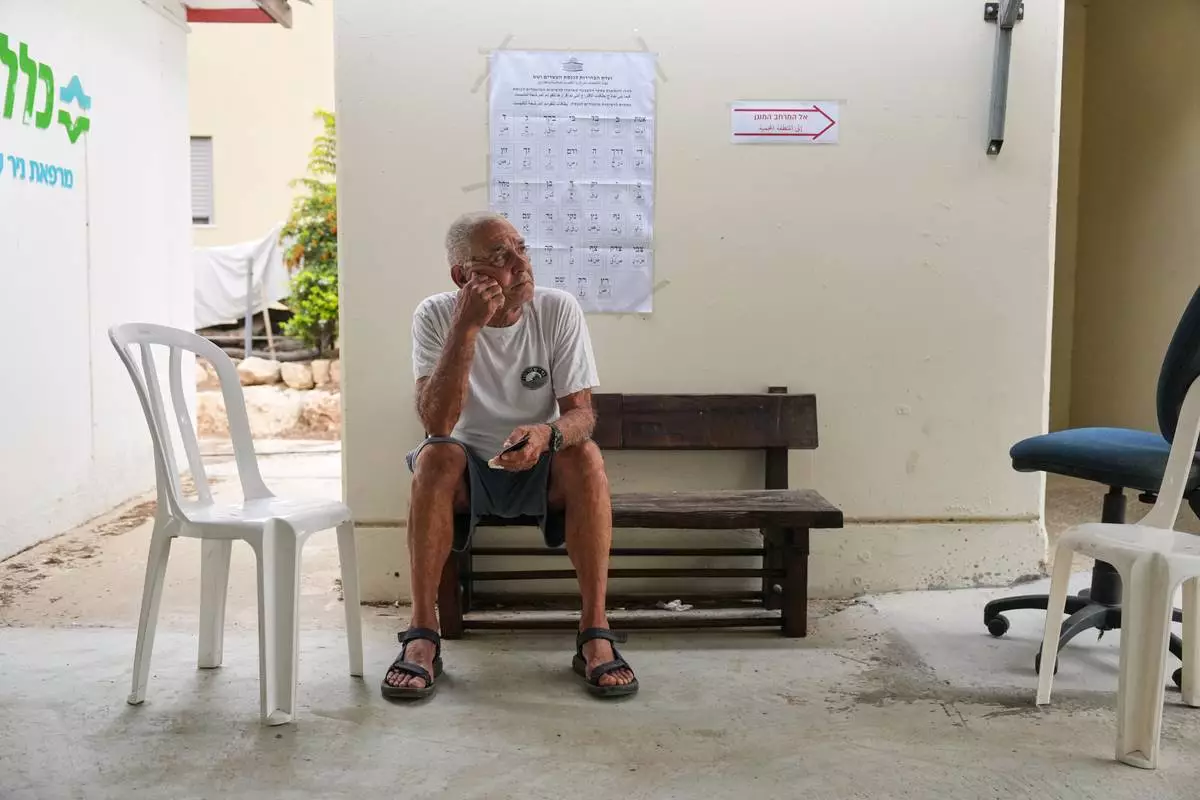
Former Israeli hostage Gadi Moses waits to cast his ballot during Israel's general election at a polling station in Kibbutz Nir Oz, southern Israel, Tuesday, Oct. 27, 2026. (AP Photo/Ariel Schalit)
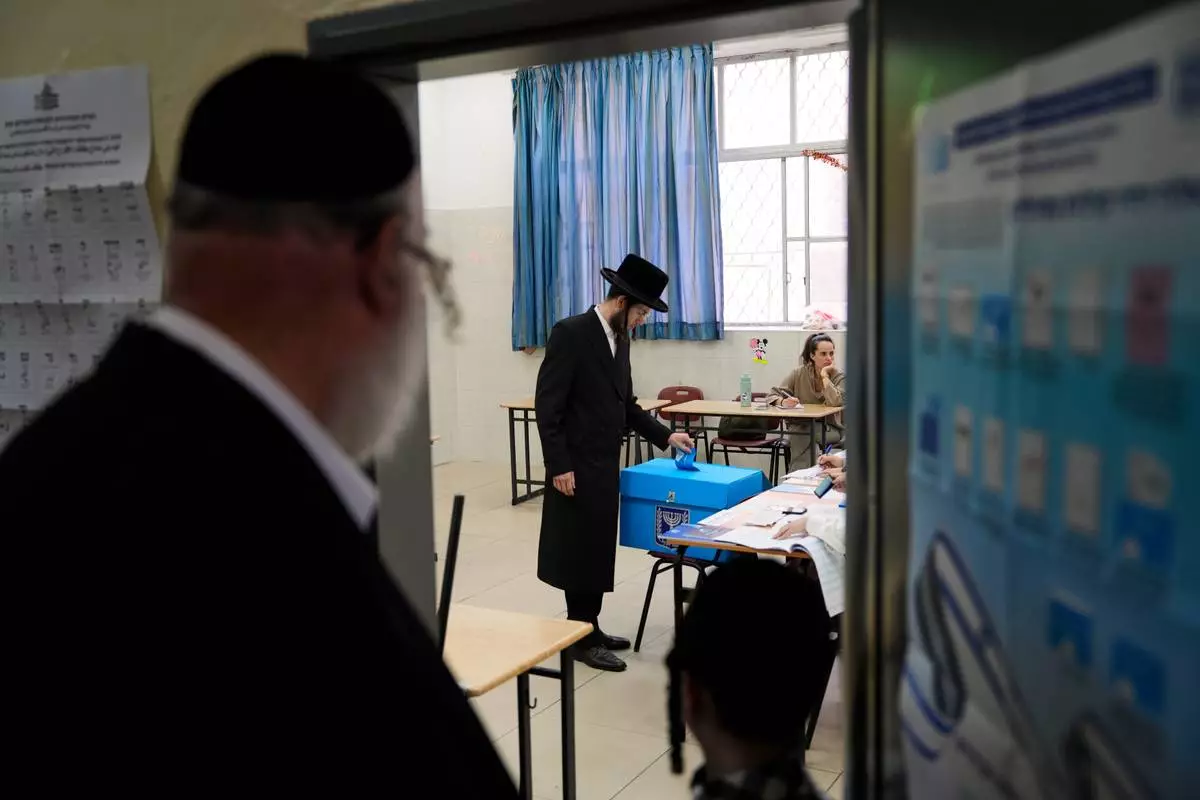
A man casts his ballot at a polling station during Israel's general election in Haifa, Israel, Tuesday, Oct. 27, 2026. (AP Photo/Baz Ratner)
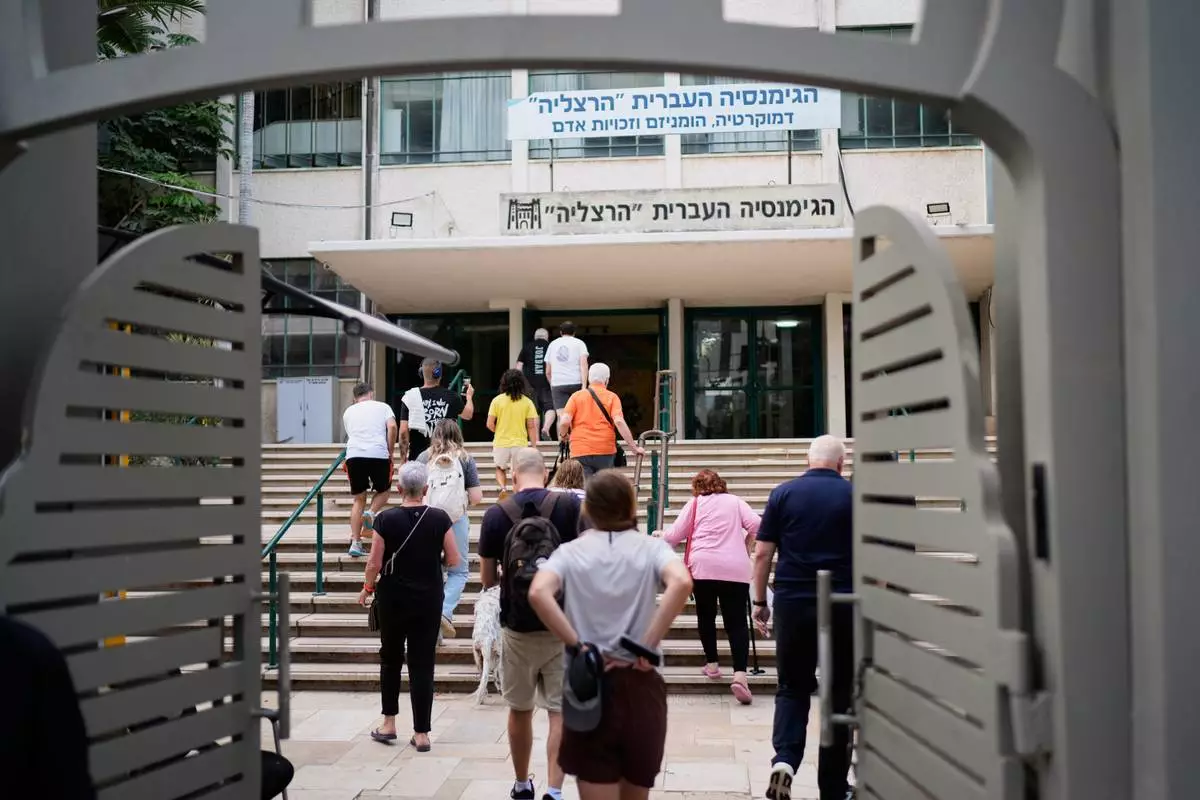
Voters arrive at a school used as a polling station during Israel's general election in Tel Aviv, Israel, Tuesday, Oct. 27, 2026. (AP Photo/David Goldman)
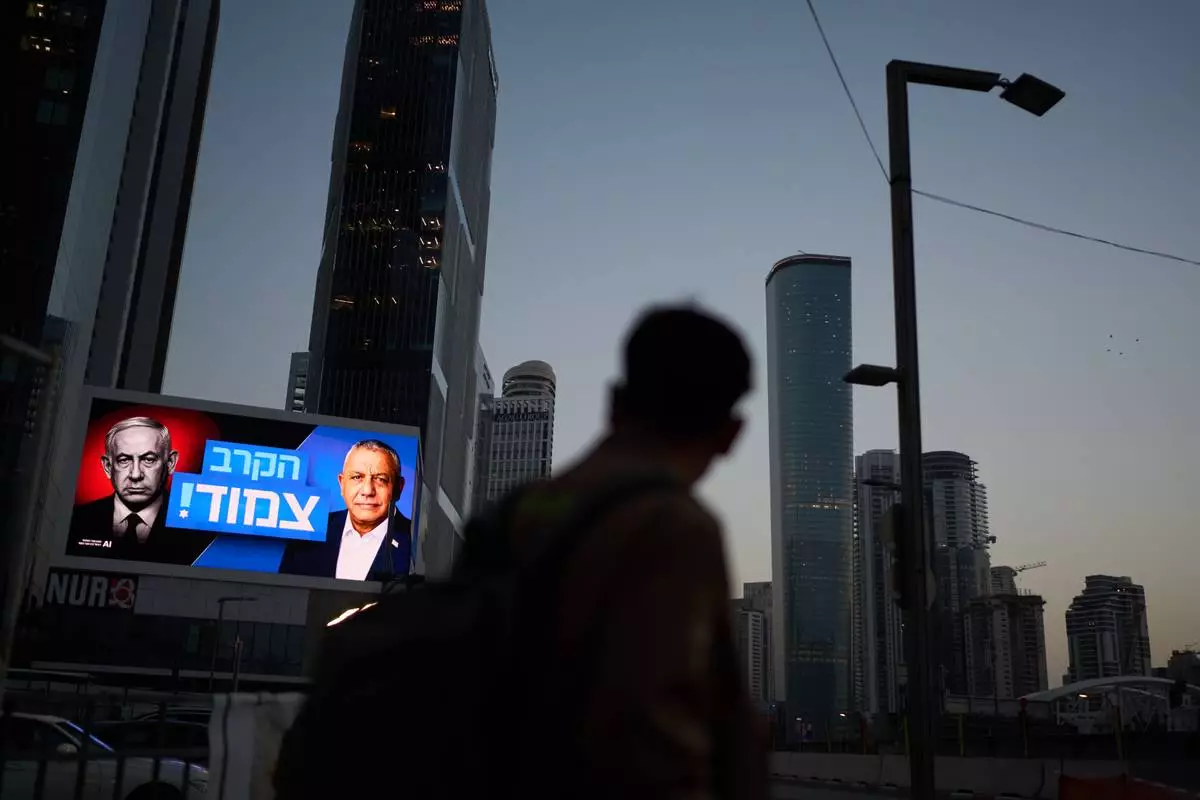
A pedestrian passes a campaign billboard featuring Israeli Prime Minister Benjamin Netanyahu, left, and his main rival, opposition candidate Gadi Eisenkot, with a message in Hebrew that reads "The race is tight," Friday, Oct. 23, 2026, in Tel Aviv, Israel. (AP Photo/David Goldman)
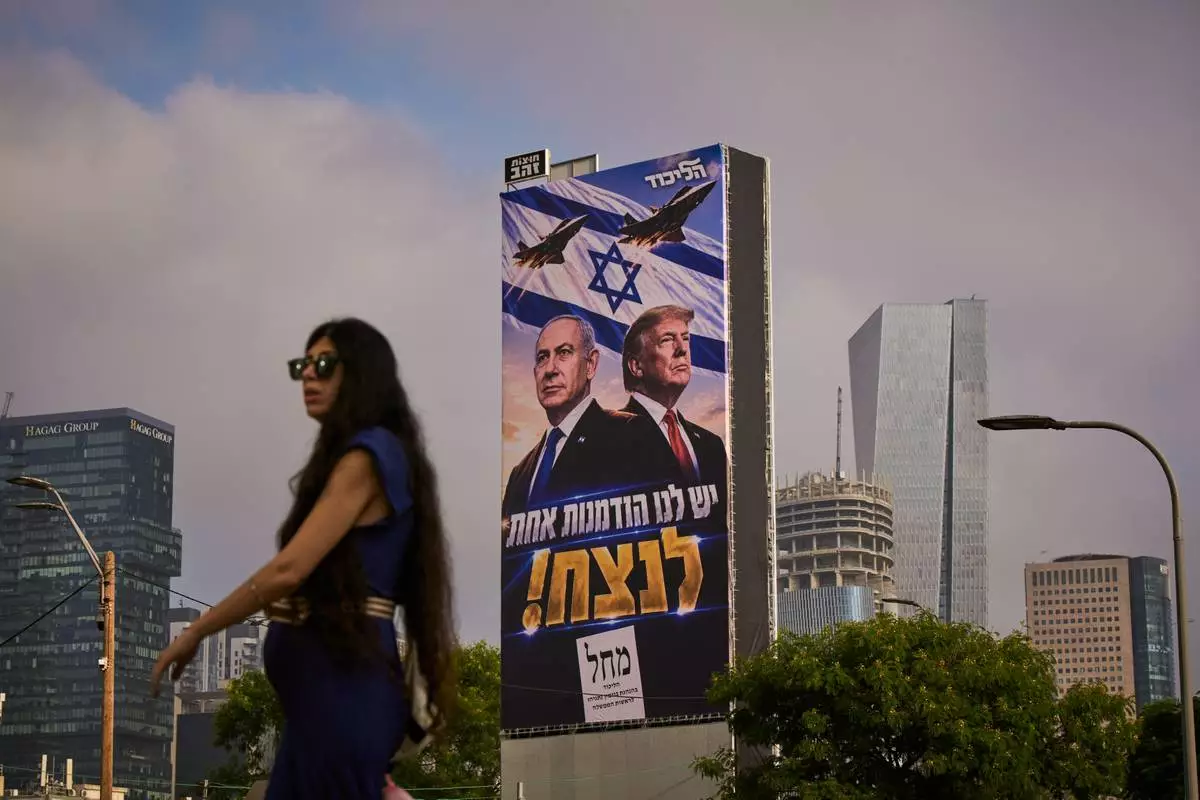
A woman walks past a Likud Party campaign billboard featuring U.S. President Donald Trump and Israeli Prime Minister Benjamin Netanyahu, with a Hebrew message reading, "We have one opportunity to win," in Tel Aviv, Israel, Monday, Oct. 26, 2026. (AP Photo/Oded Balilty)