Skip to Content Facebook Feature Image

In Afghanistan, musicians defy music ban to keep traditions alive

News

In Afghanistan, musicians defy music ban to keep traditions alive
News

News

In Afghanistan, musicians defy music ban to keep traditions alive

2026-10-30 13:03 Last Updated At:13:11

KABUL, Afghanistan (AP) — There was a time when music would fill many of Kabul’s streets, wafting out of cafes and restaurants, seeping out of homes in the warren of alleys that make up the Afghan capital’s music district.

Those days are long gone.

More Images
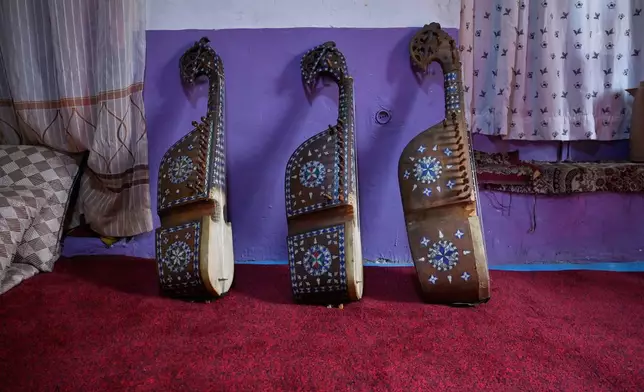
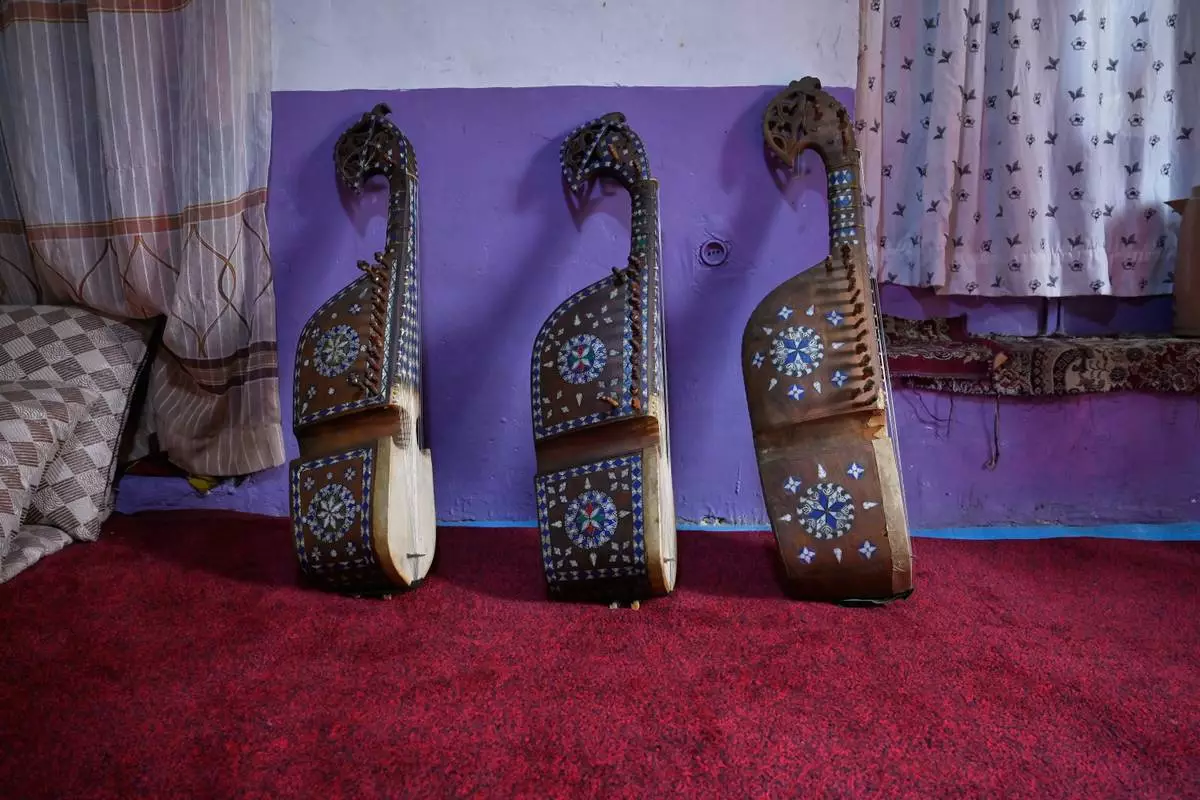
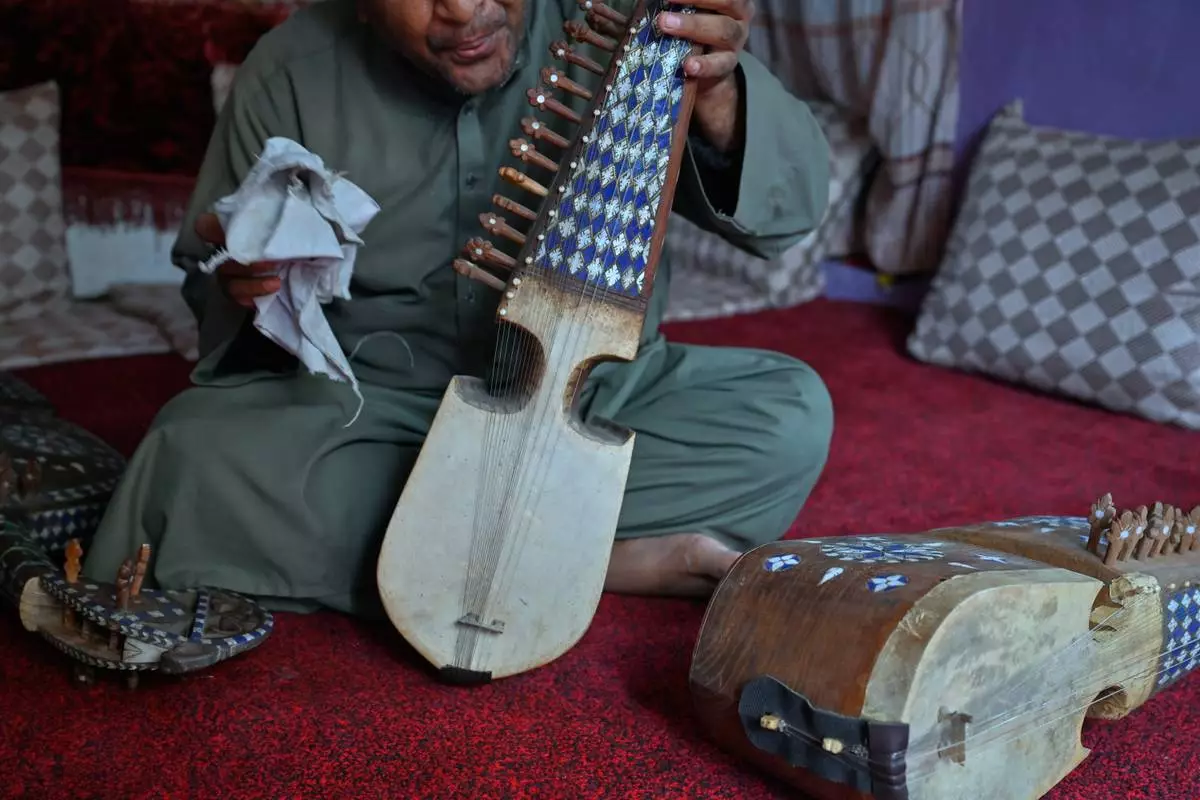
Rubabs, traditional stringed instruments belonging to a former music teacher who closed his family's instrument shop following the Taliban takeover in 2021, lean against a wall in Kabul, Afghanistan. Sunday, Oct.11, 2026.(AP Photo/Nava Jamshidi)
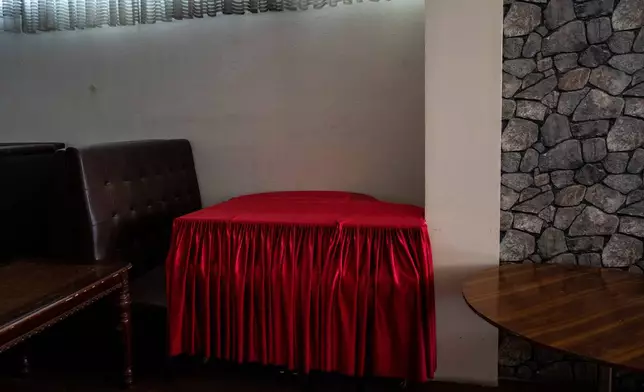
Rubabs, traditional stringed instruments belonging to a former music teacher who closed his family's instrument shop following the Taliban takeover in 2021, lean against a wall in Kabul, Afghanistan. Sunday, Oct.11, 2026.(AP Photo/Nava Jamshidi)

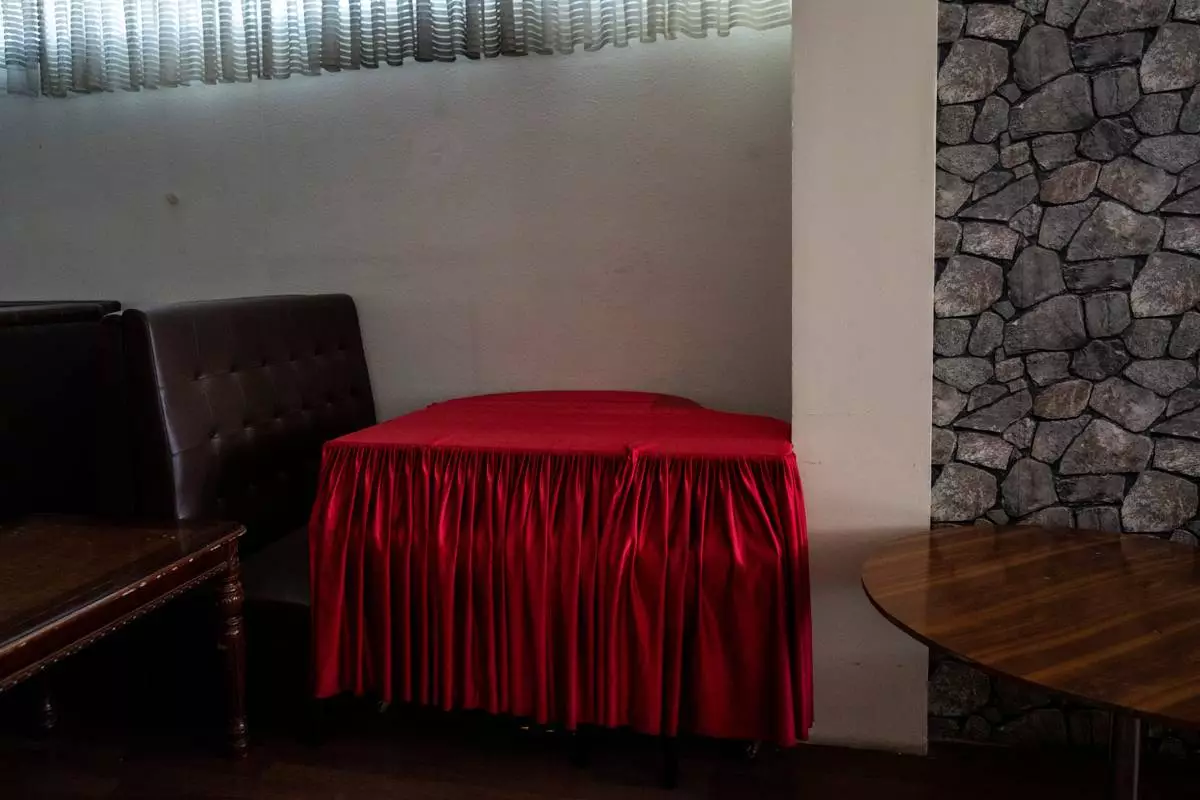
FILE - Red cloth covers a grand piano in a hookah bar in Kabul, Afghanistan, Sept. 21, 2021. (AP Photo/Bernat Armangue, File)
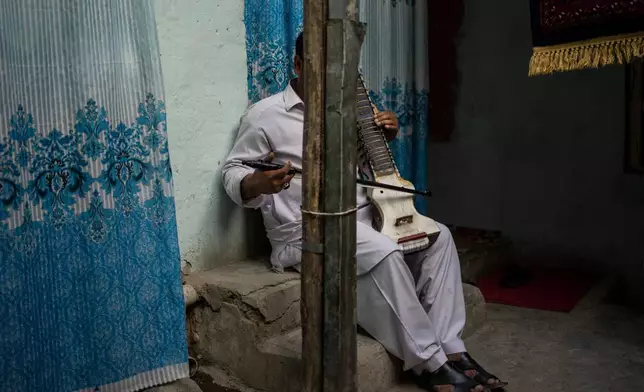
FILE - Red cloth covers a grand piano in a hookah bar in Kabul, Afghanistan, Sept. 21, 2021. (AP Photo/Bernat Armangue, File)

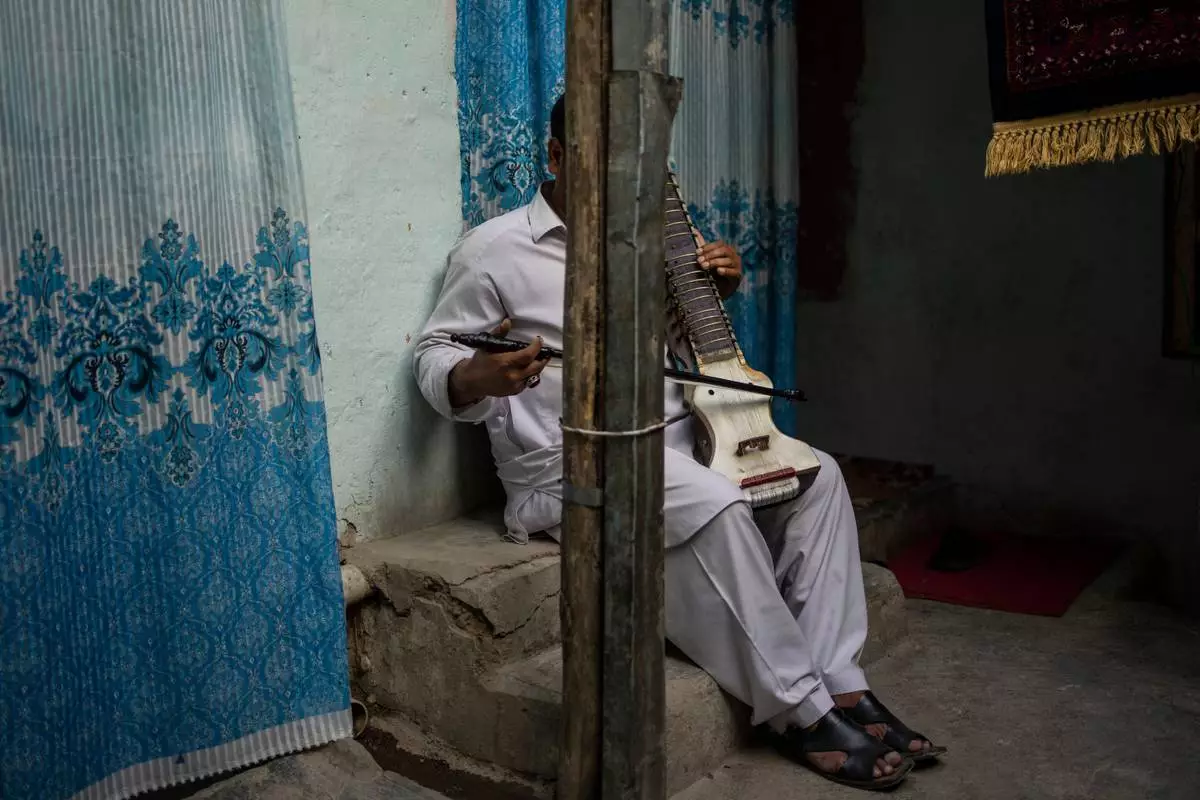
FILE - An Afghan musician poses for a portrait with his dilruba in Kabul, Afghanistan, Sept. 18, 2021. (AP Photo/Bernat Armangue, File)
FILE - An Afghan musician poses for a portrait with his dilruba in Kabul, Afghanistan, Sept. 18, 2021. (AP Photo/Bernat Armangue, File)

FILE - An Afghan musician poses for a portrait with his rubab in Kabul, Afghanistan, Sept. 16, 2021. (AP Photo/Bernat Armangue, File)
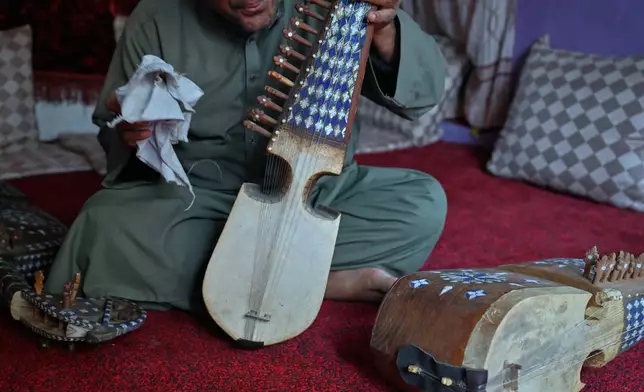
FILE - An Afghan musician poses for a portrait with his rubab in Kabul, Afghanistan, Sept. 16, 2021. (AP Photo/Bernat Armangue, File)

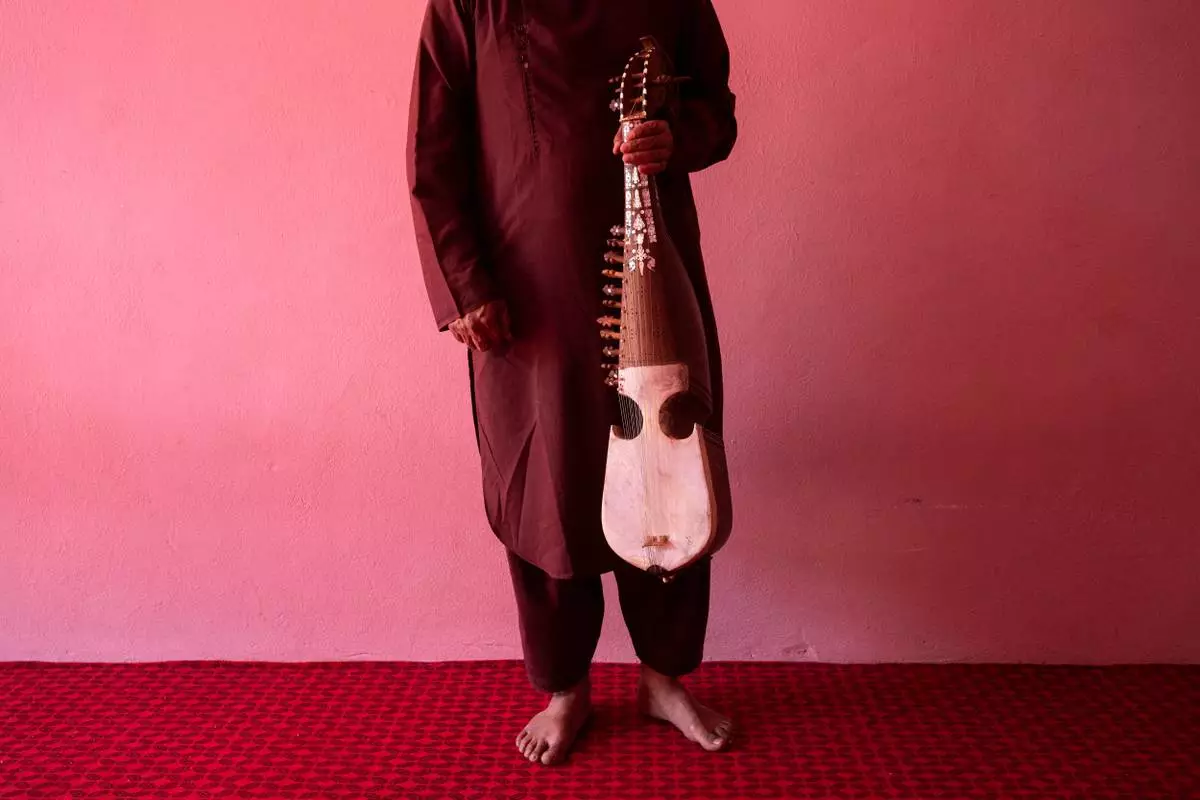
A musician who now works as a manual laborer after closing his family's instrument shop following the Taliban takeover in 2021 holds a rubab, a traditional stringed instrument, in Kabul, Afghanistan, Sunday, Oct. 11, 2026.(AP Photo/Nava Jamshidi)

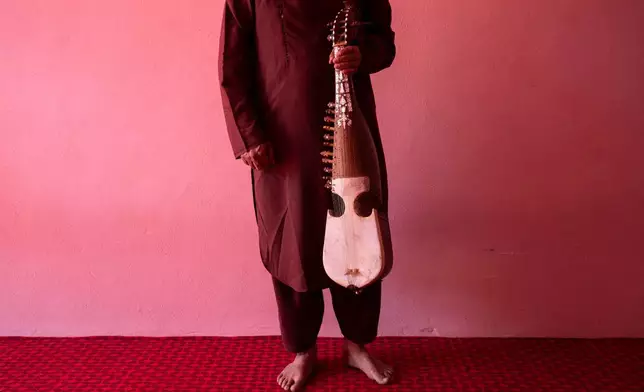
A musician who now works as a manual laborer after closing his family's instrument shop following the Taliban takeover in 2021 holds a rubab, a traditional stringed instrument, in Kabul, Afghanistan, Sunday, Oct. 11, 2026.(AP Photo/Nava Jamshidi)

Since 2022, playing or listening to music has been officially banned throughout Afghanistan. The Taliban who seized power in 2021 have prohibited anything but religious music — unaccompanied vocal chanting — with the ban enforced by the feared morality police of the Ministry for the Propagation of Virtue and Prevention of Vice.

“Music is forbidden in Islam,” said ministry spokesperson Saif ul Islam Khyber, adding that it “serves as a means of joy to Satan,” and that it “often leads to various other vices.” No one, he said, "is permitted to listen to music or to record songs and musical compositions.”

Many musicians and performers fled the country after the takeover. Those who remained sent their instruments abroad or hid them to save them from being smashed by authorities.

The music shops in Kucha-e-Kharabat, the neighborhood in Kabul's old city where many musicians lived, now sell other wares, from food and groceries to clothes and household goods. Anything except musical instruments.

Across Afghanistan, musicians lost their livelihoods overnight.

Yet for many, music is in their blood. It has flowed through their families for generations, and the thought of never playing again is unbearable. Every so often, some pull out their instruments and play in secret. A knock at the door could mean danger. Still, they play.

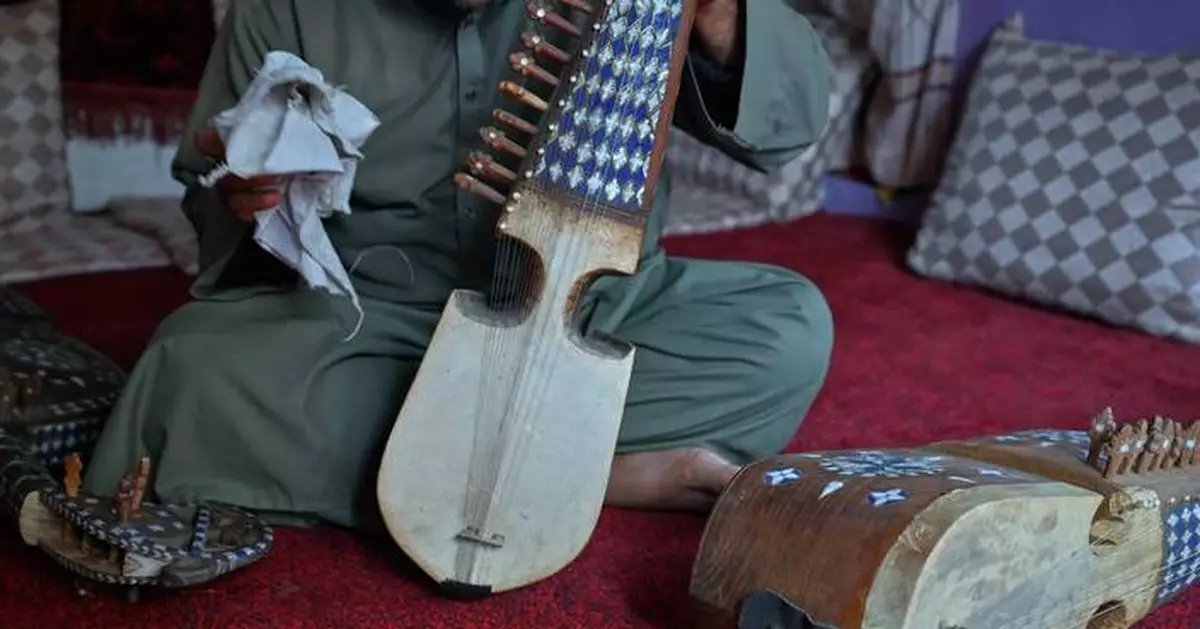
In a small home tucked down a narrow street, a musician pulls out three hand-carved wooden rubabs, a traditional plucked lute-like instrument that is an integral part of Afghan musical culture. Picking one up, he cradles it in his lap for a moment before beginning to play.

The resonant, warm sound of the rubab fills the tiny room.

“As long as I am alive, I will continue to play,” he says. “Perhaps I will do so in secret, but I will not allow (the rubab) to be silent. This is our culture, the traditions of Afghanistan which must not be silent; they must be revived and I will fight for that.”

In another part of Kabul, a singer echoes the rubab player’s determination.

“For now, music may not be performed openly, but no one can ever erase it from our hearts,” the singer said. “Whether in secret or in our dreams, we will continue to sing and play our music.”

Both spoke on condition of anonymity for fear of arrest.

Before the takeover, the singer had performed at concerts and celebrations. He, too, has hidden his instruments: a rubab, a harmonium, a flute, a tabla — traditional Afghan hand drums — and a keyboard.

“The day I brought my musical instruments home and covered them with a tarp felt as if I had been buried alive beneath that very covering, as if I were dead,” he said. “Music gave me life; it brought me fame and recognition. Without music, an artist is like a soulless corpse.”

Sometimes, he stands before his hidden instruments and weeps. “I beg my instruments for forgiveness, explaining that I can no longer play them.”

The rubab player taught music at a school and also owned a traditional musical instrument shop. The son and grandson of musicians, the shop and music were his family business.

But after the takeover, he packed up as many of the instruments as he could and sent them abroad. Others, he hid. The music shop shut down.

Losing the business was a heavy blow. Not just financially, but also emotionally, especially for his father. A short while later, his father died of a heart attack. The musician believes the loss of the shop was something he never recovered from.

Between teaching and the shop, the musician made a very comfortable living, earning about 10,000 afghanis ($150) a day, he said. Now, he barely makes 100 afghanis ($1.50) as a manual laborer. With a wife and children to feed, he’s now desperately poor.

For his part, the singer spent two years unemployed before friends helped him start a small business.

When the music ban was first imposed, a few underground performances continued. Both the singer and the rubab player performed at some.

But now, it’s just too dangerous.

“The situation was becoming increasingly difficult day by day, and government agents were actively searching for individuals like me to arrest them,” the singer said. He hasn’t performed at a secret gathering for four years now. “The risk is simply too high, and I do not want to end up in prison. I have young children.”

The rubab player said a gathering he had performed at was raided by the vice and virtue police after one of those attending took photos and sent them to the authorities. Many participants were arrested, but he managed to slip away. He hasn’t performed at a secret gathering since.

The rubab player learned how to play from his father — an art form handed down through the generations.

Despite the dangers, he says he will start teaching his eldest son.

“It’s a legacy from my father, and I want this heritage to continue,” he said. “From my grandfather to my father, from my father to me, and from me to my son, and so on. This tradition must continue.”

For the singer, music is so enmeshed in Afghan culture and identity that he believes it can never truly be silenced.

“No one can ever truly separate music from Afghan society," he said. "They are as inseparable as the fingernail from the flesh.”
Rubabs, traditional stringed instruments belonging to a former music teacher who closed his family's instrument shop following the Taliban takeover in 2021, lean against a wall in Kabul, Afghanistan. Sunday, Oct.11, 2026.(AP Photo/Nava Jamshidi)
Rubabs, traditional stringed instruments belonging to a former music teacher who closed his family's instrument shop following the Taliban takeover in 2021, lean against a wall in Kabul, Afghanistan. Sunday, Oct.11, 2026.(AP Photo/Nava Jamshidi)

FILE - Red cloth covers a grand piano in a hookah bar in Kabul, Afghanistan, Sept. 21, 2021. (AP Photo/Bernat Armangue, File)
FILE - Red cloth covers a grand piano in a hookah bar in Kabul, Afghanistan, Sept. 21, 2021. (AP Photo/Bernat Armangue, File)

FILE - An Afghan musician poses for a portrait with his dilruba in Kabul, Afghanistan, Sept. 18, 2021. (AP Photo/Bernat Armangue, File)
FILE - An Afghan musician poses for a portrait with his dilruba in Kabul, Afghanistan, Sept. 18, 2021. (AP Photo/Bernat Armangue, File)

FILE - An Afghan musician poses for a portrait with his rubab in Kabul, Afghanistan, Sept. 16, 2021. (AP Photo/Bernat Armangue, File)
FILE - An Afghan musician poses for a portrait with his rubab in Kabul, Afghanistan, Sept. 16, 2021. (AP Photo/Bernat Armangue, File)

A musician who now works as a manual laborer after closing his family's instrument shop following the Taliban takeover in 2021 holds a rubab, a traditional stringed instrument, in Kabul, Afghanistan, Sunday, Oct. 11, 2026.(AP Photo/Nava Jamshidi)

A musician who now works as a manual laborer after closing his family's instrument shop following the Taliban takeover in 2021 holds a rubab, a traditional stringed instrument, in Kabul, Afghanistan, Sunday, Oct. 11, 2026.(AP Photo/Nava Jamshidi)
BARCELONA, Spain (AP) — Was Spain's second major train collision this year caused by human error or failures in its once touted high-speed rail network?

It depends on whom you ask.

Spain’s transport minister was quick to lay most of the blame a traffic controller’s poor judgment for Wednesday's collision in Toledo province, which killed 69 people.

But railway unions are pushing back. They point instead to what they describe as deteriorated working conditions — fewer traffic controllers with more work than ever — that have made it increasingly difficult to ensure the safety of 45 million passengers annually.

A judge and a special government commission are conducting separate investigations into the deadly crash, while Spanish Prime Minister Pedro Sánchez has pledged to get to the bottom of it.

“This investigation must determine how and why this catastrophe happened,” Spain’s King Felipe VI said on Thursday after visiting injured passengers in a Toledo hospital. “We will have to take measures so this never happens again.”

The chain of events that ended in disaster started at 8:30 a.m. on Wednesday, when the communication system key to the functioning of the line’s security system went down. The system, called LZB, monitors the position of trains and can even trigger the automatic braking of a train to prevent a collision.

That malfunction meant that human controllers based at a control post in Madrid took over full responsibility for monitoring the positions and safety of the trains on a stretch of 63 kilometers (39 miles) between Madrid and Seville. At that time authorities believe there were six trains on the affected stretch of track.

At 8:36, a controller told one train, belonging to the state-owned RENFE company, that it could start running again at normal speed. The other train, operated by privately owned IRYO, located 15.5 miles (25 kilometers) down the line, also tried to restart, but the engineer was unable to override the automatic stop and informed the controller.

At 8:53 the collision occurred, derailing carriages and shredding parts of the trains to bits.

It was the second major crash on the Madrid-Seville line this year. In January, over two hours further south, one train jumped the track and hit another train going the other direction, killing 46 people.

Transport Minister Óscar Puente, who is under pressure to resign, called the controller's decision to let one train restart at full speed while the other remained still “inexplicable” and “erroneous.”

Puente said that the RENFE train should never have been told to start moving again since there was still a stop signal active on that line.

“An order is given for the train to restart, an erroneous decision,” Puente told reporters. The decision “was taken in inexplicable circumstances given that a train was stopped and with a red light," he said.

Unions, however, argue that the context matters.

Raquel Ayllón, spokesperson for SCF, Spain’s railway traffic controllers union, told The Associated Press that the workload is regularly too much for the current staff to safely handle. She said that traffic controllers have been asking for more personnel for years, while the safety systems keep failing.

“We believe (the minister) is blaming a mere worker who was working under increasingly poor conditions,” she said. “Human error isn't incomprehensible. What is incomprehensible is that the safety system is regularly failing.”

Spain's union for train engineers, SEMAF, said that this was not the first time the three-decade-old LZB security system, which is still in use on the Madrid-Seville line while being phased out, has gone offline and left human operators to fend for themselves.

“The LZB system should have been replaced some time ago,” said Diego Martín, spokesperson of the SEMAF union of Spain’s train engineers. “It failed us yesterday (Wednesday) and it has gone offline on repeated occasions in the past.”

Train workers went on strike Thursday in a previously planned action to demand the government fulfill its commitments to improve safety conditions after the January crash.

Representatives from several unions also criticized what they called the “irresponsible” leak of audio clips of conversations between the control room and the train engineers to Spanish media.

Spain’s railways only serviced state-owned trains until it opened its high-speed rail to private operators in 2021.

Both of this year’s collisions involved a train operated by RENFE and one operated by IRYO.

Rail traffic increased after the market was opened to competition. Between Madrid and Barcelona, for instance, the average number of daily trips increased from 56 to 89 between 2019 and 2024, according to the SCF union.

A spokesperson for Spain’s train workers’ union, Joan Rodríguez, said increased traffic brought by privatization has put extra strain on railways.

“We are not convinced that the liberalization of the high-speed passenger rail service was matched by the necessary upkeep of the lines,” Rodríguez told TVE on Wednesday. “I am not saying it was a determining factor (in the crashes), but yes, the increase in use of the network is a factor to keep in mind.”

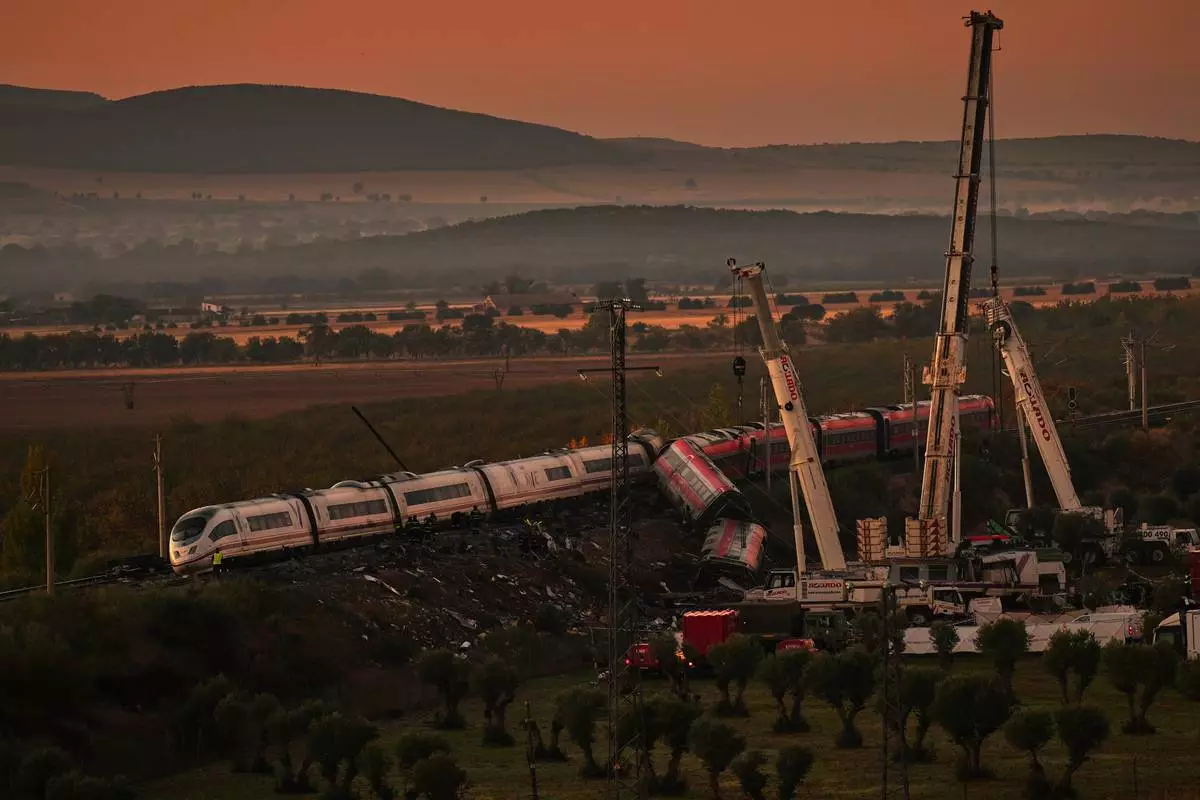
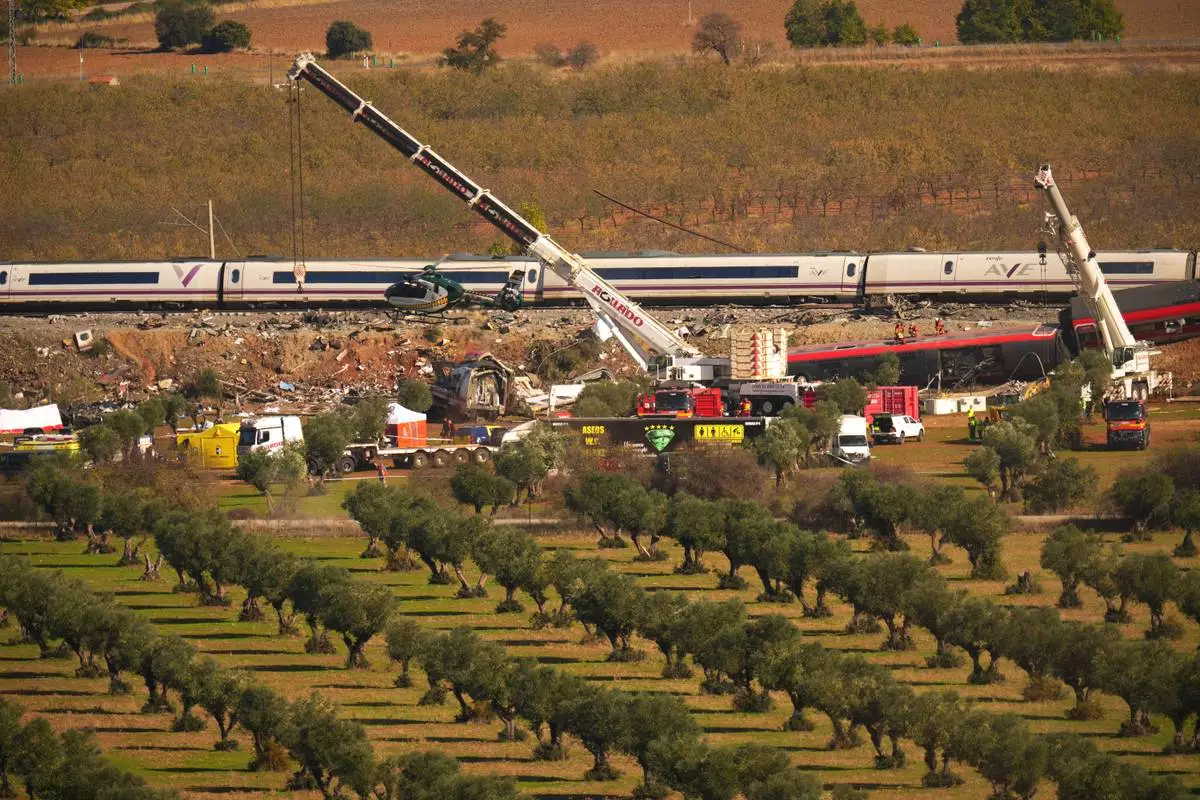
Cranes lift wrecked train carriages as rescuers search for victims following a collision between two trains in Urda, Spain, Thursday, Oct. 29, 2026. (AP Photo/Manu Fernandez)

Cranes lift wrecked train carriages as rescuers search for victims following a collision between two trains in Urda, Spain, Thursday, Oct. 29, 2026. (AP Photo/Manu Fernandez)

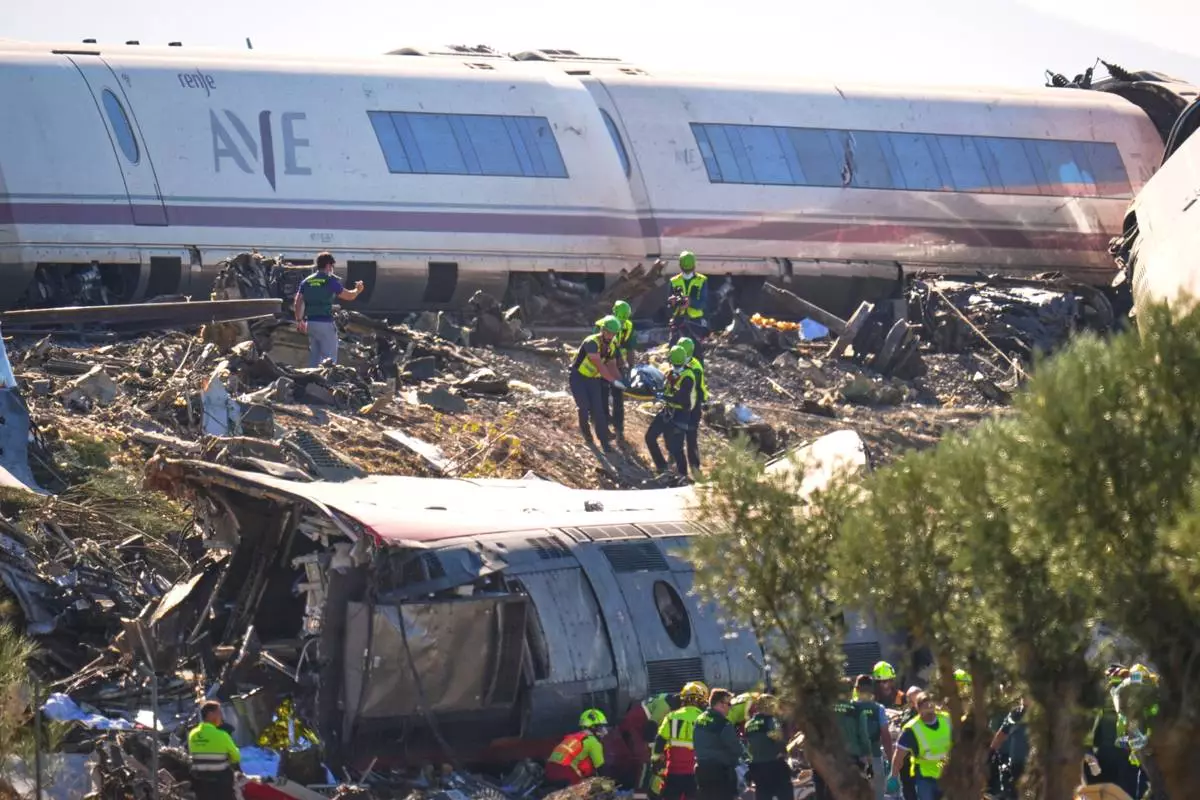
Emergency services attend to the victims at the scene of a collision between two trains in Urda, Spain, on Wednesday, Oct. 28, 2026. (AP Photo/Manu Fernandez)

Emergency services attend to the victims at the scene of a collision between two trains in Urda, Spain, on Wednesday, Oct. 28, 2026. (AP Photo/Manu Fernandez)

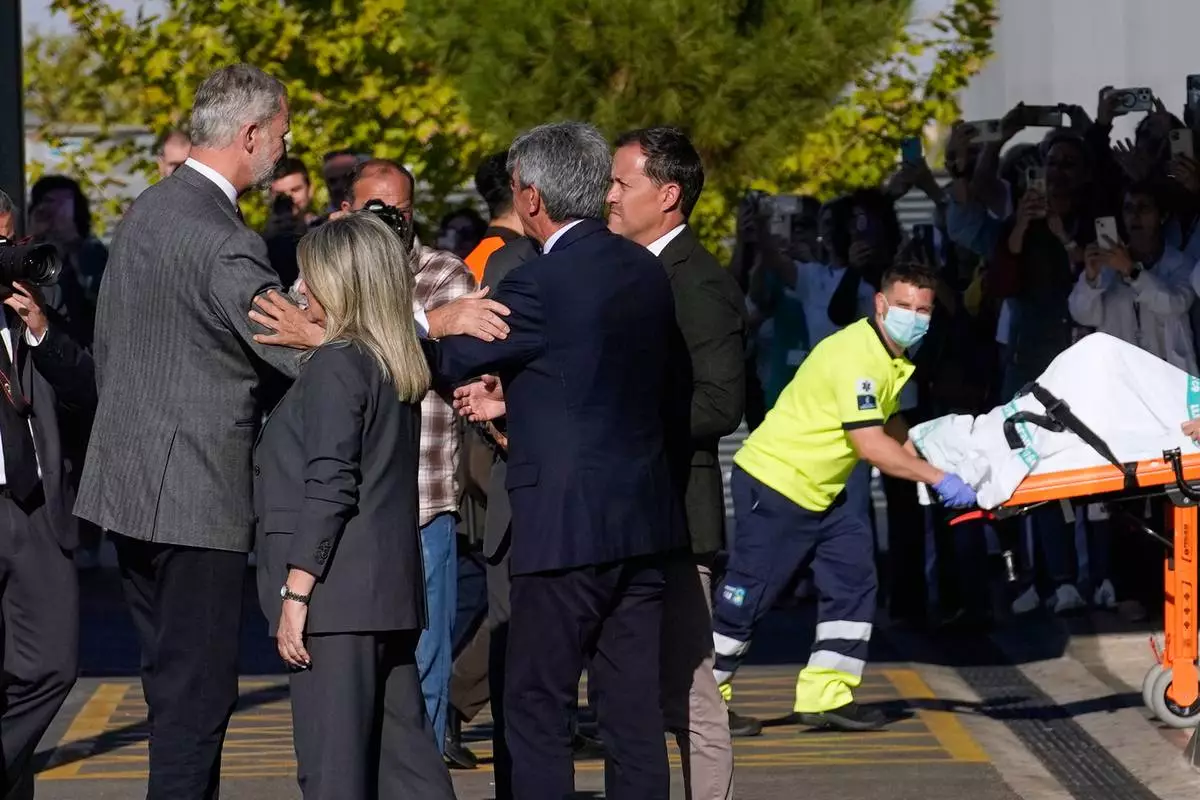
Spain's King Felipe VI, left, arrives to visit people injured in a train collision in Toledo, Spain, Thursday, Oct. 29, 2026. (AP Photo/Andrea Comas)

Spain's King Felipe VI, left, arrives to visit people injured in a train collision in Toledo, Spain, Thursday, Oct. 29, 2026. (AP Photo/Andrea Comas)

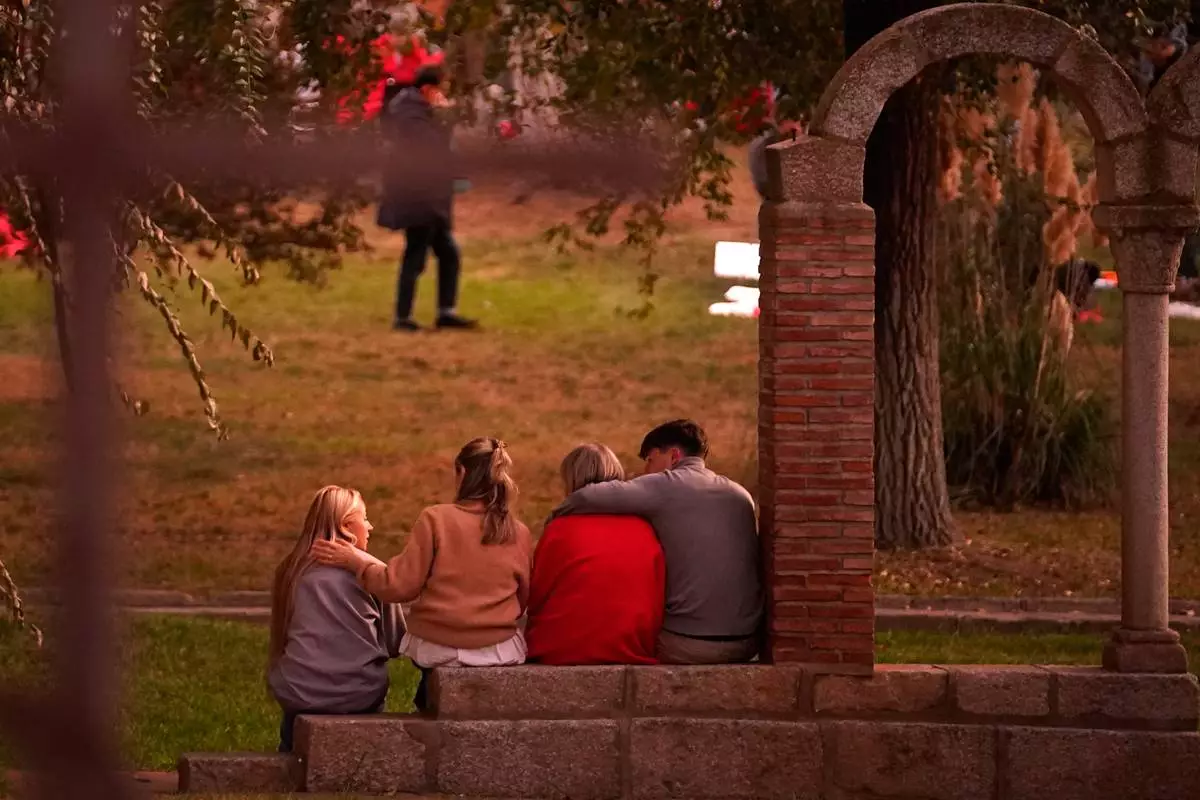
People searching for relatives who were traveling on the trains involved in a collision gather at a religious residence converted into a temporary medical facility in Toledo, Spain, Thursday, Oct. 29, 2026. (AP Photo/Andrea Comas)

People searching for relatives who were traveling on the trains involved in a collision gather at a religious residence converted into a temporary medical facility in Toledo, Spain, Thursday, Oct. 29, 2026. (AP Photo/Andrea Comas)

Cranes lift wrecked train carriages as rescuers search for victims following a collision between two trains in Urda, Spain, Thursday, Oct. 29, 2026. (AP Photo/Manu Fernandez)

Cranes lift wrecked train carriages as rescuers search for victims following a collision between two trains in Urda, Spain, Thursday, Oct. 29, 2026. (AP Photo/Manu Fernandez)

Recommended Articles