BARCELONA, Spain (AP) — Was Spain's second major train collision this year caused by human error or failures in its once touted high-speed rail network?
It depends on whom you ask.
Click to Gallery
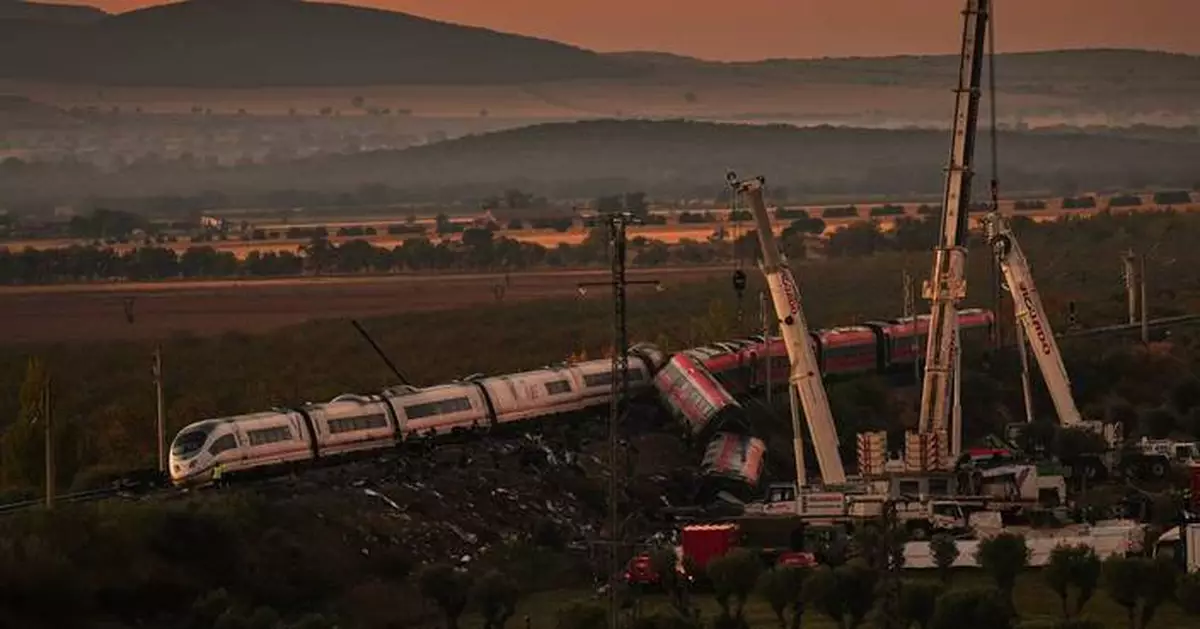
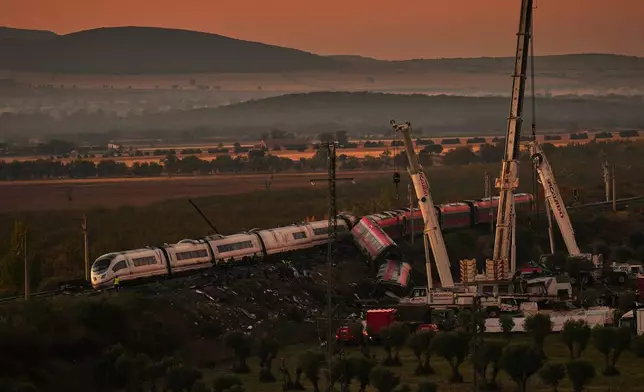
Cranes lift wrecked train carriages as rescuers search for victims following a collision between two trains in Urda, Spain, Thursday, Oct. 29, 2026. (AP Photo/Manu Fernandez)
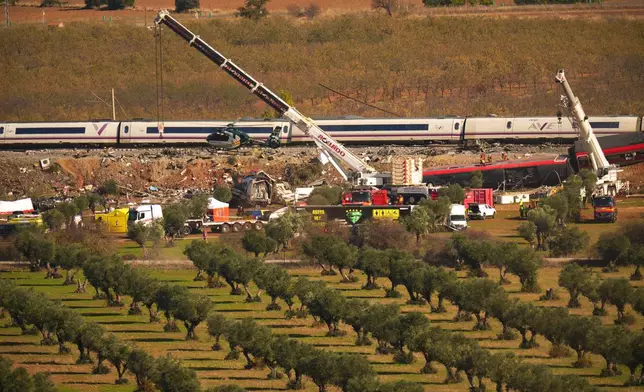
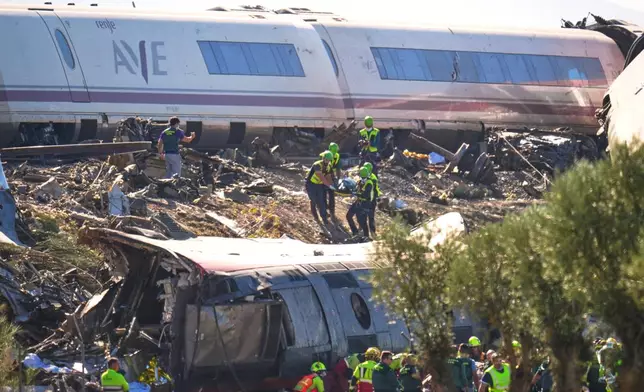
Emergency services attend to the victims at the scene of a collision between two trains in Urda, Spain, on Wednesday, Oct. 28, 2026. (AP Photo/Manu Fernandez)
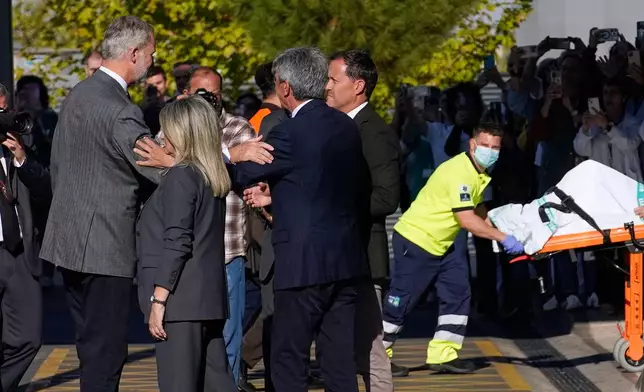
Spain's King Felipe VI, left, arrives to visit people injured in a train collision in Toledo, Spain, Thursday, Oct. 29, 2026. (AP Photo/Andrea Comas)
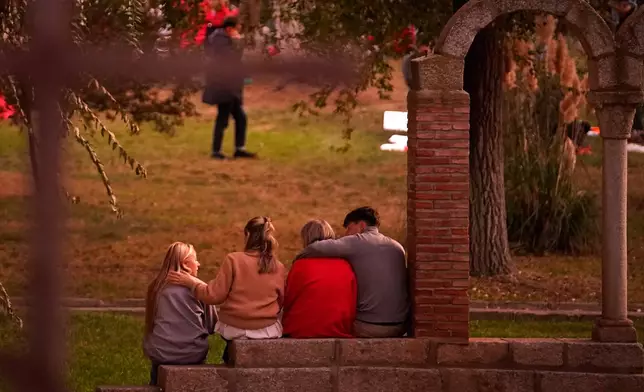
People searching for relatives who were traveling on the trains involved in a collision gather at a religious residence converted into a temporary medical facility in Toledo, Spain, Thursday, Oct. 29, 2026. (AP Photo/Andrea Comas)
Cranes lift wrecked train carriages as rescuers search for victims following a collision between two trains in Urda, Spain, Thursday, Oct. 29, 2026. (AP Photo/Manu Fernandez)
Spain’s transport minister was quick to lay most of the blame a traffic controller’s poor judgment for Wednesday's collision in Toledo province, which killed 69 people.
But railway unions are pushing back. They point instead to what they describe as deteriorated working conditions — fewer traffic controllers with more work than ever — that have made it increasingly difficult to ensure the safety of 45 million passengers annually.
A judge and a special government commission are conducting separate investigations into the deadly crash, while Spanish Prime Minister Pedro Sánchez has pledged to get to the bottom of it.
“This investigation must determine how and why this catastrophe happened,” Spain’s King Felipe VI said on Thursday after visiting injured passengers in a Toledo hospital. “We will have to take measures so this never happens again.”
The chain of events that ended in disaster started at 8:30 a.m. on Wednesday, when the communication system key to the functioning of the line’s security system went down. The system, called LZB, monitors the position of trains and can even trigger the automatic braking of a train to prevent a collision.
That malfunction meant that human controllers based at a control post in Madrid took over full responsibility for monitoring the positions and safety of the trains on a stretch of 63 kilometers (39 miles) between Madrid and Seville. At that time authorities believe there were six trains on the affected stretch of track.
At 8:36, a controller told one train, belonging to the state-owned RENFE company, that it could start running again at normal speed. The other train, operated by privately owned IRYO, located 15.5 miles (25 kilometers) down the line, also tried to restart, but the engineer was unable to override the automatic stop and informed the controller.
At 8:53 the collision occurred, derailing carriages and shredding parts of the trains to bits.
It was the second major crash on the Madrid-Seville line this year. In January, over two hours further south, one train jumped the track and hit another train going the other direction, killing 46 people.
Transport Minister Óscar Puente, who is under pressure to resign, called the controller's decision to let one train restart at full speed while the other remained still “inexplicable” and “erroneous.”
Puente said that the RENFE train should never have been told to start moving again since there was still a stop signal active on that line.
“An order is given for the train to restart, an erroneous decision,” Puente told reporters. The decision “was taken in inexplicable circumstances given that a train was stopped and with a red light," he said.
Unions, however, argue that the context matters.
Raquel Ayllón, spokesperson for SCF, Spain’s railway traffic controllers union, told The Associated Press that the workload is regularly too much for the current staff to safely handle. She said that traffic controllers have been asking for more personnel for years, while the safety systems keep failing.
“We believe (the minister) is blaming a mere worker who was working under increasingly poor conditions,” she said. “Human error isn't incomprehensible. What is incomprehensible is that the safety system is regularly failing.”
Spain's union for train engineers, SEMAF, said that this was not the first time the three-decade-old LZB security system, which is still in use on the Madrid-Seville line while being phased out, has gone offline and left human operators to fend for themselves.
“The LZB system should have been replaced some time ago,” said Diego Martín, spokesperson of the SEMAF union of Spain’s train engineers. “It failed us yesterday (Wednesday) and it has gone offline on repeated occasions in the past.”
Train workers went on strike Thursday in a previously planned action to demand the government fulfill its commitments to improve safety conditions after the January crash.
Representatives from several unions also criticized what they called the “irresponsible” leak of audio clips of conversations between the control room and the train engineers to Spanish media.
Spain’s railways only serviced state-owned trains until it opened its high-speed rail to private operators in 2021.
Both of this year’s collisions involved a train operated by RENFE and one operated by IRYO.
Rail traffic increased after the market was opened to competition. Between Madrid and Barcelona, for instance, the average number of daily trips increased from 56 to 89 between 2019 and 2024, according to the SCF union.
A spokesperson for Spain’s train workers’ union, Joan Rodríguez, said increased traffic brought by privatization has put extra strain on railways.
“We are not convinced that the liberalization of the high-speed passenger rail service was matched by the necessary upkeep of the lines,” Rodríguez told TVE on Wednesday. “I am not saying it was a determining factor (in the crashes), but yes, the increase in use of the network is a factor to keep in mind.”
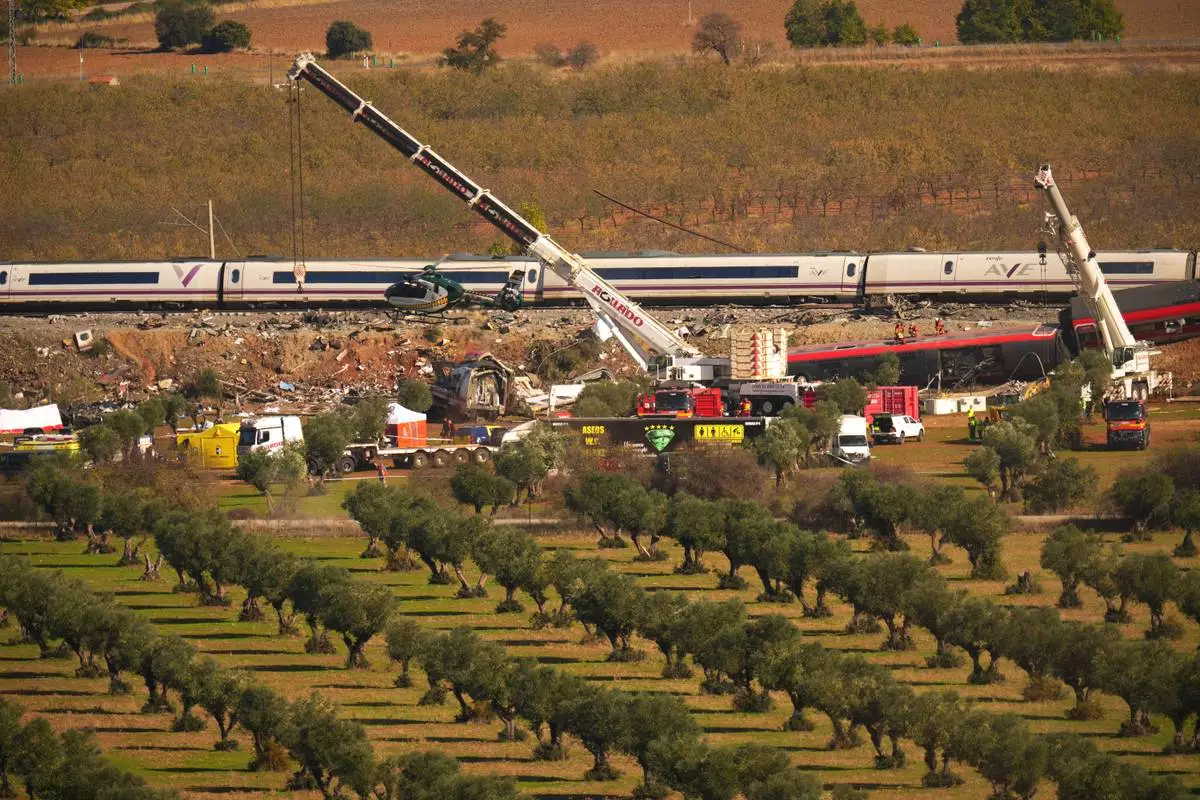
Cranes lift wrecked train carriages as rescuers search for victims following a collision between two trains in Urda, Spain, Thursday, Oct. 29, 2026. (AP Photo/Manu Fernandez)
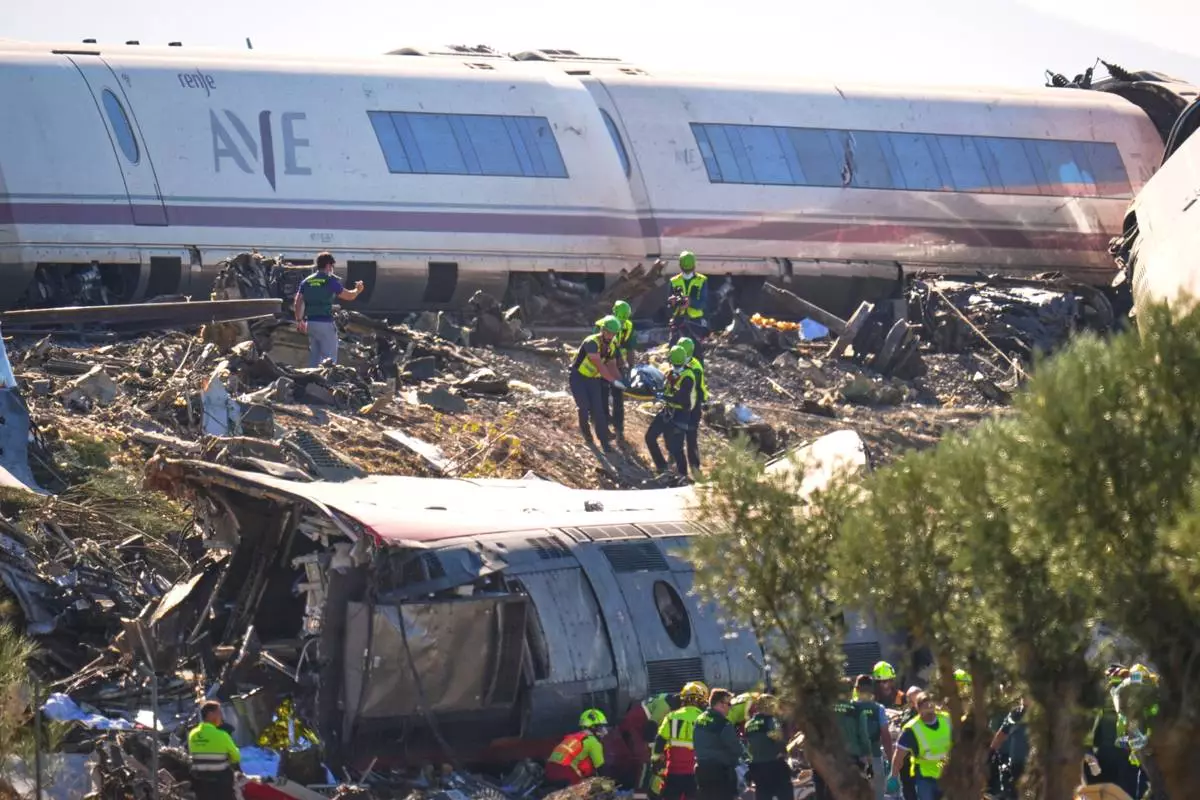
Emergency services attend to the victims at the scene of a collision between two trains in Urda, Spain, on Wednesday, Oct. 28, 2026. (AP Photo/Manu Fernandez)
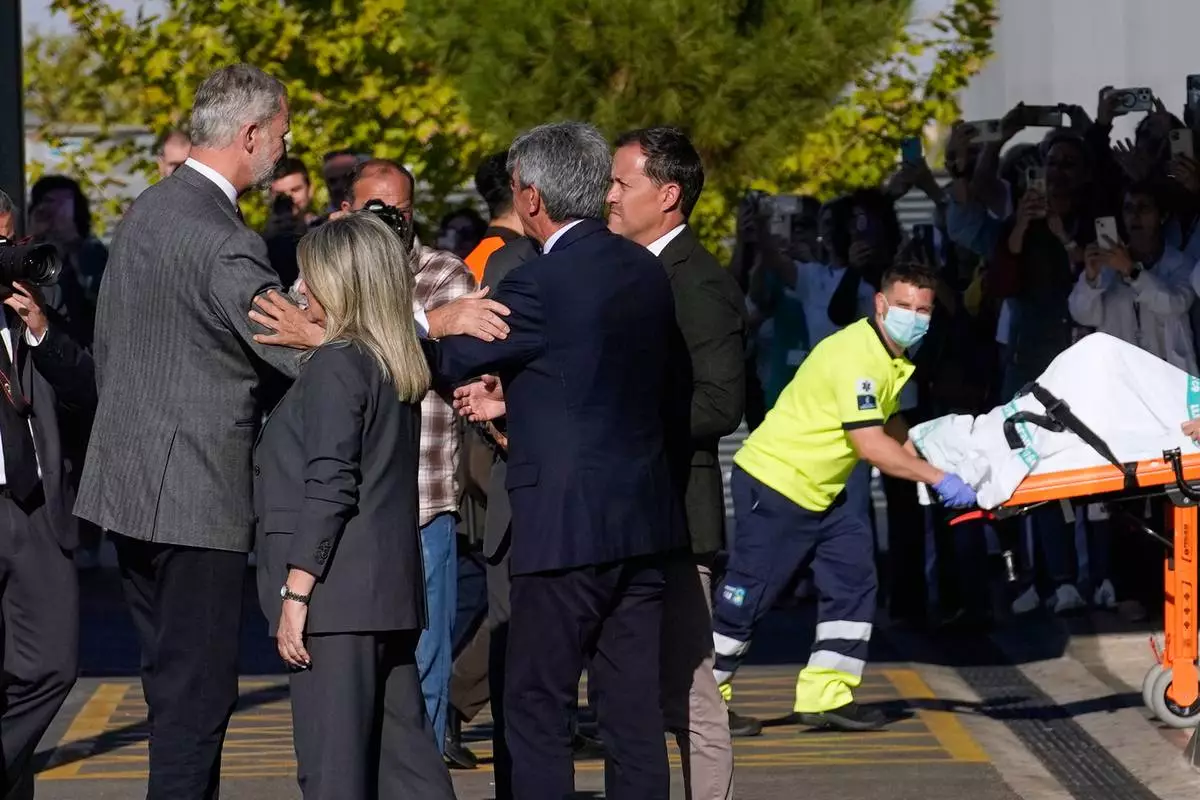
Spain's King Felipe VI, left, arrives to visit people injured in a train collision in Toledo, Spain, Thursday, Oct. 29, 2026. (AP Photo/Andrea Comas)
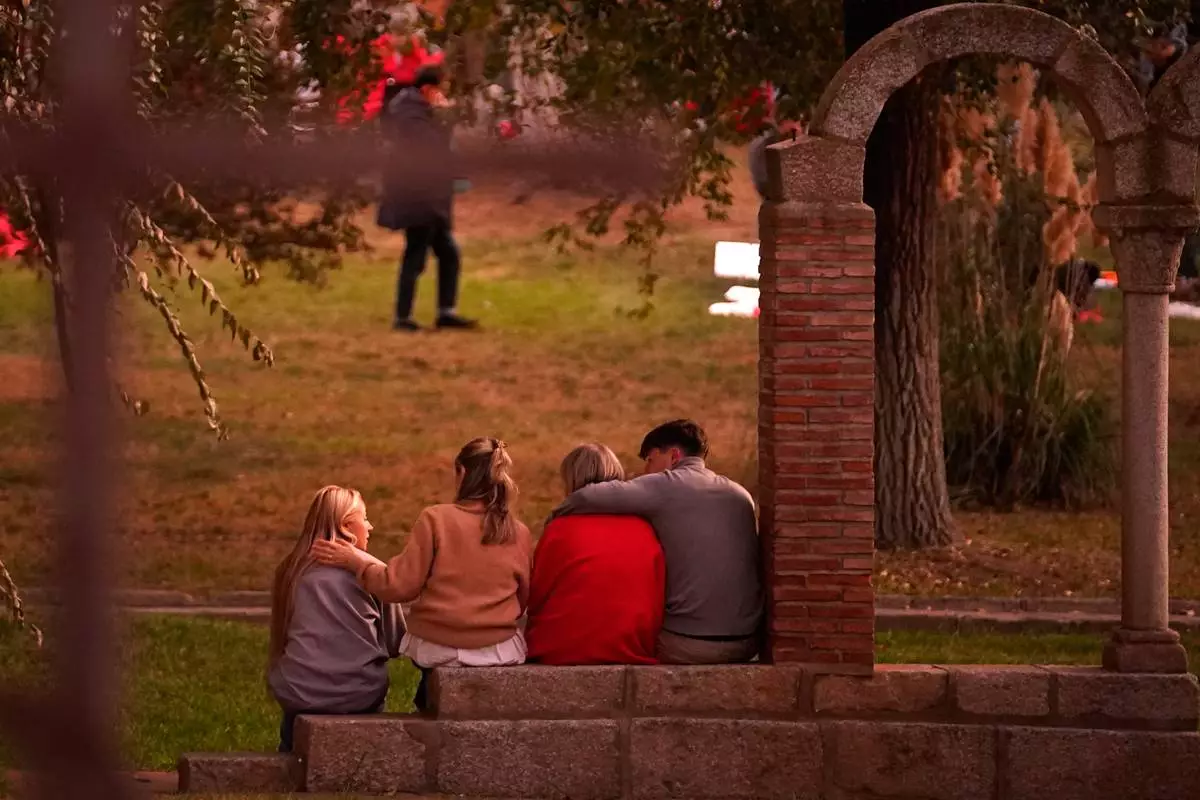
People searching for relatives who were traveling on the trains involved in a collision gather at a religious residence converted into a temporary medical facility in Toledo, Spain, Thursday, Oct. 29, 2026. (AP Photo/Andrea Comas)
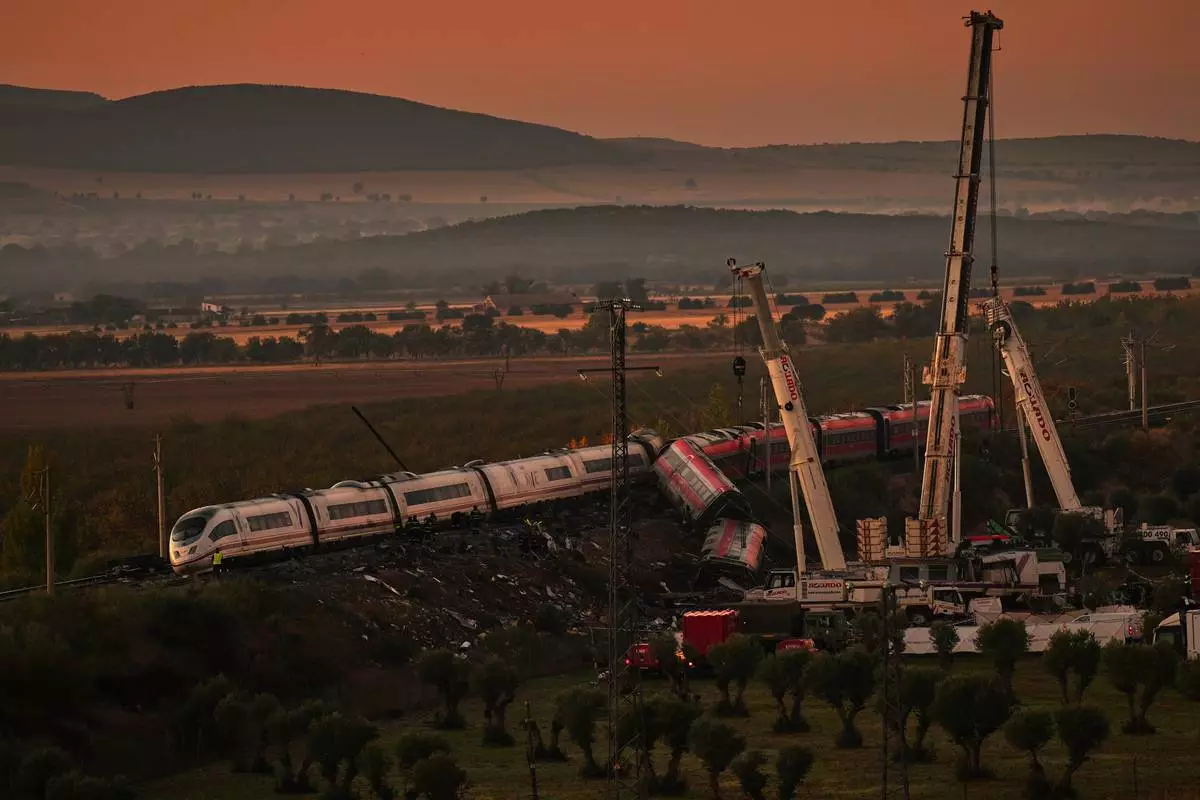
Cranes lift wrecked train carriages as rescuers search for victims following a collision between two trains in Urda, Spain, Thursday, Oct. 29, 2026. (AP Photo/Manu Fernandez)
JERUSALEM (AP) — Final election results have been released in Israel, leaving uncertainty since neither Prime Minister Benjamin Netanyahu's bloc nor the main opposition's has a won a majority in parliament.
Weeks of negotiations to build a majority coalition and name a prime minister likely lie ahead, with another election possible if they fail. One scenario would be Jewish and Arab-led parties opposed to Netanyahu joining forces, a rare and politically controversial move. Another would be some parties that campaigned on ousting Israel’s longest-serving prime minister teaming up with him instead.
Both possibilities have prompted bitter debate in an already deeply divided country.
Here’s what to know about what comes next:
The final vote count released by the Central Elections Committee showed Netanyahu’s bloc won 53 seats in the 120-member Knesset, well below the 68 seats it had controlled at its peak in the previous parliament.
His main opposition, led by Yashar, the party of former military chief of staff Gadi Eisenkot, won 48 seats and Arab-led parties secured the other 19. The count is complete, though the results still need to be certified and submitted to the country’s president by Wednesday.
The election was widely seen as a referendum on Netanyahu, even though Israelis vote on parties, not individuals. His party, Likud, received the most votes overall, but lost support compared with the previous election in 2022. Voter turnout was nearly 78%, the highest since 1999.
Israel's president soon will task someone with forming a government. If multiple attempts fail, the country could have new elections early next year.
Arab-led parties were clear winners in Tuesday’s elections, significantly increasing their total representation in the Knesset and potentially becoming kingmakers in the wrangling to form a governing coalition.
Eisenkot has left the door open to partnering with them under certain conditions, including recognition of the Gaza-based Hamas as an extremist group, but some of his other likely partners have ruled it out.
Netanyahu has refused to form a government relying on Arab parties. Now he and Likud are amplifying allegations they are stealing the election and have asked the elections committee to investigate. Likud has not shared evidence supporting the claim.
Separately, the elections committee has asked the Shin Bet intelligence service to investigate allegations of unspecified foreign interference. While the letter making the request does not mention the Arab-led parties, Netanyahu cited it in arguing that no party should cooperate with them.
Netanyahu's opponents have accused him of using scare tactics and trying to create a narrative to further discrimination against Arab-led parties and Israel’s Arab citizens, who are 20% of the population.
It was not clear who made the latest interference allegations. But Qatar issued a sharp statement denying it had funded “any activities intended to influence” the elections' outcome. Many Israelis see the energy-rich Gulf Arab country as a patron of Hamas, and allegations of its influence have roiled Israeli politics in other cases.
The election was held against the backdrop of the trauma of the Hamas-led attack on Oct. 7, 2023, when militants killed 1,200 people, mostly civilians, and abducted 251 others, and the ensuing wars in Gaza and beyond.
The deadliest day in Israel’s history featured prominently in the campaigns. Israelis tended to be focused on the security failures surrounding Oct. 7 rather than on the humanitarian situation in war-devastated Gaza.
Netanyahu has rejected an investigation into Oct. 7. His supporters say he led the country back from that difficult day and scored important achievements in wars in Gaza, Lebanon and Iran.
Some of Netanyahu’s opponents have said creating a commission of inquiry would be among their first acts in power.
Especially since Oct. 7, many Jewish Israelis view their Arab fellow citizens with suspicion because of their sympathies with other Palestinians.
The country also has been deeply divided by exemptions from military service granted to the rapidly growing ultra-Orthodox population. The exemptions are especially contentious after three years of wars, with nearly 1,000 soldiers and reservists killed.
Netanyahu’s governing coalition has long relied on ultra-Orthodox Jewish parties that have demanded the exemptions remain in place. Eisenkot, who lost his son to combat in Gaza, has vowed to end the exemptions.
Associated Press journalist Cara Anna contributed from Jerusalem.
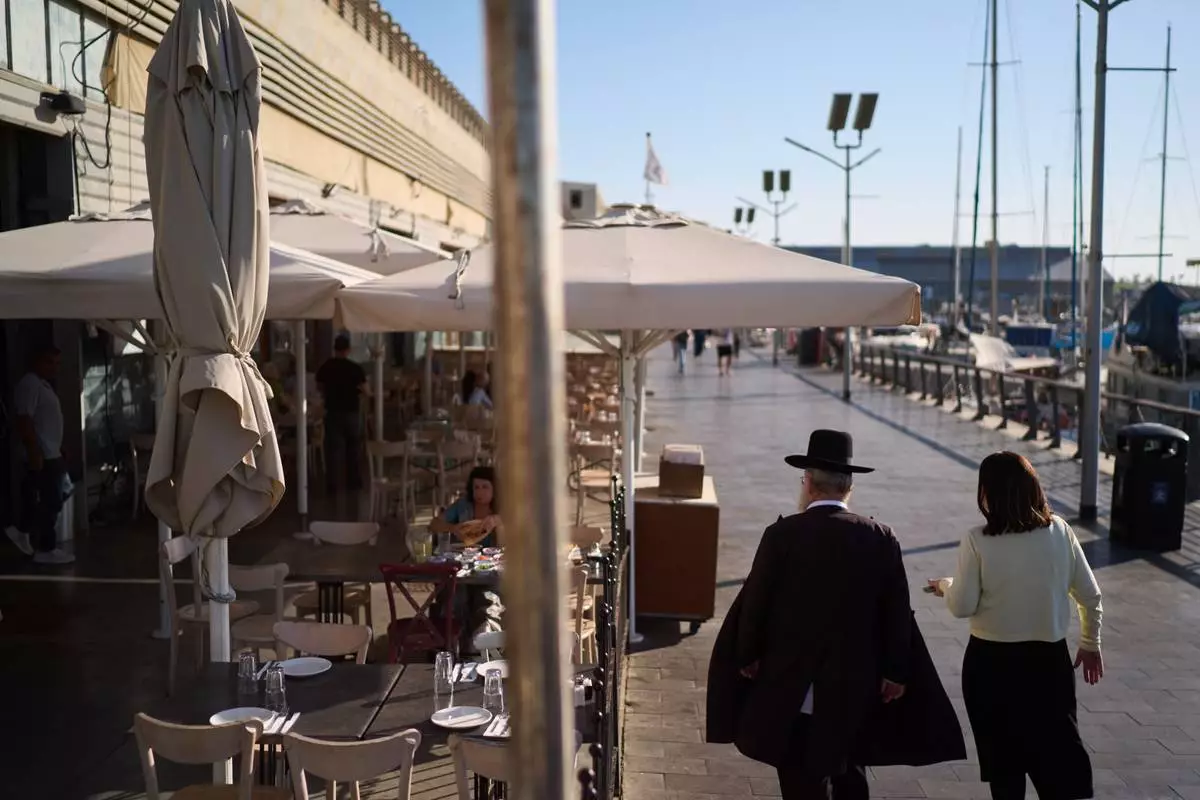
Pedestrians walk along the waterfront in the old port of Jaffa, a mixed Jewish-Arab neighborhood in Tel Aviv, Israel, Thursday, Oct. 29, 2026. (AP Photo/David Goldman)
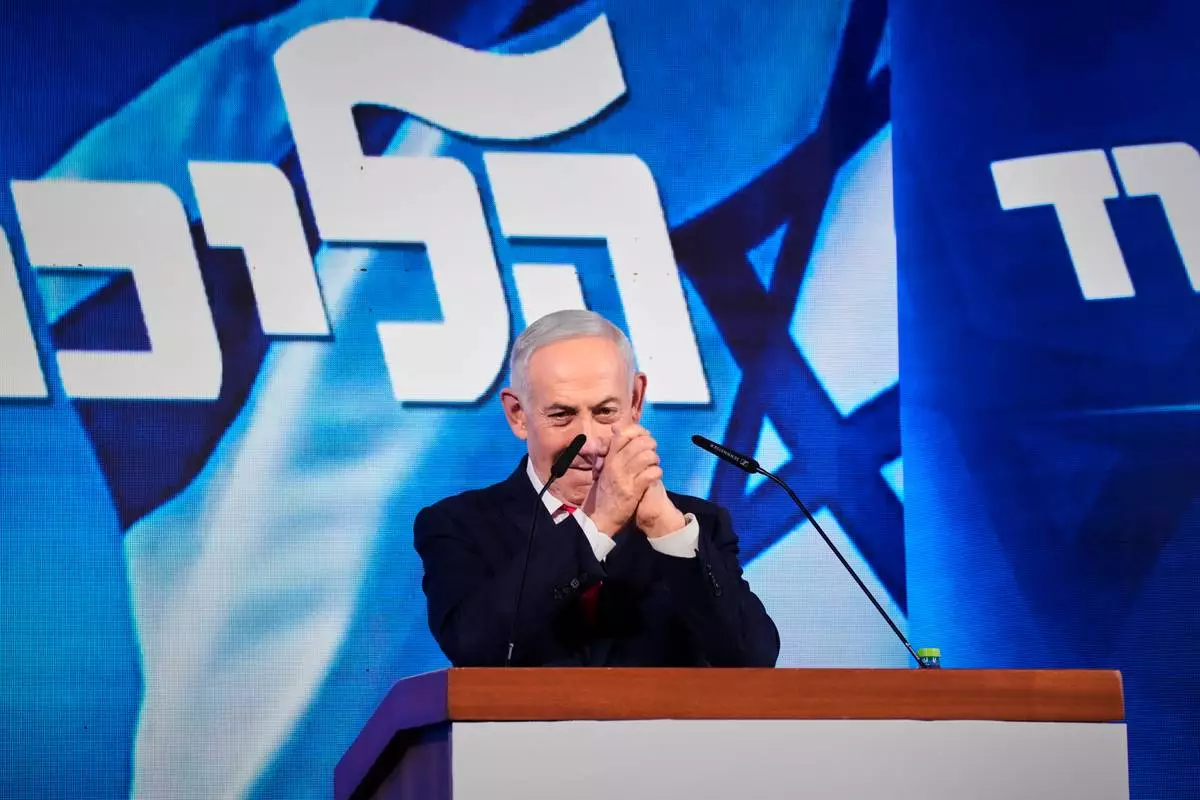
Israeli Prime Minister Benjamin Netanyahu greets his supporters at Likud party headquarters in Jerusalem after the release of the first exit poll results in Israel's general election, Wednesday, Oct. 28, 2026. (AP Photo/Ohad Zwigenberg)
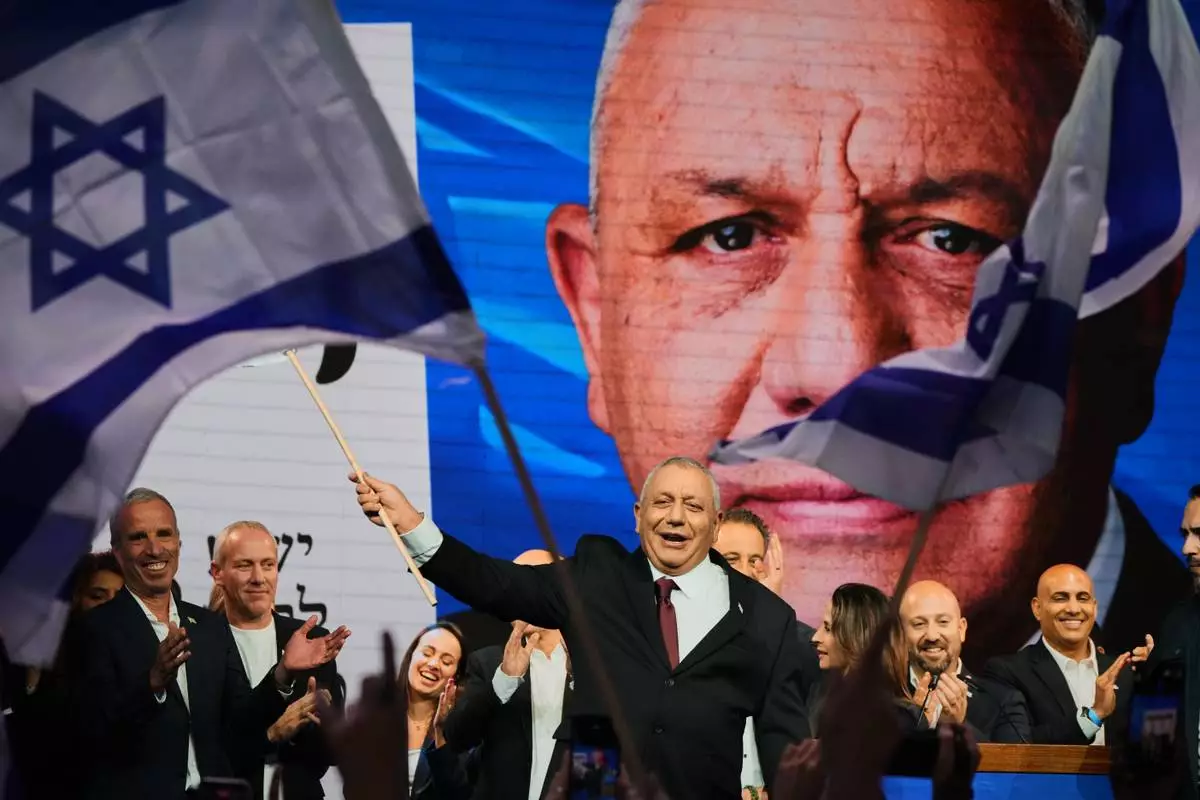
Gadi Eisenkot, leader of the Yashar ("Straight") party, waves an Israeli flag onstage following the release of the first exit poll results in Israel's general election in Tel Aviv, Israel, Wednesday, Oct. 28, 2026. (AP Photo/Ariel Schalit)

Supporters of Israeli lawmaker Mansour Abbas's Raam party applaud and wave party flags after the release of the first exit poll results in Israel's general election, in Sakhnin, Israel, Tuesday, Oct. 27, 2026. (AP Photo/Mahmoud Illean)
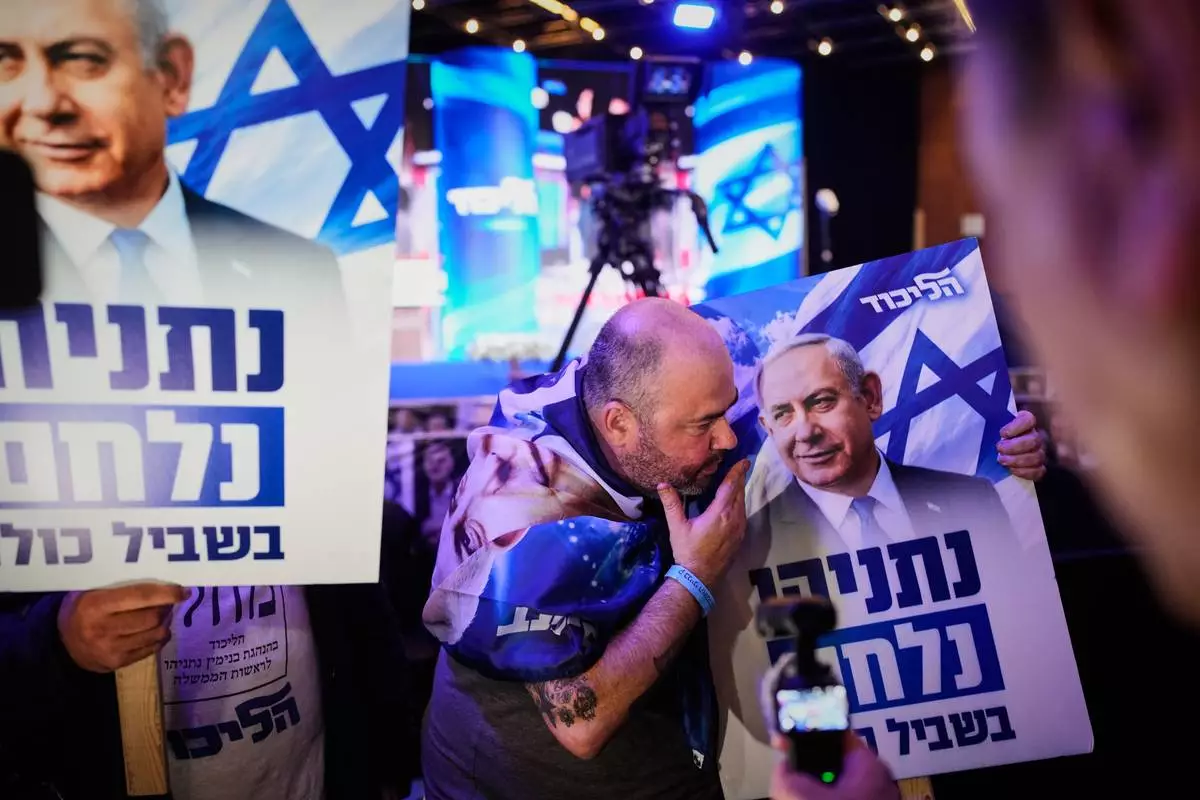
Supporters of Israeli Prime Minister Benjamin Netanyahu react to the release of the first exit poll results in Israel's general election in Jerusalem on Tuesday, Oct. 27, 2026. (AP Photo/Ohad Zwigenberg)
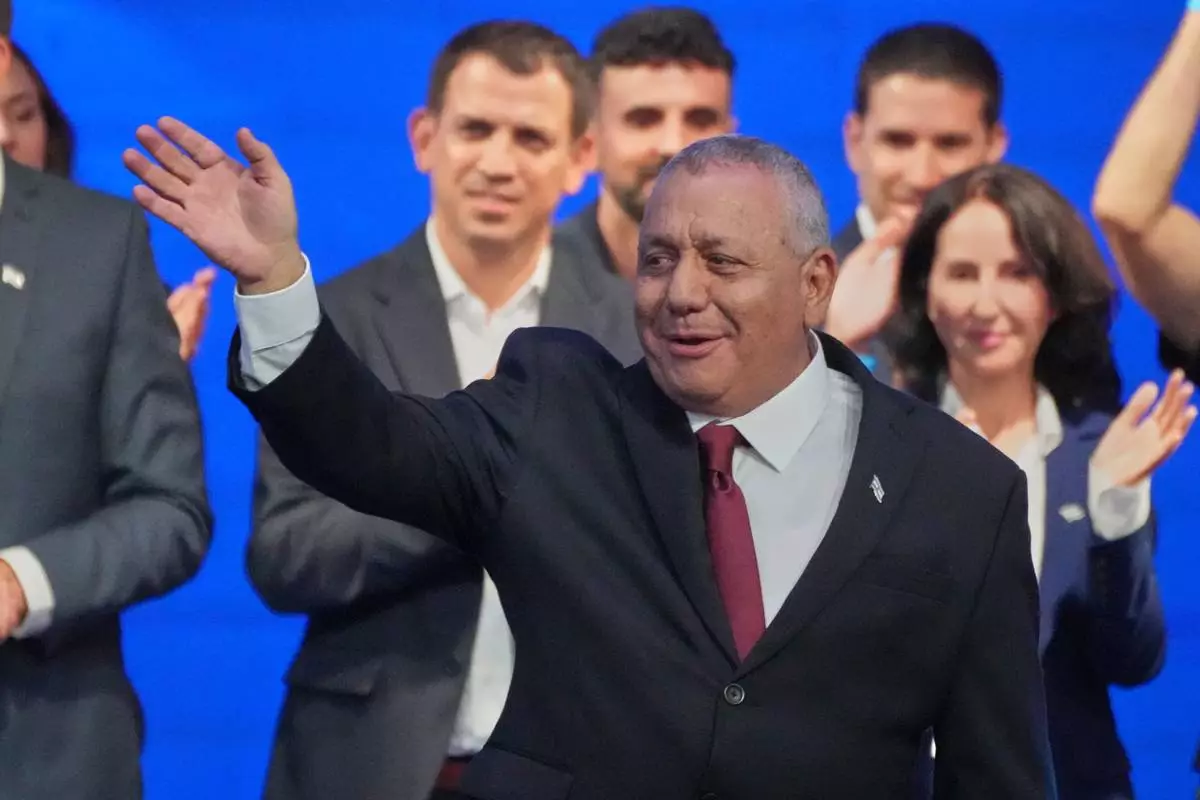
Gadi Eisenkot, leader of the Yashar ("Straight") party, waves to supporters after the release of the first exit poll results in Israel's general election in Tel Aviv, Israel, Tuesday, Oct. 27, 2026. (AP Photo/Ariel Schalit)

Gadi Eisenkot, leader of the Yashar party, is partially obscured by Israeli flags as he greets supporters after the release of the first exit poll results in Israel's general election in Tel Aviv, Israel, Tuesday, Oct. 27, 2026. (AP Photo/Ariel Schalit)
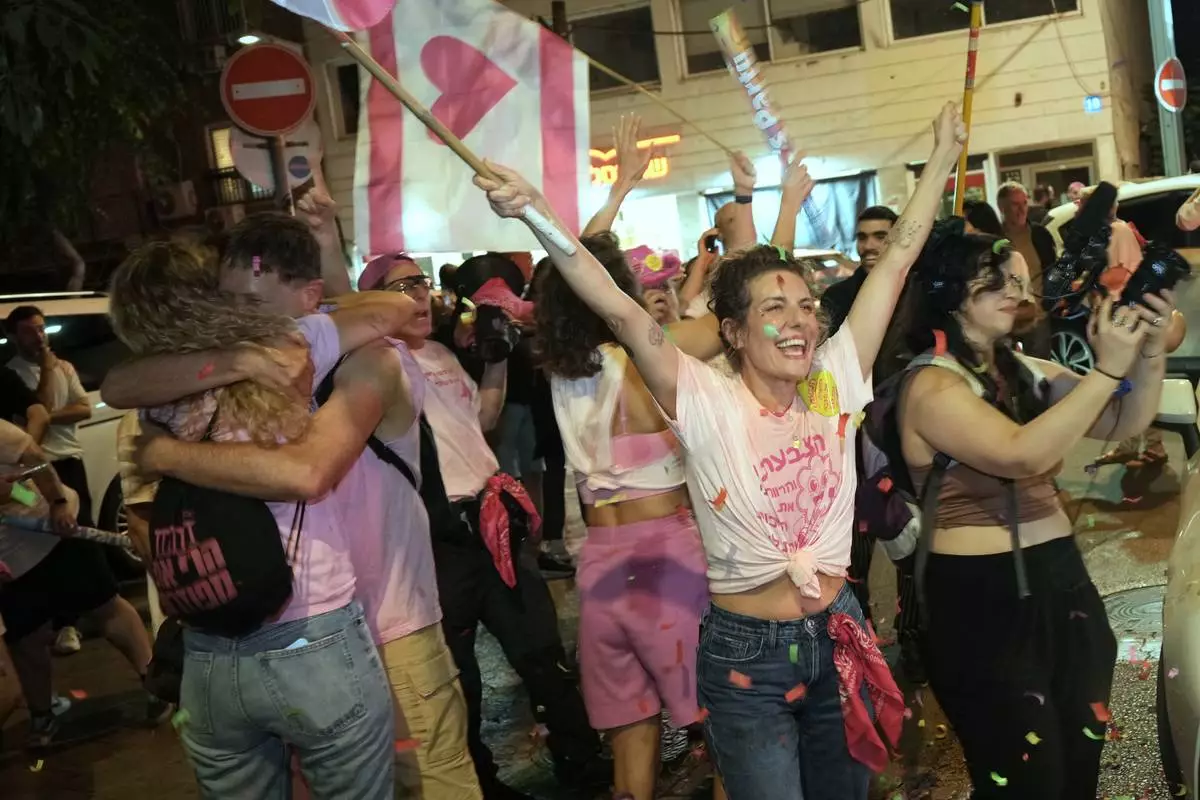
People embrace and wave flags amid falling confetti as they celebrate early exit poll results for Israel's general election in Tel Aviv, Israel, Tuesday, Oct. 27, 2026. (AP Photo/Oded Balilty)

Supporters of Gadi Eisenkot, leader of the Yashar ("Straight") party, react after the release of the first exit poll results in Israel's general election in Tel Aviv, Tuesday, Oct. 27, 2026. (AP Photo/Ariel Schalit)
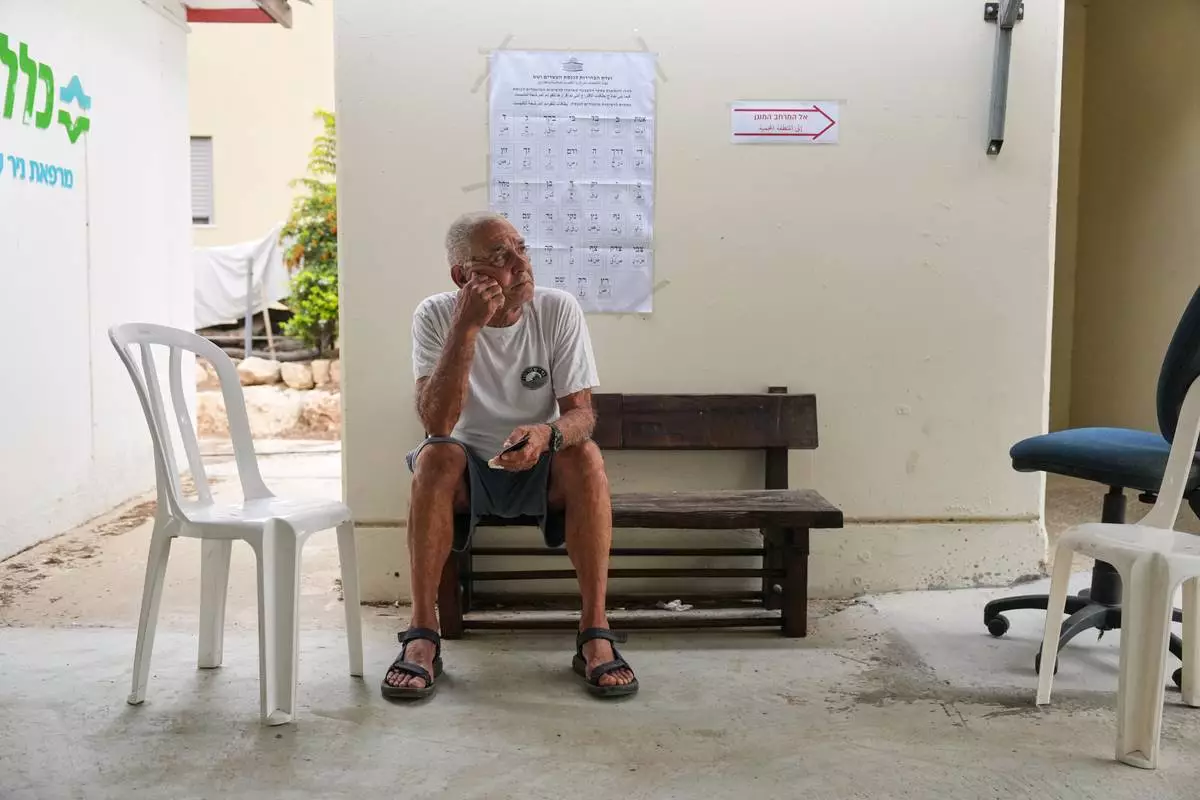
Former Israeli hostage Gadi Moses waits to cast his ballot during Israel's general election at a polling station in Kibbutz Nir Oz, southern Israel, Tuesday, Oct. 27, 2026. (AP Photo/Ariel Schalit)
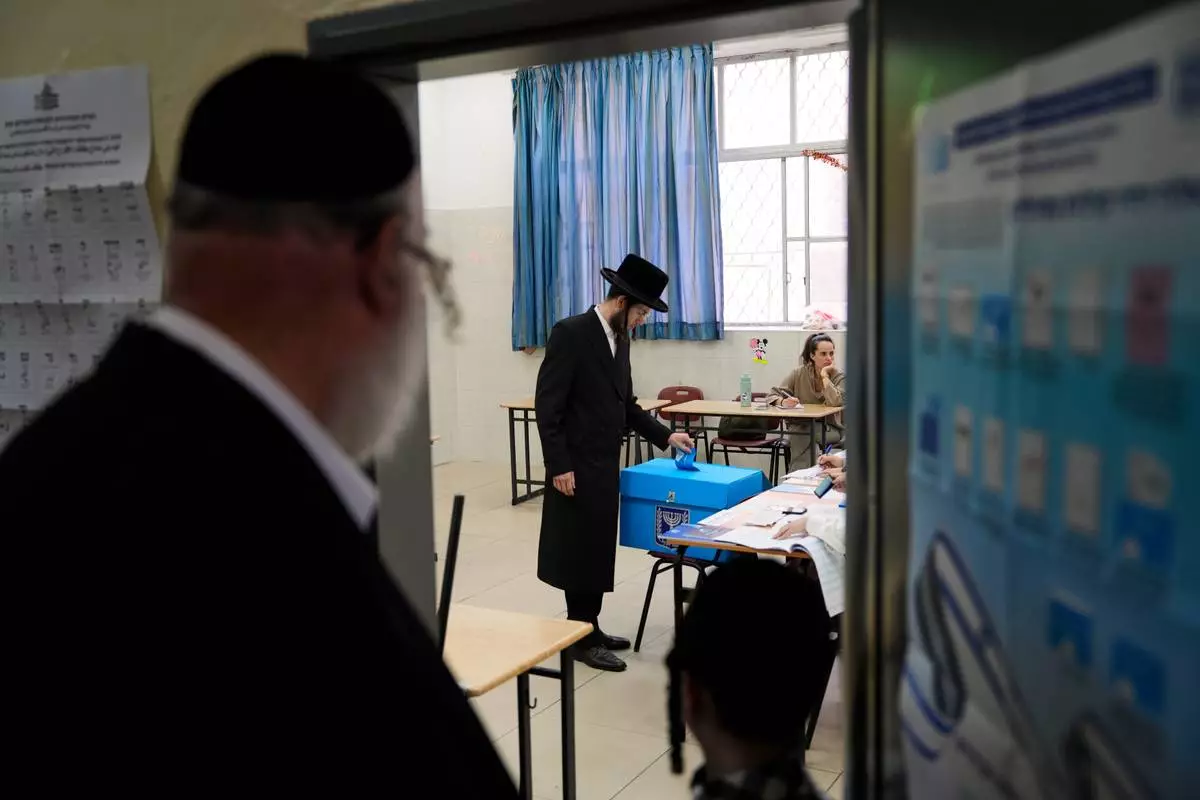
A man casts his ballot at a polling station during Israel's general election in Haifa, Israel, Tuesday, Oct. 27, 2026. (AP Photo/Baz Ratner)
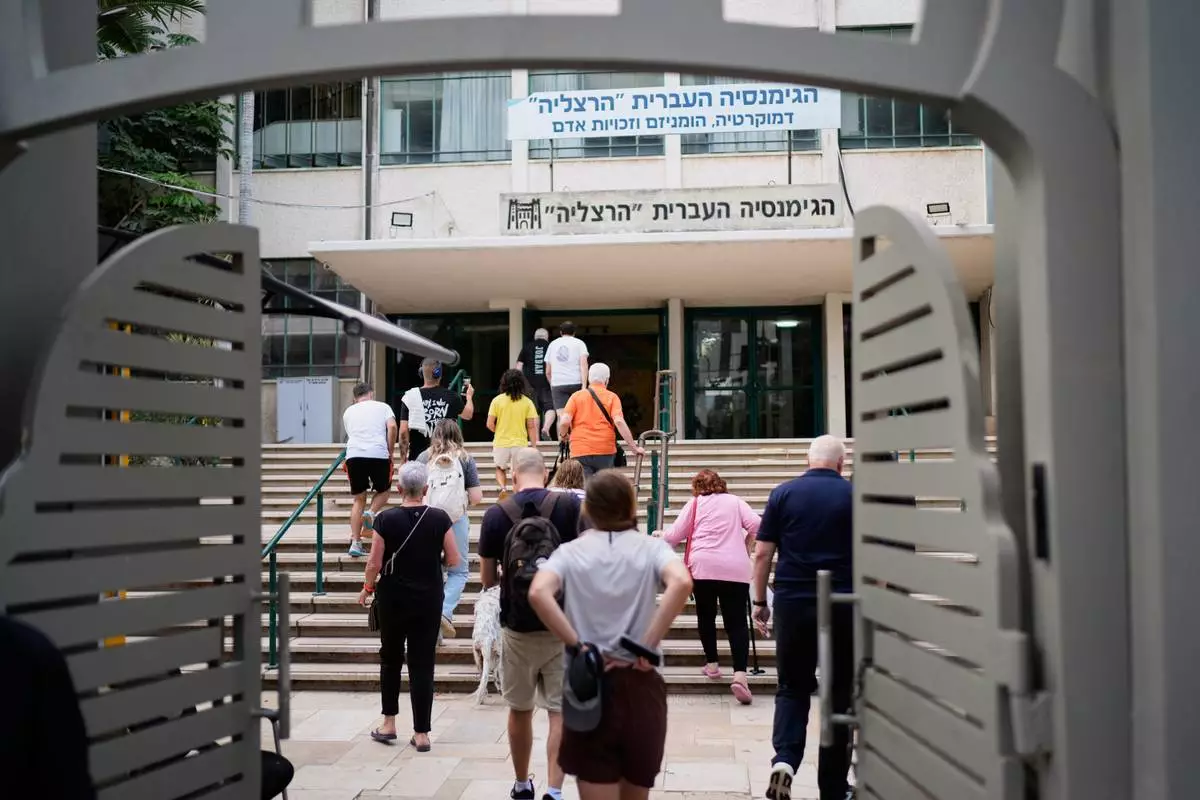
Voters arrive at a school used as a polling station during Israel's general election in Tel Aviv, Israel, Tuesday, Oct. 27, 2026. (AP Photo/David Goldman)
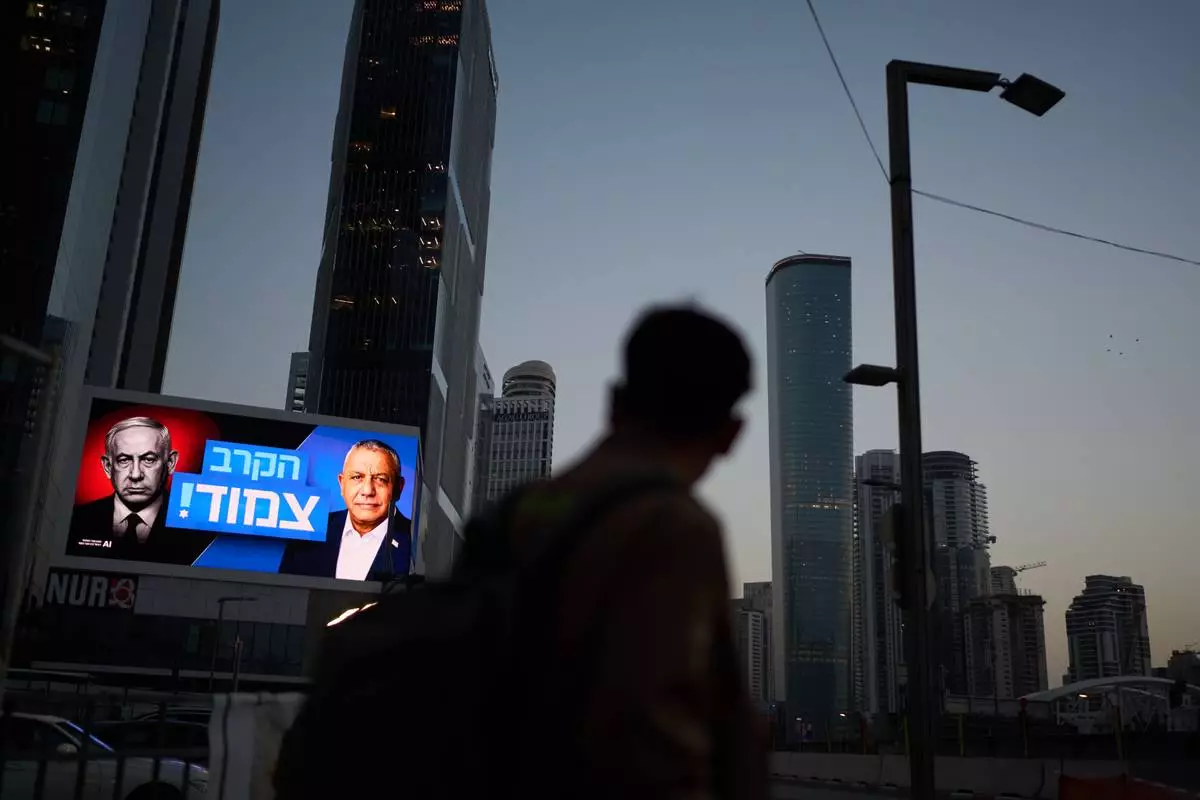
A pedestrian passes a campaign billboard featuring Israeli Prime Minister Benjamin Netanyahu, left, and his main rival, opposition candidate Gadi Eisenkot, with a message in Hebrew that reads "The race is tight," Friday, Oct. 23, 2026, in Tel Aviv, Israel. (AP Photo/David Goldman)

A woman walks past a Likud Party campaign billboard featuring U.S. President Donald Trump and Israeli Prime Minister Benjamin Netanyahu, with a Hebrew message reading, "We have one opportunity to win," in Tel Aviv, Israel, Monday, Oct. 26, 2026. (AP Photo/Oded Balilty)