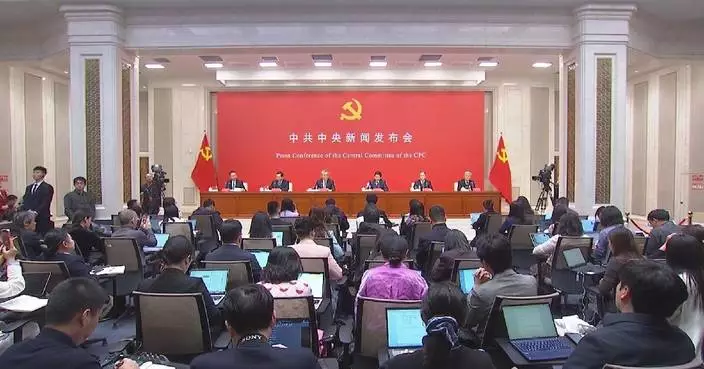
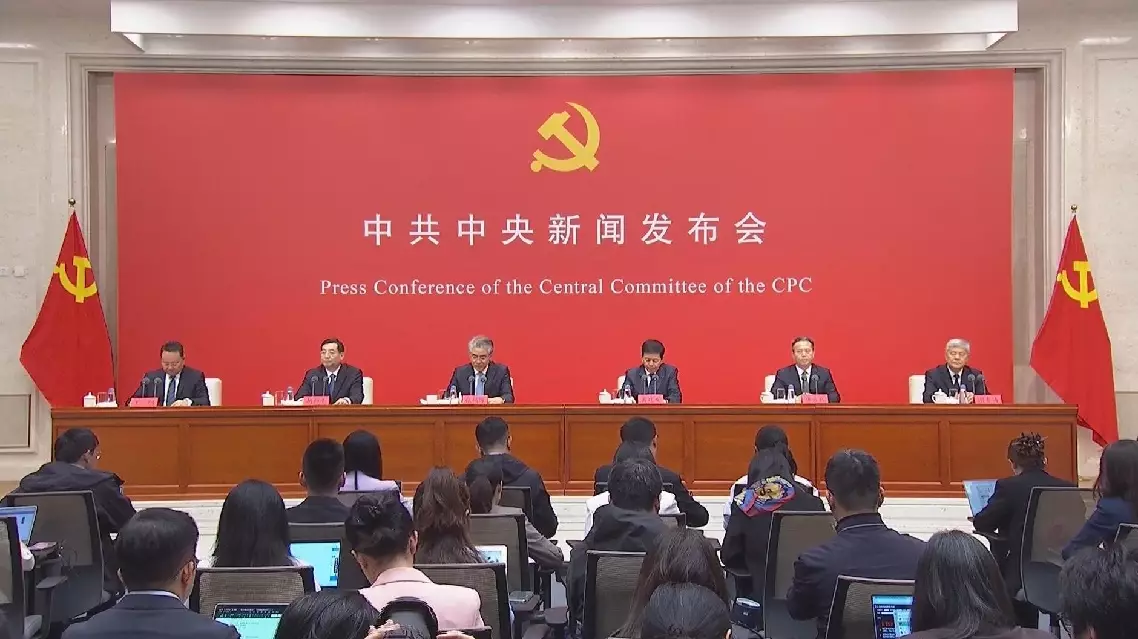
China remains firmly committed to advancing a distinctive Chinese path to combating corruption, a senior Party official said at a press conference in Beijing on Friday, citing Party leadership, a holistic approach and integrated efforts against corruption.
Since the 18th National Congress of the Communist Party of China (CPC), the CPC Central Committee with Comrade Xi Jinping at its core has led the whole Party in carrying out an unprecedented anti-corruption campaign with unprecedented intensity and widely recognized results. The campaign has safeguarded the Party's advanced nature and integrity, eliminated serious hidden dangers within the Party, the state and the military, ensured that the Party will never change its nature, its conviction, or its character, and provided a strong guarantee for building a great country and advancing the cause of national rejuvenation.
At the fifth plenary session of the 20th CPC Central Commission for Discipline Inspection (CCDI), General Secretary Xi pointed out that the CPC has successfully blazed a distinctive Chinese path to combating corruption, one pursued under the centralized, unified leadership of the CPC Central Committee, one that addresses both symptoms and root causes, and one that advances the integrated approach of ensuring officials do not dare to, are unable to, and have no desire to commit corruption. This represents a profound exposition of the connotations of the distinctive Chinese path to combating corruption.
At the press conference, Zhang Fuhai, deputy secretary of the CPC Central Commission for Discipline Inspection and deputy head of the National Commission of Supervision, elaborated on the essence and significance of this distinctive Chinese path to combating corruption.
"First, upholding the centralized and unified leadership of the CPC Central Committee. Combating corruption is an extremely complex and arduous task that requires strong organizational leadership, meticulous planning and coordinated action. Without the centralized and unified leadership of the Party, it would be impossible to succeed," said Zhang.
"Second, addressing both symptoms and root causes. In the new era, the anti-corruption struggle has consistently taken a holistic approach, addressing both symptoms and root causes through systematic governance. It has worked to both clean up the 'blue-green algae' and remove the 'silt,' creating conditions for tackling root causes by addressing symptoms, and consolidating the gains of addressing symptoms by tackling root causes. Both symptoms and root causes are tackled through synchronized, organically integrated, and mutually reinforcing efforts," he said.
"Third, taking an integrated approach to ensure that officials do not dare to, are unable to and have no desire to commit corruption. These three aspects form an interconnected whole, are embedded in each other and serve as conditions for one another. Only through an integrated approach can we cure both the symptoms and the root causes," said Zhang.
China details its distinctive path to combating corruption: official