Skip to Content Facebook Feature Image

Xi stresses Party self-governance to ensure CPC remains strong leadership core

China

China

China

Xi stresses Party self-governance to ensure CPC remains strong leadership core

2026-10-30 20:13 Last Updated At:23:10

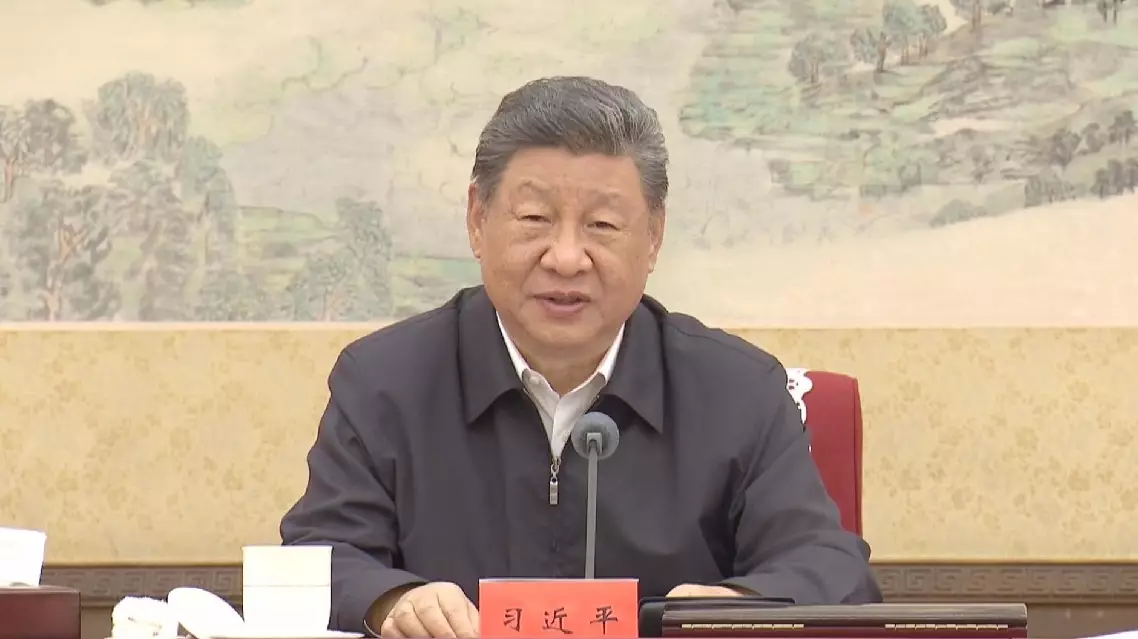
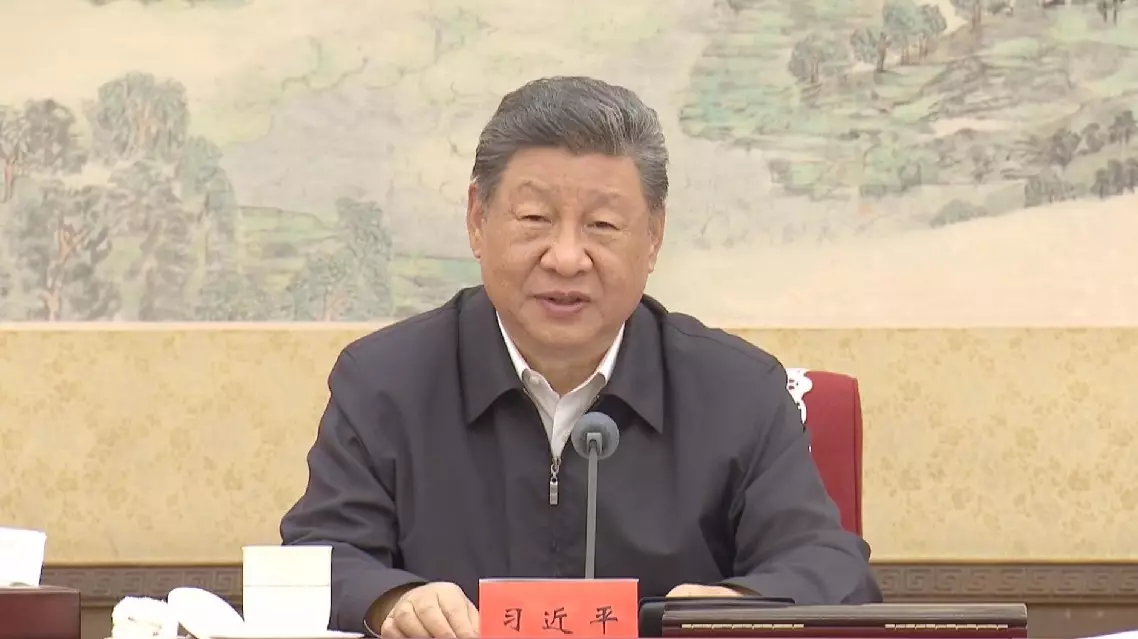
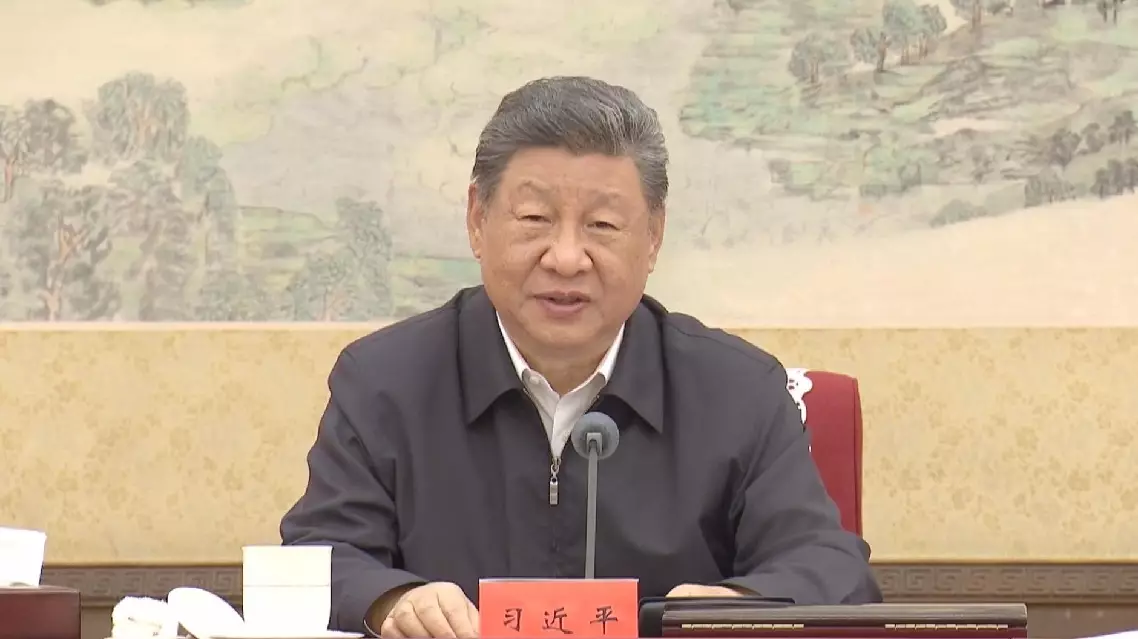
Xi Jinping, general secretary of the Communist Party of China (CPC) Central Committee, stressed the need to persevere with full and rigorous Party self-governance to ensure that the CPC remains the strong leadership core in advancing socialism with Chinese characteristics.

Xi made the remarks at a symposium on Aug 21 to solicit opinions from non-Party personages on drafting the resolution of the CPC Central Committee on certain major issues concerning persevering with full and rigorous Party self-governance.

The resolution was adopted at the fifth plenary session of the 20th Central Committee of the CPC, which concluded on Thursday in Beijing.

Addressing the symposium, Xi said that to govern the country well, the Party must first govern itself well, and to make the country strong, the Party must first strengthen itself.

Wang Huning, Cai Qi and Li Xi, who are members of the Standing Committee of the Political Bureau of the CPC Central Committee, attended the symposium.

The chairpersons of the central committees of the eight non-CPC parties, the chairperson of the All-China Federation of Industry and Commerce (ACFIC) and a representative of personages without party affiliation shared their views and suggestions, and expressed full support for the draft resolution.

The CPC has unswervingly promoted full and rigorous Party self-governance since its 18th National Congress in 2012, and thus grown stronger through revolutionary tempering, Xi said.

At the same time, he added, profound changes in global, national and Party conditions have brought new circumstances and issues to the endeavor to advance full and rigorous Party self-governance.

It is essential to build firm confidence, maintain resolve and earnestly govern the Party well and build it stronger, he said.

To persevere with full and rigorous Party self-governance, it is important to make tenacious efforts to resolve prominent problems within the Party, Xi said.

Efforts must be made to uphold and strengthen the CPC Central Committee's centralized, unified leadership, unwaveringly apply strict principles, improve the system of exercising full and rigorous Party self-governance, and take strengthening the Party politically as the overarching principle to advance Party building on all fronts, he said.

At the symposium, Xi highlighted the need to uphold, develop and improve China's new type of political party system.

He also expressed the hope that other political parties, the ACFIC and personages without party affiliation would stay committed to the original aspiration of multiparty cooperation, steadfastly uphold the leadership of the CPC, actively make proposals on state affairs, and give full play to their function of democratic oversight.
Xi stresses Party self-governance to ensure CPC remains strong leadership core
Xi stresses Party self-governance to ensure CPC remains strong leadership core
Xi stresses Party self-governance to ensure CPC remains strong leadership core


Xi stresses Party self-governance to ensure CPC remains strong leadership core

Xi stresses Party self-governance to ensure CPC remains strong leadership core

Xi stresses Party self-governance to ensure CPC remains strong leadership core

The Bank of Japan (BOJ) decided to leave its benchmark interest rate unchanged at around 1.25 percent after concluding its two-day monetary policy meeting on Friday.

The widely expected decision came after the central bank raised the key rate by 0.25 percentage points to a 31-year high of 1.25 percent at its previous policy meeting in September.

In its quarterly economic outlook report released after the meeting, the BOJ said that with the policy interest rate now higher than in the past, it is important to examine how financial conditions change under such circumstances.

The BOJ also said that Japan's underlying inflation has "generally" reached its 2 percent price stability target, nearly 14 years after the goal was set as part of efforts to end decades of deflation.

At a post-meeting press conference, BOJ Governor Kazuo Ueda said the central bank's monetary policy will increasingly focus on keeping underlying inflation firmly anchored around 2 percent, signaling that the BOJ could raise rates further to prevent price increases from overshooting the target.

The BOJ cited higher prices of crude oil, semiconductors and other items, as well as the yen's depreciation, among the factors currently pushing up prices and likely to keep doing so for some time. It said it will closely monitor the impact of the situation in the Middle East, global demand related to artificial intelligence, and foreign exchange rate movements on Japan's economic activity and prices.

In the outlook report, the BOJ raised its core consumer price inflation forecast for fiscal 2027 to 2.6 percent from 2.4 percent, while lowering its real GDP growth projection to 0.7 percent from 0.8 percent.

The BOJ first adopted its 2 percent inflation target in January 2013, initially aiming to achieve it in about two years.

In April that year, under then-Governor Haruhiko Kuroda, the central bank launched an aggressive monetary easing program, but the target remained out of reach, with the BOJ repeatedly pushing back the timeline.

Japan's recent inflation has been fueled largely by external factors such as higher energy prices, and analysts said sustained wage growth would be key to creating a virtuous cycle of rising wages and prices.

The BOJ has one more policy meeting this year, scheduled for Dec. 17-18, at which markets increasingly expect another rate hike.

Japan's central bank keeps interest rate unchanged

Japan's central bank keeps interest rate unchanged

Recommended Articles