A river-lake zircon sand deposit was discovered in Baicheng County, northwest China's Xinjiang Uygur Autonomous Region, with a confirmed resource scale equivalent to more than 40 large zircon deposits combined, the Ministry of Natural Resources announced in Beijing on Saturday.
This is the first ancient fluvial-lacustrine zircon sand deposit ever discovered in China, marking another breakthrough of in the country's new round of strategic mineral exploration, the Ministry said at a press conference.
Officially named Yuhai Zirconium Deposit, the mine is expected to significantly bolster China's zirconium supply security. It also features a super-large reserve of associated hafnium.
Zirconium and its compounds are widely used in high-tech sectors such as ceramics, nuclear industry, refractory materials, and new energy. Hafnium is a critical material for control rods in nuclear reactors and is also used in the production of high-temperature components for aerospace applications, including turbine blades and combustion chambers.
Ma Xiaojie, deputy director of the Department of Geological Exploration Management of the ministry, also briefed the press on China's other mineral exploration achievements.
"In terms of bulk mineral resources, a major breakthrough was made in the Chating copper-gold mine exploration, with a workload of nearly 100,000 meters of drilling completed in merely four months. The Zhugongtang lead-zinc mine in Bijie City of [southwest China's] Guizhou Province marks the first completely concealed, high-grade, and thick-bedded super-large lead-zinc deposit discovered in China," Ma said.
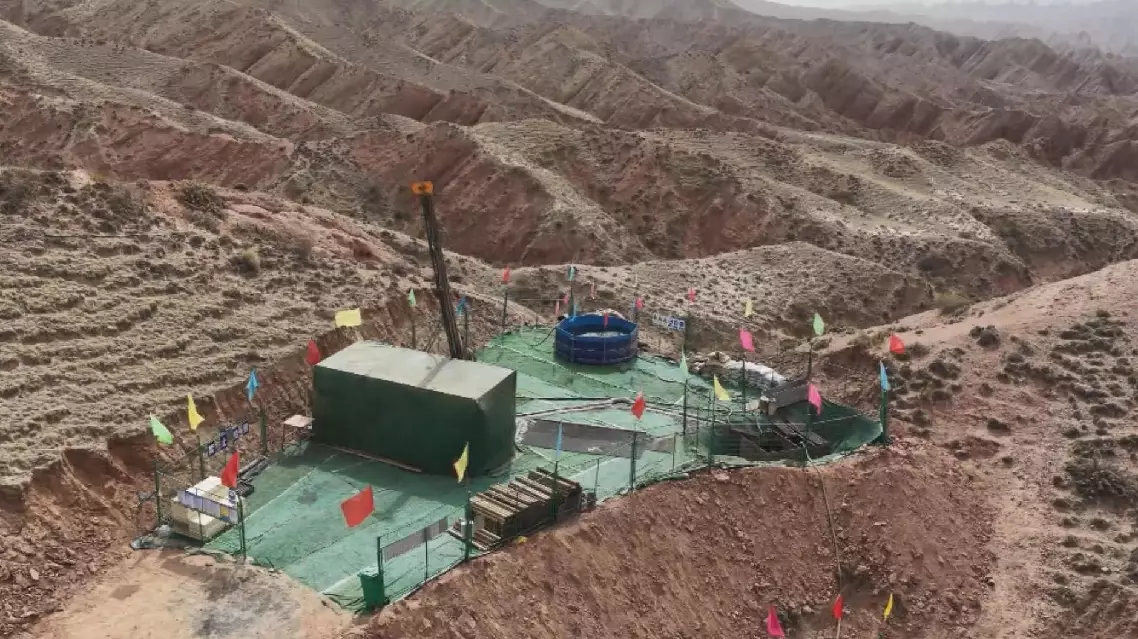
Super-large zirconium mine discovered in Xinjiang
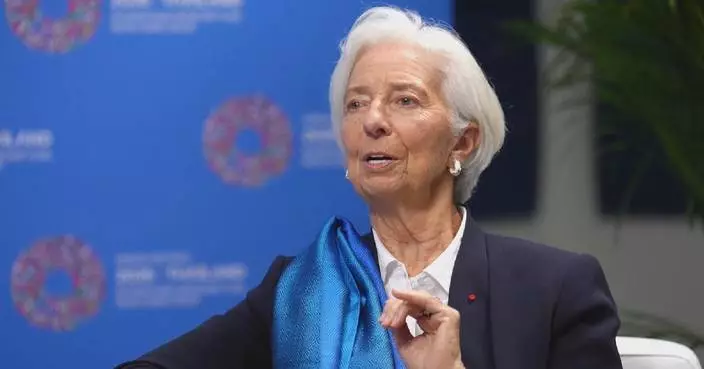
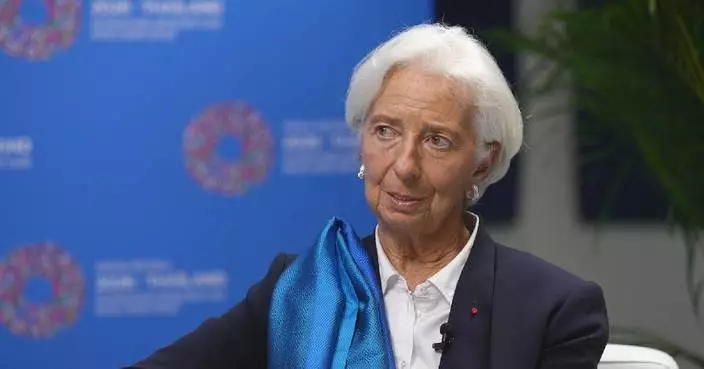
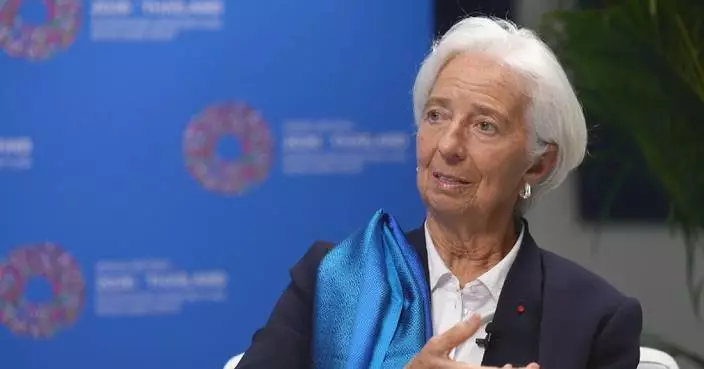
European Central Bank (ECB) President Christine Lagarde stressed the importance of human control over the direction of artificial intelligence (AI) development in an interview with China Media Group in Bangkok, Thailand, earlier this month.
Lagarde has recently warned that Europe faces an extraordinary crisis, as it has fallen far behind the United States and China in AI models, computing power, and investment.
However, in the interview that aired on Friday, she placed greater emphasis on the risks AI poses to humanity as a whole rather than on the regional concern.
"Because I think that there is one particular element, which I strongly believe in. What? The developments that we are seeing as a result of artificial intelligence are so transformational, and gearing in such an independent direction with potential recursive development to artificial intelligence that I think that all of us -- meaning the United States, China, Europe, corporate as well as policymakers -- should be preoccupied by this development. And I see it as a priority that we all understand where this is going and what kind of control human beings like you and me continue to have on this development. I'm more concerned about that than about closing the gap," she said.
Lagarde expressed confidence in the outlook for Europe's AI development and urged efforts to better leverage the region's talent and financial resources.
"So on closing the gap, it's pretty obvious from all accounts -- and I'm not the ultimate expert on artificial intelligence -- but those who know are saying that the United States is ahead of the game, that China is shortly behind. [Compared with] those developments in the U.S., [Chinese developments are] operating on a different model -- less proprietary and more open source. And Europe is -- for some of the member states -- a distant third. So can we become less of a distant third and be a third but have some control and some operational innovation? I think that should be the case, because we should also be able to develop. We have bright minds, great schooling, money, but we don't put them together well," she said.
Lagarde also called for cooperation among different parts of the world, instead of the pursuit of sole dominance.
"I also think that artificial intelligence is a long chain of different segments. So you are hand in hand with others. You don't control the entire ecosystem," she said.
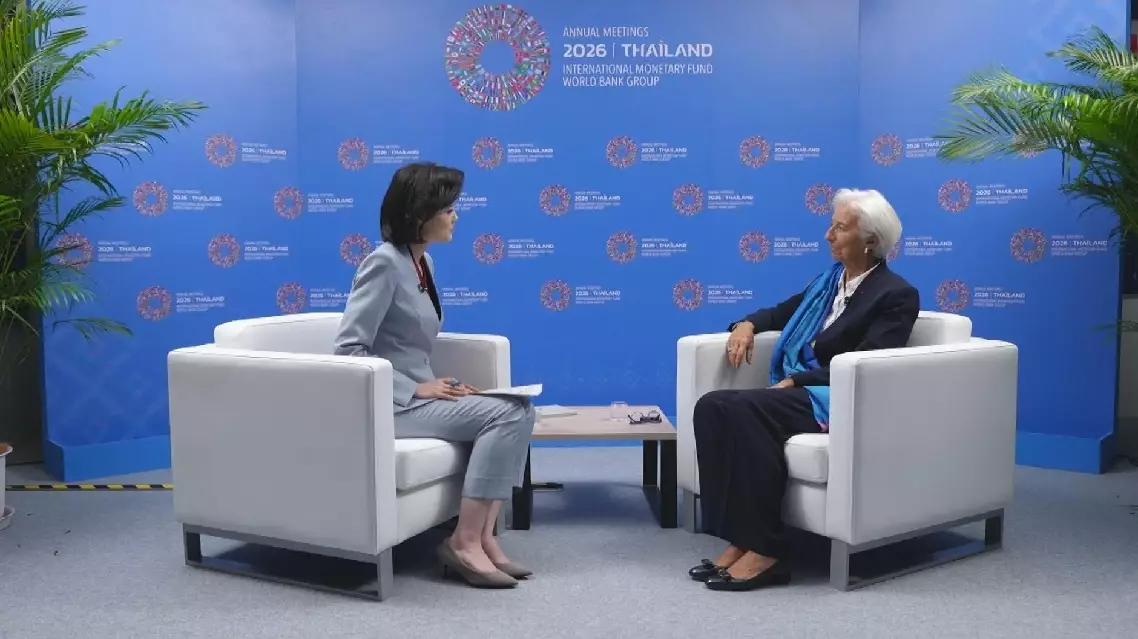
ECB president underscores importance of keeping AI development under control