China on Friday called for stronger international cooperation to advance the right to development, and urged countries to put development at the center of the global agenda amid widening inequalities and mounting challenges facing developing nations.
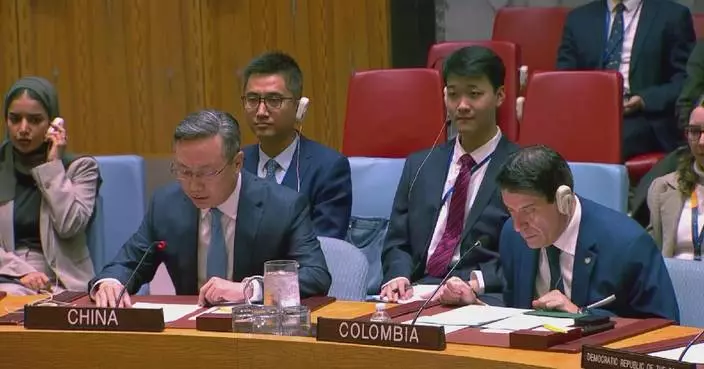
Speaking at a side event marking the 40th anniversary of the UN Declaration on the Right to Development, Sun Lei, China's deputy permanent representative to the United Nations, said that only through continuous development can people's aspirations for a better life and social stability be realized.
Development has been politicized and pushed to the margins when it is needed most, while divisions and confrontation are being fueled when solidarity is more critical than ever, he said.
Sun put forward four proposals to advance the right to development: defending the right to development, reinvigorating development partnerships, improving the development environment, and fostering new drivers of growth.
The rights to subsistence and development are basic human rights of paramount importance and equal importance should be placed on different types of human rights, he said.
Without development, there would be no human rights to speak of, nor could any enjoyment of rights be sustainable, he said, noting that development should be put front and center on the international agenda.
Sun also called for a more just and equitable international economic and financial architecture.
Unilateral sanctions and long-arm jurisdiction are inimical to development and must be rejected, he said, urging the international community to promote an inclusive economic globalization that benefits all.
On innovation, Sun called for speeding up technology transfer and knowledge sharing, so as to close the digital divide and artificial intelligence divide, and accelerate the low-carbon transition.
Sun said China's Global Development Initiative (GDI) has mobilized more than 23 billion U.S. dollars in funding and supported over 1,800 "small and beautiful" projects, benefiting local communities in more than 120 countries.
China stands ready to work with all parties to strengthen international cooperation and create an enabling environment for the realization of the right to development, Sun said.
The event was co-organized by the Permanent Mission of China to the United Nations, the Coordinating Bureau of the Non-Aligned Movement and the Office of the UN High Commissioner for Human Rights.
Godfrey Kwoba, charge d'affaires of Uganda's UN mission and chair of the Coordinating Bureau of the Non-Aligned Movement, said that the principles contained in the declaration must be translated into practical policies and actions at national, regional and international levels.
Claudia Fuentes Julio, UN assistant secretary-general for human rights, said development is not simply about economic growth; it is also about ensuring that development benefits are shared fairly and equitably.
Bjorg Sandkjaer, UN assistant secretary-general for policy coordination, welcomed the GDI as a contribution to global development efforts.
The emphasis on prioritizing development, adopting a people-centered approach and promoting practical cooperation is closely aligned with the right to development and the 2030 Agenda, she said.
Adopted by the UN General Assembly in 1986, the Declaration on the Right to Development recognizes development as an inalienable human right, affirming that every person and all peoples are entitled to participate in, contribute to, and enjoy development.
China calls for stronger global cooperation to advance right to development