Iranian Foreign Minister Seyed Abbas Araghchi said that Tehran currently has no plans to meet with U.S. officials, while consultations with Qatari and Pakistani mediators continue over Iran's conditions for resolving the crisis, Qatar's Al Jazeera reported Saturday.
In an interview with Al Jazeera, Araghchi dismissed reports of possible meetings as media speculation, saying Iran saw no need to meet with American officials at present.
He said Tehran would decide whether to hold direct or indirect negotiations after Washington accepted Iran's conditions.
Araghchi said an Iranian delegation had traveled to Qatar for further discussions, adding that his aide was there to continue consultations with mediators.
According to Araghchi, Iran's conditions include recognition of a new shipping route through the Strait of Hormuz that Tehran had worked out with Oman, and the closure of other routes.
He said Tehran also sought the lifting of sanctions imposed after the Islamabad Memorandum of Understanding (MoU), a reduction in U.S. military forces in the region, the restoration of sanctions waivers for Iranian oil exports, and the release of all frozen Iranian funds, including those held in Qatar.
Iran also demanded an end to hostilities on all fronts, including Lebanon, he said.
Araghchi said mediators had presented proposals concerning Iran's nuclear program, which Tehran was reviewing as part of what he described as a second phase.
The Iranian foreign minister also said a letter from U.S. Vice President JD Vance had been reviewed at high-level meetings, describing the American effort to open the door to broader dialogue and understanding as a "positive step."
On Feb 28, Israel and the United States launched joint attacks on Tehran and other Iranian cities. Iran responded with waves of missile and drone attacks targeting Israel and U.S. bases and assets in the region, and tightened its grip on the Strait of Hormuz.
A ceasefire was achieved between the warring parties on April 8. On June 18, Iran and the United States signed the MoU on ending the war in the region on all fronts.
Under the MoU, the two countries were scheduled to hold negotiations within 60 days, ending on Aug 17, to reach a final agreement on Iran's nuclear program and the removal of sanctions. However, they failed to make sufficient progress toward a deal.

Iran says no plans to meet U.S. officials, consultations with mediators continue

Iran says no plans to meet U.S. officials, consultations with mediators continue
Trade between China and Africa reached 312.11 billion U.S. dollars in the first nine months of 2026, up 22 percent from the same period last year, the latest customs data showed.
From vases to dining tables, more and more African products are enriching the choices of Chinese consumers, driven by China's zero-tariff policy for African countries.
Effective May 1 of this year, China fully implemented zero tariffs on 100 percent of tariff lines for 53 African countries with which it has established diplomatic relations, allowing a large number of African goods to enter the Chinese market.
From May to September, the import value of African peanuts, frozen strawberries and avocados soared 4.4 times, 113 percent and 82 percent, respectively, compared with the same period last year. China has become Egypt's largest export market for frozen strawberries, and 90 percent of South Africa's pecan exports are sold to China. "Both China and Africa have benefited extensively. On the one hand, African products have enriched the supply in the domestic market, with 70 percent of China's sesame imports and 40 percent of its coffee imports coming from Africa, while African pomelos, apples, and other fruits have met consumers' demand for out-of-season fresh fruit. On the other hand, the African people have also reaped tangible benefits," said Liu Yu, director of the West Asia and Africa Department under the Ministry of Commerce.
Behind this abundance of imported goods lie unimpeded transportation corridors and an increasingly dense logistics network.
This year, the cargo route between Ezhou City in central China's Hubei Province and Ethiopia's capital Addis Ababa has been increased to seven flights per week. In the first nine months, 456 flights were operated, up nearly 60 percent year on year.
Yue Bin, deputy general manager of the Enterprise Management Department under the Hubei International Logistics Airport Co., Ltd., said their business has benefited significantly from the increased flights.
"Since the beginning of this year, the overall cargo volume to Africa has grown very rapidly. Our cargo volume has doubled to 36,000 metric tons to date. Products such as fresh flowers have very strict requirements for transit time. With the increased frequency of flights, products like fresh flowers and coffee beans can now enter the Chinese market more conveniently," he said.
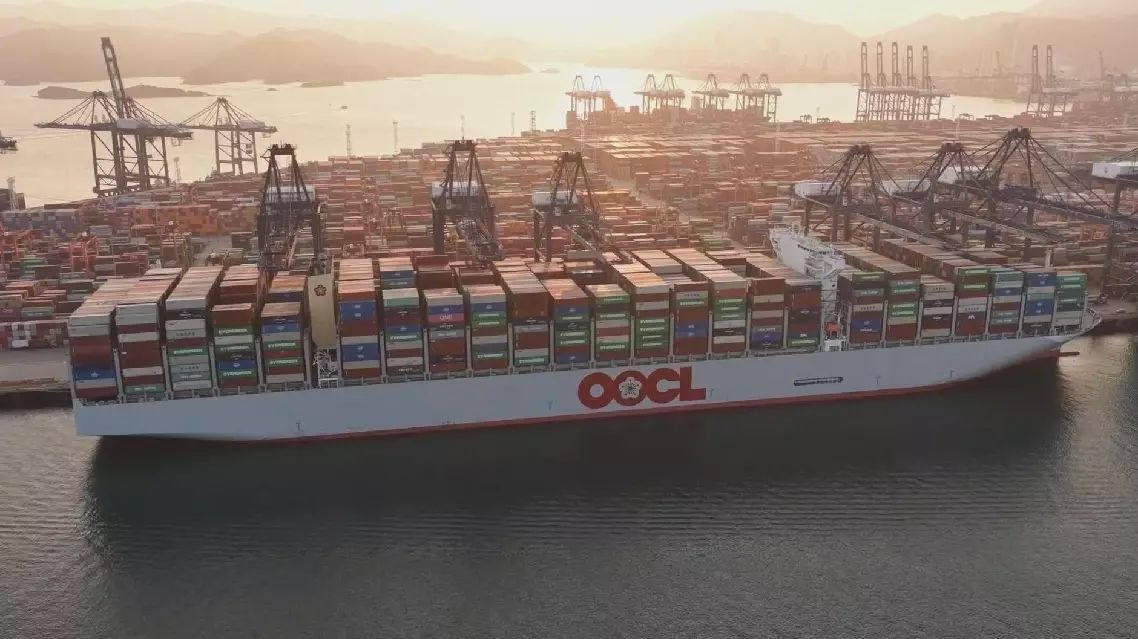
Meanwhile, maritime transport has also expanded import channels for African products, with the China-Africa logistics network continuing to densify.
Since the beginning of this year, cargo volume on the general cargo liner route between Yantai Port and Africa has exceeded 8 million tons, up 93 percent year on year and hitting a record high since the route was launched. The average number of monthly sailings to Africa has remained above 30, covering more than 20 African countries and regions.
China-Africa trade up 22 pct in first 9 months as zero-tariff policy boosts African imports