Trade between China and Africa reached 312.11 billion U.S. dollars in the first nine months of 2026, up 22 percent from the same period last year, the latest customs data showed.
From vases to dining tables, more and more African products are enriching the choices of Chinese consumers, driven by China's zero-tariff policy for African countries.
Effective May 1 of this year, China fully implemented zero tariffs on 100 percent of tariff lines for 53 African countries with which it has established diplomatic relations, allowing a large number of African goods to enter the Chinese market.
From May to September, the import value of African peanuts, frozen strawberries and avocados soared 4.4 times, 113 percent and 82 percent, respectively, compared with the same period last year. China has become Egypt's largest export market for frozen strawberries, and 90 percent of South Africa's pecan exports are sold to China. "Both China and Africa have benefited extensively. On the one hand, African products have enriched the supply in the domestic market, with 70 percent of China's sesame imports and 40 percent of its coffee imports coming from Africa, while African pomelos, apples, and other fruits have met consumers' demand for out-of-season fresh fruit. On the other hand, the African people have also reaped tangible benefits," said Liu Yu, director of the West Asia and Africa Department under the Ministry of Commerce.
Behind this abundance of imported goods lie unimpeded transportation corridors and an increasingly dense logistics network.
This year, the cargo route between Ezhou City in central China's Hubei Province and Ethiopia's capital Addis Ababa has been increased to seven flights per week. In the first nine months, 456 flights were operated, up nearly 60 percent year on year.
Yue Bin, deputy general manager of the Enterprise Management Department under the Hubei International Logistics Airport Co., Ltd., said their business has benefited significantly from the increased flights.
"Since the beginning of this year, the overall cargo volume to Africa has grown very rapidly. Our cargo volume has doubled to 36,000 metric tons to date. Products such as fresh flowers have very strict requirements for transit time. With the increased frequency of flights, products like fresh flowers and coffee beans can now enter the Chinese market more conveniently," he said.
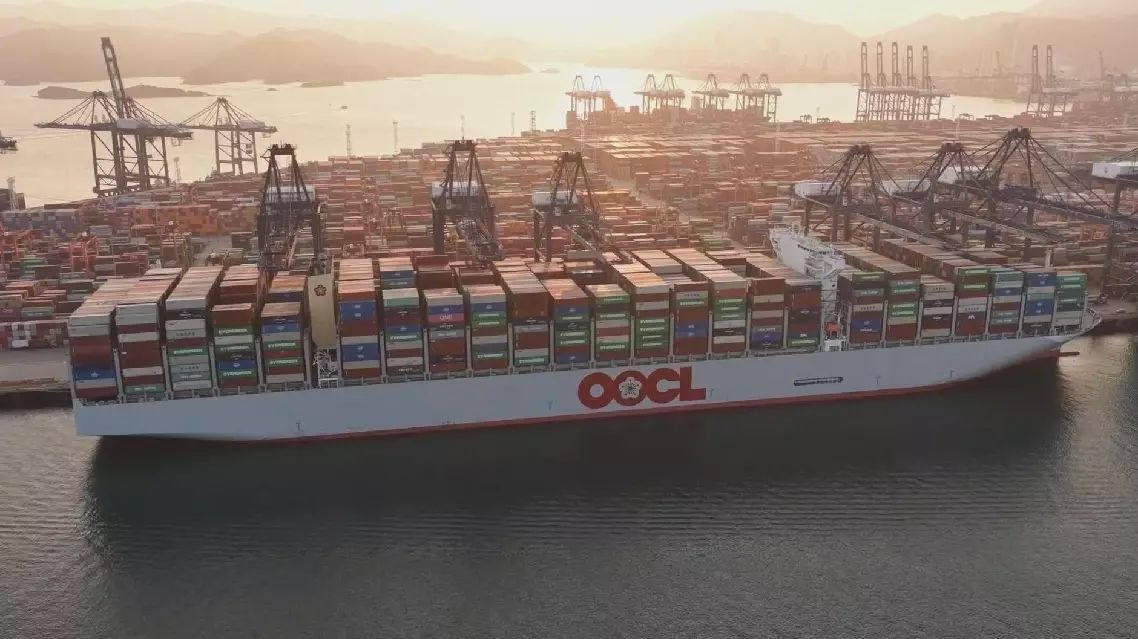
Meanwhile, maritime transport has also expanded import channels for African products, with the China-Africa logistics network continuing to densify.
Since the beginning of this year, cargo volume on the general cargo liner route between Yantai Port and Africa has exceeded 8 million tons, up 93 percent year on year and hitting a record high since the route was launched. The average number of monthly sailings to Africa has remained above 30, covering more than 20 African countries and regions.
China-Africa trade up 22 pct in first 9 months as zero-tariff policy boosts African imports