China's Shenzhou-23 crew has been living and working in orbit for over five months, carrying out scientific experiments, maintaining the Tiangong space station and managing their health in coordination with ground control to ensure the steady operation of their space home.
Multiple projects advanced as planned last week. Using optical 3D spatial measurement equipment, the astronauts -- Zhu Yangzhu, Zhang Zhiyuan and Lai Ka-ying -- alternately touched their noses and a blue handrail with their right index fingers to collect data on tactile and proprioceptive perception of mechanical forces in microgravity.
They also completed behavioral tests for visual motion processing experiments. Wearing EEG recording devices and VR headsets, they conducted tests including weak-stimulus brain-computer interface, microgravity intuitive physics, and spatial cooperative coding and regulation experiments; ground researchers will conduct follow-up studies based on downlink data.
Last week, the crew completed the collection, centrifugation and storage of blood samples for in-orbit medical examinations and related experiments.
Following the experiment schedule, the crew replaced gas cylinders in the combustion science experiment cabinet, cleaned samples from the containerless experiment cabinet's chamber, maintained electrodes in the axial mechanism, and replaced the window cover lens.
The crew completed platform inspections and replaced components of the water treatment subsystem in the core module, continuing to ensure the stable operation of the station's regenerative life support system.
The three astronauts underwent 12-lead ECG examinations and ambulatory ECG and blood pressure monitoring, and received diagnosis and treatment using a traditional Chinese medicine diagnostic instrument to continuously monitor their condition in orbit.
They also exercised as scheduled to counteract the physiological effects of microgravity and maintain good physical and mental health.
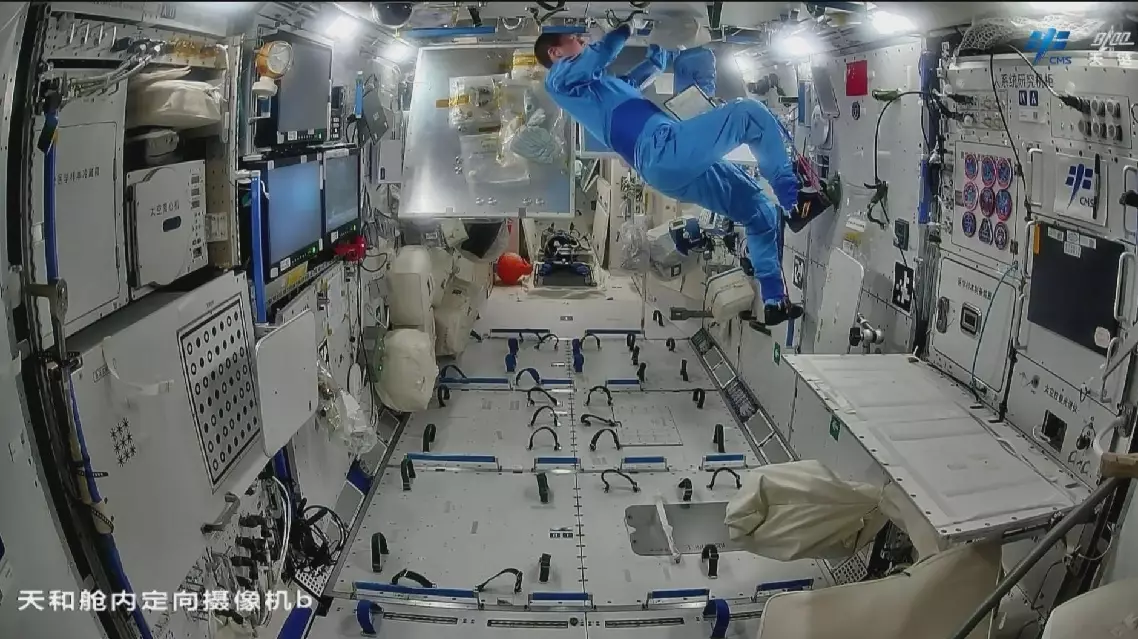
Shenzhou-23 crew advances space science experiments, station maintenance
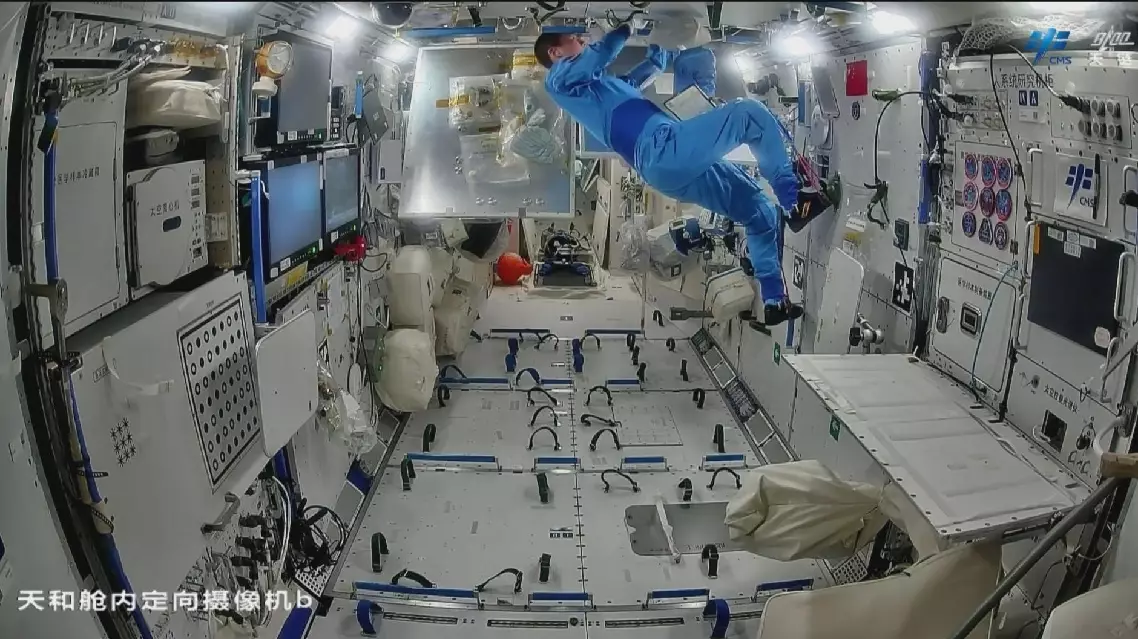
Shenzhou-23 crew advances space science experiments, station maintenance
China's largest ultra-high-altitude wind power project has been successfully connected to the power grid in Nagqu City, southwest China's Xizang Autonomous Region, as wind power deployment accelerates on the plateau alongside photovoltaics.
The high-altitude plateau brings strong winds, but the thin air makes it difficult to convert them into electricity. Moreover, the harsh and remote conditions present an added challenge to power storage, which is essential due to the intermittent nature of wind generation.
Developed by the China Energy Investment Corporation's Xizang Company, the Jicuo Wind Farm has met both of these challenges head on. In terms of storage, the project has successfully integrated a record-setting 100 megawatts of storage capacity.
The 18 wind turbines, standing at altitudes between 4,850 and 5,127 meters, were specially tailored for the ultra-high-altitude thin-air environment, with their rotor diameter enlarged to 200 meters -- noticeably larger than flatland models of the same capacity, so that the expanded swept area can capture as much wind energy as possible under low air density and capture even light winds.
That lets the wind farm take full advantage of the wind-rich area, where the average annual wind speed reaches 7.51 meters per second, and the maximum speed sees 42 meters per second.
Their power generation and control systems have also been optimized for greater operational stability under gusty and turbulent conditions.
"After the project is put into operation, it is expected to deliver about 211 million kilowatt-hours of clean electricity, save about 72,000 tonnes of standard coal, and reduce carbon dioxide emissions by about 196,000 tonnes annually. It is of great significance for enhancing the power supply capacity and stability of the Nagqu regional grid," said Hu Jiansheng, manager of Jicuo wind power project under Xizang branch of China Energy Investment Corporation.
The integrated project is expected to improve the power supply capacity and stability of the regional grid, ensure that farmers and herdsmen in Nagqu stay warm through the winter, and promote rural revitalization and economic and social development.
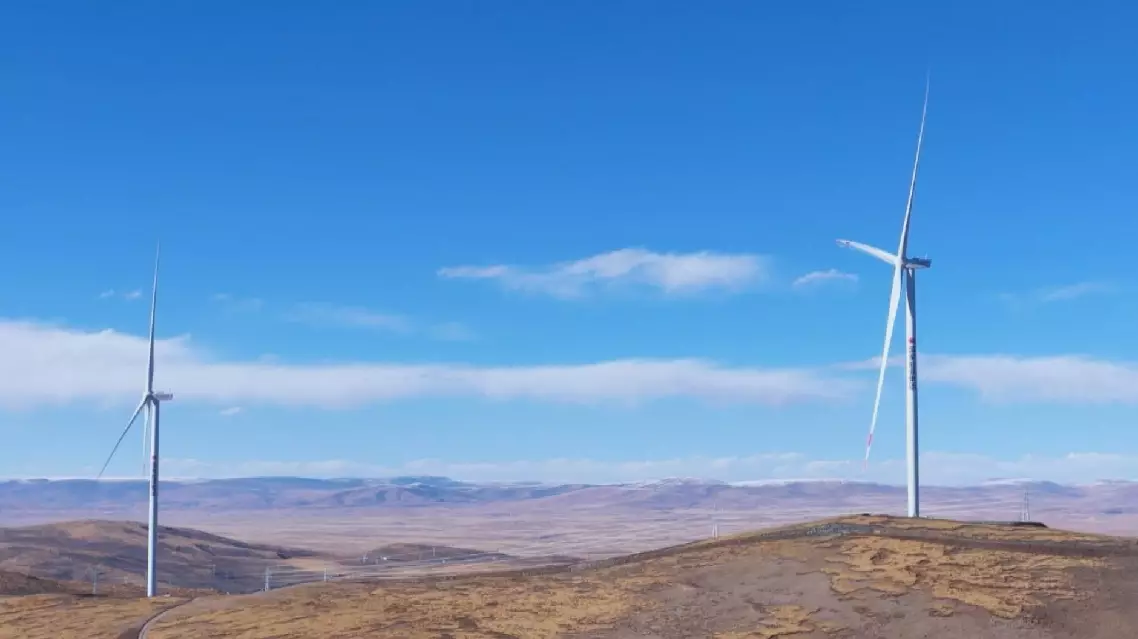
China's largest ultra-high-altitude wind power project connected to grid in Xizang
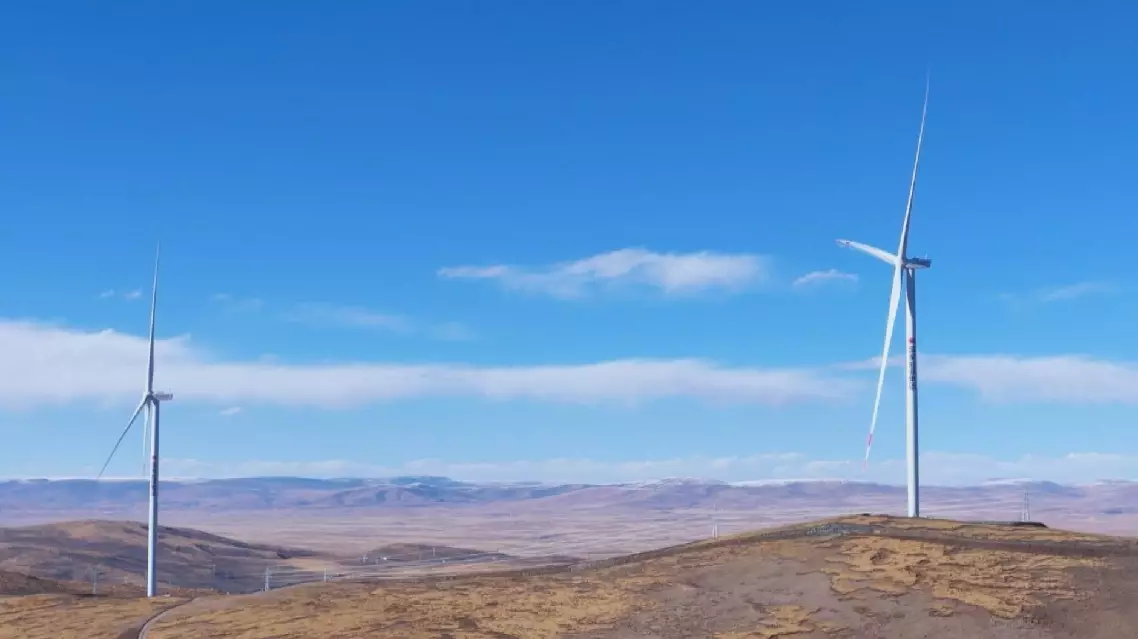
China's largest ultra-high-altitude wind power project connected to grid in Xizang