Chinese-made cars, electronics and household goods are becoming a fixture of everyday life in Oman, winning over consumers with competitive prices and improving quality as economic ties between the two countries expand beyond oil.
China has remained Oman's largest trading partner for many consecutive years and is also the biggest destination for Omani crude oil exports. Bilateral trade reached about 33 billion U.S. dollars in 2025, according to Chinese customs statistics.
For Mahmoud, a taxi driver in Muscat, the appeal of Chinese products became clear back in 2018, when high local prices prompted him to fly to China to buy furniture and building materials for his new home.
"The first place I visited was Guangzhou. At that time, I was building my own house and I made a special trip to China to buy things. I bought furniture from China, along with all kinds of building materials," he said.
Even after factoring in round-trip airfare and hotel costs, Mahmoud said he saved more than 100,000 yuan (about 15,000 U.S. dollars) compared with buying locally, and the furniture he brought home is still in use eight years on.
Omani consumers no longer need to travel abroad to buy Chinese appliances, mobile phones or vehicles, as more and more brands enter the local market. For Mahmoud, the change is most visible on the roads.
"Over the past five years, Chinese vehicles have entered the Omani market in large numbers. They are very popular. Especially now, Chinese electric vehicles are becoming more and more common," he said.
The growing presence extends well beyond transport. Hasan, a local resident, said goods from China have become part of everyday life across the Gulf region.
"Here in the Gulf region, you see Chinese vehicles and all kinds of equipment, appliances and mobile phones made in China. Chinese goods are very common in our daily lives," he said.
Rashed, another resident, said the appeal also reflects improvements in quality, particularly in vehicles and electronics.
"Chinese vehicles are getting better and better now. The quality is good. Chinese products perform well, especially when it comes to electronics and technology," he said.
Chinese brands have gained a solid foothold in both categories. Sales of Chinese-brand cars in Oman reached about 12,000 units in 2025, while three of the country's top five mobile phone brands are Chinese.
The flow of goods runs in both directions, with Omani seafood and premium perfume brands attracting a growing following among Chinese consumers.
Consumer trade forms part of a broader economic relationship that is expanding into investment, construction and industrial production. The alignment of the China-proposed Belt and Road Initiative with Oman's Vision 2040 development strategy is creating opportunities in areas ranging from energy infrastructure to local manufacturing.
Omani economist Yousuf bin Hamed al Balushi said deeper industrial cooperation with China could support Oman's development plans and help the country make fuller use of its natural resources.
"Oman is working to achieve a series of strategic goals through Vision 2040. To realize these development goals, we need China's experience and technology, we need capital from China, and we also need to bring in factories and industrial projects, so as to maximize the development and utilization of Oman's existing natural resources," he said.
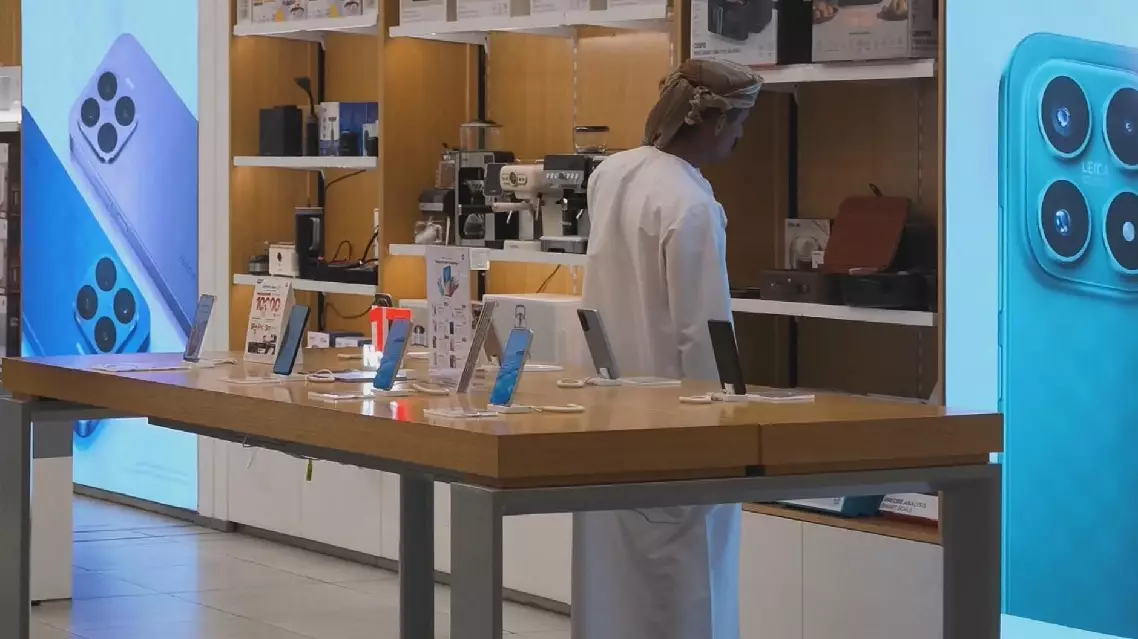
Chinese goods win over Omani shoppers on quality, competitive prices