Skip to Content Facebook Feature Image

New ski season begins with fans flocking to major resorts

China

China

China

New ski season begins with fans flocking to major resorts

2026-11-01 17:31 Last Updated At:22:48

As temperatures drop, winter tourism is heating up across northern China, with major ski resorts in Hebei, Xinjiang and other regions officially opening their doors to embrace fans.

The 2026-2027 ski season officially kicked off in Chongli, north China's Hebei Province, on Saturday, with local ski resorts continuously going more popular. Tourists are enjoying themselves to the fullest everywhere on the snow.

"I rushed here from Beijing early this morning. I feel absolutely thrilled to be here for the very first day of this ski season," said Jin Xin, a skiing enthusiast from Beijing.

Chongli District of Zhangjiakou City was the primary venue for the 2022 Winter Olympics snow events. Its ski courses boast a thrilling maximum vertical drop of approximately 500 meters. Its extended ski season runs from November through late March.

Creating an immersive ice and snow experience highlighted this season's opening in Chongli. While experiencing the passion of winter sports, skiing enthusiasts could also have fun in snow hotpot parties, new equipment trial runs, and opening-day cake celebrations.

The Mohe Beiji (Arctic) Ski Resort in Mohe City of the northeastern province of Heilongjiang opened Friday to sports fans, starting the new ski season. It is the northernmost, highest-latitude, and longest-season outdoor ski resort in China, with a skiing period lasting up to six months.

"For us southerners, the snow here is incredibly appealing. It is my first experience of winter sports, and it is absolutely thrilling," said Dai Jun, a tourist from Guangdong Province in the south.

Beyond skiing, activities like snow tug-of-war, snow football, and snowmobiling also see visitors glued to them.

This year, some ski resorts in the Greater Khingan Mountains have improved their professionalism and become better catered to team training, and skiing enthusiasts with upgraded cable car systems and snowmaking equipment.

The Jiangjunshan Ski Resort in Altay Prefecture of northwest China's Xinjiang Uygur Autonomous Region officially opened Friday, and received a large number of skiing enthusiasts on its opening day. This season, the resort has added six new ski trails and opened a dedicated carving trail to enrich the experience for visitors.

"I make it a point to visit Jiangjunshan Ski Resort as soon as it opens every year. On the slopes, you can take a bird-eye view of the stunning landscape of Altay while enjoying the fun of skiing," said Wang Xiao, a skiing enthusiast from Gansu Province.

This year, Altay Prefecture has also introduced a series of public-benefit winter tourism initiatives. Discounts such as free skiing for non-local tourists upon presenting their flight tickets, and a "locals touring their hometown" free skiing program, allow different groups of people to conveniently experience the region's abundant winter ice and snow resources.

New ski season begins with fans flocking to major resorts

New ski season begins with fans flocking to major resorts

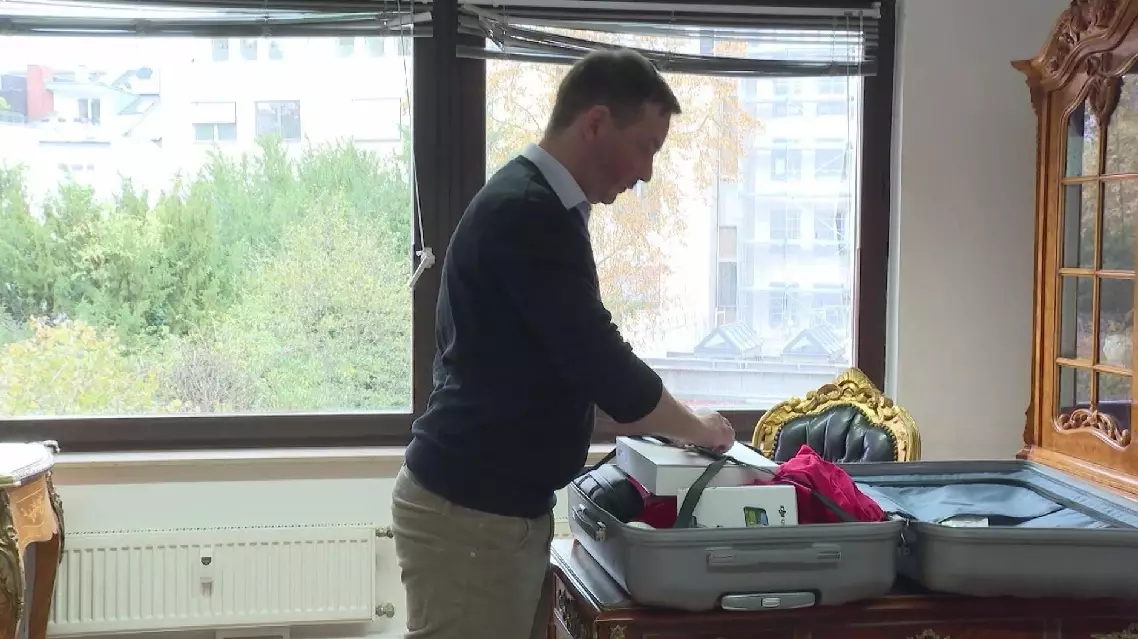
⁠⁠⁠⁠⁠⁠⁠"China Haul" -- a trend of foreign tourists opening their suitcases on social media to show off the Chinese goods they bought during trips to China -- has recently gone viral overseas.

Some joke that "China Haul" sounds like "China good" in Chinese, a fitting description for leisure trips to the country, since tourists often arrive with empty suitcases and leave with them fully stuffed, proving that made-in-China products are indeed good.

Opening a suitcase to show off purchases made in China is one of the most popular ways German tourists share their trips. Alexander Haase has traveled to Beijing four times over the past year, and buying Chinese tech products has been a must every time. His suitcase reads like a continuously updated list of Chinese tech products.

"In the past 12 months alone, I've been to China four times. What I bought are mostly high-tech products. For example, I bought a Huawei laptop, and AI glasses. In short, all the latest high-tech products," said Haase.

Haase's shopping list directly reflects the popularity of Chinese tech products among German tourists. Having visited China many times over more than two decades, he has witnessed not only the iteration of products but also the overall upgrading of the urban environment and digital infrastructure.

For him, buying tech products in China is no longer a side activity but an indispensable part of the trip. This change is also appearing among more German tourists.

German travel industry insiders have also observed that China's appeal to young people has moved beyond traditional sightseeing of historic sites; experiencing cutting-edge technologies such as artificial intelligence and robots up close is becoming a new reason to visit China.

"The development of China's high and new technologies is a very important element attracting young people from abroad. For example, robots spark their greater interest in learning more about China. Thanks to the visa-free policy, young German tour groups can travel to China at any time, just as they please," said Tang Huiying, general manager of a German youth travel agency.

According to German travel industry insiders, German tourists visiting China in 2026 are expected to reach between 500,000 to 600,000. For frequent travelers like Wolfgang Bednarek, who has visited China many times, China's charm is not one-dimensional but a comprehensive appeal formed by the combination of multiple experiences.

"I have traveled all over the world, but I have to say that in my heart, China is the most impressive country. China not only has a unique culture and diverse geographical features, but the people there are also a highlight -- an absolute highlight," said Bednarek.

German tourists embrace Chinese high-tech goods, fueling "China Haul" trend online

German tourists embrace Chinese high-tech goods, fueling "China Haul" trend online

Recommended Articles