China's lunar exploration project will rigorously validate key technologies through unmanned test flights and near-Earth orbital trials before executing its crewed Moon landing mission, ensuring maximum safety and resource efficiency, said chief designer of the country's lunar exploration program on the sidelines of the 7th Manned Space Symposium in Beijing.
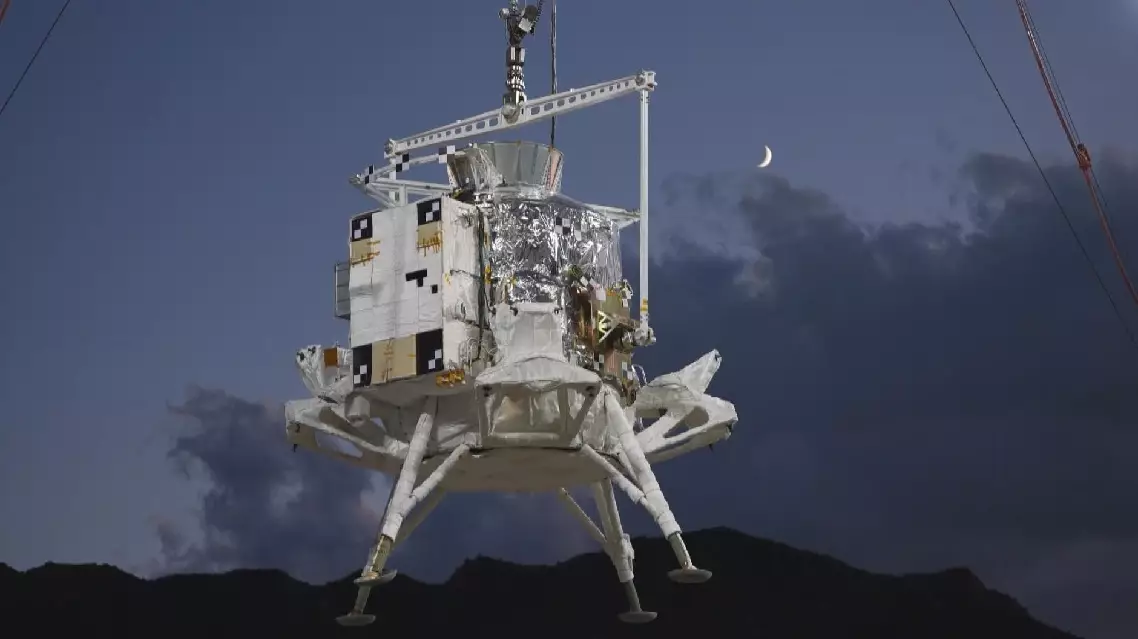
Currently, the development and construction of China's crewed lunar landing missions are advancing steadily. According to the previously announced plan, two Long March-10 carrier rockets will successively launch the Lanyue lunar lander and the Mengzhou crewed spacecraft, which will then dock in lunar orbit. The Mengzhou spacecraft can carry three astronauts between the Earth and lunar orbit, with two of them taking the Lanyue lander to travel between lunar orbit and the lunar surface.
"When planning, we follow two principles: first, for any task to be performed in lunar orbit, we will utilize the space station to conduct validation in near-Earth orbit whenever possible; second, for any crewed mission, we will try to fly it in an unmanned state first. We will use the near-Earth version of the Long March-10 rocket to launch the near-Earth version of the Mengzhou spacecraft to perform space station missions in near-Earth orbit, validating the rocket's basic technologies and the critical re-entry and return phases of the spacecraft. Then, we will use the lunar version of the Long March-10 rocket to launch the lunar version of the Mengzhou spacecraft to execute the lunar landing mission. This is a validation process for the rocket: near-Earth first, then the Moon," said Wang Xiang, deputy chief designer of China's manned space program and chief designer of the lunar exploration program.
The unmanned flight mission of the Lanyue lander will allow for the on-site collection of critical environmental data, including first-hand measured information on lunar surface temperature, lunar dust conditions, and the in-orbit performance of the spacecraft.
"In an unmanned state, we will validate as many key technologies of the entire crewed process as possible, including launch, orbiting the Moon, docking with the Mengzhou spacecraft, landing and staying on the lunar surface, taking off again, and re-docking with the Mengzhou spacecraft. This is to ensure that the crewed flight is safe and reliable," Wang explained.
Meanwhile, the unmanned flight mission of the Lanyue lander is also soliciting secondary payloads nationwide. For a single mission, the total mass of the carried payloads will not exceed 50 kilograms, and the total power consumption will not exceed 100 watts.
"Because it is an unmanned mission, we will have some surplus resources, and we must make full use of them. Through a selection process, we will choose scientific experiment projects that are meaningful and necessary to be conducted on the Moon. It is like giving them a 'free ride' to the Moon to conduct corresponding scientific experiments or technical explorations, achieving the goal of benefiting multiple parties with a single flight," said Wang.
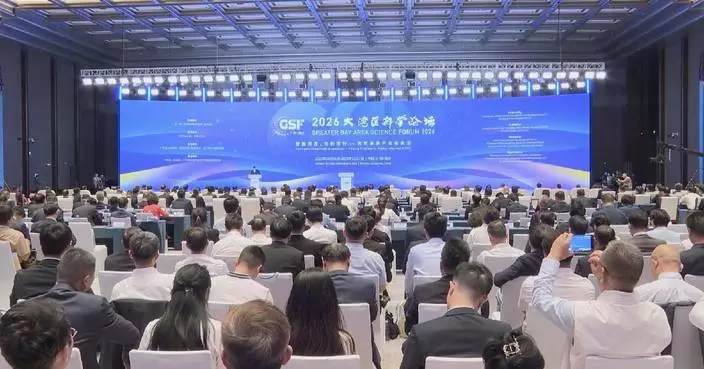
The symposium, running from Saturday to Sunday, drew more than 800 experts and scholars exploring how digital and intelligent technologies can advance human spaceflight.
This year's event focused on cutting-edge technologies, engineering practices, and development needs in the field of human spaceflight, aiming to exchange the latest research results and deepen academic discussion.
It featured 15 sub-forums under three themes -- common technologies for human spaceflight, the low-Earth-orbit crewed space station, and lunar exploration missions.
Lunar lander to undergo unmanned tests ahead of crewed mission: chief designer