Public trust in safety has been shattered in Spain after two crashes on the same high-speed rail line in the same year, shaking a nation that once took pride in its rail network and leaving travelers questioning whether the system can be relied on.
At least 69 people were killed and dozens more injured when two trains collided on the Madrid-Seville high-speed line on the morning of October 28. The crash occurred near Toledo, south of the capital, on the line linking Madrid with the southern region of Andalusia.
"You feel like Russian roulette, you know, the expression, you don't know what's going to happen," said a local.
"It used to be like the most safe transport medium and now it's... I'm wondering, is it?" said another local.
Oscar Puente, Spain's Minister of Transport and Sustainable Mobility, has resisted calls to resign, insisting that human error caused the accident -- a train operator gave permission for one train to restart and continue at full speed despite another train stuck on the track ahead.
But rail employees reject using one control-room operator as a scapegoat.
Diego Martin, president of the Federation of European Train Drivers' Unions, said that, unfortunately, they were trying to put all responsibility on train workers and not on the system, even though they were forced to work with degraded and faulty systems.
Raquel Gonzalez, the Rail Secretary General of the UGT Union, said they had to respect the investigation and reach a final analysis without jumping to conclusions.
The automatic LZB signaling system has come under scrutiny -- the system was installed in the early nineties but has gone offline 170 times this year alone.
"The LZB system actually automatically stopped the trains in the first instance, right? That means the failsafe design is acknowledged, which means the LZB system is still safe. But after it was taken over by the manual control centers, so I think there might be some human error. Both railway maintenance and operation management are to be further enhanced, including technical investments, management, training, etc.," said Lei Chen, Professor of Railway Operation and Control, University of Birmingham.
Only 16 percent of Spain's high-speed rail budget goes to maintenance and upgrades, lower than in Germany or Switzerland according to European Commission data. Meanwhile, train travel in Spain has doubled since 2019, after opening up its rail network to private companies.
Opposition leader Alberto Nunez Feijoo claims that Spain has "lost its culture of security," as general elections at the end of the month approach.
With families mourning their unspeakable loss, people here want assurances that this will never happen again.
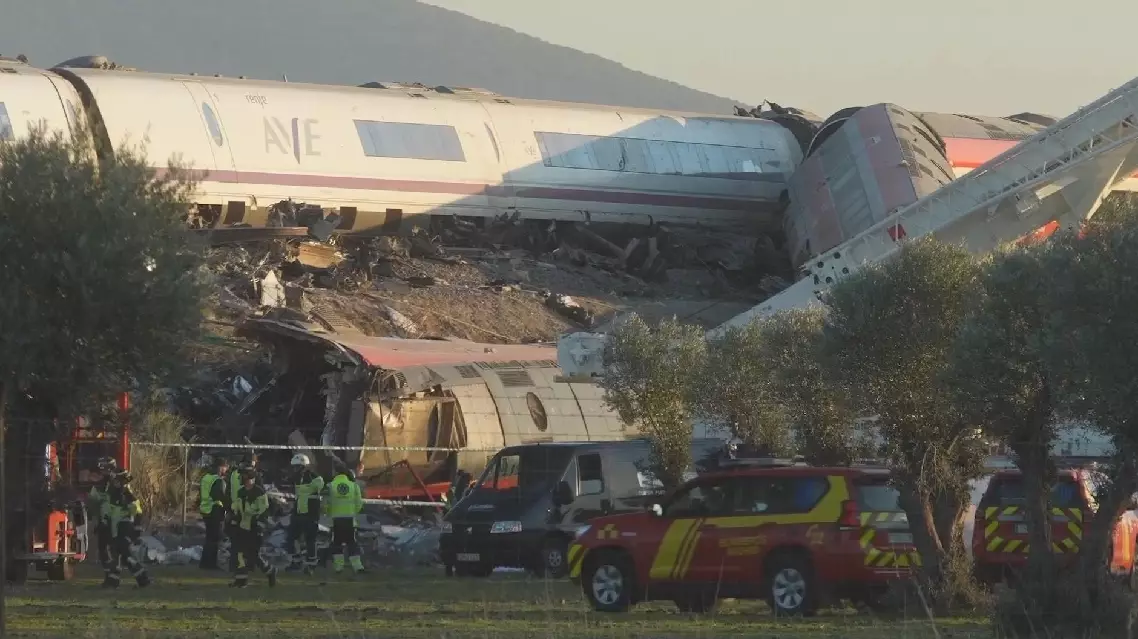
Spain high-speed rail crashes shatter public trust in safety
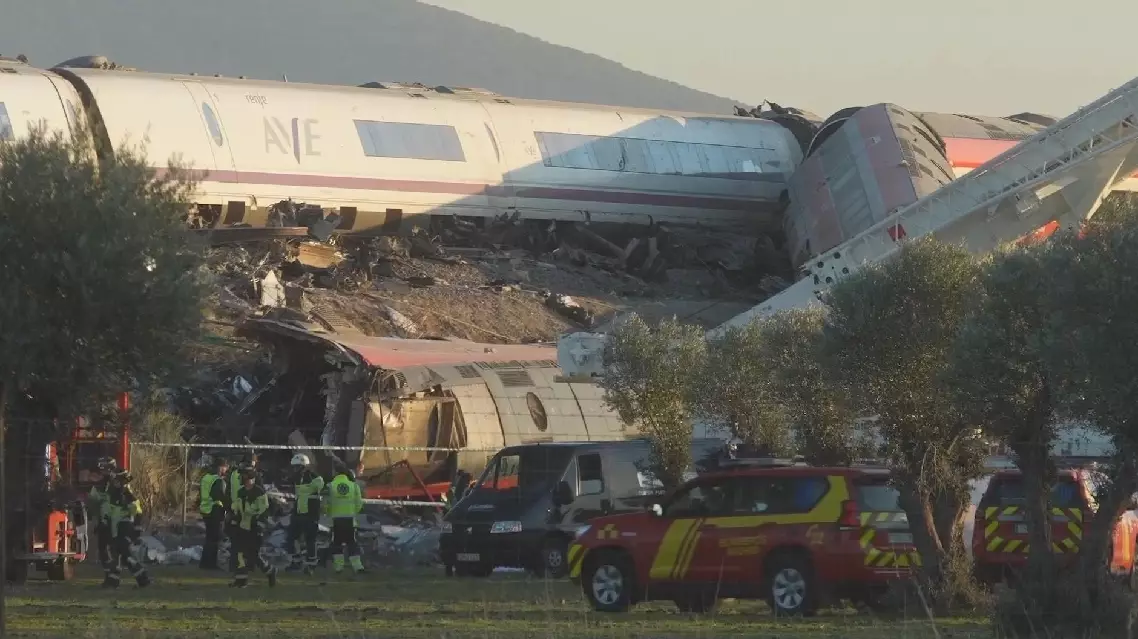
Spain high-speed rail crashes shatter public trust in safety