MAASTRICHT, the Netherlands--(BUSINESS WIRE)--Nov 2, 2026--
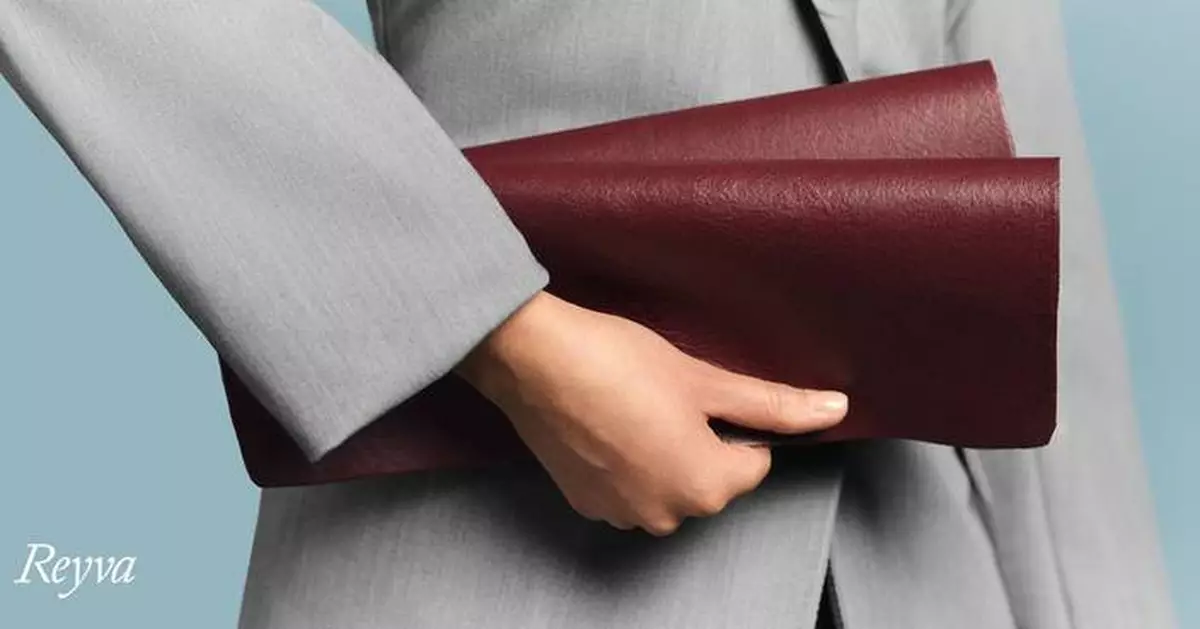
Qorium, the company that develops cultivated real leather, today announces that it is becoming Reyva. The new name and identity mark its next stage: moving from a pioneering technology business towards a global material brand built for the exacting standards of the luxury leather sector.
This press release features multimedia. View the full release here: https://www.businesswire.com/news/home/20261102661351/en/
Reyva grows collagen directly from animal cells and cultivates it through a proprietary process to create uniform sheets. The resulting material is then tanned to become real leather, made from the same natural material that gives conventional leather its strength, breathability and durability. It does so without the necessity of raising or slaughtering animals, and with dramatically reduced waste, water and energy demands compared with traditional leather production. Reyva’s process is designed to give brands greater control over thickness, structure, quality and traceability, while eliminating the variability and waste associated with animal hides.
The relaunch gives the company a more distinctive platform for commercial growth while preserving what sits at its core: advanced tissue engineering, deep leather knowledge and a commitment to creating a premium material that can work with established tanning, finishing and manufacturing processes.
The name Reyva brings together “RE,” inspired by reinventing leather, and “VA,” expressing forward movement. It also echoes rey, the Spanish word for “king,” offering a subtle nod to luxury. Reyva is pronounced RAY-vuh, with the emphasis on the first syllable “ray,” as in a ray of light.
“Reyva reflects the company we have become: ambitious, design-led and ready to stand alongside the world’s leading material brands,” said Michael Newton, CEO of Reyva. “Our science gives us a fundamentally new way to make real leather. Our next chapter is about turning that capability into a material that designers and manufacturers choose for its beauty, consistency and performance, as well as its sustainability credentials.”
Reyva’s platform begins with a small, painless biopsy. Selected cells are banked and multiplied before being cultivated in proprietary tissue bioreactors, where they form collagen sheets. These sheets are then tanned and finished using leather-industry craftsmanship and expertise. The material can be cut, stitched, embossed, tanned and finished, and can be engineered to meet the requirements of different applications.
The company is industrialising its process at the Brightlands Maastricht Health Campus in the Netherlands. It is working with selected partners in automotive and luxury fashion as it progresses from development to commercial volumes. Initial availability will be limited, with capacity increasing as the company scales.
“Leather is an extraordinary natural material, but its conventional production begins with the limits and variability of an animal hide,” said Dr Mark Post, co-founder and Chief Science Officer of Reyva. “By cultivating collagen in a controlled environment, we can preserve the qualities people value in leather while introducing a new level of precision, consistency and resource efficiency.”
An independent life-cycle assessment by CE Delft projects that Reyva’s cultivated leather could achieve an 87% lower carbon footprint than conventional cow-derived leather at full-scale production in 2029 using renewable electricity. The assessment calculated 10.5 kg CO₂-equivalent per square metre at the tannery gate, including finishing, compared with a benchmark of 77–83 kg CO₂-equivalent per square metre for conventional French calf leather. Reyva will continue to update its assessment as the process scales and primary data becomes available.
Reyva was founded by tissue-engineering pioneer Dr Mark Post, leather-industry expert Rutger Ploem who comes from a family of tanners spanning six generations, and sustainability entrepreneur Stef Kranendijk. The company is led by CEO Michael Newton and has raised €30 million to date, including a €22 million Series A announced in November 2025.
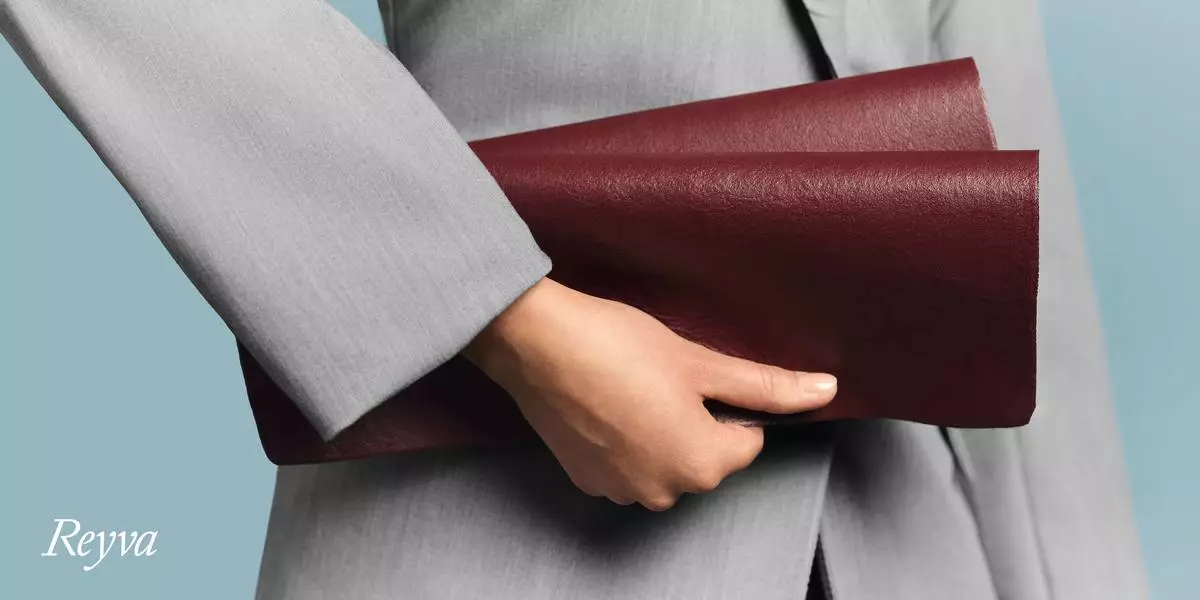
Reyva creates beautiful, high-performing real leather. By cultivating leather in uniform sheets, we can move beyond the natural limits of traditional hides, with greater control over its shape, size, thickness and structure. Reyva sample photography by Laurent Stevens
JERUSALEM (AP) — The Middle East is braced for a possible return to all-out war. There are concerns that the United States, along with Israel, could strike Iran shortly after Tuesday’s midterm elections in the U.S.
Two Iranian officials said their delegation had left Qatar after days of discussions but that messages with the U.S. continued to be exchanged through the mediator. The officials spoke on condition of anonymity due to the sensitivity of the talks.
The diplomatic efforts seek to avert new attacks. Tehran has expanded its threats but said it is waiting for the latest U.S. response to a proposal that would fully open the Strait of Hormuz to shipping within two days if Washington meets several conditions.
Here’s where things stand Monday.
U.S. President Donald Trump on Sunday evening told reporters he and Israeli Prime Minister Benjamin Netanyahu had a “very good” call on Saturday. He said they discussed Iran but gave no details.
Even before Netanyahu and his bloc of allies lost their majority in parliament in last week’s election, there were growing fears that Netanyahu was pushing for new strikes against Iran in an effort to stay in power in an emergency government during renewed war. Since last Tuesday’s election, the prime minister has publicly commented only on the vote.
There was no word from Netanyahu and his office on the latest call with Trump, who has continued to alternate between public comments about pursuing talks with Iran and threats to strike it hard.
“The standoff in the Gulf between the U.S. and Iran is really between Qatar and Israel,” Andreas Krieg, a professor at King’s College London, said on X. “Qatar is tirelessly working on a diplomatic offramp with the region’s backing while Israel is looking for military ways to throw the region under the bus.”
The Islamic Republic has stepped up its public messaging during the uncertainty, saying it is ready for both diplomacy and renewed fighting.
The new supreme leader, Ayatollah Mojtaba Khamenei, met with Iran’s military chiefs and said the response to “any kind and level of threat” from the U.S. or Israel should be immediate and without “geographic limits,” and urged an expansion of the list of potential targets.
Khamenei still has not been seen publicly since the opening strikes by Israel and the U.S. on Feb. 28 killed his father, the previous supreme leader.
Iran’s security chief, Mohsen Rezaei, warned on X that any attack would bring “devastating blows on the aggressor using new weapons.”
In an interview with state television, Rezaei said “the tone has completely changed” from the U.S. and called it a “very good sign.” He gave no details about the letter he received from U.S. Vice President JD Vance, which Iran acknowledged last week, and said he had not responded.
Rezaei also said there had been no decision to change Iran’s nuclear doctrine, but he noted that some Iranians had questioned whether that should it should change if Iran were attacked again. Tehran has insisted its nuclear program is peaceful.
Washington seeks to prevent Iran from obtaining a nuclear weapon and wants to address the issue in any new talks. Iran wants to discuss the nuclear issue later.
Iranian Foreign Minister Abbas Araghchi, on a one-day visit to neighboring Turkmenistan on Monday, has said the final outcome depends on answers provided by the United States to the “Iranian questions.”
More attacks on commercial ships were reported on the Strait of Hormuz during October, in the busiest month for reported assaults since March, during the war's opening weeks.
The mood was grim at the Manama Dialogue, an annual security summit in Bahrain organized by the International Institute for Strategic Studies.
“We don’t really want to see another round of confrontation in the region,” United Arab Emirates presidential adviser Anwar Gargash told attendees.
Gargash acknowledged that “the rules of logic” show that the U.S. and Iranian stances are far apart, and “if these positions are not bridged, then we have to worry about the worst.”
Gulf nations have spent billions of dollars to boost their defense capabilities since the war began. The UAE has faced the largest number of attacks from Iran, with more than 3,000 drones and ballistic missiles targeting airports and military and oil facilities, according to IISS. Most were intercepted.
Egypt’s Foreign Minister Badr Abdelatty told the gathering in Bahrain that “the second round (of escalation) will be more dangerous, more destructive, and it will lead to nowhere."
Meanwhile, China will send a special envoy to Iran, Oman and Saudi Arabia in early to mid-November, Foreign Ministry spokesperson Mao Ning told reporters Monday.
“The Middle East Gulf region should not become an arena for great-power rivalry and geopolitical conflict,” China's President Xi Jinping said in his meeting with Oman’s sultan, according to a readout from China’s Foreign Ministry. The two countries called for a return to dialogue.
Associated Press writers Victoria Eastwood in Cairo and Kanis Leung in Hong Kong contributed to this report.
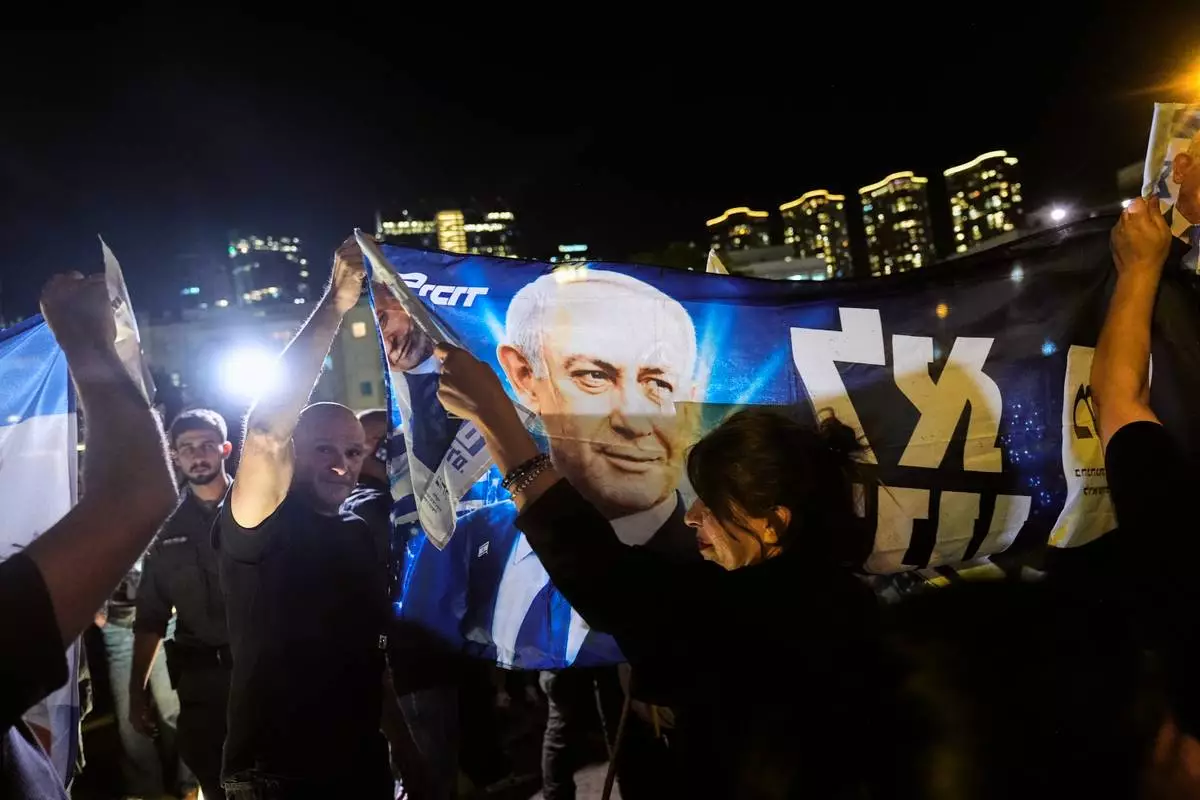
Supporters of Prime Minister Benjamin Netanyahu protest against left-wing activists calling for the formation of a government that includes Arab parties, following Israel's general election, in Tel Aviv, Israel, Saturday, Oct. 31, 2026. (AP Photo/David Goldman)
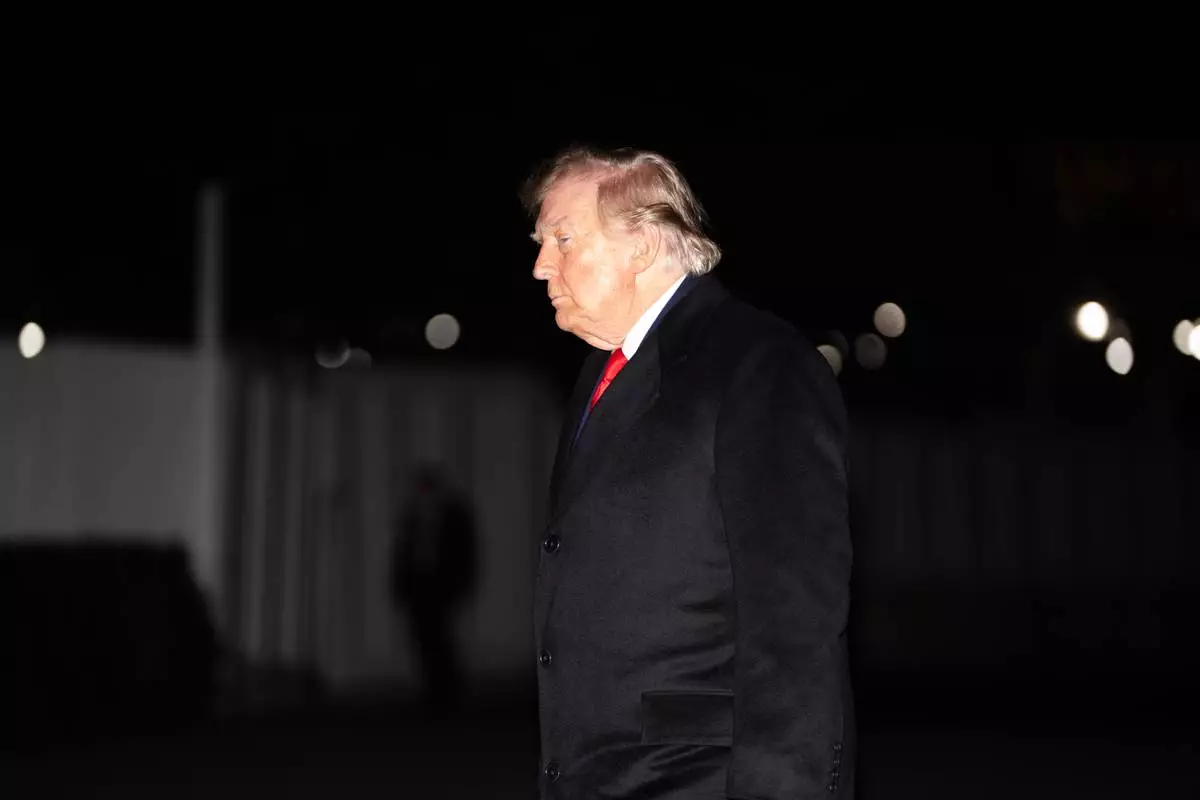
President Donald Trump walks across the South Lawn of the White House after stepping off Marine One, Monday, Nov. 2, 2026, in Washington. (AP Photo/Allison Robbert)
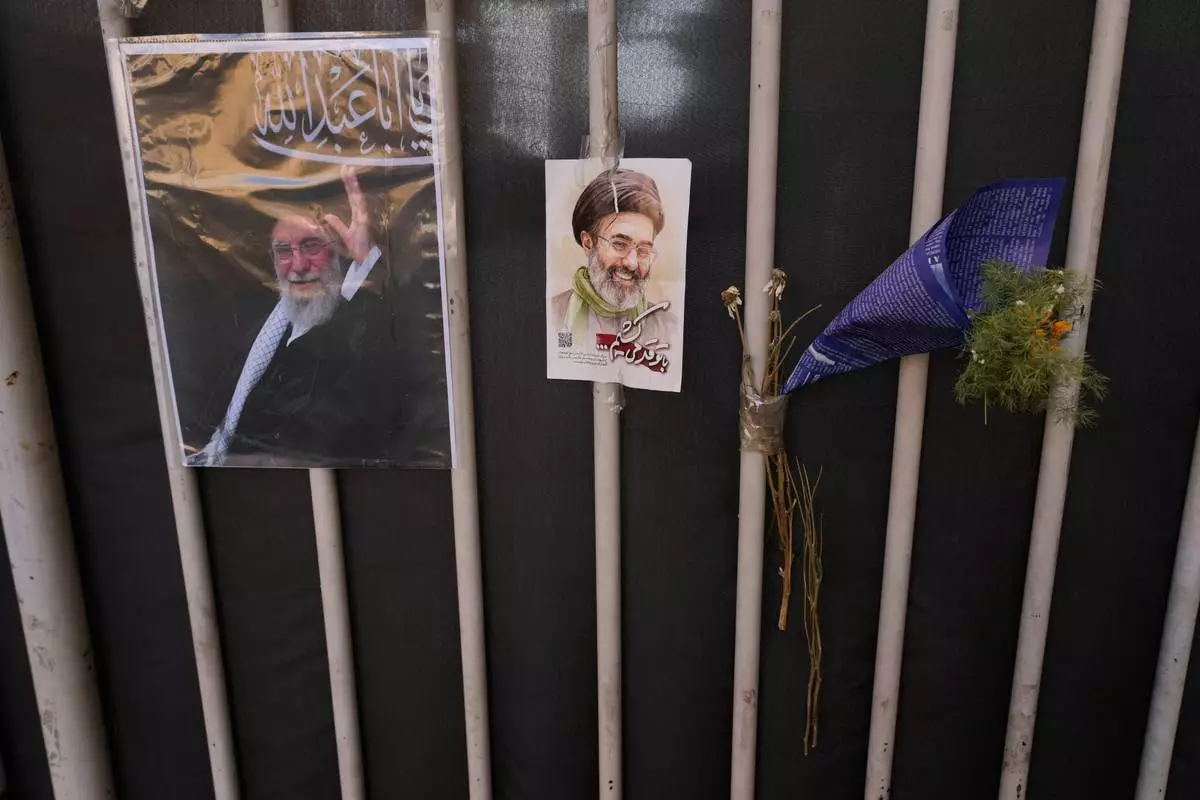
Posters of the Iranian Supreme Leader Ayatollah Mojtaba Khamenei, center, and his father, the late Supreme Leader Ayatollah Ali Khamenei are seen alongside dried flowers on a barricade placed on the street leading to their residence compound where the late Ayatollah Ali Khamenei was killed during the U.S. and Israel strike on Feb. 28, in Tehran, Iran, Friday, Oct. 30, 2026. (AP Photo/Vahid Salemi)