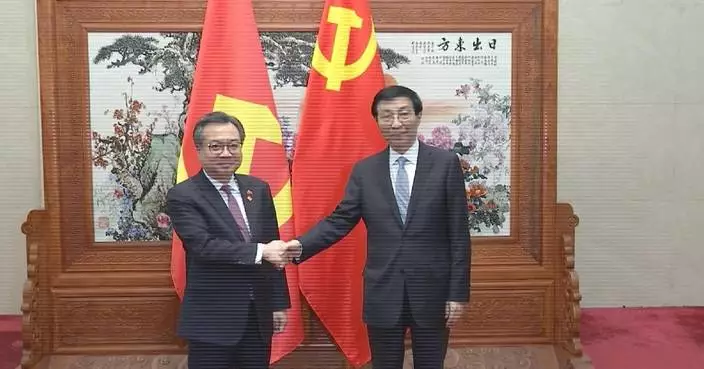
China's top legislator Zhao Leji held talks with Russian Federation Council Speaker Valentina Matviyenko in Beijing on Monday, calling for closer strategic communication and deeper cooperation between the two countries.
Zhao, chairman of the National People's Congress (NPC) Standing Committee, said that Chinese President Xi Jinping and Russian President Vladimir Putin met twice in May and August this year, providing strategic guidance for bilateral ties to enter a new stage of more substantive and accelerated development.
Taking the important consensus reached by the two heads of state as fundamental guidelines, China is ready to work with Russia to strengthen strategic communication, expand mutually beneficial cooperation, and push for in-depth and solid progress in the development of the China-Russia comprehensive strategic partnership of coordination for a new era, Zhao said.
Noting that this year marks 30th anniversary of the China-Russia strategic partnership of coordination and the 25th anniversary of the China-Russia Treaty of Good-Neighborliness and Friendly Cooperation, Zhao said that the two sides should deepen cooperation in key areas, including trade, investment and energy, while exploring new growth drivers in emerging fields such as artificial intelligence and the digital economy.
Zhao also called for joint efforts to make the China-Russia Year of Education a success and expand exchanges in culture and among young people to strengthen mutual understanding and friendship between the two peoples.
Zhao stressed that the legislative bodies of the two countries should enhance exchanges and cooperation, improve their capacity to perform duties in accordance with the law, and enhance exchanges of legislative experience in areas such as AI and the digital economy to provide legal support for practical bilateral cooperation.
He also briefed Matviyenko on the fifth plenary session of the 20th Central Committee of the Communist Party of China (CPC).
For her part, Matviyenko said Russia-China good-neighborliness and cooperation have continued to deepen under the strategic guidance of the two presidents.
She congratulated China on the successful convening of the fifth plenary session of the 20th CPC Central Committee and expressed the Federation Council's readiness to strengthen exchanges with the NPC, promote practical cooperation and expand cultural and educational exchanges.
The two sides should also uphold a correct view of history and work together to promote world peace and development, she said.
On the same day, Zhao and Matviyenko visited the National Art Museum of China, where they viewed an exhibition of classic works from the museum's collection and an exhibition featuring paintings by Russian artist Nicolai Fechin.
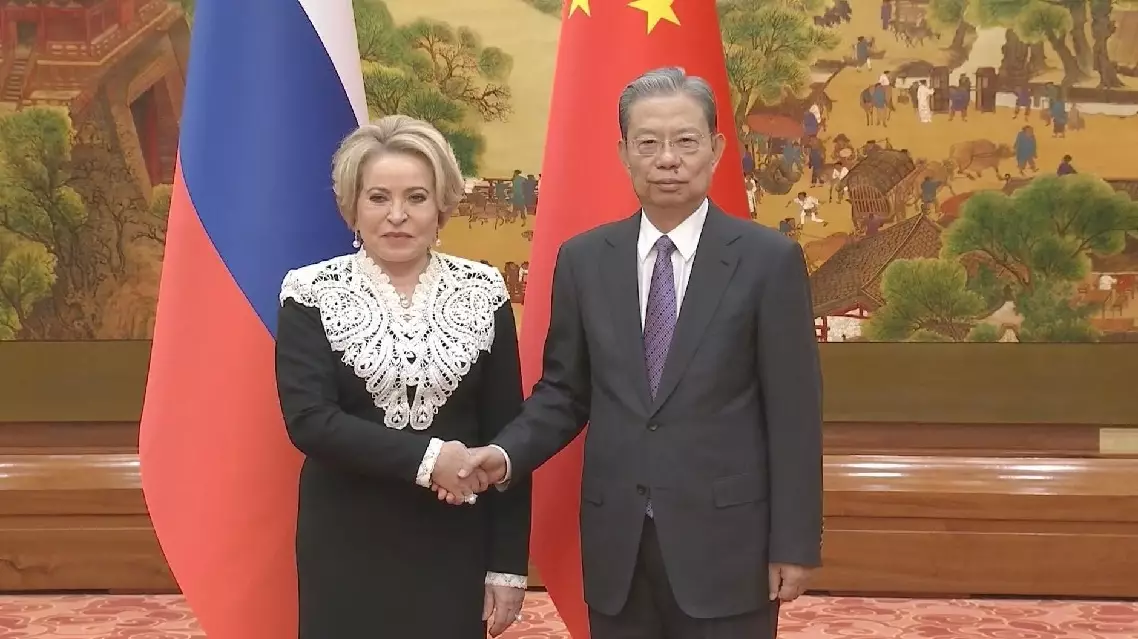
China's top legislator holds talks with Russian Federation Council Speaker
China's top legislature has convened its latest standing committee session in Beijing from November 2 to 6 to review a series of draft laws and amendment bills addressing issues including procuratorial public interest litigation, state-owned assets, Antarctic protection, and combating cross-border corruption.
The second draft of the cross-border anti-corruption bill anchors legislation in a holistic approach to national security, and stresses strict rule of law, due process and human rights protection.
According to Zhou Guangquan, Vice Chairman of the Constitution and Law Committee of the 14th National People's Congress, the draft sets out provisions for authorities to use information technology in cross-border anti-corruption work.
He also noted that members of the public have called for tighter safeguards for state secrets, work secrets, trade secrets, personal information and privacy.
Separately, some Standing Committee members and experts said enterprises with cross-border operations should factor in company size, business scope and risk prevention needs when establishing integrity compliance units or appointing dedicated anti-corrruption staff. Following deliberation, the suggestion was put forward for adoption.
The session will also review the second reading of the draft financial law.
The latest draft aims to boost consumer and investor protection, unify asset management rules, regulate online financial marketing, and tighten oversight of cross-border financial activities.
Xin Chunying, Chairperson of the Constitution and Law Committee of the 14th National People's Congress, said the committee proposed adding a rule that prevents overseas institutions or individuals providing financial products and services within Chinese territory without approval.
She also stated that entities legally providing such products and services in China must comply with laws, administrative regulations and the provisions of the State Council's financial regulatory authorities.
The draft Antarctic Activities and Environmental Protection Law entered its third reading at the session with updated clauses outlining China's participation in global Antarctic governance, improving the national expedition management system, and protecting Chinese citizens' lawful rights in Antarctica.
Several other draft law revisions are being tabled for first deliberation at this session, including amendments to the Criminal Procedure Law to refine the foreign-related criminal litigation system, a revised Renewable Energy Law to tighten regulations and boost industrial development, and several updates to the Ecology and Environment Code that took effect in August.
Lawmakers will also review a State Council proposal to ratify the Agreement on the Establishment of the World Artificial Intelligence Cooperation Organization.
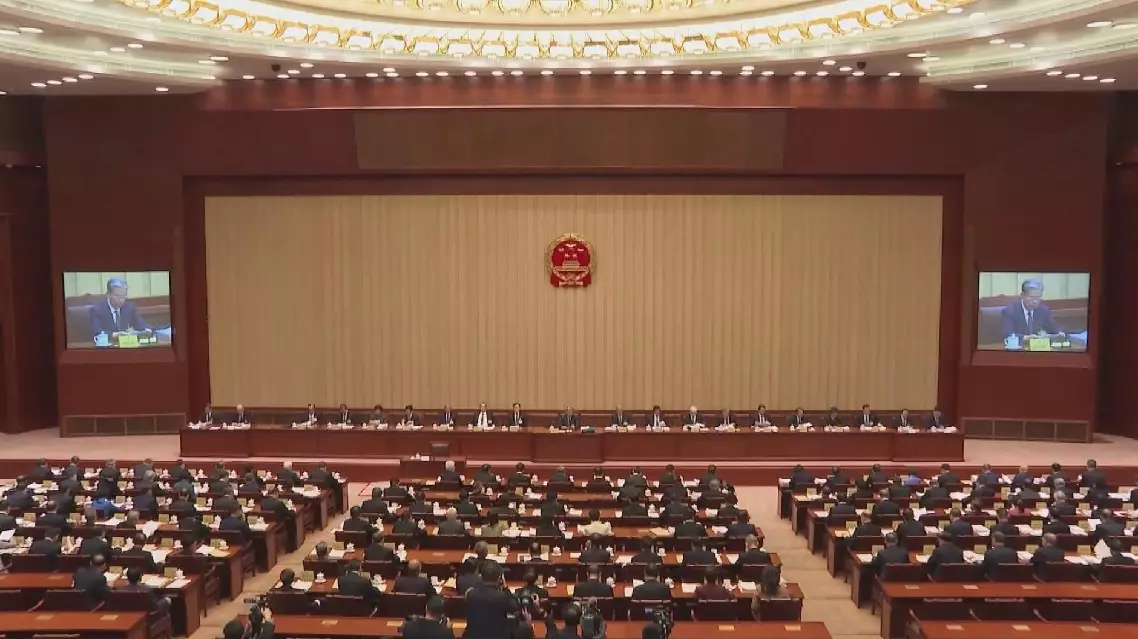
China's top legislature convenes standing committee session