WATERTOWN, Mass.--(BUSINESS WIRE)--Nov 2, 2026--
Tutor Intelligence, the robotics research and deployment company, today announced its $75 million Series B led by Andreessen Horowitz, bringing the company’s total capital raised to $117 million. The round will support Tutor’s frontier robot foundation model training, as well as the manufacturing and deployment of Sonny and Cassie, Tutor’s robot workers, which run the company’s models and work jobs across the United States. Union Square Ventures and Neo, which led the company’s Series A and seed rounds, respectively, also participated.
This press release features multimedia. View the full release here: https://www.businesswire.com/news/home/20261102314852/en/
Artificial intelligence has transformed the digital world, learning to converse and code from the internet’s vast record of text and images. The physical world has no such record to train on, and AI has yet to transform it in the same way.
Tutor was founded to close the gap between what robots can do and what people can do. The company deploys fleets of internet-connected robots into production environments, where they do real work for real customers, with input from remote operators known as “tutors.” Every task the robots complete generates the real-world experience data that has been missing from the training equation. That data trains better frontier models, making the robots capable of more work and wider deployment.
“Tutor’s insight is that deployment isn’t just the destination for robotics research—it’s how you overcome its limitations. Rather than asking the real world to fit the research, Tutor starts with what real-world deployments demand and works backward through distribution, hardware and research. Continual learning across an expanding range of deployments is the path from specialized capabilities to general-purpose robotics,” said Raghu Raghuram, general partner at Andreessen Horowitz and former CEO of VMware.
By offering a full-stack platform spanning robots, models and deployments, Tutor is building a network of intelligence in which each new deployment strengthens the entire fleet, making robots smarter, cheaper and easier to deploy over time. This flywheel accelerates both deployment and training, building toward a generally capable robot workforce and a safer, more affordable and more abundant world for the American consumer.
“It’s not only that Tutor’s models let robots do jobs that robots have never been able to do before,” said Josh Gruenstein, co-founder and CEO of Tutor Intelligence. “This type of intelligence also makes robots affordable on a whole new level. We’re unlocking much broader access to the solutions that businesses need to survive and that make basic goods cheaper for everybody. And the demand is there. We can hardly build robots fast enough.”
Tutor sells robot work the way businesses already buy labor: by the hour or by the pick. Customers make no upfront purchase and sign no long-term contract, and Tutor handles deployment and maintenance and sends the robots upgraded software and intelligence on a regular basis. This business and service model is part of how Tutor is bringing automation into work that has long defied conventional robotics.
Today, Tutor’s robots are working in almost four times as many facilities as a year ago, and the team is on track to have more than 1,000 robots under contract by the end of 2027, all of which will be built in and deployed from the United States. The robots are currently in operation across some of the country’s largest manufacturing and logistics networks, handling the goods that fill the average American home: popular breakfast cereals, snacks, candy, cosmetics, home goods, toys and more.
Tutor’s growth tracks a broader turn in enterprise adoption of AI, as companies stop funding pilots and start underwriting systems that deliver measurable output inside their existing operations. Tutor’s robots take on the lifting, moving, and manipulation that keep factories and warehouses running, and customers are coming back for more: nearly a third of organizations who received Tutor robots in the past 12 months were existing Tutor customers installing more Tutor robots.
About Tutor IntelligenceTutor Intelligence is a robotics research and deployment company building across the full stack to deploy intelligent robots now. With Tutor-built robots, models and deployments compounding as a network, every robot Tutor puts to work makes the next robot more capable. Today, Tutor robots work real jobs across the United States, directed by human “tutors” and the foundation models the company has trained on the work done. Founded out of MIT CSAIL and based in Watertown, Massachusetts, Tutor sells robot work the way businesses already buy labor, with robot workers paid by the hour or by the pick. To learn more, visit tutorintelligence.com.
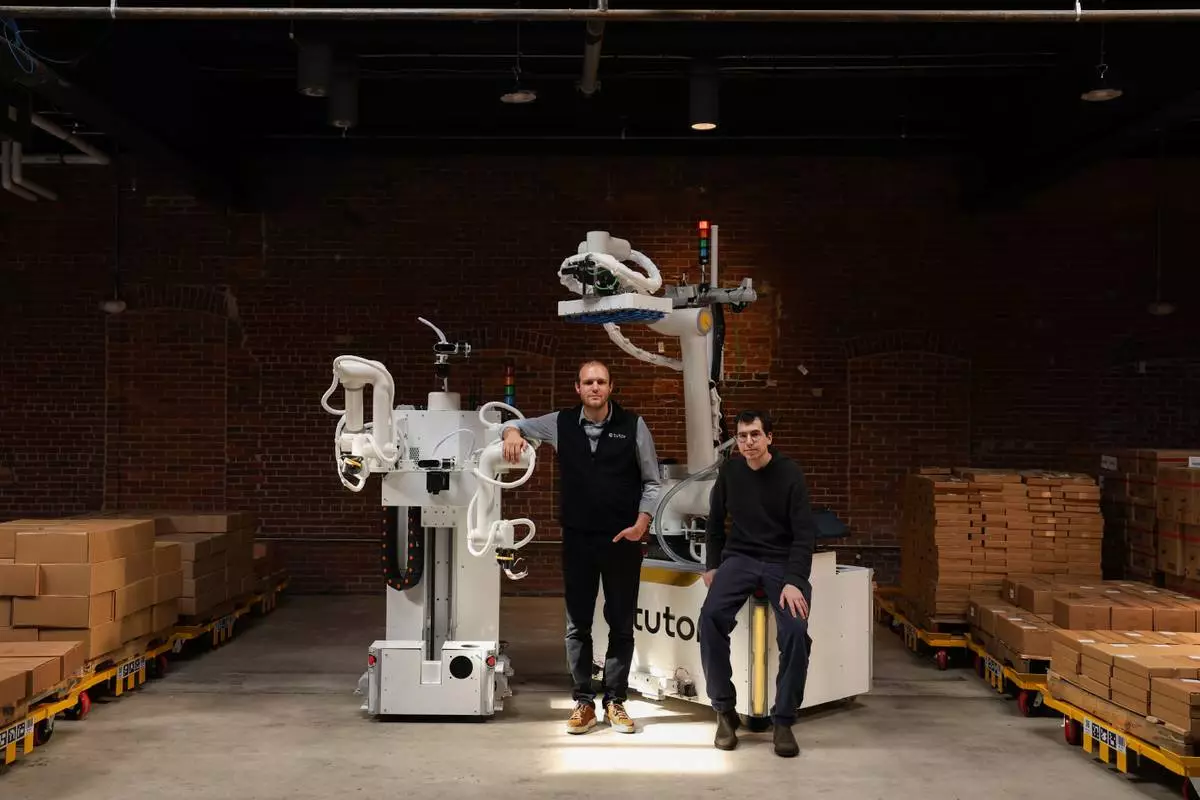
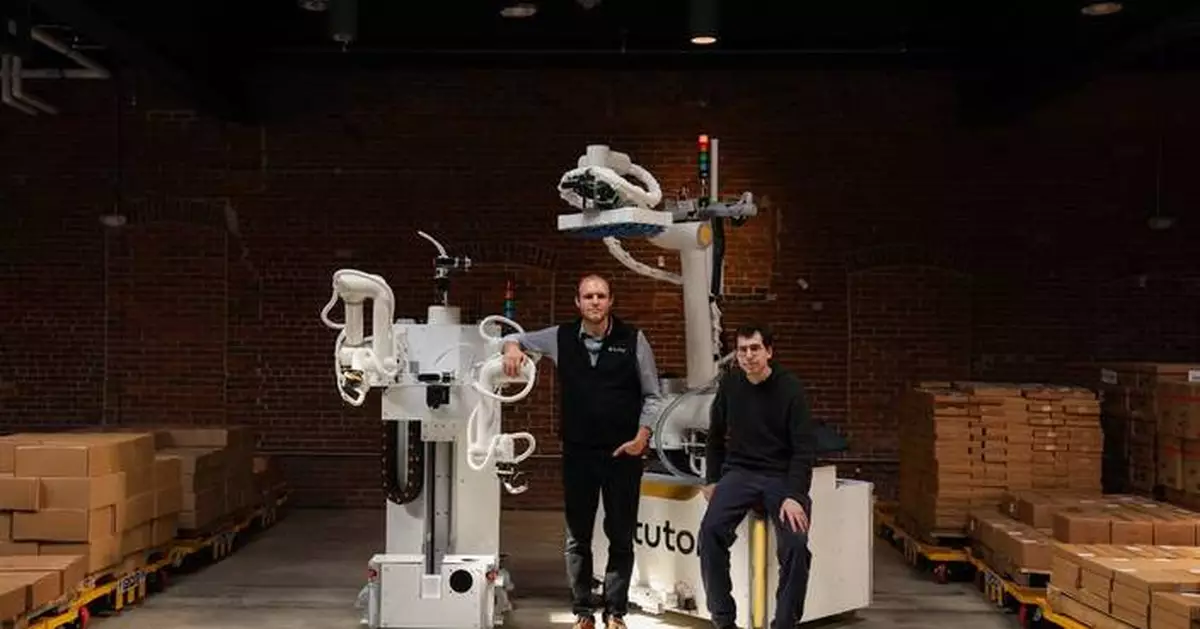
Tutor Intelligence co-founders Alon Kosowsky-Sachs and Josh Gruenstein with robot workers Sonny and Cassie.
NEW YORK (AP) — The U.S. stock market is rising Monday and recovering some of last week's sell-off that was led by the tech and AI industries.
The S&P 500 climbed 0.8%, coming off its third straight losing week, and pulled within 2.3% of its all-time high. The Dow Jones Industrial Average was up 547 points, or 1.1%, as of 10:15 a.m. Eastern time, and the Nasdaq composite was 1% higher.
Stocks got a lift from easing prices for oil, which headed back down in their latest yo-yo move on uncertainty about when the war with Iran will allow the global industry to return to normal. The price for a barrel of Brent crude, the international standard, fell 6.7% to $105.87.
Iran said Monday it had a two-day plan to reopen the Strait of Hormuz, which would help the global energy industry, and resume nuclear talks with the United States. Over the weekend, Iran’s top diplomat said he hoped for “rationality” on the U.S. side as diplomatic efforts seek to avert a return to all-out war.
The price for the most actively traded contract in the Brent market has been veering between roughly $70 and $120 since just before the war began, and it’s been quick to reverse direction.
So have stocks in the artificial-intelligence industry, which have been shaky for months amid criticism that they surged too high and are in a bubble. Worries are growing that all the hundreds of billions of dollars Big Tech companies are pouring into AI data centers won’t produce enough productivity and profit to make the investments worth it.
The latest profit reports from Alphabet and other Big Tech companies also showed how AI may be dragging on their own businesses. Not only did Google’s parent company burn through more cash during the latest quarter, as measured by something called free cash flow, it also reported slower-than-expected growth in its search business, which raised worries about AI cannibalizing its cash cow.
Alphabet rose 2.4% Monday, recovering some of its drop of more than 12% from Thursday, which was its worst in history.
Other tech giants also held steadier. Nvidia rose 1.9% after its 4.2% slide on Friday forced it to cede the title as Wall Street’s most valuable stock to Apple.
Outside of AI and tech, several stocks climbed after reporting better profits for the summer than analysts expected.
Marriott International rallied 4.3%, for example, after reporting strength for its hotels around the world. Even in the Middle East, where the war has affected its business, CEO Anthony Capuano said that “trends improved meaningfully” from the spring.
Idexx Laboratories leaped 16.3% after likewise delivering stronger profit and revenue than analysts expected. The company, which sells diagnostic equipment and other products to veterinarians, also raised its forecasts for revenue and profit for the full year of 2026.
Expectations are high for all kinds of companies to continue to deliver big gains in profits as the U.S. economy keeps chugging along, even with high inflation and interest rates. A report on Monday said that growth for U.S. manufacturing was better than economists expected. Perhaps just as importantly, a measure of inflation in the survey by the Institute for Supply Management showed prices were rising at a slower pace.
Monday's drop in oil prices, meanwhile, helped lift stocks of companies with big fuel bills. United Airlines flew 6.5% higher, Southwest Airlines climbed 4.2% and cruise operator Carnival rose 4.6%.
They helped offset a 6% drop for Marvell Technology after it announced a deal to buy Lumentum, which sells lasers and other products that power the networks and infrastructure behind AI and cloud computing.
Marvell said it will give 4.5 of its shares for each Lumentum share, valuing it at roughly $115 billion. Lumentum’s shares dropped 10.6%.
In stock markets abroad, indexes were mixed in Europe amid mostly modest moves.
The swings were larger in Asia, where South Korea’s Kospi jumped 2.2% on renewed strength for the tech giants that dominate its market.
In China, indexes rose 1.1% in Shanghai and 0.4% in Hong Kong to recover some of their steep recent losses. Stocks in Shanghai finished October more than 15% below a peak reached in May.
AP Business Writers Chan Ho-him and Michelle Chapman contributed to this report.
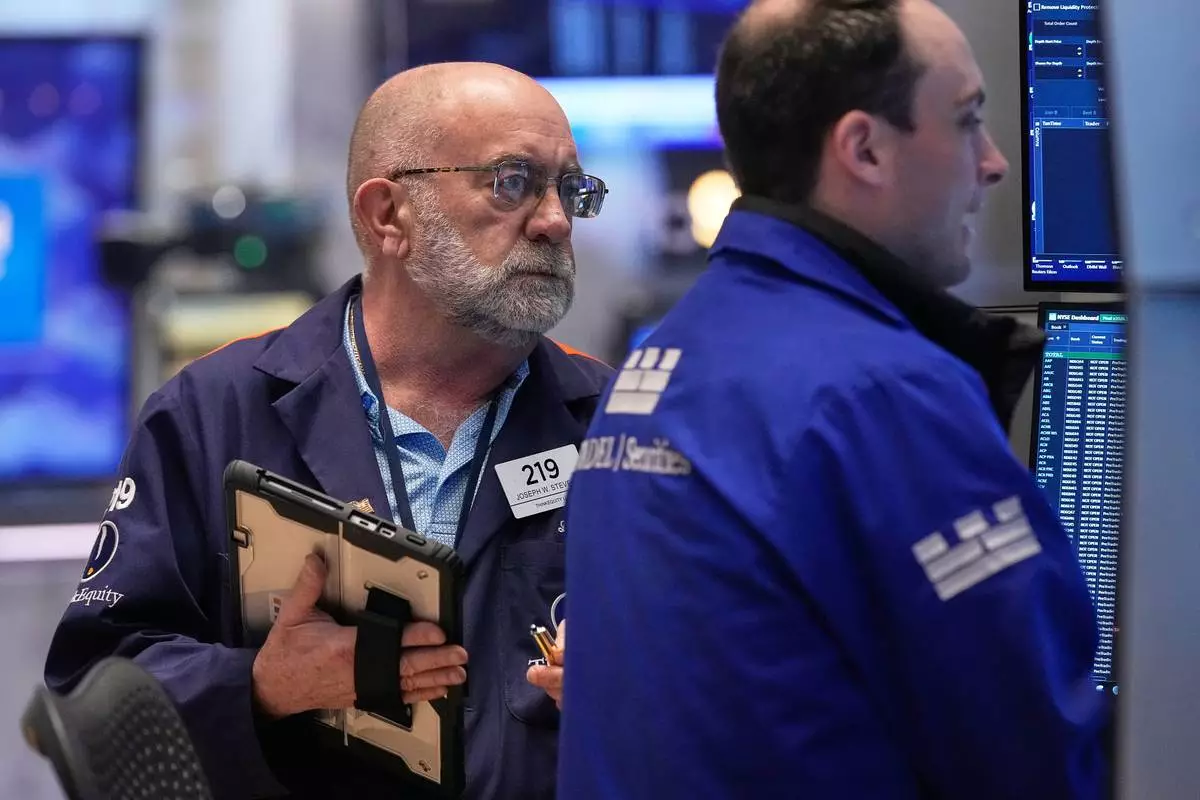
FILE - Trader Joseph Stevens, left, works on the floor of the New York Stock Exchange, on May 5, 2026. (AP Photo/Richard Drew)
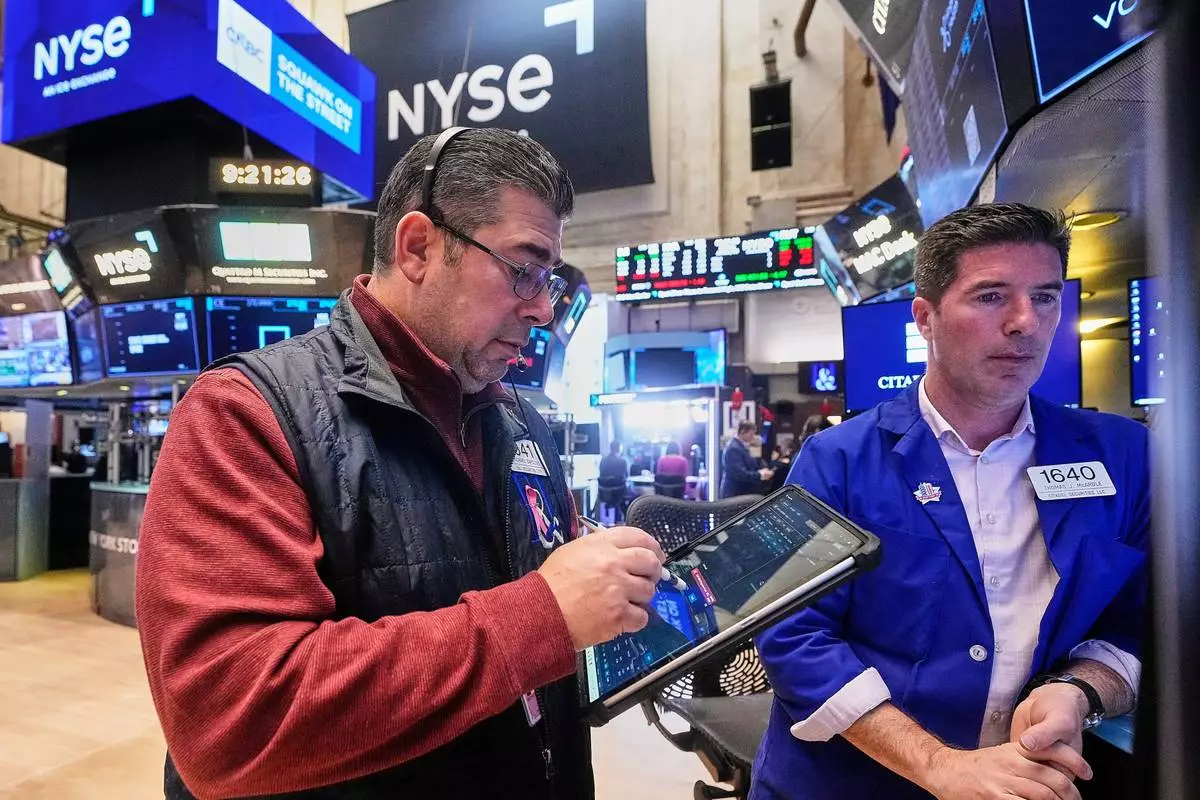
FILE - Trader Michael Capolino, left, and Specialist Thomas McArdle work on the floor of the New York Stock Exchange, Monday, Jan. 26, 2026. (AP Photo/Richard Drew, file)
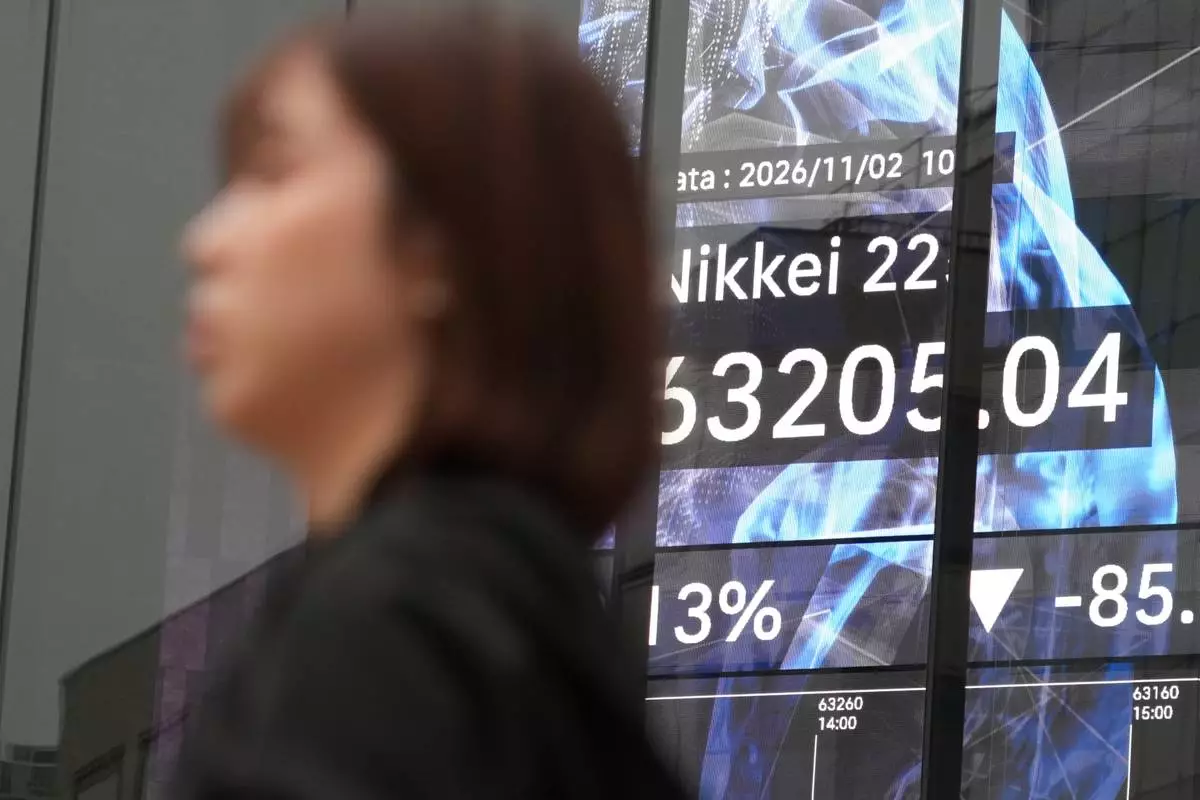
A person walks in front of an electronic stock board showing Japan's Nikkei index at a securities firm, Monday, Nov. 2, 2026, in Tokyo. (AP Photo/Eugene Hoshiko)
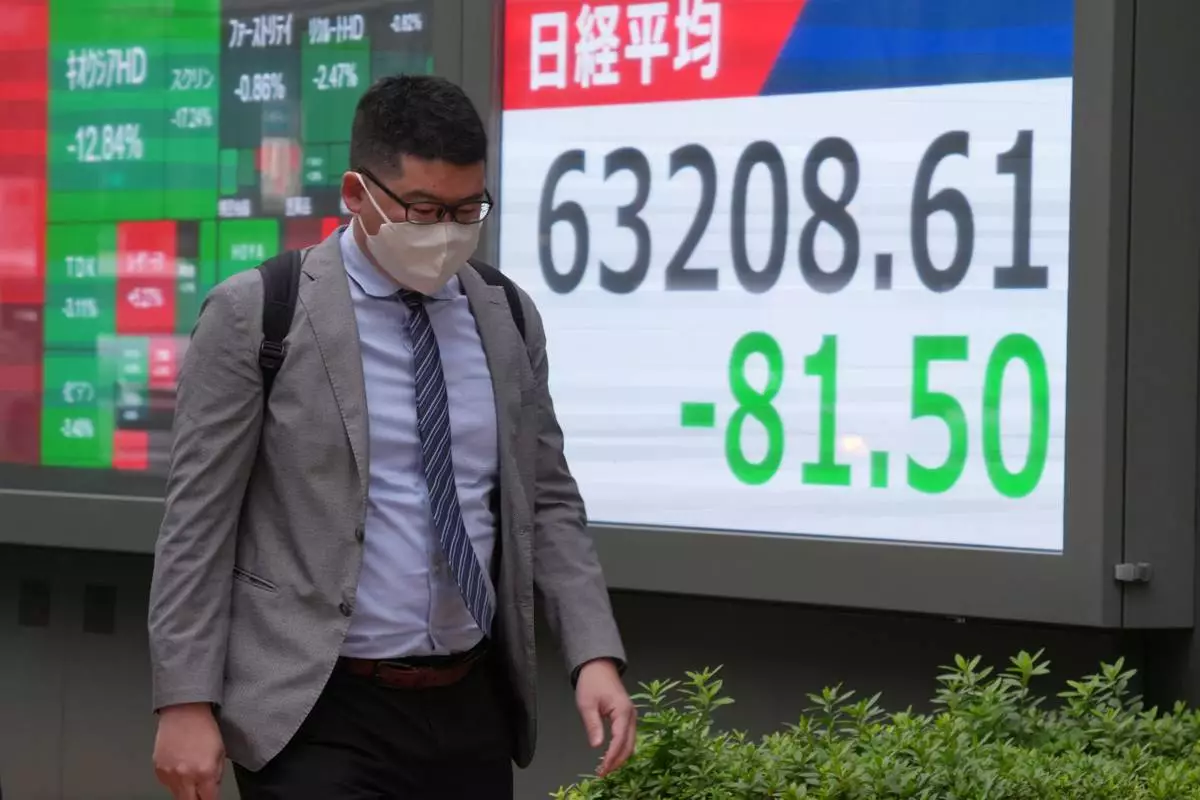
A person walks in front of an electronic stock board showing Japan's Nikkei index at a securities firm, Monday, Nov. 2, 2026, in Tokyo. (AP Photo/Eugene Hoshiko)
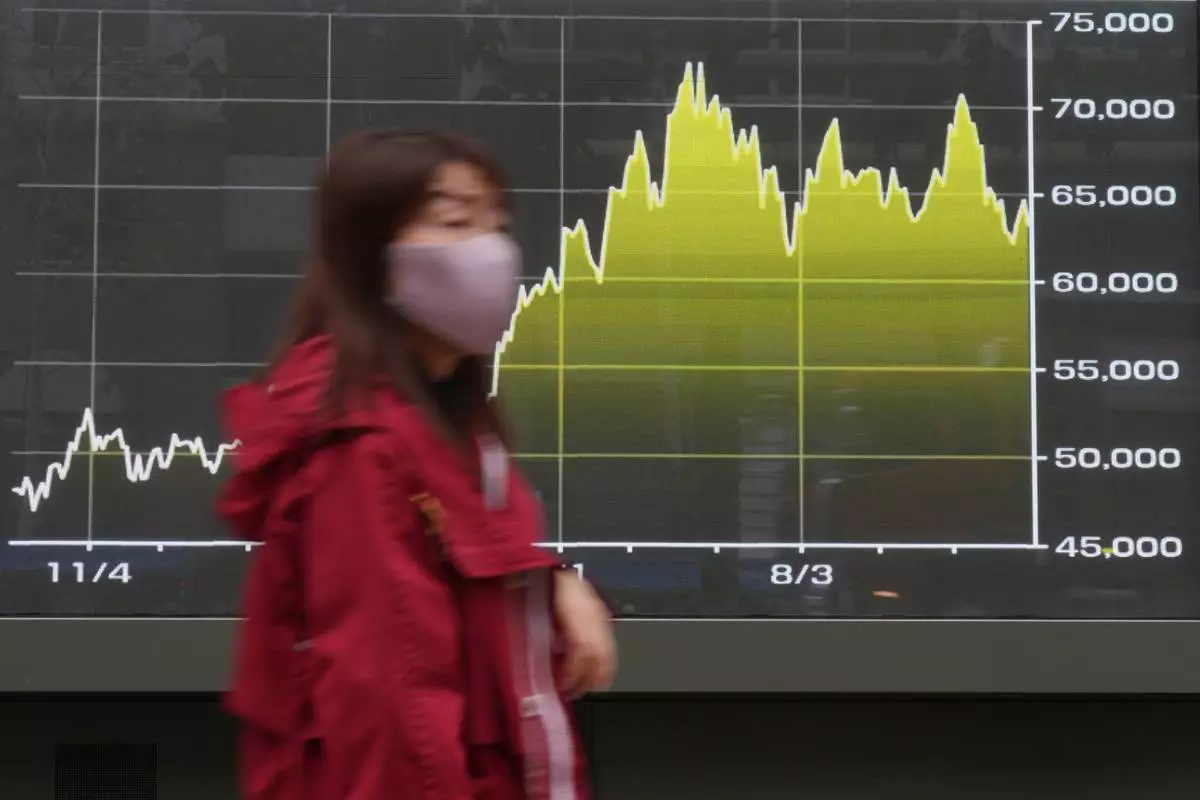
A person walks in front of an electronic stock board showing Japan's Nikkei index at a securities firm, Monday, Nov. 2, 2026, in Tokyo. (AP Photo/Eugene Hoshiko)
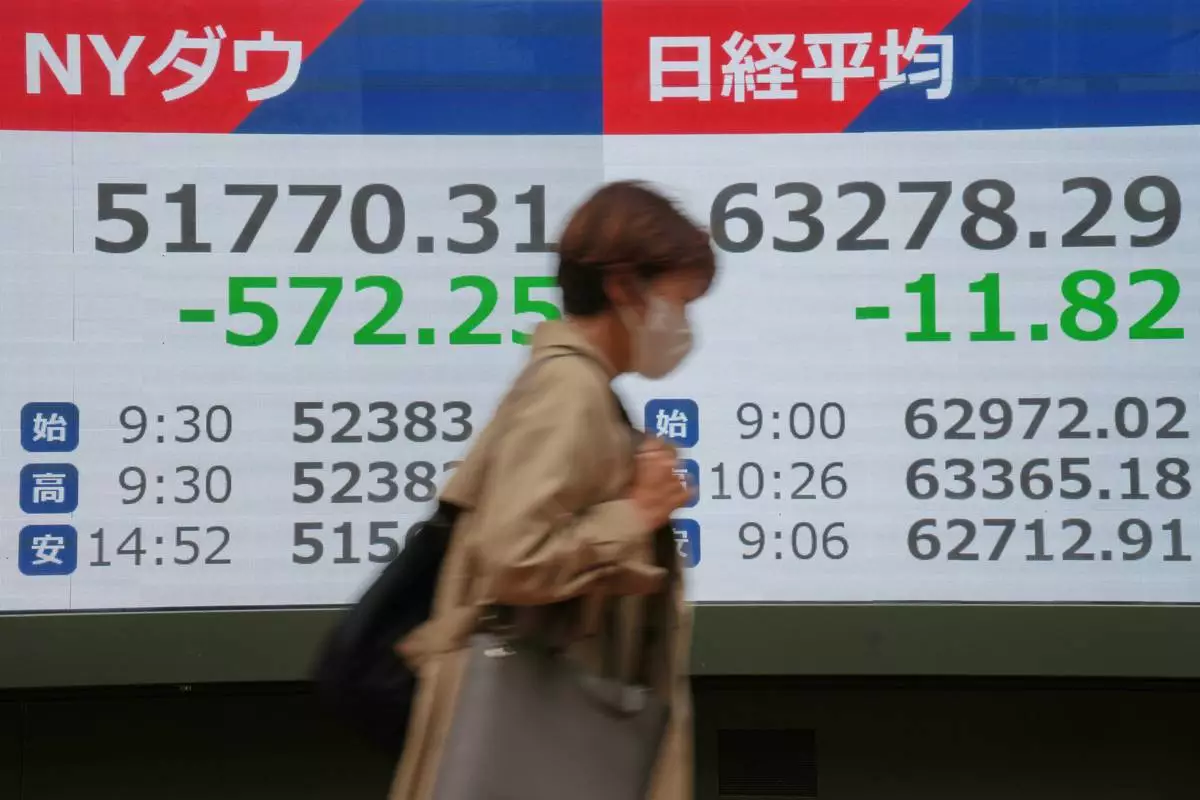
A person walks in front of an electronic stock board showing Japan's Nikkei and New York Dow indexes at a securities firm, Monday, Nov. 2, 2026, in Tokyo. (AP Photo/Eugene Hoshiko)
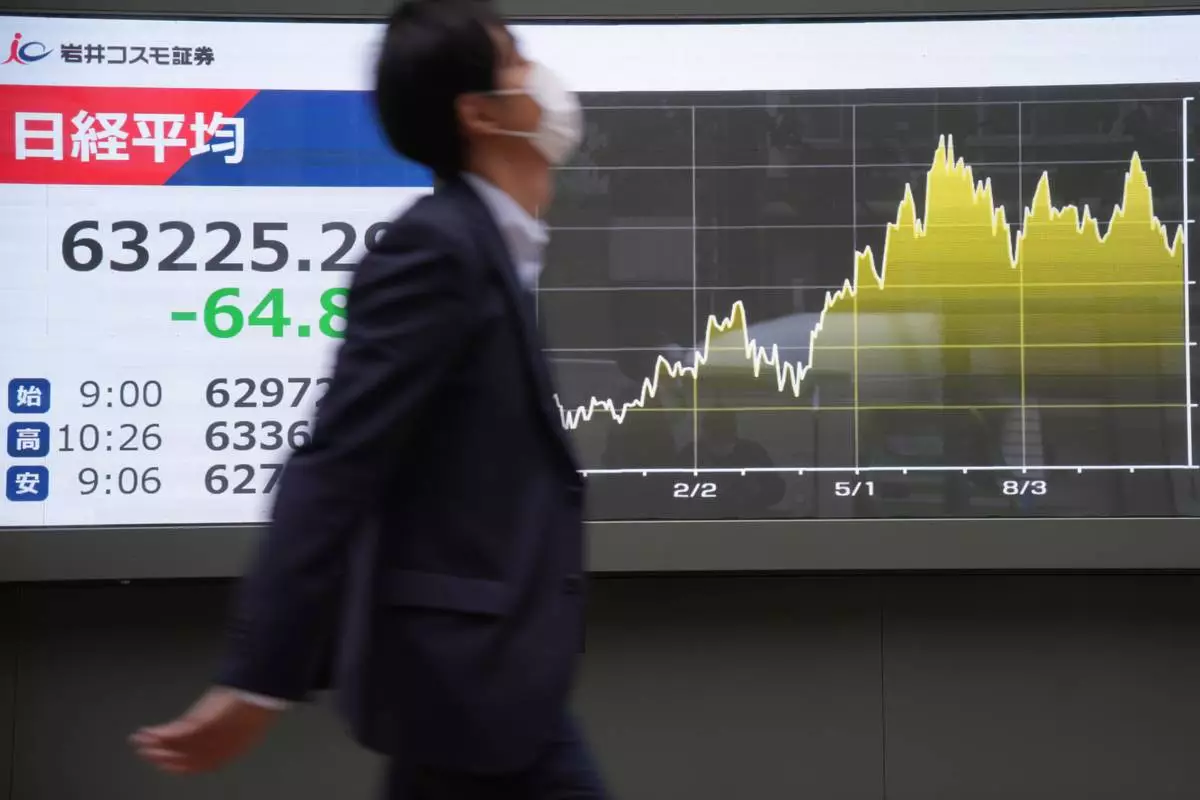
A person walks in front of an electronic stock board showing Japan's Nikkei index at a securities firm, Monday, Nov. 2, 2026, in Tokyo. (AP Photo/Eugene Hoshiko)