Iran's President Masoud Pezeshkian said on Monday that his administration will work to resolve problems created by Iran's "enemies" through dialogue, according to the Iranian president's office.
Speaking at a meeting with the country's governors and mayors in Tehran, Pezeshkian said that Iran's Supreme Leader Mojtaba Khamenei had granted the government certain authorities to pursue diplomatic solutions.
He stressed that no one benefits from war, adding that the country's "enemies" will not be able to make Iran surrender.
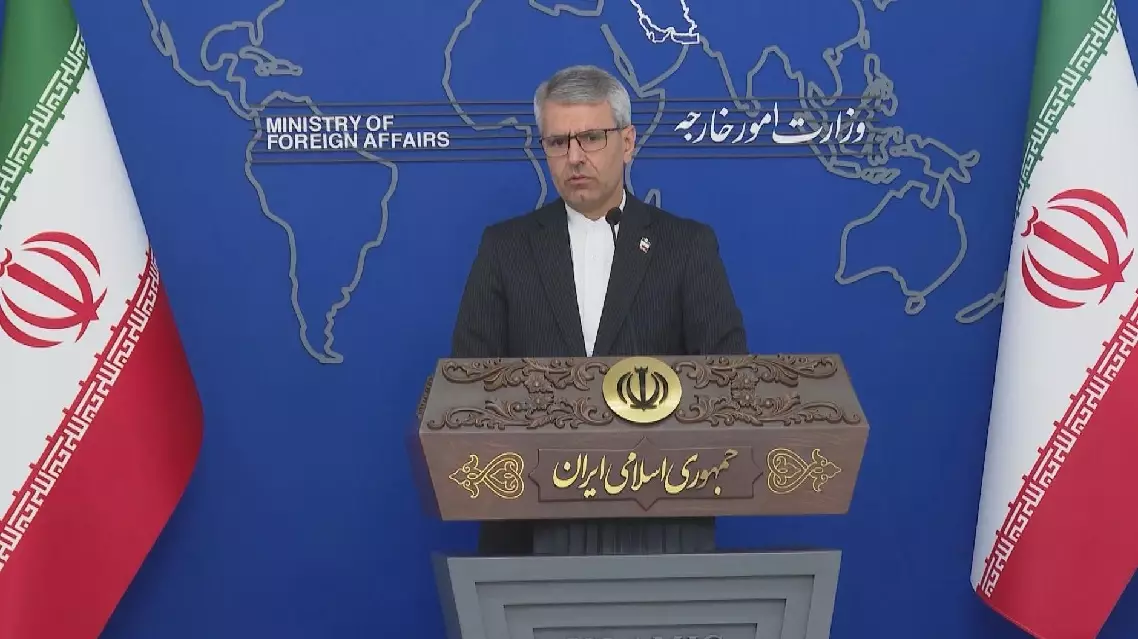
Iran's Foreign Ministry spokesman Esmaeil Baghaei said on Monday that Deputy Foreign Minister for Legal and International Affairs Kazem Gharibabadi's recent visit to Doha was aimed at exchanging information with the United States. Related Iran-U.S. discussions were ongoing, and Iranian Parliament Speaker Mohammad Bagher Ghalibaf was leading Iran's negotiation team.
Baghaei said at a regular press briefing that Iran had conveyed all its legitimate demands to Washington in a reasonable manner, and meeting those demands was a prerequisite for restoring regional security.
He confirmed Ghalibaf remains Iran's lead negotiator, and Iran's Supreme National Security Council is responsible for coordinating the country's diplomatic agenda.
Baghaei said that the United States must halt its unlawful actions, and that Iran would not move to the next phase of negotiations under U.S. threats and pressure. He pointed out that the basis for any indirect interaction between Iran and the United States through mediators remains the seven-day plan proposed by Tehran in September, adding Iran has reduced the period for implementing the plan to two days based on its good faith.
"This reflects Iran's goodwill and constructive stance. As Tehran has made clear, security in the Strait of Hormuz could be restored, paving the way for talks if Iran's conditions are met. Ultimately, however, everything hinges on the United States and how it moves the process forward," said Baghaei.
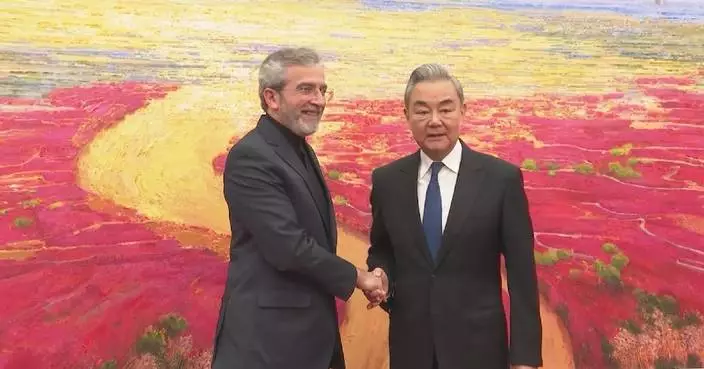
Also on Monday, Iranian Foreign Minister Seyed Abbas Araghchi said consultations mediated by Qatar and Pakistan to end regional hostilities have become "extremely intensive," given the sensitivity and critical nature of the current situation.
"Exchange of visits by delegations is evident, and tens of phone conversations are being held among the parties, and numerous messages are being exchanged," Araghchi said in an interview at the end of his visit to Turkmenistan with Iran's official IRNA news agency.
He reiterated Tehran's readiness for both diplomacy and defense, noting that the Strait of Hormuz would reopen if Iran's conditions are accepted.
On Sept. 22, Iran conveyed a seven-day proposal to the United States through mediators to end hostilities and reopen the Strait of Hormuz.
"We are committed to rationality, dialogue, and logic, and are ready to enter a positive engagement should the other side adopt a similar approach," Araghchi said, while warning that any further military escalation by Washington would draw a "far more bitter and severe" response.
Iran vows dialogue to resolve problems, rejects surrender to "enemies"