WASHINGTON (AP) — For Donald Trump, Tuesday’s elections will chart the course for the final two years of his presidency.
If his party loses control of Congress in the midterm elections, the rest of his time in office is likely to be consumed by Democratic-led investigations into his administration and his business dealings, and possibly even another impeachment. The political spotlight will also begin its shift to Republicans and Democrats vying to replace him during the 2028 presidential campaign.
Click to Gallery
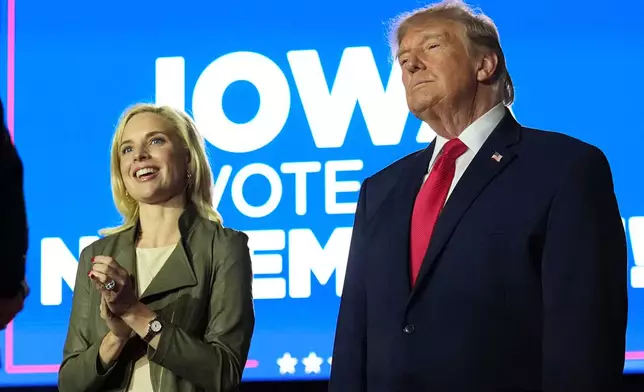
Senate candidate Rep. Ashley Hinson, R-Iowa, left, stands with President Donald Trump on stage during a campaign rally at the Five Flags Event Center, Sunday, Nov. 1, 2026, in Dubuque, Iowa. (AP Photo/Jacquelyn Martin)
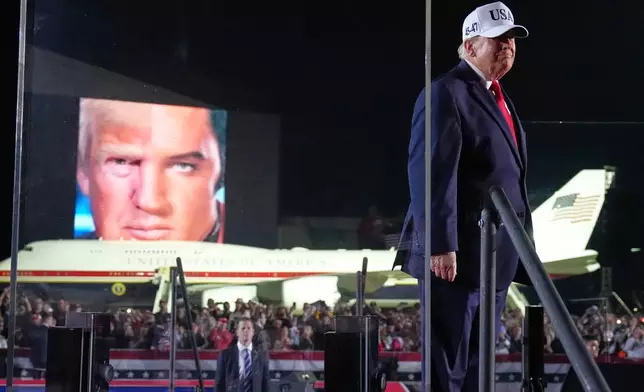
President Donald Trump arrives at a campaign rally at the Salina Regional Airport, Sunday, Nov. 1, 2026, in Salina Kan. (AP Photo/Jacquelyn Martin)
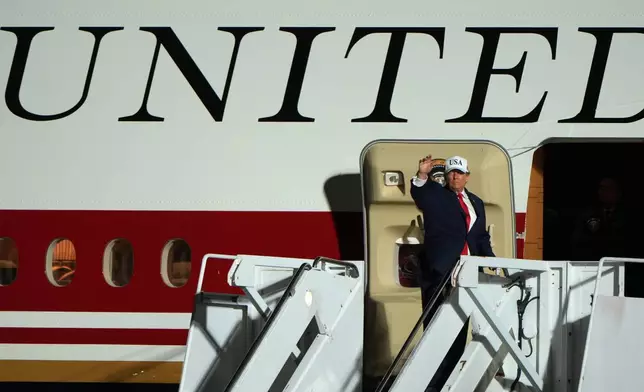
President Donald Trump boards Air Force One after speaking at a campaign rally at the Salina Regional Airport, Sunday, Nov. 1, 2026, in Salina Kan. (AP Photo/Charlie Riedel)
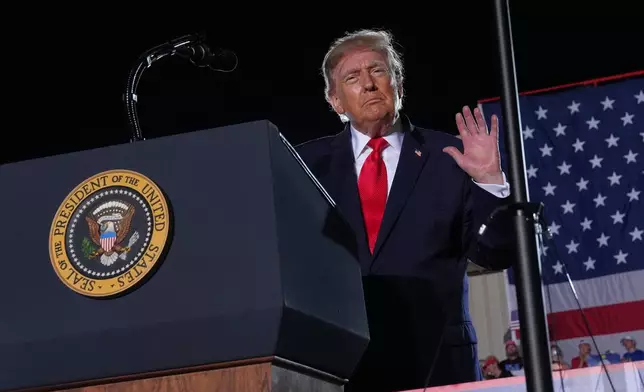
President Donald Trump speaks at a campaign rally at the Salina Regional Airport, Sunday, Nov. 1, 2026, in Salina Kan. (AP Photo/Jacquelyn Martin)
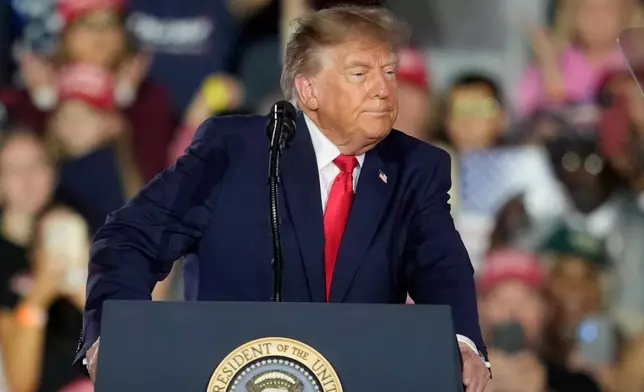
President Donald Trump speaks during a campaign rally at the Five Flags Event Center, Sunday, Nov. 1, 2026, in Dubuque, Iowa. (AP Photo/Charlie Neibergall)
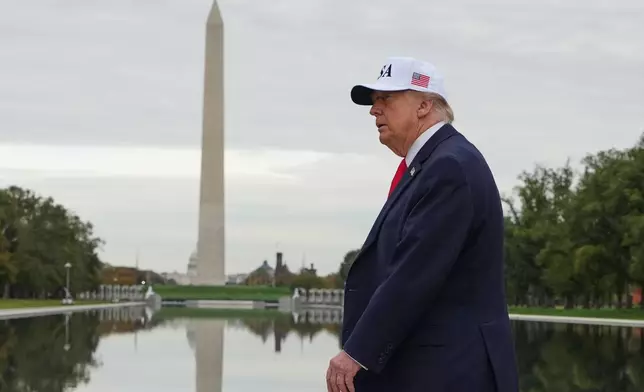
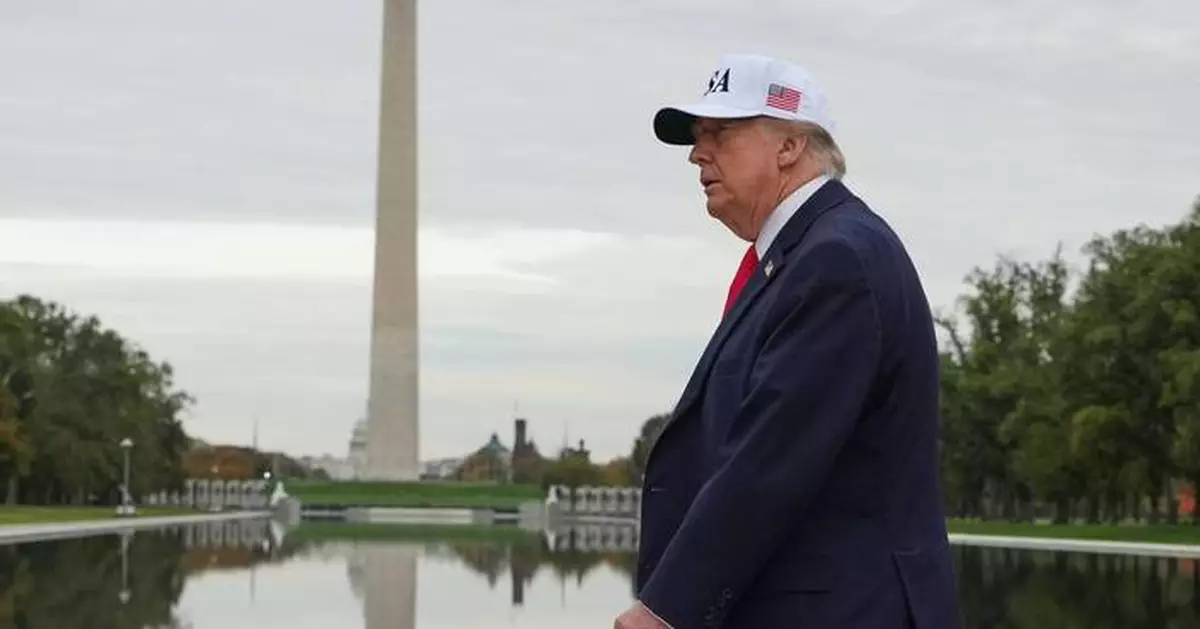
President Donald Trump walks from the podium after speaking at the Lincoln Memorial Reflecting Pool, Monday, Nov. 2, 2026, in Washington. (AP Photo/Alex Brandon)
Beyond that, if voters deliver a rebuke to Republicans on Tuesday, Trump will be left with dramatically diminished political capital at home and abroad, as he has all but guaranteed the results will be seen as a referendum on himself by repeatedly urging voters to “pretend I’m on the ballot.”
Placing himself front and center on voters’ minds was a major gamble by the president and his political team, who believed personalizing the midterms would activate “Make America Great Again” supporters who might otherwise be less likely to turn out when Trump was not an official candidate. Democrats were eager to watch the unpopular president insert himself so fully in the campaign, believing it’s served as an effective reminder of who should be blamed for the state of the economy, which voters said was their top concern.
“Trump’s desire to have everyone think that he’s on the ballot? Like, it’s happening,” said Sen. Andy Kim, D-N.J., who has campaigned in key battlegrounds this fall, including Iowa, Georgia and Texas. “Everyone is thinking about him and the harm that he has done to them directly.”
But if Trump defies the political odds and retains GOP majorities, then he will undoubtedly emerge more powerful and with a stronger grip on his party, which would owe much of its success to the president's monthlong barnstorming of primarily conservative states where he remains very popular with voters. On Tuesday, Trump plans to spend his day at the White House.
The president — who faced a Democratic-led House for the latter half of his first term — campaigned aggressively in the final weeks to keep the Republican majorities on Capitol Hill because he knows what the consequences would be if Democrats seize power.
But the president at times shrugged off the prospect of a Republican loss of power in Congress, and even told a crowd in Oklahoma that Democrats, if they take power, could impeach him again. “I’ve become very good at beating them in impeachment," Trump said.
The president is also keenly aware of the political power he draws from having a foil leveraging opposition to consolidate support in his party and boost fundraising.
Senior Democrats, as they anticipate a majority in at least one chamber of Congress, have been telegraphing what their top investigative targets would be. Their list is vast, with ambitions to go after the Trump administration’s policies, the conduct of its personnel, and interactions between government officials and private corporations who’ve tried to wield influence with the White House.
For instance, California Rep. Robert Garcia, who is set to lead the powerful House Oversight Committee if Democrats win the House, in recent days has made it clear he plans to dig into the administration’s immigration and detention policies, making an unannounced visit to an Immigration and Customs Enforcement processing center in southern California and holding a news conference outlining his agenda to “demand accountability” for ICE’s tactics.
Among his other priorities are the Trump family’s business dealings, the administration’s handling of the Jeffrey Epstein investigation and broader allegations of corporate corruption.
A Democratic majority would be armed with control of committees, bigger budgets and staff, and subpoena powers that could compel the administration to be responsive to Congress. In response, the White House could reprise its strategy from the first Trump administration, when it slow-walked congressional requests for documents and testimony and asserted executive privilege over certain information.
The president is also bracing for major legislative fights, saying he has a “strong veto."
“I hope that that won’t be the case, but if it is, that’s happened before with many presidents,” Trump told reporters last week. “And you have strong veto and you end up working out deals.”
A potential House speaker, Hakeem Jeffries, would also be confronted with whether to pursue an unprecedented third impeachment against Trump, who was impeached twice in his first term in office but acquitted by the Senate both times. Democratic lawmakers have signaled that, instead, they may go after top Cabinet members, including Defense Secretary Pete Hegseth, one of Trump’s most stridently loyal administration officials who has played a key role in the Iran war that Democrats have decried.
“I'm here to say, one of the first things we’re going to do in the majority, we’re going to run Pete Hegseth out of town,” Jeffries said at an October rally.
Trump’s personal pitch involved a flurry of campaign rallies across the U.S. in the final weeks, increasingly in deeply Republican areas where the apparent need to shore up his party’s candidates was seen as a warning sign of the national mood.
In an attempt to buck historical trends that have seen the president's party typically lose seats in midterm elections, Trump also tried some novel tactics. He staged a two-day Trump-focused Republican convention in Dallas, where he led party faithful in a repeat-after-me pledge to vote and issued a dubious promise that he'd send $5,000 to every adult if his party wins in November.
But his closing message has been disjointed.
On the campaign trail, the winding remarks he typically delivered for 90 minutes included some promotion of the local Republican nominees, but plenty of free association that drifted away from the issues voters care about, such as the high cost of fuel. Trump frequently waxed on about the renovations he's done to Washington and the White House, including his construction of a giant ballroom.
And lately, he's been fixated on the muscular builds of some Republican candidates, regaling crowds in North Carolina, Michigan and Kentucky with descriptions of the impressive backside of Ohio Sen. Jon Husted.
He's also embraced positions at odds with a broad swath of voter concerns, claiming communities that reject data centers will end up “backwards and poor” and claiming affordability is a “hoax” and a word “made up by the Democrats.”
Befitting of his unusual strategy, Trump set his closing argument ahead of Tuesday at the National Mall, where he stood before the Reflecting Pool and spent much of a winding, hourlong speech bragging about his beautification of Washington, D.C.
“So, we have a lot of great things planned for Washington, and I could get into the nation,” Trump said. “But for that, you don’t have enough time.”
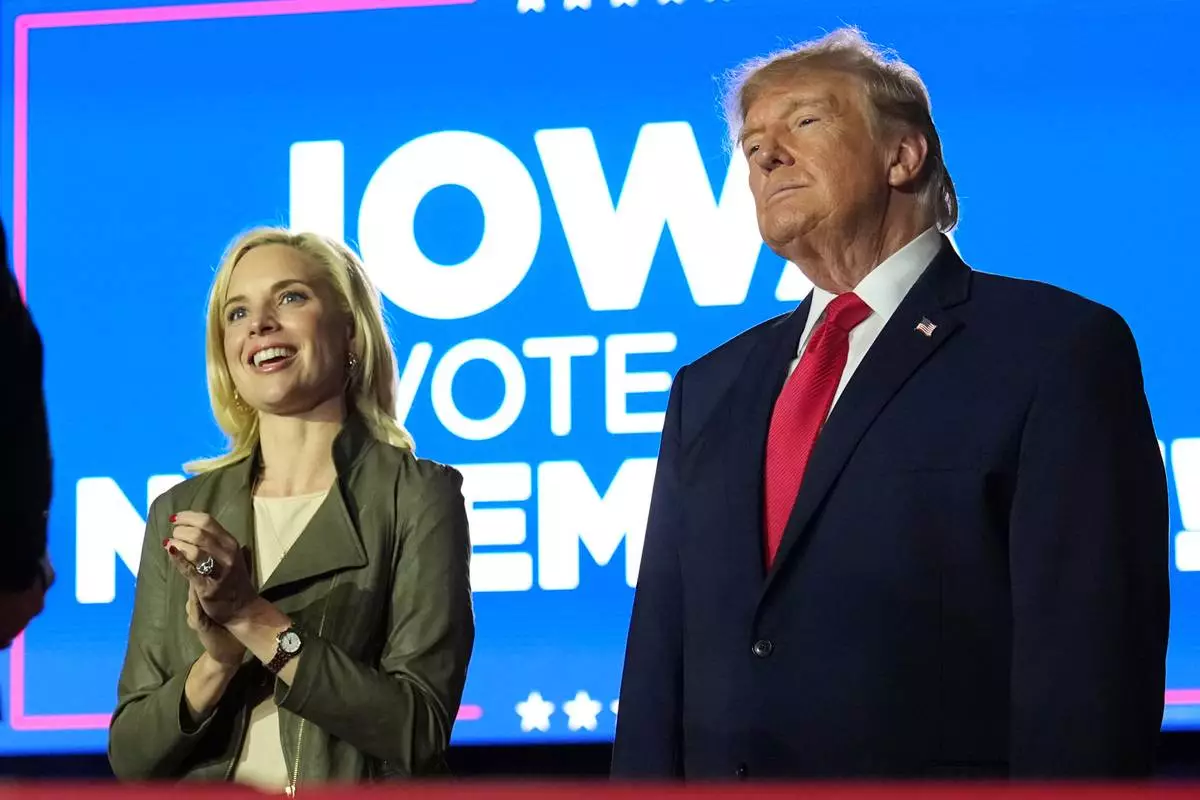
Senate candidate Rep. Ashley Hinson, R-Iowa, left, stands with President Donald Trump on stage during a campaign rally at the Five Flags Event Center, Sunday, Nov. 1, 2026, in Dubuque, Iowa. (AP Photo/Jacquelyn Martin)
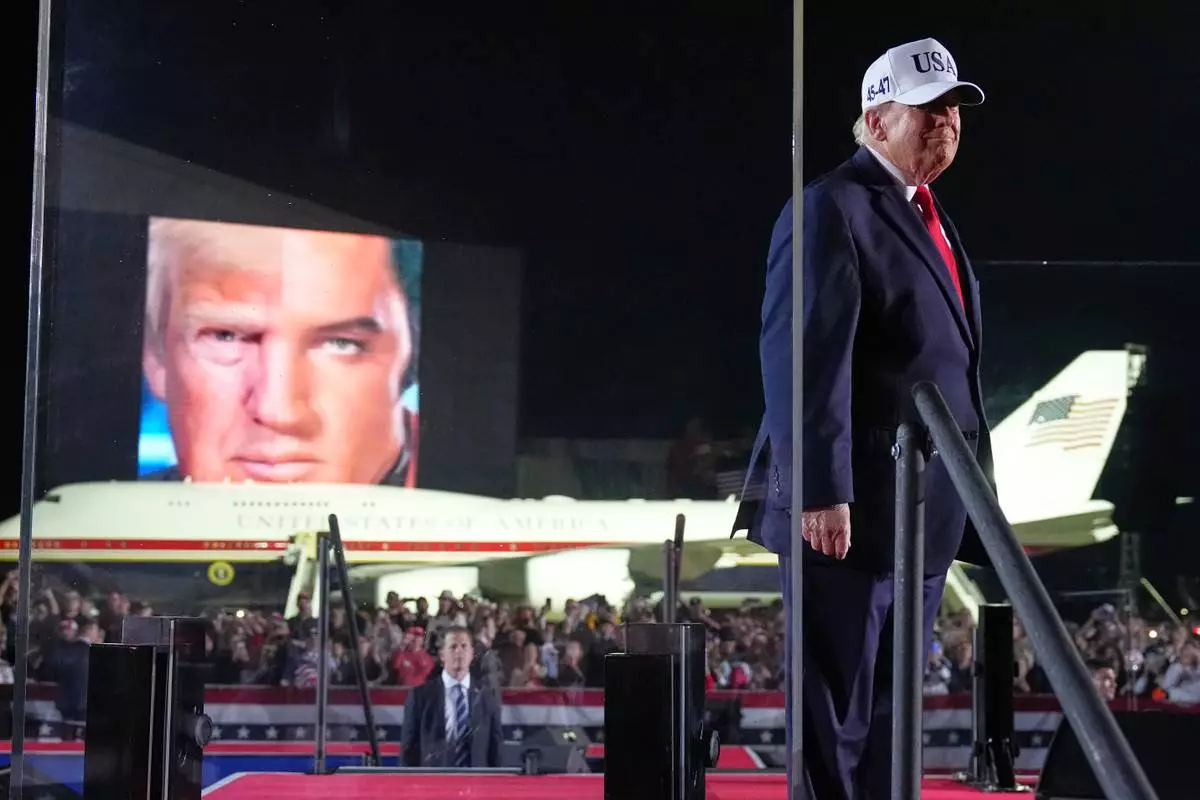
President Donald Trump arrives at a campaign rally at the Salina Regional Airport, Sunday, Nov. 1, 2026, in Salina Kan. (AP Photo/Jacquelyn Martin)
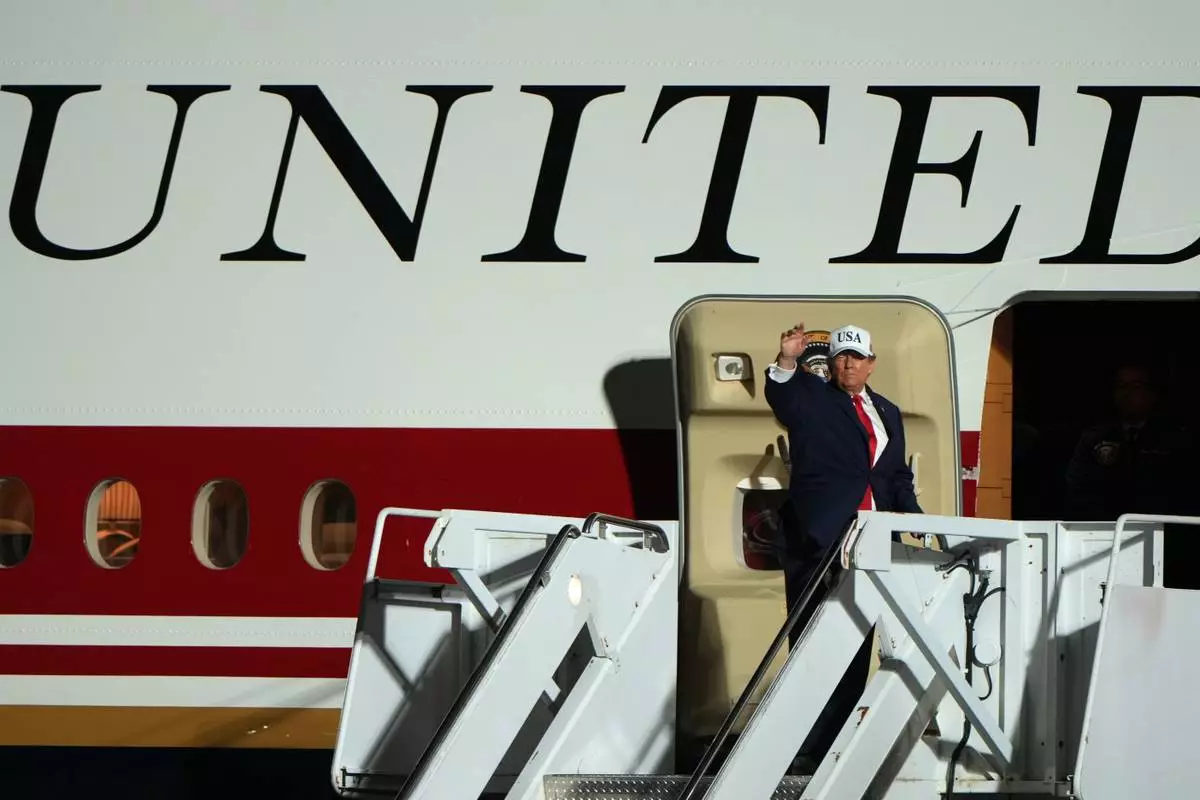
President Donald Trump boards Air Force One after speaking at a campaign rally at the Salina Regional Airport, Sunday, Nov. 1, 2026, in Salina Kan. (AP Photo/Charlie Riedel)
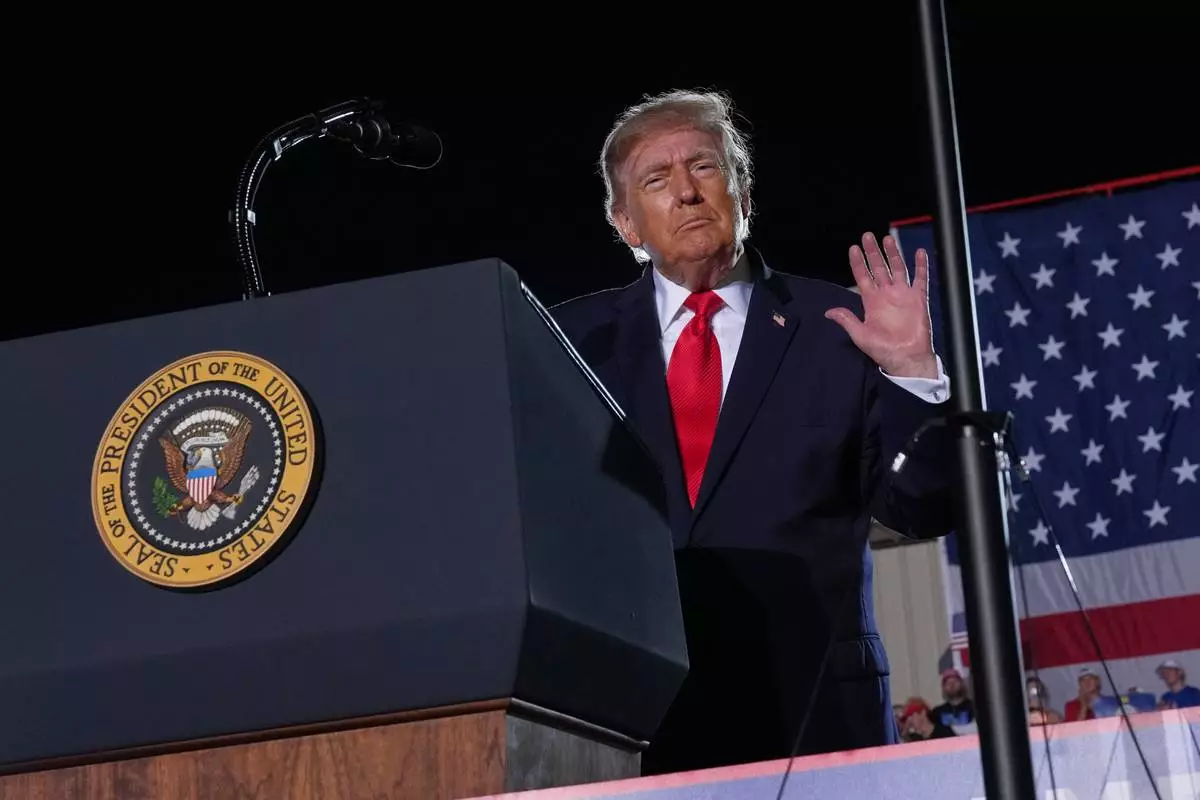
President Donald Trump speaks at a campaign rally at the Salina Regional Airport, Sunday, Nov. 1, 2026, in Salina Kan. (AP Photo/Jacquelyn Martin)
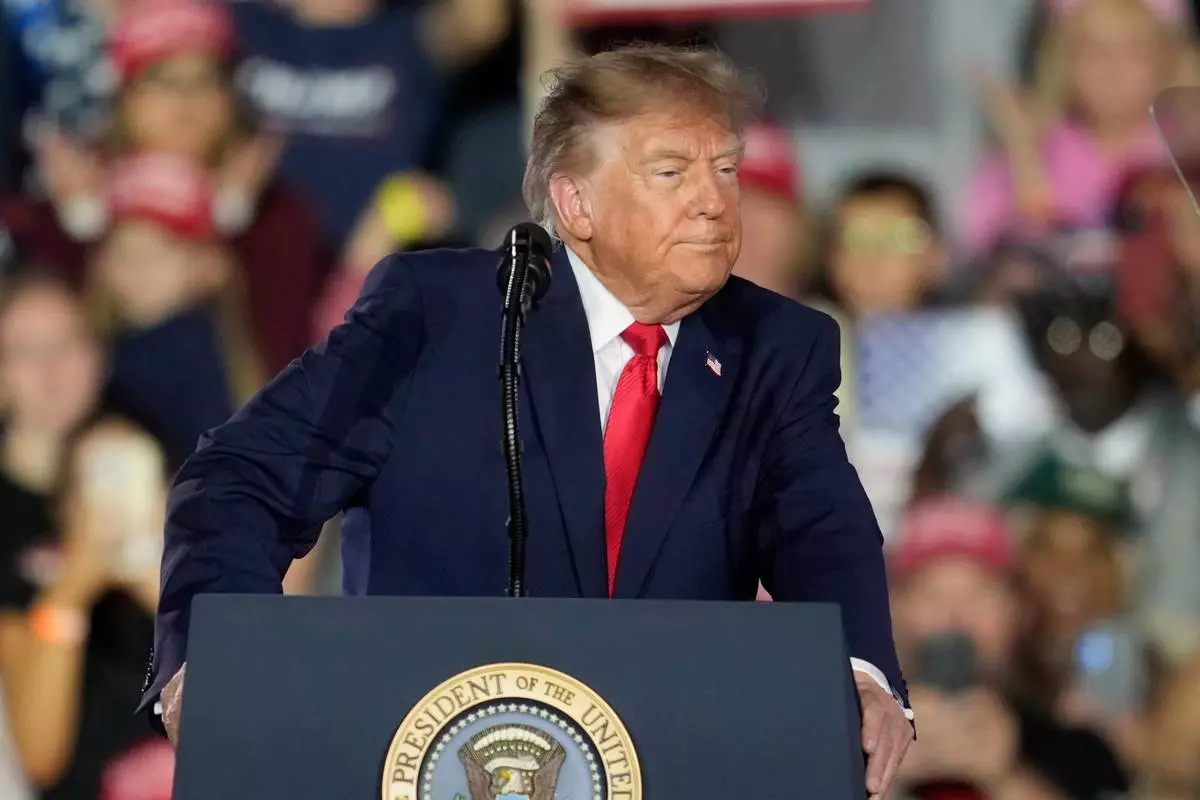
President Donald Trump speaks during a campaign rally at the Five Flags Event Center, Sunday, Nov. 1, 2026, in Dubuque, Iowa. (AP Photo/Charlie Neibergall)
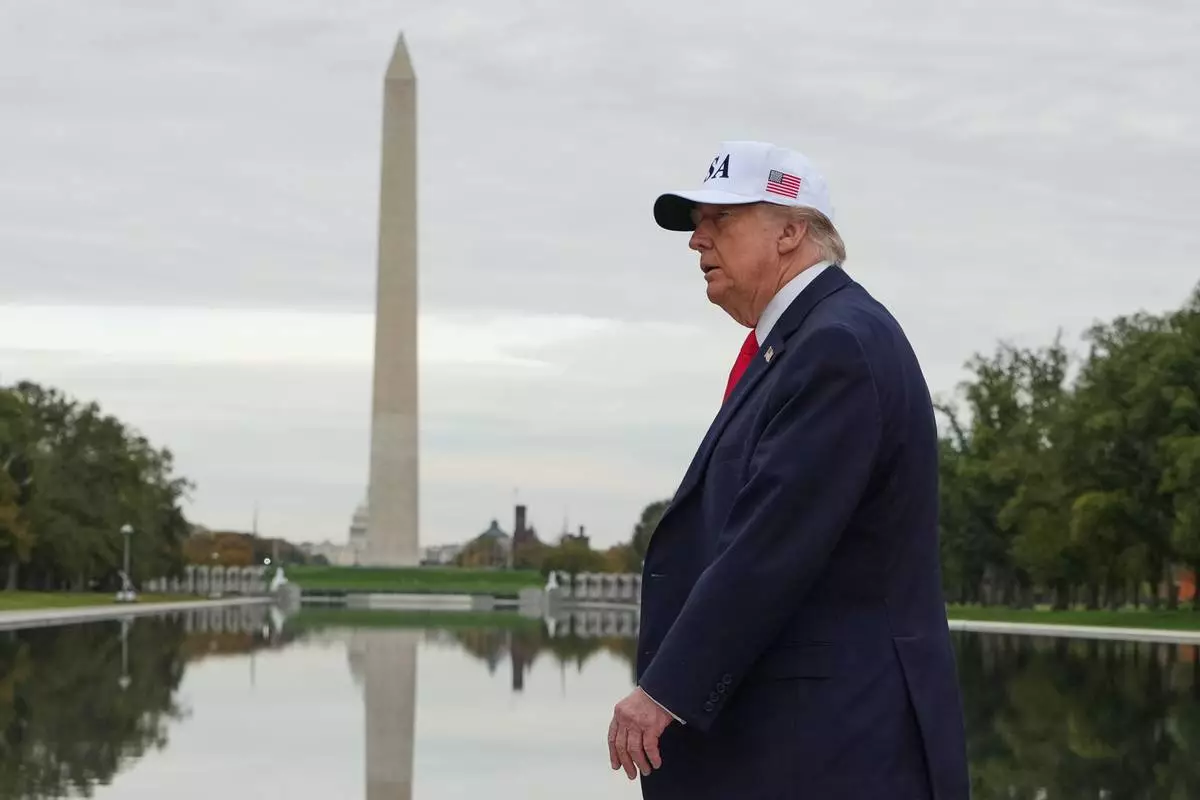
President Donald Trump walks from the podium after speaking at the Lincoln Memorial Reflecting Pool, Monday, Nov. 2, 2026, in Washington. (AP Photo/Alex Brandon)