Skip to Content Facebook Feature Image

Promising new HIV-prevention drug is hard to find where it's most needed, in places like Uganda

News

Promising new HIV-prevention drug is hard to find where it's most needed, in places like Uganda
News

News

Promising new HIV-prevention drug is hard to find where it's most needed, in places like Uganda

2026-11-03 16:06 Last Updated At:17:17

MBARARA, Uganda (AP) — In the red light district in Mbarara, a city in western Uganda known in part for sex tourism, a sex worker named Lisa Mutoni insists on using condoms when men enter her room, to protect her against HIV and other infections. The problem: Some try to remove or tear the condom while having sex.

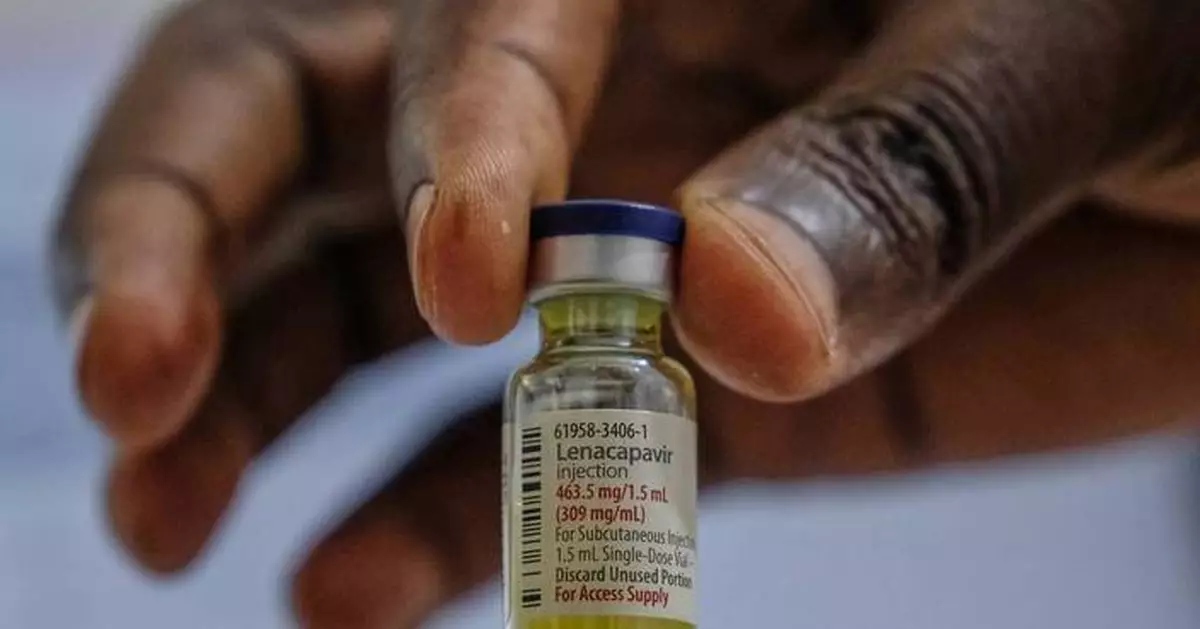
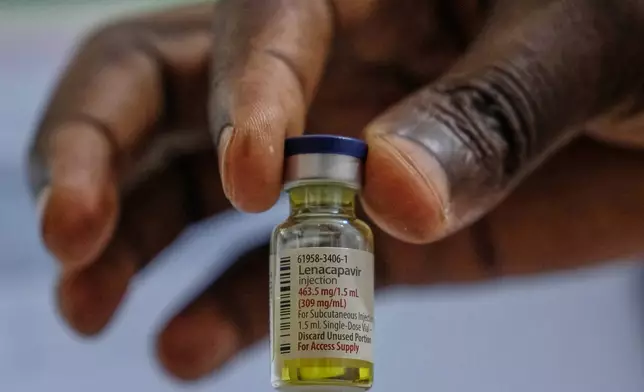
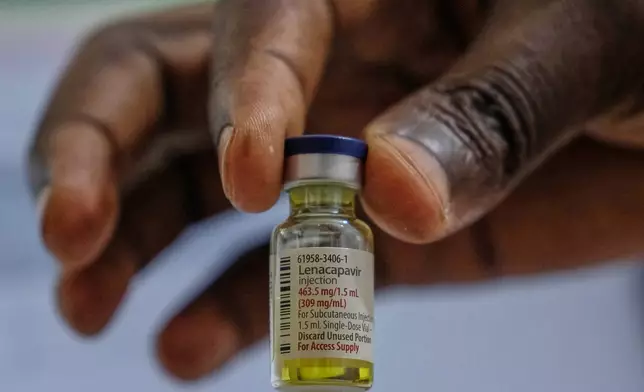
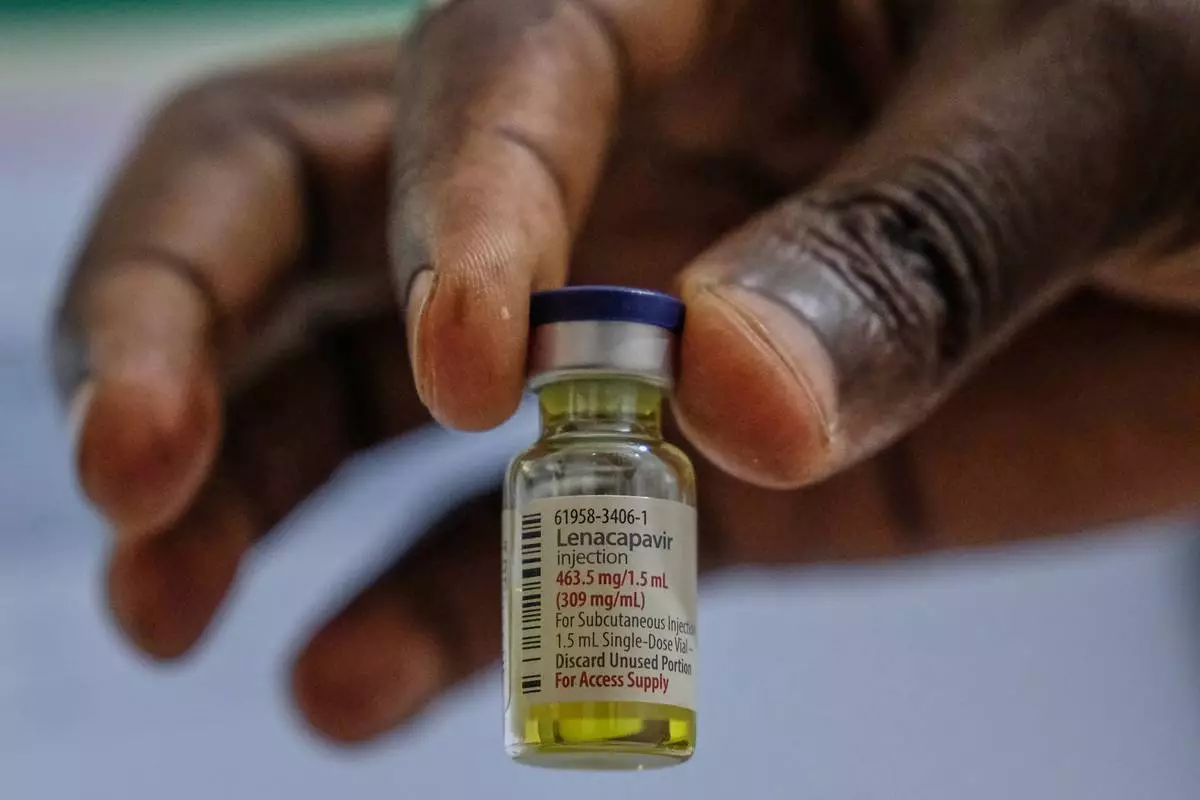
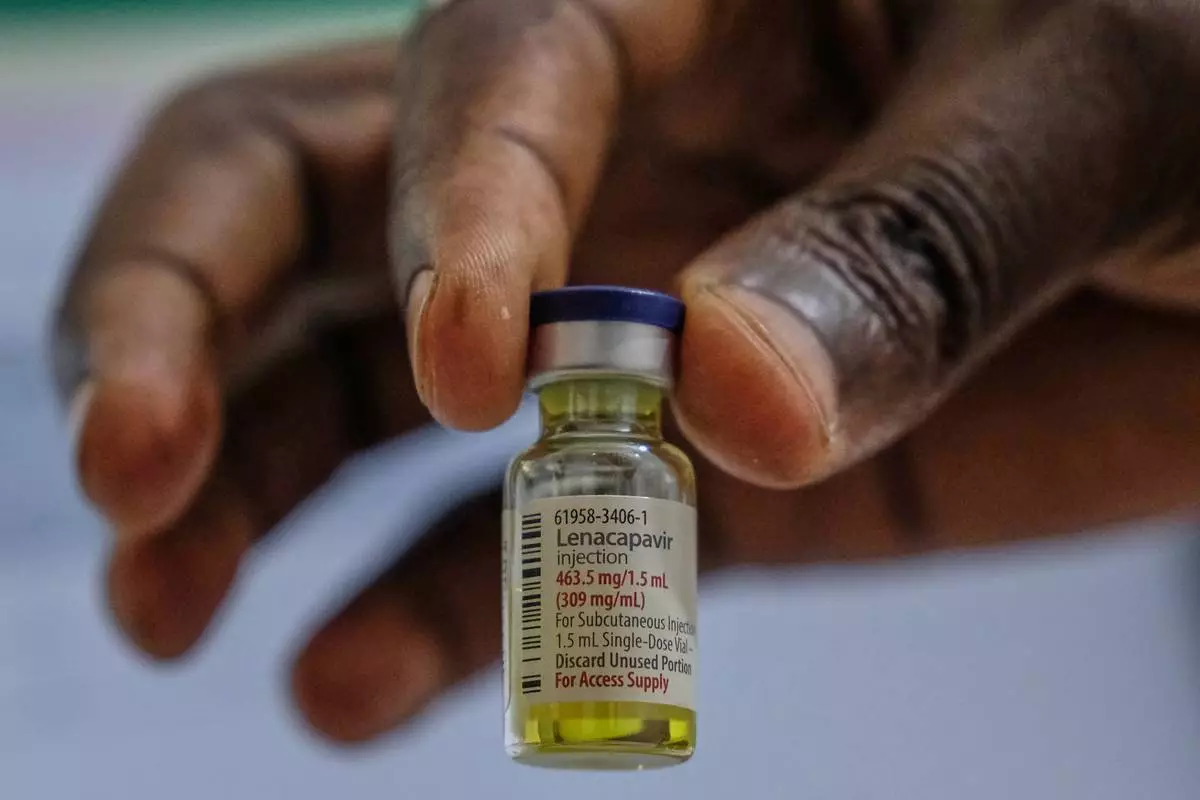
She takes HIV-prevention medication called PrEP, or preexposure prophylaxis, which can come in the form of daily pills or periodic injections. But there’s a new option for her and millions like her — if they could only get it. It’s a drug called lenacapavir that studies have shown can offer nearly complete protection from HIV with just two shots a year.

More Images
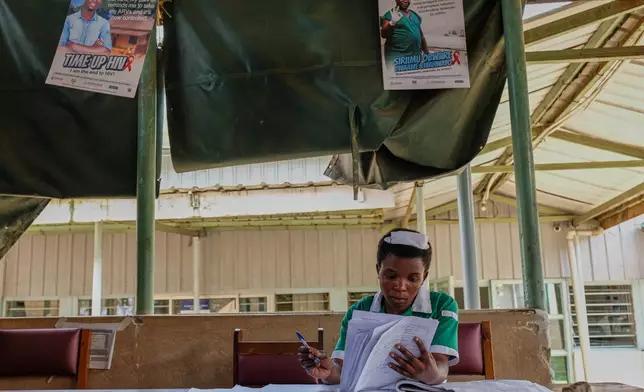
A health worker registers patients at the ART clinic at Mbarara City Council Health Center IV in Mbarara, western Uganda, Aug. 21, 2026. (AP Photo/Hajarah Nalwadda)
A health worker registers patients at the ART clinic at Mbarara City Council Health Center IV in Mbarara, western Uganda, Aug. 21, 2026. (AP Photo/Hajarah Nalwadda)

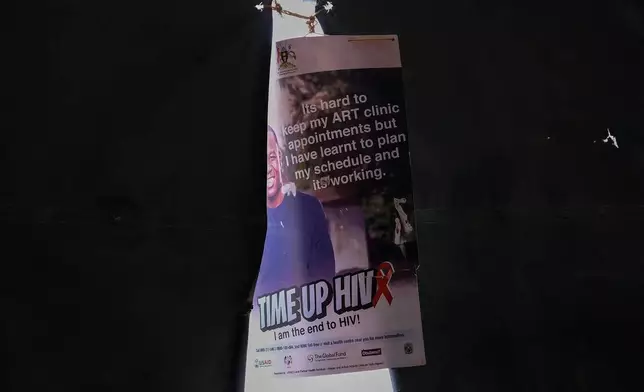
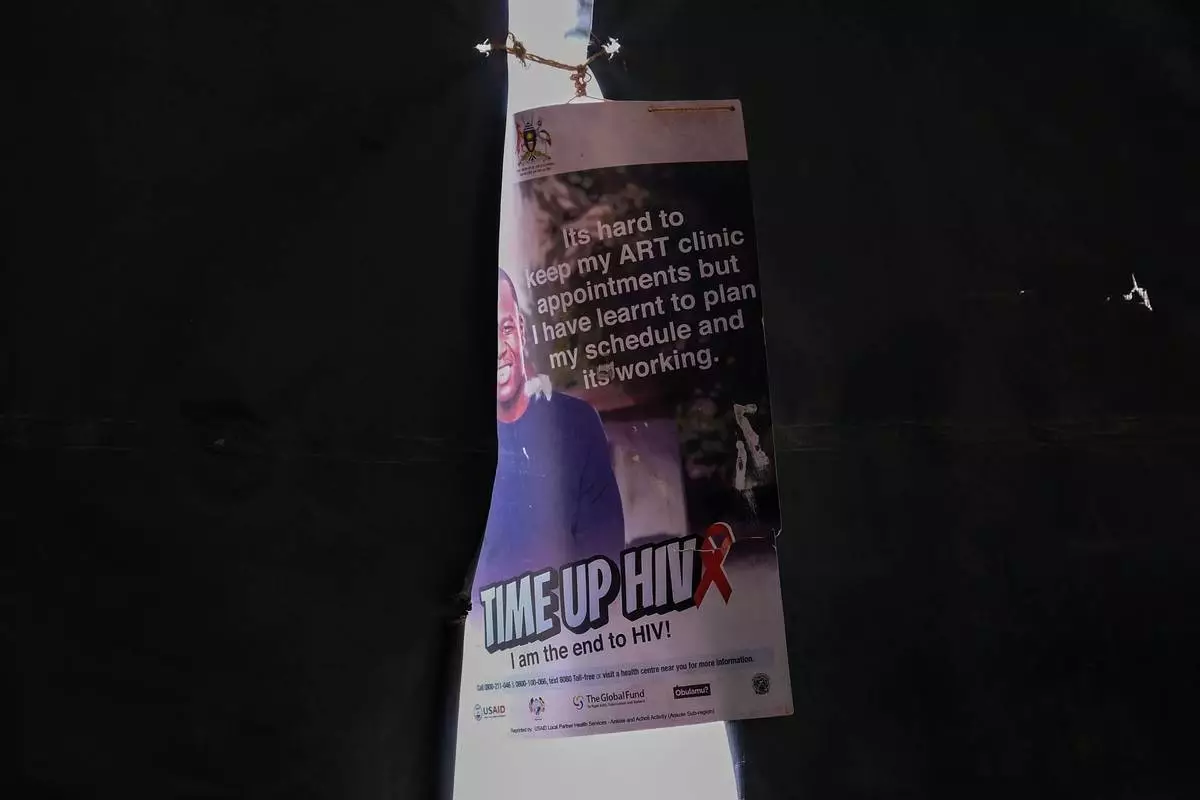
A health flyer educating about HIV prevention is seen at the ART clinic at Mbarara City Council Health Center IV in western Uganda, Aug. 21, 2026. (AP Photo/Hajarah Nalwadda)
A health flyer educating about HIV prevention is seen at the ART clinic at Mbarara City Council Health Center IV in western Uganda, Aug. 21, 2026. (AP Photo/Hajarah Nalwadda)

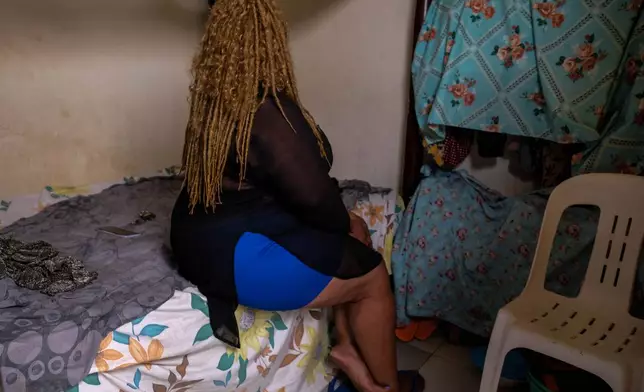
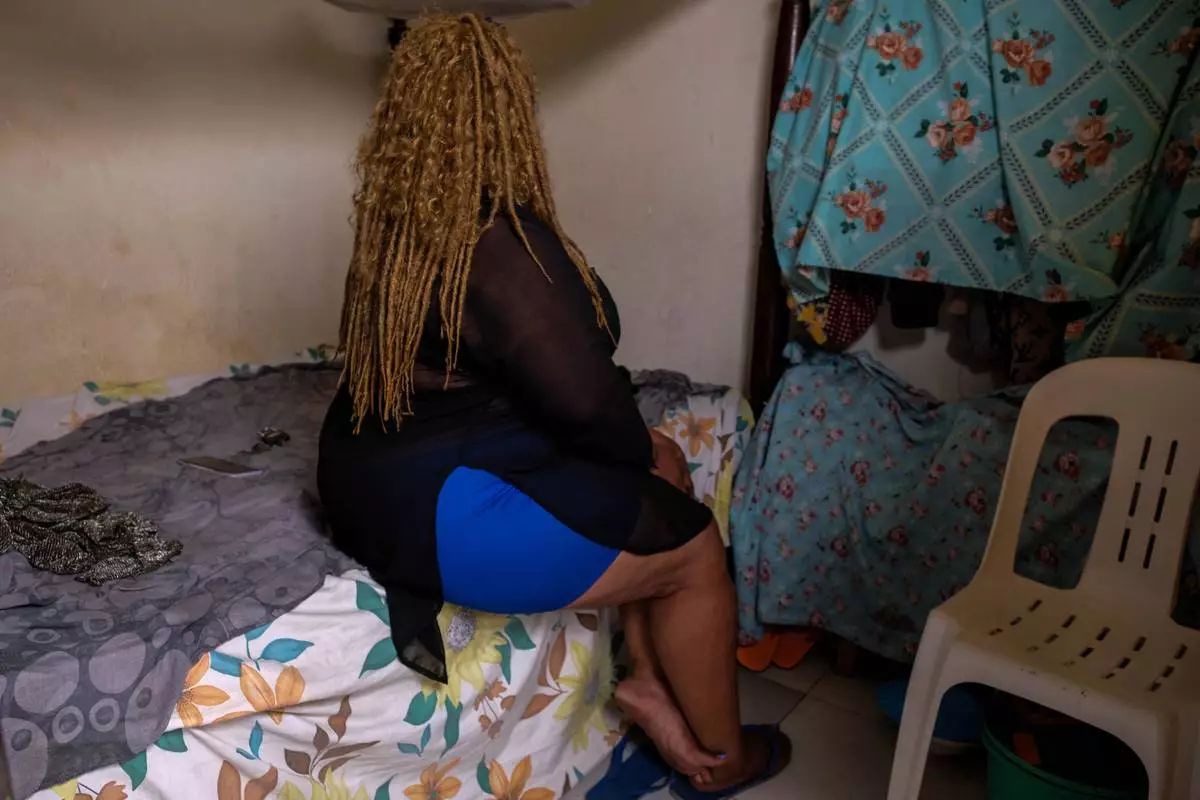
A sex worker sits on a bed during an interview with The Associated Press in Mbarara, western Uganda, Aug. 22, 2026. (AP Photo/Hajarah Nalwadda)
A sex worker sits on a bed during an interview with The Associated Press in Mbarara, western Uganda, Aug. 22, 2026. (AP Photo/Hajarah Nalwadda)

A nurse prepares a syringe before injecting a patient with the new HIV prevention drug lenacapavir at the ART clinic at Mbarara City Council Health Center IV in western Uganda, Aug. 21, 2026. (AP Photo/Hajarah Nalwadda)
A nurse prepares a syringe before injecting a patient with the new HIV prevention drug lenacapavir at the ART clinic at Mbarara City Council Health Center IV in western Uganda, Aug. 21, 2026. (AP Photo/Hajarah Nalwadda)

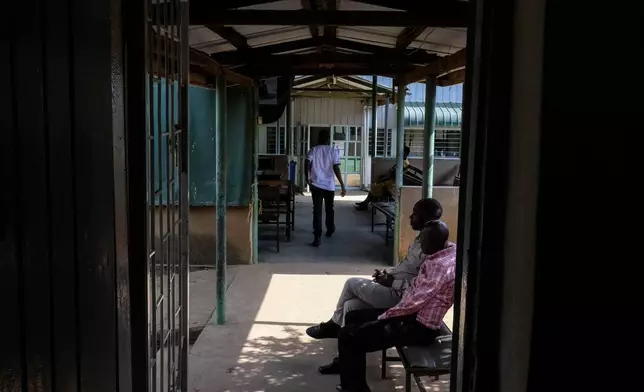
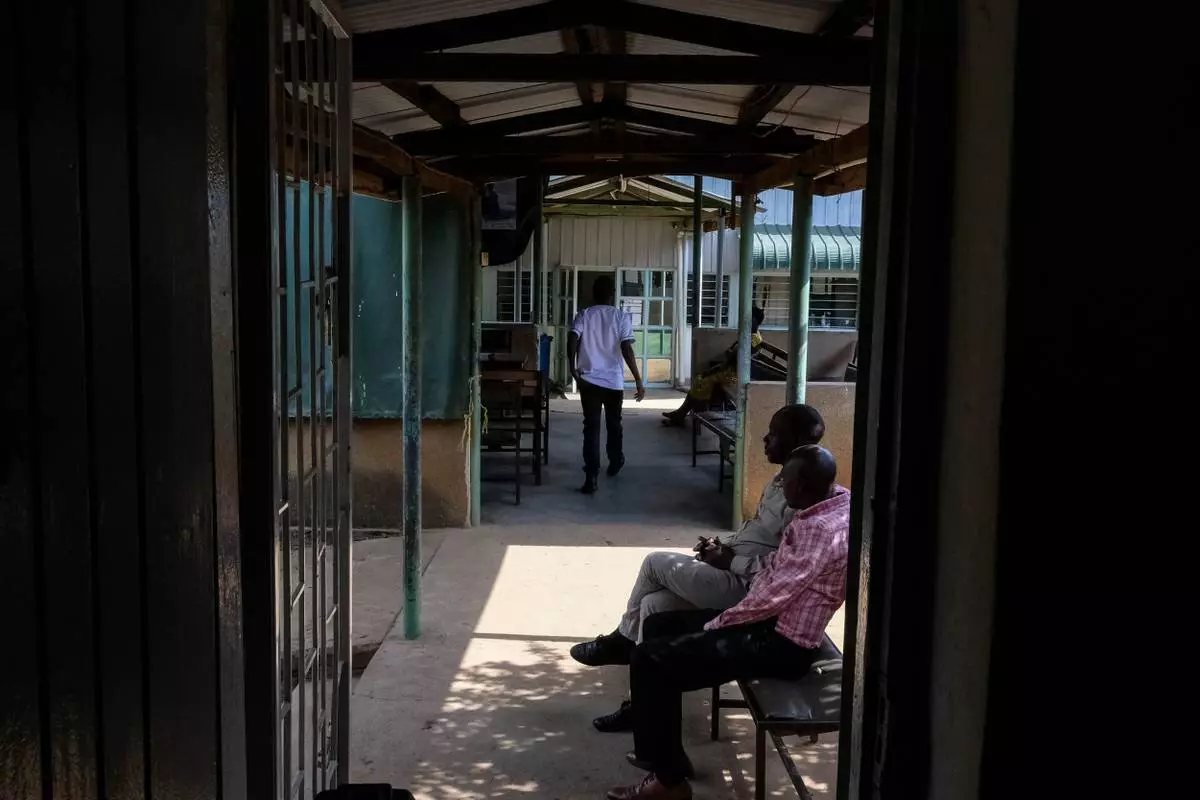
Patients wait for services at the ART clinic at Mbarara City Council Health Center IV in Mbarara, western Uganda, Aug. 21, 2026. (AP Photo/Hajarah Nalwadda)
Patients wait for services at the ART clinic at Mbarara City Council Health Center IV in Mbarara, western Uganda, Aug. 21, 2026. (AP Photo/Hajarah Nalwadda)

A nurse prepares a syringe before injecting a patient with the new HIV prevention drug lenacapavir at the ART clinic at Mbarara City Council Health Center IV in western Uganda, Aug. 21, 2026. (AP Photo/Hajarah Nalwadda)

A nurse prepares a syringe before injecting a patient with the new HIV prevention drug lenacapavir at the ART clinic at Mbarara City Council Health Center IV in western Uganda, Aug. 21, 2026. (AP Photo/Hajarah Nalwadda)

Mutoni said access to lenacapavir would benefit sex workers who sometimes shift elsewhere for months at a time.

“If you know that you have that injection for six months, you feel like you are safe,” she said. “And then it is very good, nice because sometimes you can also forget, if it is the pill, you can forget to swallow.”

But Mutoni says every time she tries to get what is commonly referred to as “lena,” it's not available. “They tell me that it is finished,” she said.

Such is the promise and the frustration with lenacapavir, a drug developed by Gilead Sciences. Other PrEP options, including pills and an every-other-month shot of the drug cabotegravir, are very effective and widely available. But health experts say lenacapavir has the power not just to protect individuals but potentially even turn the tide of the HIV epidemic globally because of its long-lasting effects.

But there are not nearly enough doses, in this East African country or the rest of the world.

“The rate of growth (of lenacapavir rollout) isn’t fast enough. We need to be getting to the millions pretty soon,” said Andrew Hill, an expert in HIV treatment who is a senior visiting research fellow at the University of Liverpool in northwest England.

That may start to change in the coming months. The U.S. Food and Drug Administration has just tentatively approved a generic version of lenacapavir that could help speed the production and distribution of the drug to 120 low-income countries at a price of roughly $40 a year, far below the U.S. list price of $28,218. The approval was announced Monday.

The hope, according to the Global Fund, is to get it to 3 million people by the end of 2028.

Some, including Doctors Without Borders, known by its French initials MSF, say this isn't nearly enough. The group is calling on Gilead to make cheap doses available to more countries and to sell it directly to MSF so it can help protect more people faster.

“Gilead says it wants to end the HIV epidemic ‘for everyone, everywhere,’ but its actions say otherwise,” said Melissa Barber, MSF USA global health advocacy and policy adviser, in a recent statement.

For now, people in Mbarara, where an estimated 10% of the adult population has HIV — double the rate of Uganda as a whole — have to settle for inferior choices.

Julius Bampe, a polygamous man, was alarmed earlier this year when testing confirmed his younger wife had HIV. She was immediately given drugs to suppress her infection, while Bampe sought lenacapavir.

But when Bampe, an itinerant builder, went to get his injection, he found that there were no doses left.

“When I got here, they said that is what they would have given me, but they said they didn’t have enough doses for everyone,” he said.

The facility that Bampe goes to received 40 lenacapavir doses in April, with instructions to focus only on pregnant mothers at risk of acquiring HIV. The guidelines were later changed to include couples like Bampe and his wife, sex workers and others.

That batch was quickly administered and another 70 doses sent in June were used up within 10 days, said Tarsisio Biryeija, a nursing officer working as a counselor at Mbarara Health Centre IV.

Uganda has slashed its HIV rate over the past three decades, and it's far below that of some southern African countries. But like in many nations, health authorities in Uganda say infections are driven largely by transactional sexual encounters like those in Mbarara — and the type of transmission that lenacapavir could be so effective at stopping.

Mutoni, the sex worker in Mbarara, gets counseling and other support, including condoms, from Immaculate Nyamwija, founder of a Mbarara-based organization known as Action for Improved Health and Wealth. Nyamwija offers HIV support services to women who would face discrimination elsewhere.

“It is a challenge, because the demand is high and the doses are few,” she said. “Who would not wish to take (lenacapavir) for six months? Who would wish to be on drugs every day?”

Gerald Imray in Cape Town, South Africa, and Laura Ungar in Louisville, Kentucky, contributed to this report.

For more on Africa and development: https://apnews.com/hub/africa-pulse

The Associated Press receives financial support for global health and development coverage in Africa from the Gates Foundation. The AP is solely responsible for all content. Find AP’s standards for working with philanthropies, a list of supporters and funded coverage areas at AP.org.
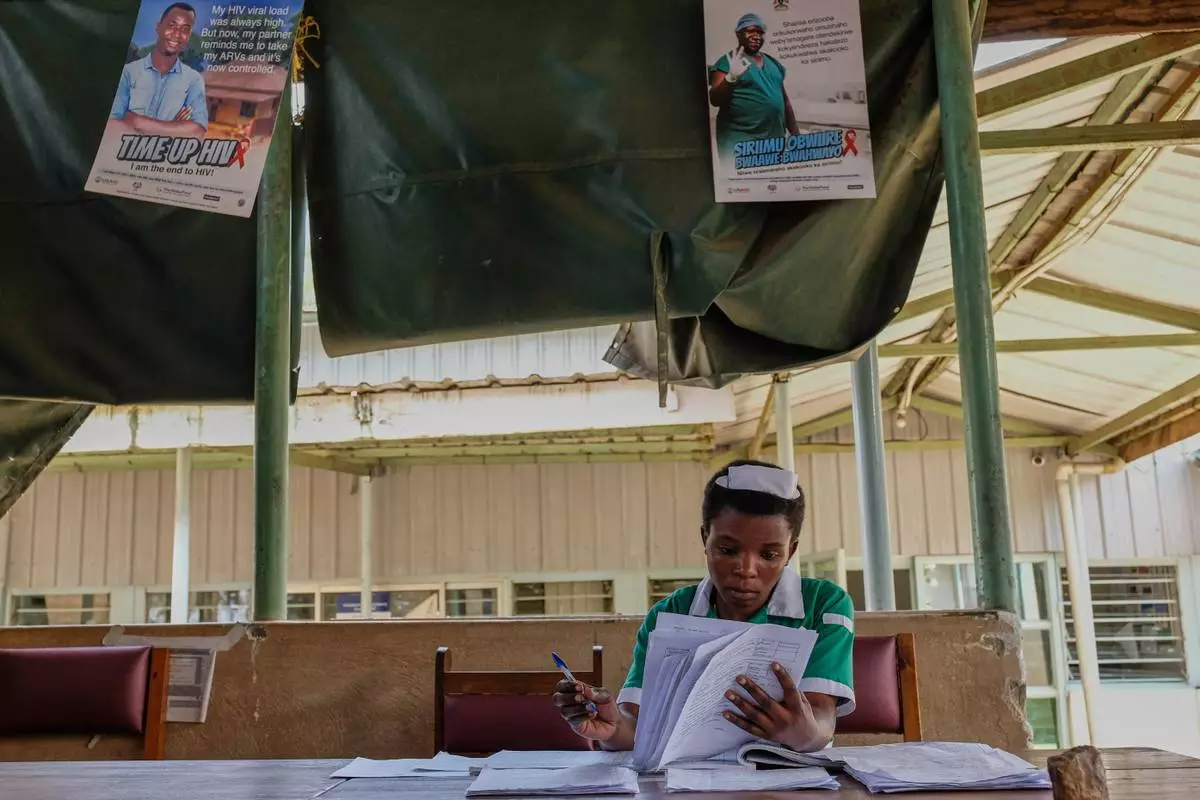
A health worker registers patients at the ART clinic at Mbarara City Council Health Center IV in Mbarara, western Uganda, Aug. 21, 2026. (AP Photo/Hajarah Nalwadda)
A health worker registers patients at the ART clinic at Mbarara City Council Health Center IV in Mbarara, western Uganda, Aug. 21, 2026. (AP Photo/Hajarah Nalwadda)

A health flyer educating about HIV prevention is seen at the ART clinic at Mbarara City Council Health Center IV in western Uganda, Aug. 21, 2026. (AP Photo/Hajarah Nalwadda)
A health flyer educating about HIV prevention is seen at the ART clinic at Mbarara City Council Health Center IV in western Uganda, Aug. 21, 2026. (AP Photo/Hajarah Nalwadda)

A sex worker sits on a bed during an interview with The Associated Press in Mbarara, western Uganda, Aug. 22, 2026. (AP Photo/Hajarah Nalwadda)
A sex worker sits on a bed during an interview with The Associated Press in Mbarara, western Uganda, Aug. 22, 2026. (AP Photo/Hajarah Nalwadda)

A nurse prepares a syringe before injecting a patient with the new HIV prevention drug lenacapavir at the ART clinic at Mbarara City Council Health Center IV in western Uganda, Aug. 21, 2026. (AP Photo/Hajarah Nalwadda)
A nurse prepares a syringe before injecting a patient with the new HIV prevention drug lenacapavir at the ART clinic at Mbarara City Council Health Center IV in western Uganda, Aug. 21, 2026. (AP Photo/Hajarah Nalwadda)

Patients wait for services at the ART clinic at Mbarara City Council Health Center IV in Mbarara, western Uganda, Aug. 21, 2026. (AP Photo/Hajarah Nalwadda)
Patients wait for services at the ART clinic at Mbarara City Council Health Center IV in Mbarara, western Uganda, Aug. 21, 2026. (AP Photo/Hajarah Nalwadda)

A nurse prepares a syringe before injecting a patient with the new HIV prevention drug lenacapavir at the ART clinic at Mbarara City Council Health Center IV in western Uganda, Aug. 21, 2026. (AP Photo/Hajarah Nalwadda)

A nurse prepares a syringe before injecting a patient with the new HIV prevention drug lenacapavir at the ART clinic at Mbarara City Council Health Center IV in western Uganda, Aug. 21, 2026. (AP Photo/Hajarah Nalwadda)
Iran’s chief negotiator says it’s up to the United States to prevent renewed war after what he described as a “firm and rational response” to Washington. Mohammad Bagher Qalibaf did not elaborate. His comments came after the U.S. conducted defensive strikes on some Iranian targets in the Strait of Hormuz.

Meanwhile, India says an attack on a commercial vessel off Oman killed an Indian national while 13 were rescued.

Here is the latest news from the Middle East on Tuesday. Read our full coverage here.

Iran’s chief negotiator and parliament speaker says the ball is now in the U.S. court to prevent new fighting after Tehran delivered what was a “firm and rational response” to the U.S., state TV reported.

In an address to parliament, Mohammad Bagher Qalibaf said Iran remained ready “for battle with its finger on the trigger.”

He did not elaborate and it was unclear what “response” he referred to. His comment came after a U.S. official said the military conducted defensive strikes on some Iranian targets in the Strait of Hormuz.

According to the official, the strikes targeted Iranians using surface-to-air missiles. The official wasn’t authorized to comment publicly and spoke on condition of anonymity.

Iranian state television reported that explosions were heard on Qeshm Island.

Qalibaf said: “If Washington makes another strategic miscalculation, it should know that this time it will face a new battlefield and will find itself even more desperate than it is today, searching for a way out.”

— By Michelle L. Price

A commercial vessel was attacked near Limah, Oman, India’s foreign ministry said, killing one Indian national while 13 were rescued in the aftermath.

Indian Ports, Shipping and Waterways Minister Sarbananda Sonowal said the Indian-flagged vessel MSV AL JUSUFI was hit by an unidentified aerial object off the coast of Oman on Monday.

India’s foreign ministry said the Indian Embassy in Oman was working with local authorities to arrange the return of the rescued nationals and the body of the deceased.

There was no claim of responsibility, but Iran previously has claimed attacks on vessels it says took unauthorized routes through the strait. It also has claimed some vessels have struck mines laid in the early days of the war.

Women and children displaced by the fighting in Yemen are losing access to essential services, including maternity care and protection from violence, the U.N. said.

Renewed fighting between the Iran-backed Houthis and the Saudi-backed government forces has displaced some 300,000 people over the past few months. The conflict, which is mainly concentrated in the west coast and southern province of Taiz, broke a four-year truce and exacerbated an already dire humanitarian situation in one of the Arab world’s poorest countries.

Francesco Galtieri, the U.N. Population Fund's representative in Aden, said fighting had escalated to levels not seen since 2020. It has led to limited access to services, leaving women and girls increasingly vulnerable to gender-based violence, sexual violence and exploitation.

In the besieged city of Taiz, Galtieri warned of a “rapidly deteriorating humanitarian situation”, with life-saving services increasingly out of reach for more than 147,000 women and girls of reproductive age. Of the city’s 27 emergency maternal and neonatal hospitals, only five remain operational.

UNFPA estimates that more than 13,000 pregnant women are currently without access to essential maternal healthcare.

Amid prospects of renewed U.S. attacks on Iran, China called on all the parties to resolve their disputes through dialogue and negotiations.

“China believes that military means do not help resolve problems and will only exacerbate tensions and escalate the situation,” Foreign Ministry spokesperson Mao Ning said during a regular briefing in Beijing.

China announced on Monday that it will send a special envoy to Iran, Oman and Saudi Arabia in early to mid-November as part of Beijing’s efforts to promote regional peace.

This report will be updated throughout the day as new developments emerge.

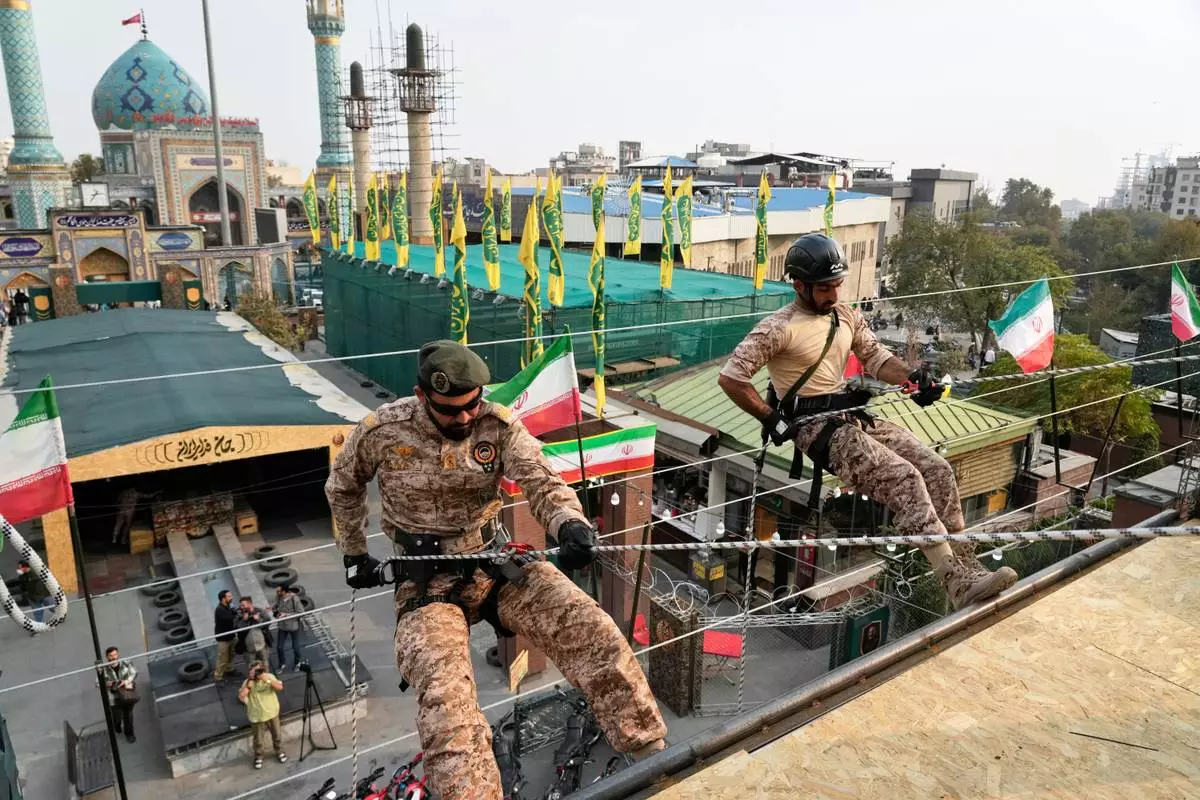
Members of Iran's Revolutionary Guard demonstrate rappelling techniques, with the Imamzadeh Saleh shrine in the background, during the inauguration of a military training center for civilian volunteers in Tajrish Square in Tehran, Iran, Monday, Nov. 2, 2026. (AP Photo/Vahid Salemi)

Members of Iran's Revolutionary Guard demonstrate rappelling techniques, with the Imamzadeh Saleh shrine in the background, during the inauguration of a military training center for civilian volunteers in Tajrish Square in Tehran, Iran, Monday, Nov. 2, 2026. (AP Photo/Vahid Salemi)

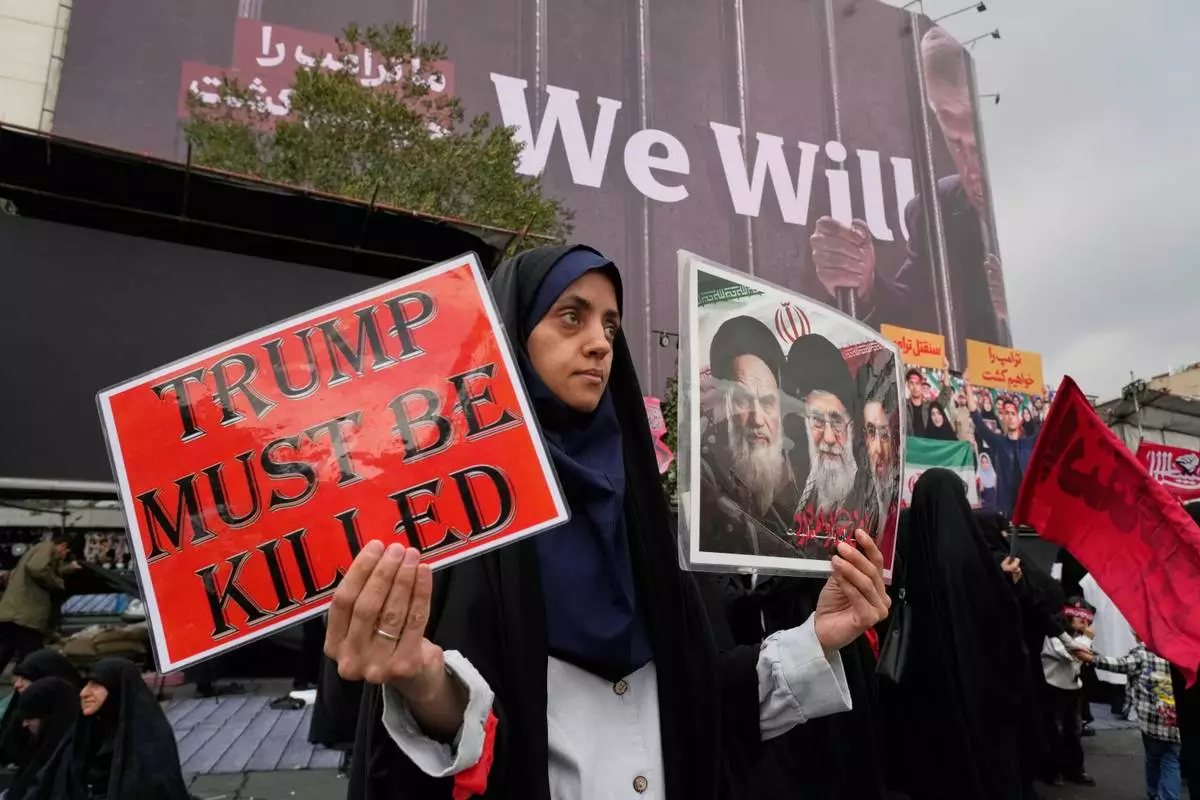
A woman holds a sign calling for the killing of U.S. President Donald Trump and a poster depicting, from left, Iran's supreme leaders Ruhollah Khomeini, Ali Khamenei and Mojtaba Khamenei during an anti-U.S. gathering beneath a billboard depicting Trump in central Tehran, Iran, Tuesday, Nov. 3, 2026. (AP Photo/Vahid Salemi)

A woman holds a sign calling for the killing of U.S. President Donald Trump and a poster depicting, from left, Iran's supreme leaders Ruhollah Khomeini, Ali Khamenei and Mojtaba Khamenei during an anti-U.S. gathering beneath a billboard depicting Trump in central Tehran, Iran, Tuesday, Nov. 3, 2026. (AP Photo/Vahid Salemi)

Recommended Articles