Democratic U.S. Sen. Amy Klobuchar faces Republican state House speaker Lisa Demuth in Tuesday's election for Minnesota governor, a race shaped by a widespread fraud scandal.
The winner will replace outgoing Gov. Tim Walz, Democrats' most recent nominee for vice president, who ended his bid for a third term after the fraud investigation into stealing hundreds of millions of dollars from state-run social services programs exploded into a national embarrassment.
Klobuchar is well known after two decades in the Senate, has won four statewide elections by double-digit margins, faced no serious opposition in the Democratic primary and raised more than four times as much money as Demuth — factors that make her the front-runner in a state that hasn't elected a Republican to statewide office since 2006.
But Republicans think sustained attention to the fraud scandal, which has angered many Minnesotans, gives Demuth a path to end their party's losing streak.
The winner will be Minnesota's first female governor. Demuth would also be the state's first Black governor and potentially the first Black female governor in the country. Keisha Lance Bottoms, another Black woman, is running for Georgia governor.
Dozens of people have been convicted of stealing hundreds of millions of dollars from state-run social services programs meant to provide food, shelter, healthcare and childcare to people in need.
Charges worked their way through the court system for years with little notice outside Minnesota until late last year, when a right-wing influencer's videos went viral and drew the attention of President Donald Trump. The president trained his ire on the state government and Minnesota's community of Somali refugees.
Under intense scrutiny, Walz dropped his reelection campaign less than four months after announcing it, and Democrats quickly coalesced around Klobuchar.
The president last winter used the scandal as justification for a violent crackdown on immigrants in the Minneapolis-Saint Paul metro area, galvanizing the liberal opposition to him.
Klobuchar pledged to thoroughly audit state government and invest in new technology to catch and prevent fraud. Pointing to her pre-Senate career as Hennepin County's head prosecutor, she says she will ensure people breaking the law are convicted.
Demuth urged Minnesotans long accustomed to voting Democratic to give the Republican Party a try, saying the fraud scandal shows the status quo isn't working.
Aside from tackling fraud, Klobuchar focused on addressing rising costs. She called for reducing barriers to homebuilding, improving school test scores and reducing screen time in schools.
She ran for president in 2020 before stepping aside to endorse Joe Biden for the Democratic nomination. She has repeatedly told interviewers that she won't run in 2028, when Democrats are expected to have a crowded primary field.
Demuth is the top Republican in state government. First elected in 2018 to represent a rural district outside St. Cloud, she became House speaker under a power-sharing deal after the 2024 elections left the chamber evenly split between the parties.
She has pledged to fight violent crime, highlighting in particular acts of violence committed by Somalis, and to improve education.
Democrats have tied her to Trump, noting she sought his endorsement in the Republican primary before he backed MyPillow founder Mike Lindell.
Through mid-October, Klobuchar had raised more than $15.5 million for her campaign, a commanding advantage over Demuth's $3.6 million, according to campaign finance records. Without a serious Democratic challenger, Klobuchar was able to hoard cash ahead of the August primary while Demuth was focused on winning in a crowded Republican field.
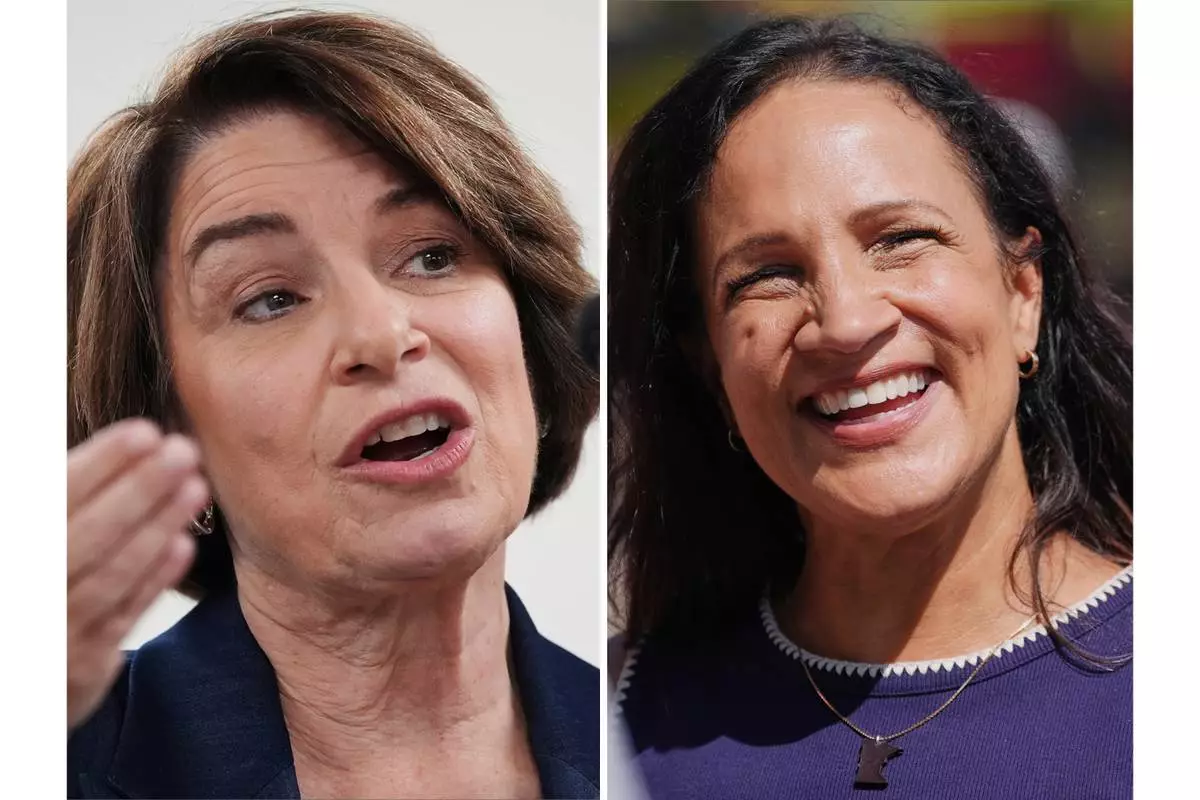
This combination of photos shows gubernatorial candidate, Sen. Amy Klobuchar, left, D-Minn., taken Friday, Oct. 9, 2026, in St. Paul, Minn., and Minnesota House Speaker Lisa Demuth, right, candidate for Minnesota governor, taken Monday, Aug. 31, 2026, in Falcon Heights, Minn. (AP Photo/Ellen Schmidt, File)
WASHINGTON (AP) — The United States will stop providing $4 billion in aid each year to Israel in 2027 but will sell arms to its closest ally in the Middle East, President Donald Trump said on Tuesday.
The Republican president told Fox News Channel during a phone call on Election Day for the midterms that Israeli Prime Minister Benjamin Netanyahu had approached him about the idea and that they have been talking about it for a couple of years.
Trump said Israel doesn’t need the aid and it’s a lot of money for the U.S. to spend. But Trump also said that U.S. aid to Israel has become a Democratic talking point for candidates such as Michigan Senate candidate Abdul El-Sayed, a vocal critic of Israel.
“You can consider it barter. You can consider military aid or cash,” Trump said. “Look, we give them $4 billion of things and money, and they don’t need it. And I was approached by Bibi Netanyahu, and we’ve been talking about it for a couple of years because it’s a lot of money.”
There was no immediate comment from Netanyahu’s office.
The United States has sent tens of billions of dollars in military aid to Israel over the last few years.
In 2016, President Barack Obama, a Democrat, signed an unprecedented security agreement with Israel to give its military $38 billion over 10 years, amounting to $3.8 billion a year. Under the agreement, Israel’s ability to spend part of the funds on Israeli military products was to be phased out and eventually all of the money would be spent on American military industries.
Netanyahu has talked about the need to wean Israel off the aid in the past and has said that the American aid would end at some point.
He told The Economist in January that he wanted to “taper off” U.S. military aid in the next 10 years and that such a change was “in the works.”
But the optics of the aid had also become an issue, according to Trump, who singled out El-Sayed for using it as a talking point.
“The left uses the $4 billion payment — that everybody knows about, it’s no secret — as a signal of unfairness,” Trump said Tuesday on Fox. “And we can’t allow that to happen. I don’t like that, because it’s too easy. It’s almost too easy a target. And Bibi and I have been talking, and we’ve agreed. He was very understanding of it.”
Phasing out direct military and economic aid to Israel has long been a subject of debate in both countries and has gained traction in the last several years.
There are several issues that complicate it, though, not least of which are obligations the U.S. has to Israel under the terms of the Camp David peace accords with Egypt, which require the United States to support Israel and Egypt with security assistance.
In addition, much of the assistance the U.S. provides Israel comes in the form of foreign military financing, or FMF, that gives Israel the money but requires it to spend the money on American-produced weaponry, meaning the funds are plowed back into the U.S. economy.
Unless Israel plans to spend the same amount on purchasing American materiel, U.S. defense contractors may see an impact.
An academic study published last year showed the U.S. under the administrations of President Joe Biden, a Democrat, and Trump provided at least $21.7 billion in military assistance to Israel after the start of the Gaza war in 2023. The study was published on the second anniversary of the Oct. 7, 2023, Hamas attacks in Israel that provoked the conflict.
Another study, also published last year by the Costs of War project at Brown University’s Watson School of International and Public Affairs, said the U.S. had spent roughly $10 billion more on security aid and operations in the broader Middle East in the previous two years.
While the reports relied on open source material for most of their findings, they offered some of the most comprehensive accountings of U.S. military aid to close ally Israel and estimated costs of direct American military involvement in the Middle East.
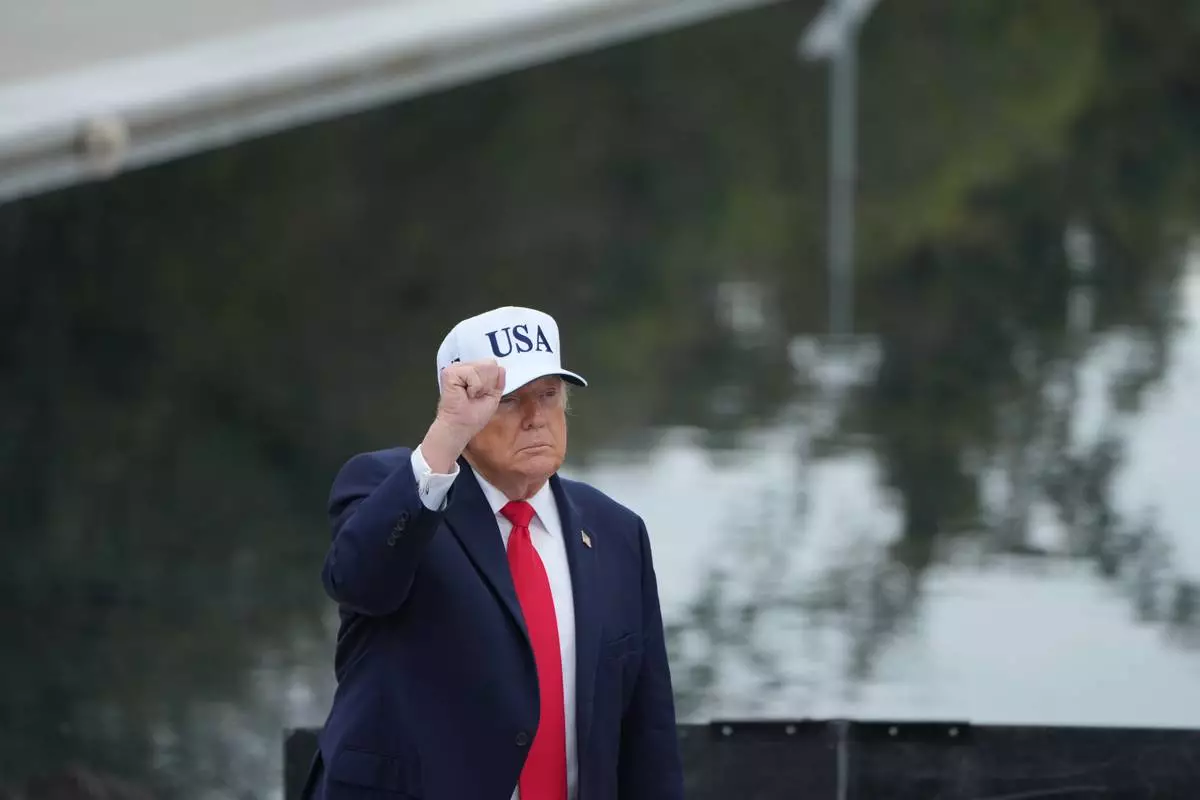
President Donald Trump after speaking in front of the Lincoln Memorial Reflecting Pool, Monday, Nov. 2, 2026, in Washington. (AP Photo/Mark Schiefelbein)