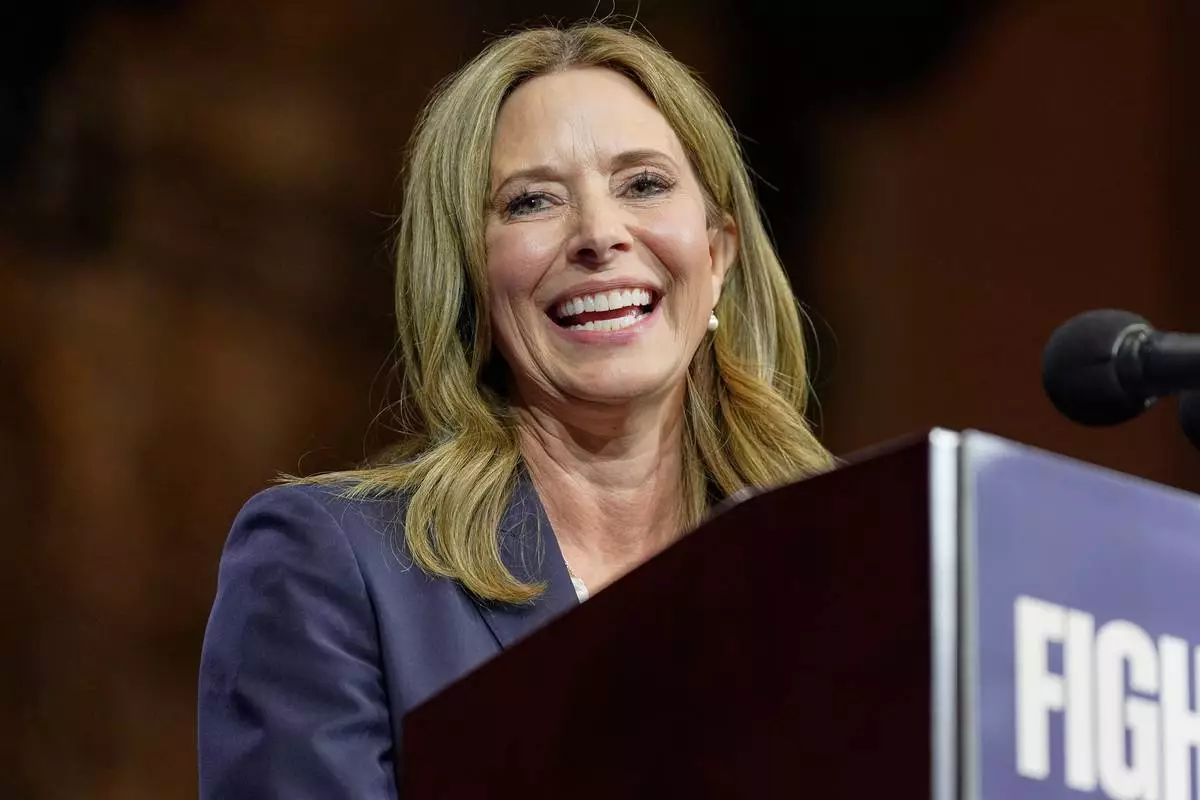
PORTLAND, Maine (AP) — Late Democratic entry Troy Jackson won Maine’s U.S. Senate seat early Wednesday, defeating longtime Republican Sen. Susan Collins, taking advantage of President Donald Trump’s deep unpopularity to dislodge an incumbent who had survived tough challenges in the past.
“For every family doing everything they can and wondering when somebody is going to do something for them, you have gotten me into this and you’re going to have someone who is fighting for you in Washington, D.C.,” Jackson told the crowd at an election night party in Portland.
Click to Gallery
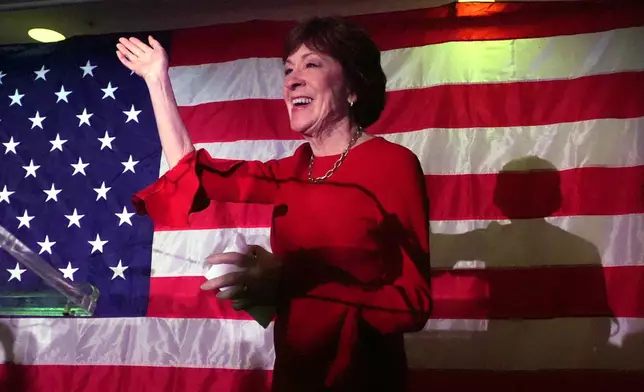
Sen. Susan Collins, R-Maine, waves at an election night event Tuesday, Nov. 3, 2026, in Bangor, Maine. (AP Photo/Charles Krupa)

Supporters of Maine Democratic Senate candidate Troy Jackson react at an election night event, Wednesday, Nov. 4, 2026, in Portland, Maine. (AP Photo/Robert F. Bukaty)
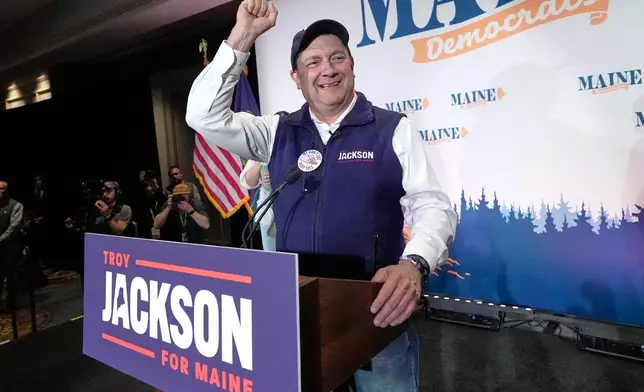
Maine Democratic Senate candidate Troy Jackson speaks at an election night event, Wednesday, Nov. 4, 2026, in Portland, Maine. (AP Photo/Robert F. Bukaty)

Sen. Susan Collins, R-Maine, smiles while clutching a bag of Maine-grown potatoes during a campaign stop at a market, Monday, Nov. 2, 2026, in Patten, Maine. (AP Photo/Charles Krupa)
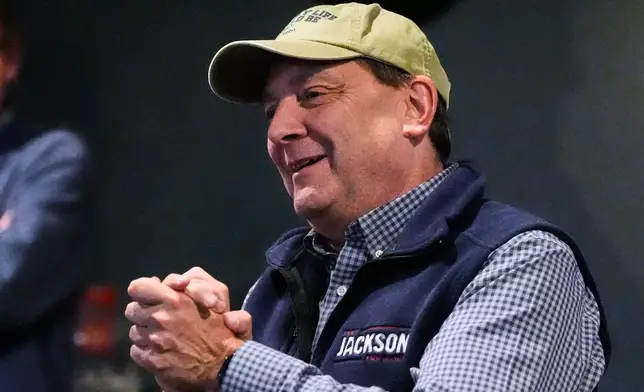
Troy Jackson, Democratic candidate for U.S. Senate, talks with supporters during a campaign stop, Sunday, Nov. 1, 2026, in Falmouth, Maine. (AP Photo/Charles Krupa)
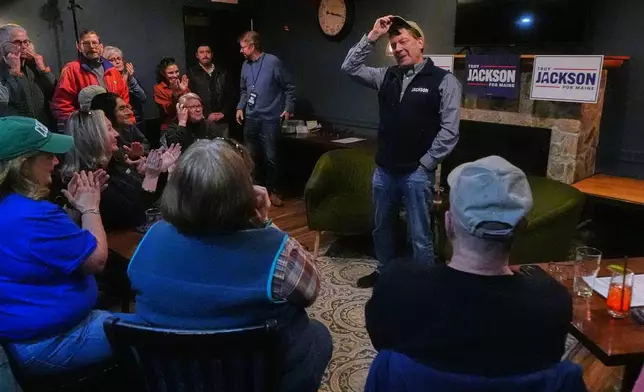
Troy Jackson, Democratic candidate for U.S. Senate, talks with supporters during a campaign stop, Sunday, Nov. 1, 2026, in Falmouth, Maine. (AP Photo/Charles Krupa)

Sen. Susan Collins, R-Maine, left, shakes hands with business owner Tom York outside his emergency vehicle manufacturing business during a campaign stop at , Monday, Nov. 2, 2026, in Island Falls, Maine. (AP Photo/Charles Krupa)
Jackson, 58, a fifth-generation logger and former president of the state Senate, had a little more than 100 days to sell himself to Maine voters after he replaced Graham Platner as the party’s nominee in July.
He won a hastily convened nominating convention and began barnstorming the state, focusing heavily on economic issues such as the high costs of housing and healthcare. As a former campaign surrogate of independent Vermont Sen. Bernie Sanders, he was known to many progressives in the state but lacked the widespread name recognition of Collins.
Collins, 73, was widely perceived as the most vulnerable Senate Republican this election year. She entered Election Day as the only Republican lawmaker in Congress from New England and was seeking her sixth term representing a state that has voted for the Democratic candidate for president since 1992.
“It has been the honor of my life to serve the people of Maine in the United States Senate. I’m proud of all I have been able to accomplish for our state and for our country in the past 30 years,” Collins said in a statement after calling Jackson to concede.
Jackson hails from rural Aroostook County, among the poorest in the state, where he went to work as a lumberjack at 19.
He first entered politics after leading a weeklong loggers’ blockade along Maine’s border with Quebec in the late 1990s protesting the hiring of Canadian loggers who were coming into Maine and driving down pay rates.
The standoff ended with Jackson being escorted away by police, an unsuccessful ending that spurred him to run for elected office. He served nearly 20 years in the state House, rising up the ranks to become the Senate’s top leader.
Jackson initially didn’t plan to run for Senate this year. Instead, he threw his hat in for the Democratic nomination for governor but lost.
Platner, an oyster farmer and political newcomer, had drawn huge crowds and enthusiasm but also faced a string of controversies. After he announced in July that he would withdraw from the Senate race, Jackson won a special nominating convention later that month.
It made for a rushed start to the campaign for Jackson. Since then, he has held events at churches, union halls and bars to tout issues such as workers’ rights and the cost of living.
At times, his campaign rhetoric is reminiscent of Sanders, who joined Jackson for rallies in October.
“In the end, if you work hard, you should be able to build a decent life,” Jackson said at a campaign event near Portland in September. “But that’s not the reality right now.”
He criticized Collins as not doing enough to stop Trump. Jackson noted she voted to advance Trump’s signature tax cut and budget legislation out of committee, before she was a “no” vote on its final passage.
“Sen. Collins is like an arsonist who helps set the fire and then she wants credit for bringing a cup of water to put it out,” he said.
Jackson faced blowback over his temperament during the campaign, and Collins criticized him for telling her to “shut up” during a debate.
Collins was first elected in 1996 and has touted her independence from Trump and her party. She has said she didn’t vote for Trump in 2016, and she voted to convict the president after his 2021 impeachment over his role in the Jan. 6 Capitol riot.
In January, Collins joined a handful of Republican colleagues in backing a failed effort to limit the president’s ability to unilaterally use force in Venezuela. The move prompted Trump to say on social media that they “should never be elected to office again.”
When Vice President JD Vance made trips to Maine, Collins did not appear with him. Vance told the crowd at a May rally that he sometimes gets frustrated with the senator and wishes she were more partisan.
Collins has been a top target of Democrats before. Many pollsters predicted Collins would lose to former Maine House Speaker Sara Gideon in 2020. Collins won handily during a year that Democrats won the presidential race and both U.S. House seats in Maine.
During this year’s race, Collins touted her longevity in the Senate and her status as a key player in powerful committees and budgeting negotiations. She said those aspects of her service remain critically important for Mainers.
“It has been 92 years since a Maine senator was chair of the Senate appropriations committee, the most powerful committee in the Senate,” Collins told reporters. “When I took over last year, I realized I had a once-in-a-century opportunity to help the state of Maine and pursue national priorities as well.”
Kruesi reported from Providence, Rhode Island.
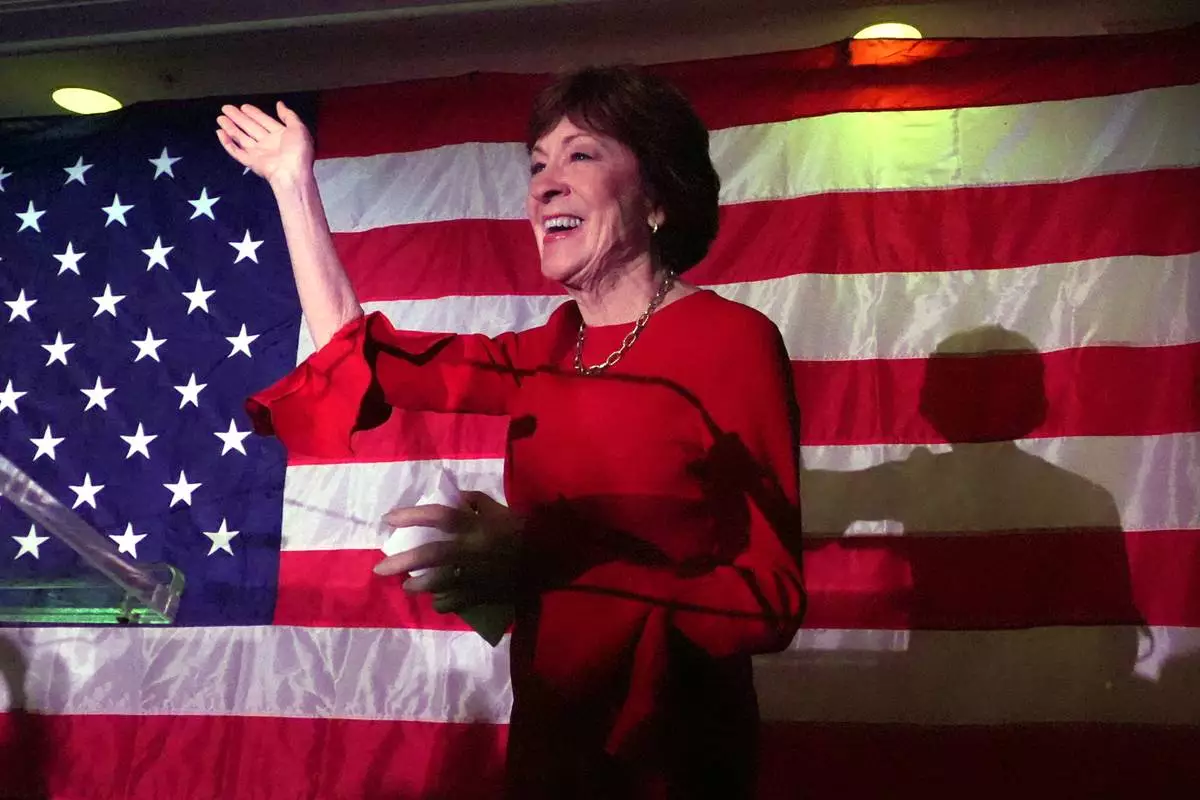
Sen. Susan Collins, R-Maine, waves at an election night event Tuesday, Nov. 3, 2026, in Bangor, Maine. (AP Photo/Charles Krupa)

Supporters of Maine Democratic Senate candidate Troy Jackson react at an election night event, Wednesday, Nov. 4, 2026, in Portland, Maine. (AP Photo/Robert F. Bukaty)
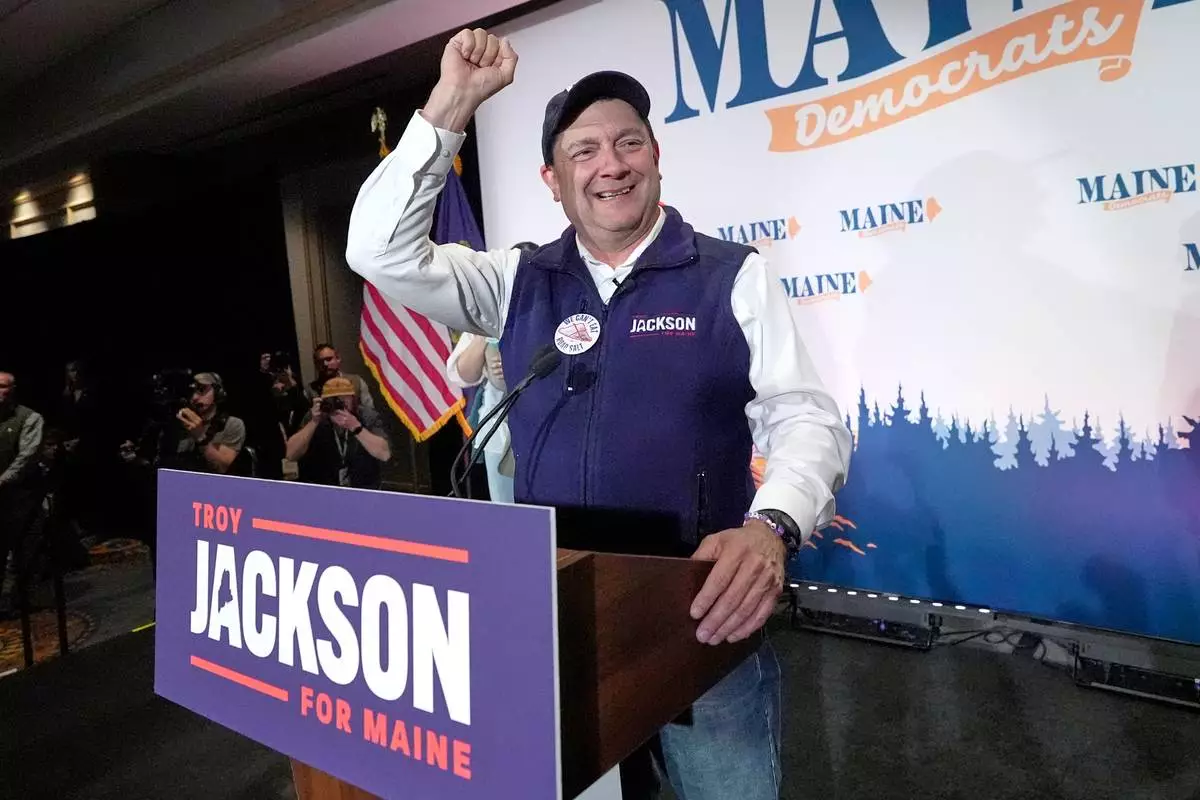
Maine Democratic Senate candidate Troy Jackson speaks at an election night event, Wednesday, Nov. 4, 2026, in Portland, Maine. (AP Photo/Robert F. Bukaty)
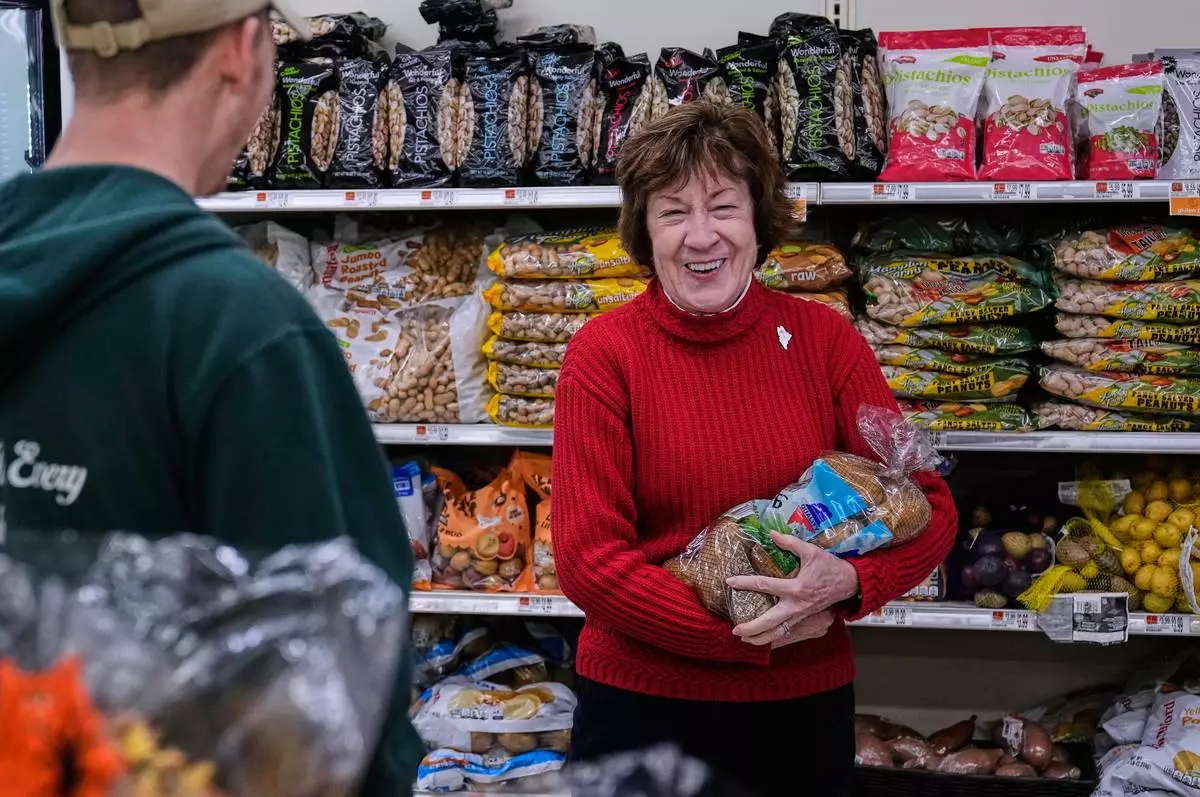
Sen. Susan Collins, R-Maine, smiles while clutching a bag of Maine-grown potatoes during a campaign stop at a market, Monday, Nov. 2, 2026, in Patten, Maine. (AP Photo/Charles Krupa)

Troy Jackson, Democratic candidate for U.S. Senate, talks with supporters during a campaign stop, Sunday, Nov. 1, 2026, in Falmouth, Maine. (AP Photo/Charles Krupa)

Troy Jackson, Democratic candidate for U.S. Senate, talks with supporters during a campaign stop, Sunday, Nov. 1, 2026, in Falmouth, Maine. (AP Photo/Charles Krupa)

Sen. Susan Collins, R-Maine, left, shakes hands with business owner Tom York outside his emergency vehicle manufacturing business during a campaign stop at , Monday, Nov. 2, 2026, in Island Falls, Maine. (AP Photo/Charles Krupa)