HARRISBURG, Pa. (AP) — Democrats are heading into Tuesday's midterm elections hoping to take over a majority of governors' offices for the first time in two decades, as they ride a wave of voter discontent over the economy, inflation, healthcare and the future of democracy.
The number of states in play is surprisingly large, a reflection of President Donald Trump's poor approval ratings dragging on his party. Competitive races include those in heavily populated states such as Texas and Florida; presidential battleground states such as Michigan and Wisconsin; and reliably red states such as Iowa and Ohio.
Click to Gallery
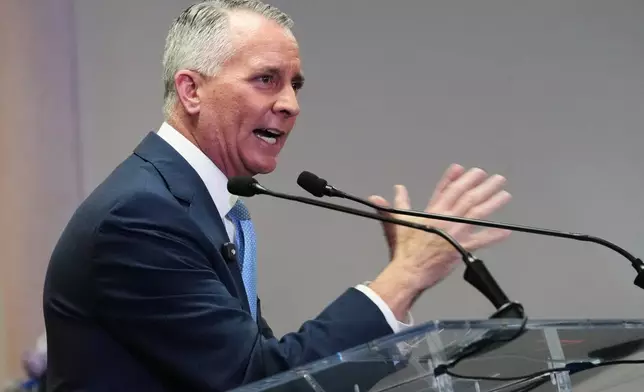
Florida Democratic candidate for governor David Jolly speaks during an interfaith event Tuesday, Oct. 20, 2026, in Hollywood, Fla. (AP Photo/Marta Lavandier)
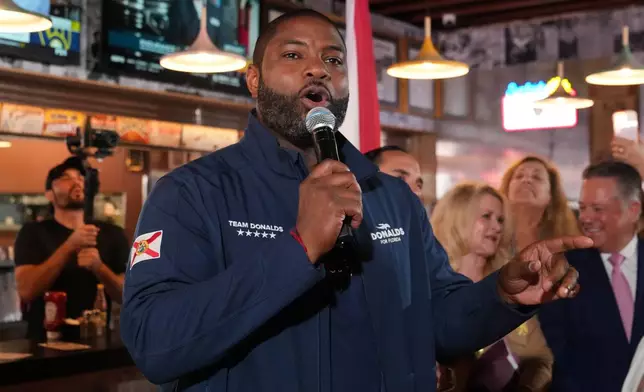
Florida Republican candidate for governor Byron Donalds speaks at a campaign event, Wednesday, Oct. 21, 2026, in Fort Lauderdale, Fla. (AP Photo/Marta Lavandier)
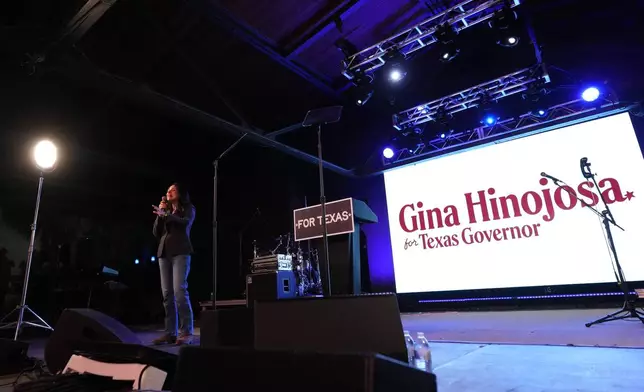
Democratic Texas gubernatorial candidate Gina Hinojosa speaks during a campaign event in San Antonio, Sunday, Nov. 1, 2026. (AP Photo/Eric Gay)

Whit sits on the shoulders of father Hayden Anderson-Michaud as he casts his ballot at a polling location open for early voting at the Curtis D. Menard Memorial Sports Center, Sunday, Nov. 1, 2026, in Wasilla, Alaska. (AP Photo/Lindsey Wasson)
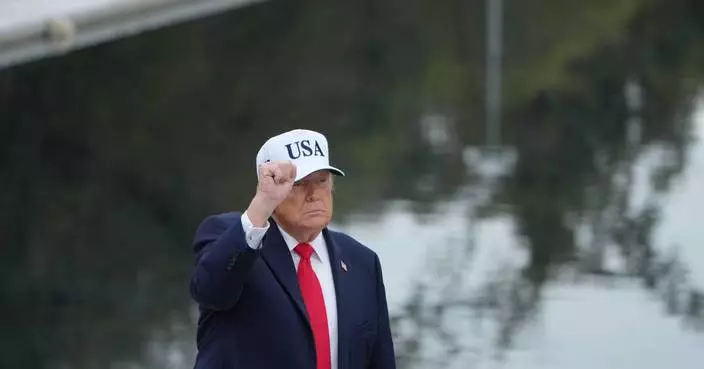
In the weeks leading up to Election Day, Trump went to heavily Republican areas to headline rallies attended by GOP gubernatorial candidates looking for a boost.
All told, 36 states that are home to about 80% of the nation’s population will elect a governor Tuesday. In 19 states, the office is open. Heading into the elections, Democratic governors represented 60% of the nation’s population, but Republicans held 26 of the nation's 50 governors’ offices.
“Our goal is not just the majority of the population, but the majority of states,” Meghan Meehan-Draper, the executive director of the Democratic Governors Association, told The Associated Press.
Democrats last gained a majority of governorships in 2006, flipping six governors’ offices in the last midterm under a second-term Republican president. Republicans recaptured the majority four years later.
Meanwhile, more states under Democratic leadership could mean more governors fighting — or ignoring — Trump's agenda.
Trump has tested the power of states, clashing primarily with Democratic-led states over call-ups of National Guard troops, immigration operations, conditions on federal aid and efforts to assert federal control over election requirements, including restricting mail voting.
Democrats' best opportunities to pick up a governor’s office are in Alaska, Georgia, Iowa and Ohio, where the incumbents are term-limited, and in Nevada, where state Attorney General Aaron Ford is challenging Republican Gov. Joe Lombardo.
Georgia and Alaska haven’t elected a Democratic governor since 1998. Iowa and Ohio haven’t elected one since 2006.
Republicans' best chance to capture an executive suite is in Kansas, a normally deep red state where Democratic Gov. Laura Kelly is term-limited.
Next on the GOP’s list is Wisconsin, where Republican U.S. Rep. Tom Tiffany is taking on Democrat David Crowley, after the Milwaukee County executive eked out a primary win.
Republicans also have an eye on Michigan's open governor’s office and on Oregon, where Democratic Gov. Tina Kotek is trying to fend off a second challenge from Republican state Sen. Christine Drazan.
Democrats feel like they have a chance in Texas, Florida, Oklahoma and Nebraska.
Ohio’s race grabbed national headlines when Republican Vivek Ramaswamy's campaign created an ad featuring Democrat Amy Acton’s estranged mother criticizing her. Acton’s mother lost custody of her children decades ago after her husband, Acton’s stepfather, was indicted for raping Acton as a child.
The ad drew bipartisan rebukes, including from Ohio Republican Gov. Mike DeWine. Conversely, Trump praised the ad and Vice President JD Vance, an Ohioan, defended it.
In Texas, where no Democrat has been elected to statewide office since 1994, Democratic state Rep. Gina Hinojosa mounted a competitive challenge to third-term Republican Gov. Greg Abbott.
Hinojosa was seen as a long shot after she emerged from a primary with a fraction of Abbott’s cash total. In September, fellow Latino politicians and politicos wrote to the Democratic Governors Association to request $10 million in campaign aid, saying Hinojosa had made it a close race.
The DGA gave $1 million — far less than it spent in Arizona, Georgia, Iowa, Michigan, Nevada, Ohio and Wisconsin.
Notably, Abbott skipped Trump’s rally in Texas, a sign of the president's unpopularity.
California Democrat Xavier Becerra is expected to cruise to victory, as is Democratic Gov. Kathy Hochul of New York.
Republicans are trying to hang on to Florida, the nation’s third-most populous state, where Republican U.S. Rep. Byron Donalds is vying against Democrat David Jolly, a former Republican congressman.
Control of the executive branch is on the line in the six swing states from the 2024 presidential election: Arizona, Georgia, Michigan, Nevada, Pennsylvania and Wisconsin.
The winners could have substantial influence over election administration during the 2028 presidential election. That could be important, considering Trump’s interest in expanding federal control over elections.
Meanwhile, some Democratic governors seeking reelection are considered possible presidential candidates in 2028.
They include Govs. Wes Moore of Maryland, JB Pritzker of Illinois and Josh Shapiro of Pennsylvania.
Demonstrating a big margin of victory, fundraising prowess and the electoral strength to help other Democrats win sends a strong signal to donors and party activists, analysts say.
In Texas, Hinojosa is vying to become the first Latina governor, while Deb Haaland of New Mexico hopes to become the first Native American woman to lead a state.
More states are poised to elect Black governors, as well. There are seven Black major party gubernatorial nominees on ballots, in addition to Maryland’s Moore. In the past 250 years, only three elected governors have been Black.
Follow Marc Levy at http://twitter.com/timelywriter
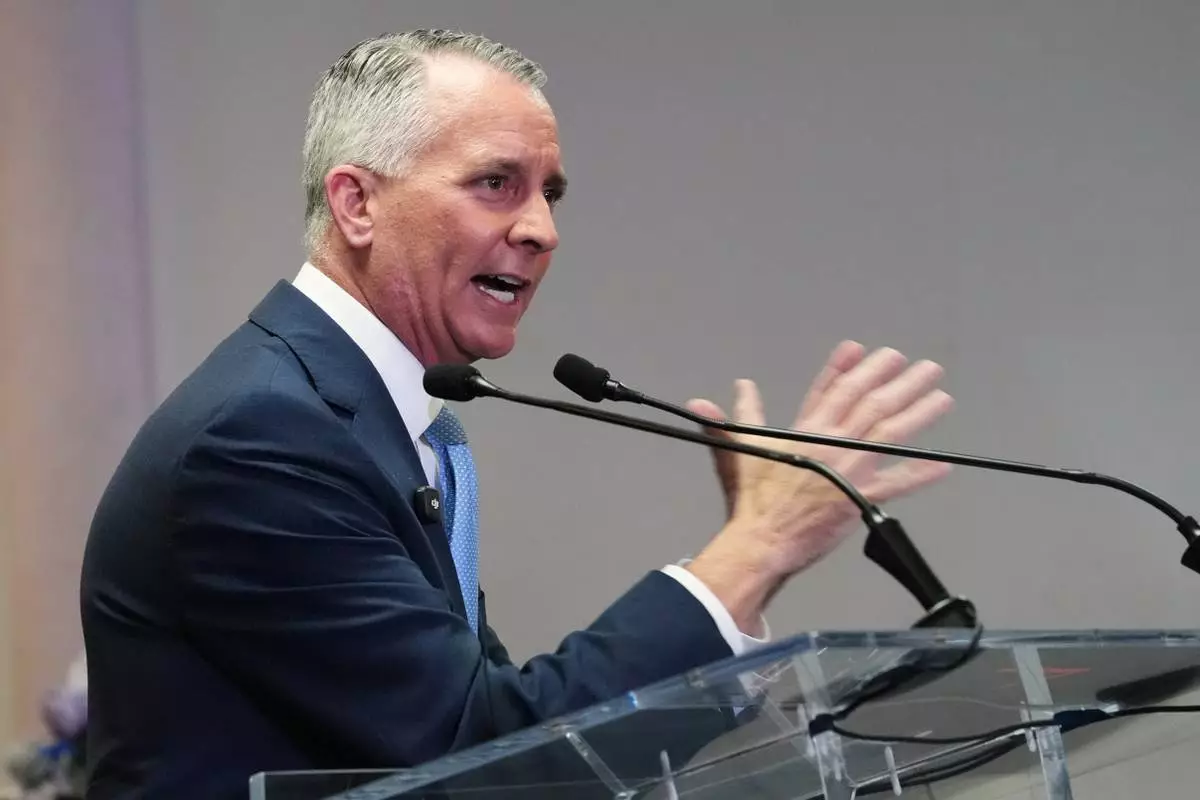
Florida Democratic candidate for governor David Jolly speaks during an interfaith event Tuesday, Oct. 20, 2026, in Hollywood, Fla. (AP Photo/Marta Lavandier)
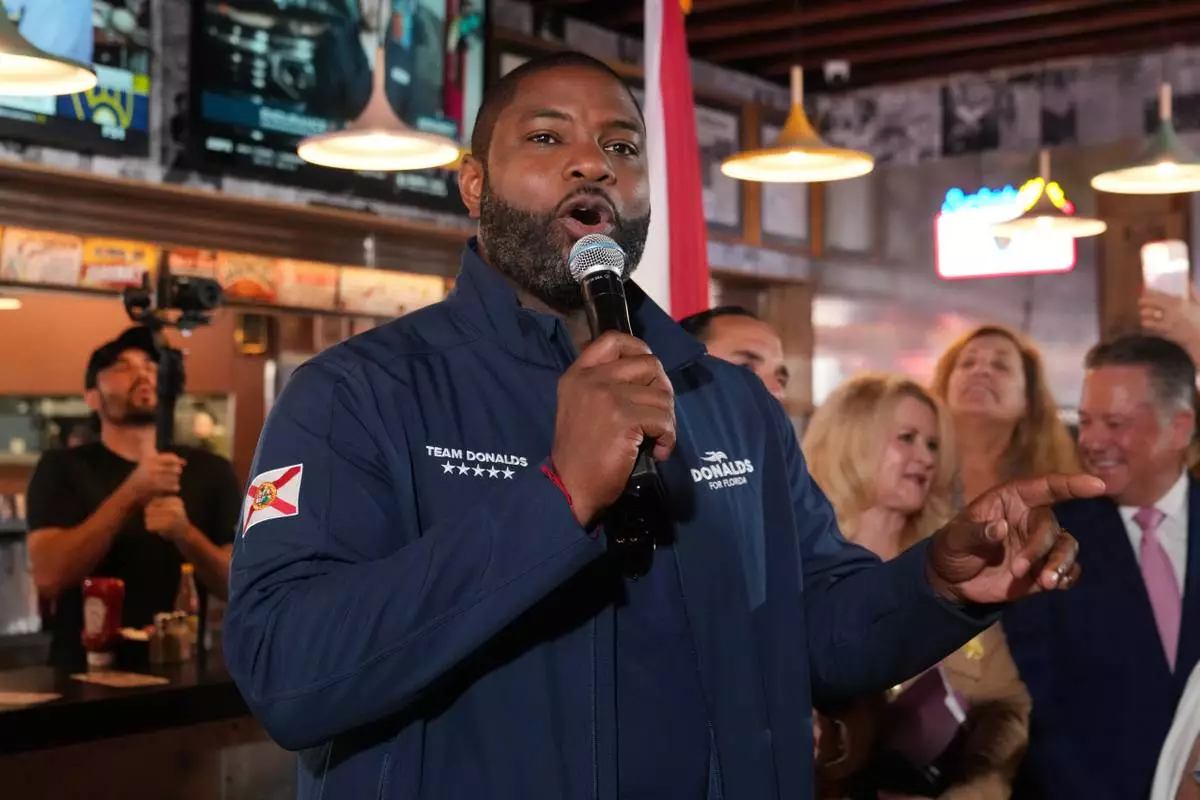
Florida Republican candidate for governor Byron Donalds speaks at a campaign event, Wednesday, Oct. 21, 2026, in Fort Lauderdale, Fla. (AP Photo/Marta Lavandier)
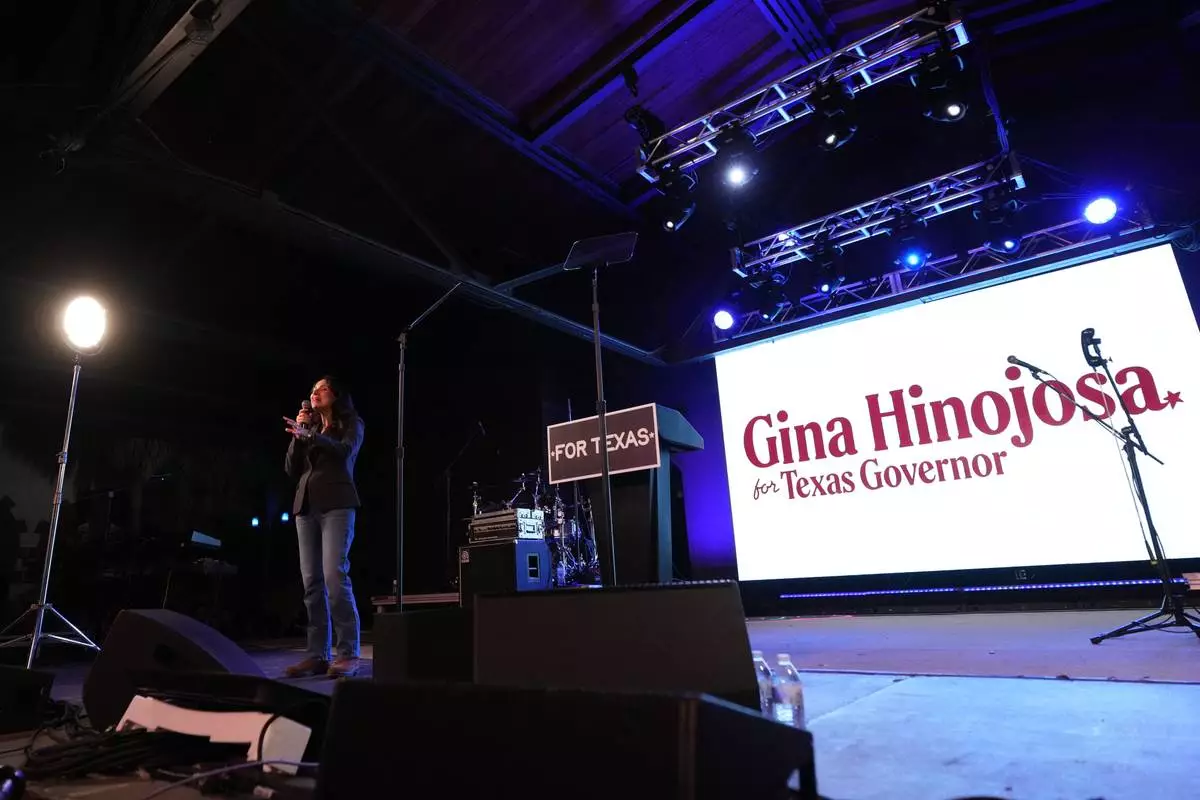
Democratic Texas gubernatorial candidate Gina Hinojosa speaks during a campaign event in San Antonio, Sunday, Nov. 1, 2026. (AP Photo/Eric Gay)

Whit sits on the shoulders of father Hayden Anderson-Michaud as he casts his ballot at a polling location open for early voting at the Curtis D. Menard Memorial Sports Center, Sunday, Nov. 1, 2026, in Wasilla, Alaska. (AP Photo/Lindsey Wasson)