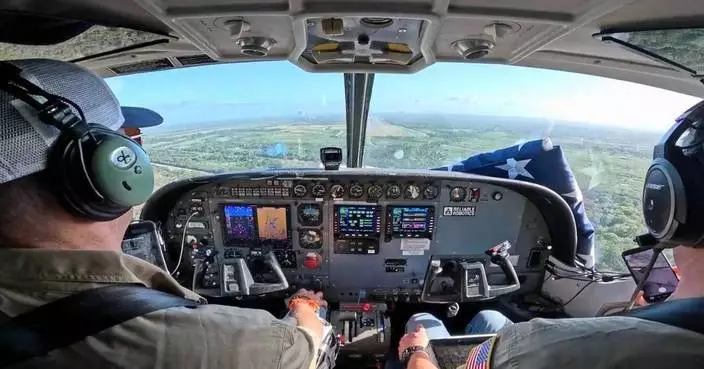
WASHINGTON (AP) — Republicans in Tuesday’s midterm races were hoping their candidates could hold onto the winning coalition that President Donald Trump assembled in the 2024 presidential election, but The AP Voter Poll suggests the GOP has lost ground with at least one key group.
The poll, an expansive survey of about 80,000 voters in all 50 states, suggests young voters were less likely to back House Republicans this year than they were to support Trump in 2024. Young voters — those under 30 — were also more likely than older voters to say their vote for the U.S. House was cast to express opposition to Trump, and Hispanic voters were also less likely to support Republican candidates than Trump two years ago.
Most voters say the economy or the state of democracy is the top issue facing the country, with the cost of living and government corruption weighing heavily on many Americans’ minds as they cast a ballot in Tuesday’s midterm elections. The poll also signals a strong desire for Congress to take a more forceful role in checking the presidency.
But the survey also found that while Democrats have at least a slight advantage on several major issues, including the economy and government corruption, the Democratic Party is not much more popular among U.S. voters than the Republican Party.
After moving toward Trump in the 2024 election, young voters appear to have swung away from the Republican Party in this year’s midterms.
The AP Voter Poll shows about 7 in 10 voters under 30 nationally say they supported the Democratic candidate in their local U.S. House race, while about 3 in 10 say they voted for the Republican. That’s a shift from 2024, when the youngest voters were roughly split between Trump and Vice President Kamala Harris.
Young voters make up a fairly small share of voters. Only about 1 in 10 voters in the 2026 midterms are under 30, which limits the impact of the shift.
But their displeasure with the country and its leadership is clear: About half of young voters say they are “angry” about the way things were going in the country today, compared with about one-third of voters ages 65 and older.
The survey also suggests Republicans may have lost the ground Trump gained with Hispanic voters in 2024, though to a lesser extent than with younger voters.
Only about one-third of Hispanic voters say they backed the Republican in their local U.S. House race, while roughly 4 in 10 voted for Trump two years ago. About 6 in 10 Hispanic voters nationally say they voted for the Democratic candidate in their local House race.
About 7 in 10 Hispanic voters say Trump’s policies have worsened economic conditions in the U.S.
While Trump was not on the ballot, many voters had him on their minds.
The AP Voter Poll finds about 4 in 10 voters report wanting “to express opposition” to Trump with their vote for Congress. Just under 2 in 10 voters wanted “to express support” for the president, and roughly 4 in 10 say Trump was not a factor in their decision.
Most young voters — those under 30 — said their vote was cast to express opposition to Trump. Older voters, who tend to be more conservative in general, were less likely to say they were trying to signal their dissatisfaction with the president.
The survey highlighted voters’ unhappiness with Trump’s leadership. About 6 in 10 disapprove of how he’s handling the presidency. Views of Trump’s priorities were also mostly negative. About 6 in 10 voters say Trump places a higher priority on his personal interests than the country’s interests.
Most voters nationally want to see Congress provide more checks and balances on the presidency, and they overwhelmingly disapprove of how Congress is handling its job.
The survey suggests voters want to see Congress take on a stronger role as a co-equal branch of government. Roughly 7 in 10 voters say Congress is doing “not enough” to provide checks and balances on the presidency. Only about 2 in 10 say it’s doing “about the right amount,” and about 1 in 10 say Congress is doing “too much.”
That dissatisfaction with Congress’s role wasn’t confined to Democrats, the poll found: The vast majority of independents and about 4 in 10 Republicans say Congress is not doing enough.
The survey reflects deep unhappiness with the president and Congress. About 6 in 10 voters disapprove of how Trump is handling the presidency, while about three-quarters of voters disapprove of the way Congress is handling its job.
The economy was a clear concern for voters, who expressed alarm over the high cost of gasoline and food.
But the survey found many voters are also deeply worried about the state of democracy and government corruption.
About 4 in 10 voters say the economy is the top issue facing the country, and roughly 3 in 10 say the state of democracy is the top issue. Only about 1 in 10 say the same about immigration or healthcare, and few named foreign policy or crime.
Roughly half of U.S. voters said government corruption and the cost of living were “crucial” to their vote for Congress, higher than the share that said that about immigration enforcement policies, the war in Iran or AI data centers.
Most voters who said government corruption was “crucial” for their vote for Congress supported the Democratic candidate for the U.S. House, while about 4 in 10 said they voted for the Republican. About 8 in 10 voters who said “the state of democracy” was the top issue facing the country supported the Democrat, while about 2 in 10 supported the Republican.
Democrats have at least a small advantage in their perceived handling of several major issues, although a significant share of voters say they don’t trust either party.
Voters are slightly more likely to say Democrats would handle the economy and government corruption better than Republicans, two issues that emerged as highly important to voters in this election. Democrats also have a small edge on foreign policy and a wider advantage on their handling of transgender issues and healthcare. Voters split on which party would better handle artificial intelligence and taxes, while Republicans have a small advantage on immigration.
Despite Democrats' relative advantage on issues, though, the Democratic Party is not much more popular with voters than the Republicans. Just under half of voters have a “somewhat” or “strongly” favorable view of the Democratic Party, while about 4 in 10 view the GOP positively.
The AP Voter Poll is a survey of the American electorate conducted by SSRS for The Associated Press, ABC News, CBS News, CNN, FOX News Media, NBC News and Versant. The survey blends probability-based and non probability-based interviews with registered voters in all 50 states conducted from Oct. 19 to Nov. 3 in Alaska and Oct. 22 to Nov. 3 in all other states. A detailed methodology statement is available here. The margin of sampling error is plus or minus 0.6 percentage points for the full sample.
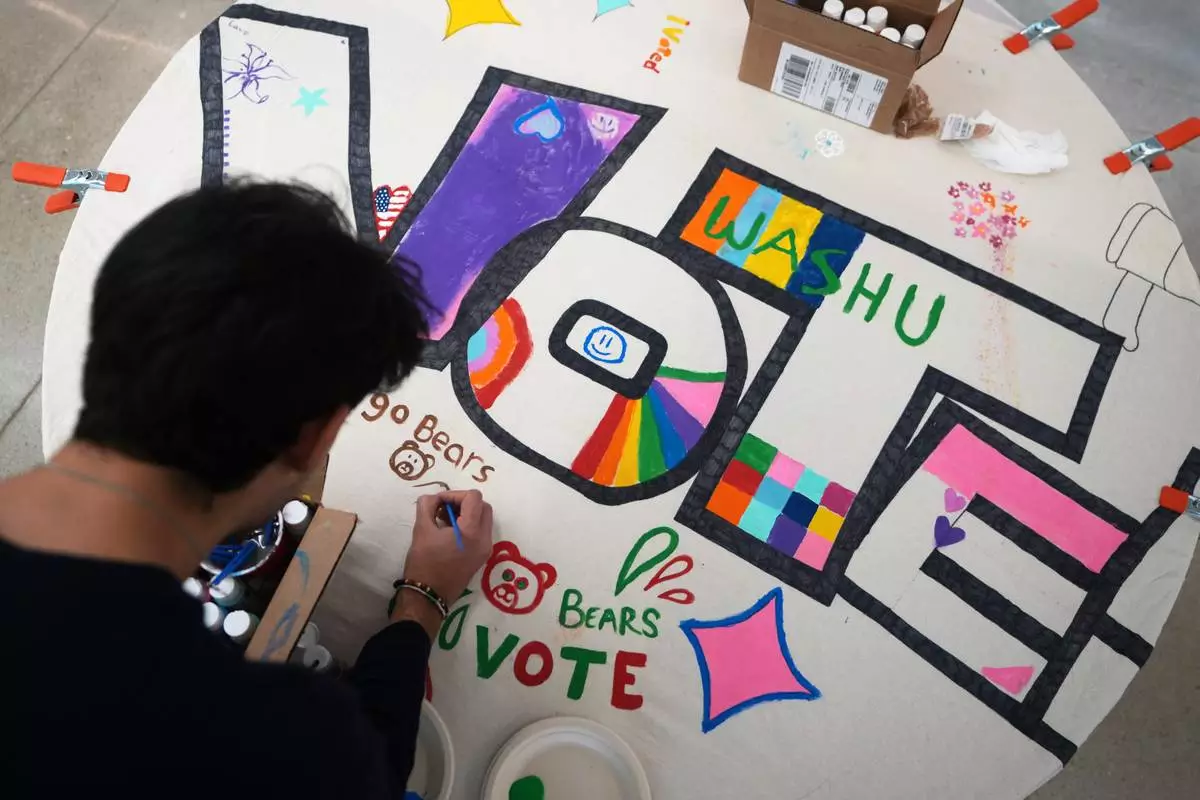
Santiago Rivera paints on a sign outside a polling place after casting his ballot on Election Day during the midterm election Tuesday, Nov. 3, 2026, in Clayton, Mo. (AP Photo/Jeff Roberson)
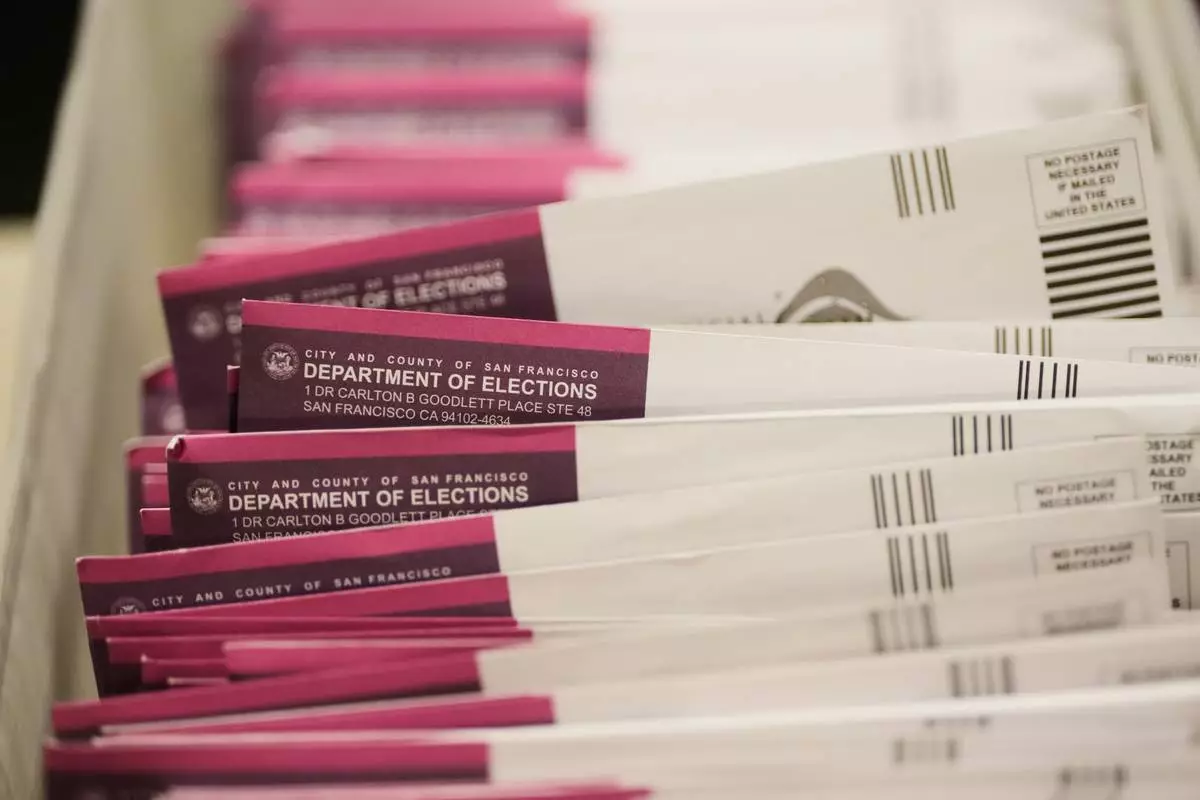
Ballots are sorted on Election Day Tuesday, Nov. 3, 2026, in San Francisco.(AP Photo/Jeff Chiu)
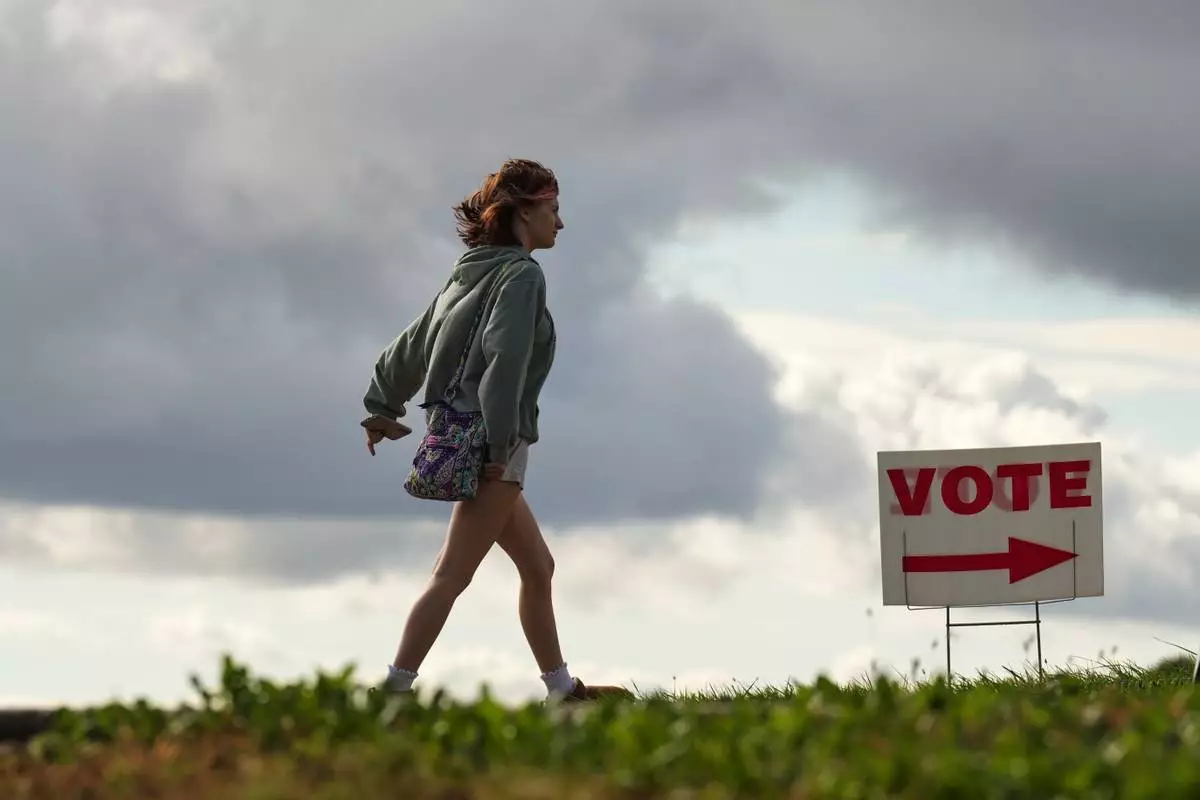
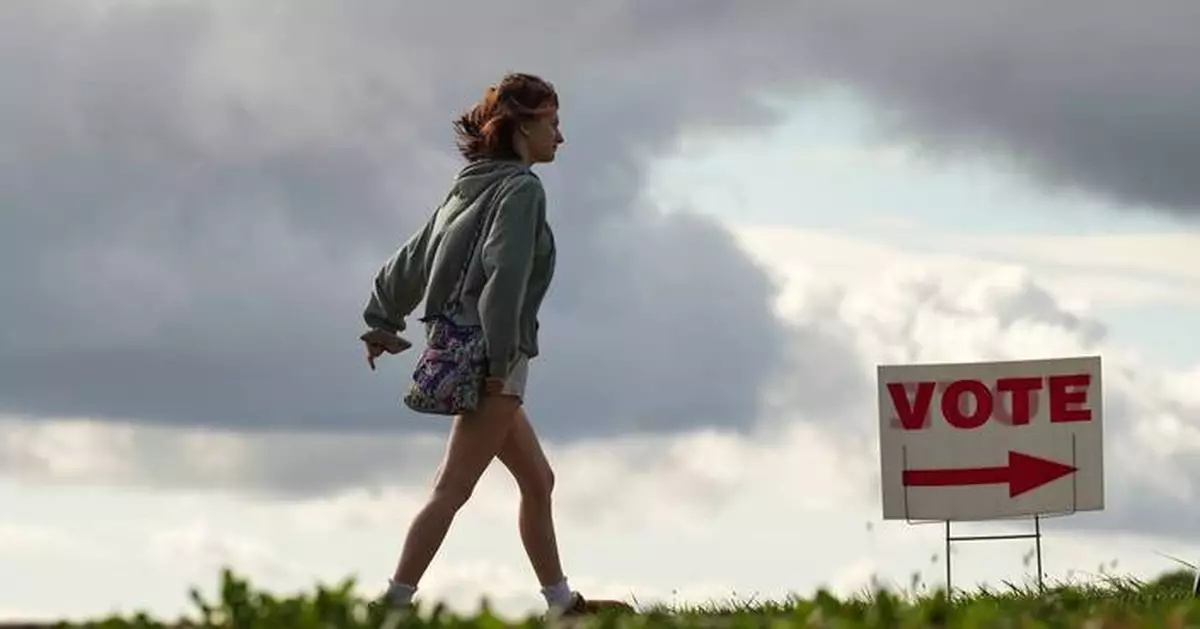
A person walks to the Kanwaka township hall to vote Tuesday, Nov. 3, 2026, near Lawrence, Kan. (AP Photo/Charlie Riedel)
Iranians on Wednesday struck a defiant tone, celebrating U.S. voters’ rebuke of President Donald Trump in the midterm elections while many in the Middle East waited to see how the results could affect the Iran war.
Concerns about the war, particularly frustration over rising prices for fuel and other goods in the U.S., helped Democrats win control of both chambers of Congress in Tuesday’s vote, a sharp setback for Trump and his Republican Party.
But Iran’s supreme leader, Ayatollah Mojtaba Khamenei, whose father and predecessor was killed in the opening strikes of the war in February, dismissed the prospect of any major change in the U.S. approach to the Islamic Republic.
“If there are still those who harbor even a slight hope for a change in behavior or partisan and factional shifts within the system of domination, or who imagine that by giving concessions to America they can dissuade it from hostility toward the Iranian nation, they are gravely mistaken,” he said on his social media account.
The broader region has been on edge for weeks over the prospect of the U.S. resuming full-scale military operations against Iran. Talks aimed at preventing renewed fighting are continuing, while other U.S. allies in the region urge Washington against resuming a war that began more than eight months ago and has rattled the global economy and devastated Iran.
Israeli Prime Minister Benjamin Netanyahu has reportedly pushed for more strikes, while Trump has alternated between threatening major military action and pushing for a deal.
Iran’s chief negotiator and parliament speaker, Mohammad Bagher Qalibaf, wrote Wednesday on X that “Americans said NO TO WAR, and we endorse this message.” He warned that if the U.S. government ignores the vote for change, “it will learn our NO comes with a Nightmare.”
Despite ceasefire agreements and repeated diplomatic efforts, military confrontations have continued in southern Iran and around the Strait of Hormuz.
Iran’s Foreign Ministry spokesperson said in a social media post that Americans had sent a clear message and warned Washington against ignoring it. If the U.S. continues to ignore reality, the spokesperson said, “the consequences of this grave miscalculation will extend far beyond what you have already witnessed.”
Underscoring the mutual hostility at the heart of the conflict, thousands marched through Tehran on Wednesday at a government-organized demonstration commemorating the anniversary of the 1979 takeover of the U.S. Embassy.
Pro-government demonstrators burned American and Israeli flags and chanted “Death to America” and “Death to Israel.” They displayed effigies of Trump and Netanyahu alongside caricatures of the two leaders.
“Trump has gone too far in everything and that’s one reason for his defeat in the election,” said Hananeh Jahed, a demonstrator.
Zahra Nadiminejad praised Iranian resistance, saying U.S. voters “finally figured out that this is Iran, and they can’t just come in here and do whatever the hell they want.”
“They’ve seen the consequences of the war back home, from skyrocketing gas and food prices to all the devastating effects the war has had on their own country. And whether the Democrats win or the Republicans win, our hostility toward America will never come to an end.”
Nearly three decades ago, Iranian students stormed the U.S. Embassy on Nov. 4, 1979, taking American diplomats and other citizens hostage. Fifty-two Americans were held for 444 days before being released.
The crisis helped cement the rupture between the two countries, which have had no formal diplomatic relations for years.
The United States and Israel launched the war against Iran on Feb. 28, killing the country’s longtime supreme leader, Ayatollah Ali Khamenei, and triggering a conflict that has disrupted global energy markets and shipping through the Strait of Hormuz.
Addressing the demonstrators on Wednesday, Tehran Mayor Alireza Zakani claimed the United States and Israel had suffered a massive defeat, which he said was also reflected in last week's Israeli elections.
“The decisive defeat of the United States and the Zionist regime in recent developments and elections is the result of the Iranian nation’s steadfastness and strength,” Zakani said.
The U.S. elections came just a day after what appeared to be a limited strike on Iranian targets in the crucial Strait of Hormuz waterway, which renewed questions about what might come next.
Iranian state media reported explosions Monday on Qeshm and Hengam islands and near the southern port city of Bandar Abbas. Iranian authorities have not publicly identified the specific sites struck or disclosed the extent of the damage.
The Strait of Hormuz, through which about a fifth of the world’s traded oil and gas transited before the war, has seen repeated Iranian attacks on commercial shipping. Iran has sought to restrict shipping to pressure the U.S. to lift its blockade on Iranian ports.
Iran’s state TV said Wednesday that four oil tankers caught fire after they struck mines on what it described as unauthorized routes.
Back-channel negotiations have continued.
U.S. Vice President JD Vance said Monday that he and Trump “both feel pretty good about the prospects for potentially coming to a negotiated settlement.”
Before the latest strikes, the Trump administration’s last known attacks on Iran were in early September. Thousands of U.S. troops remain in waters off Iran to maintain the naval blockade, aimed at preventing tankers carrying Iranian oil from reaching the global market. Another aircraft carrier and thousands of additional troops are on their way to the Middle East.
Associated Press writers Samy Magdy, Toqa Ezzidin and Aamer Madhani contributed to this report.
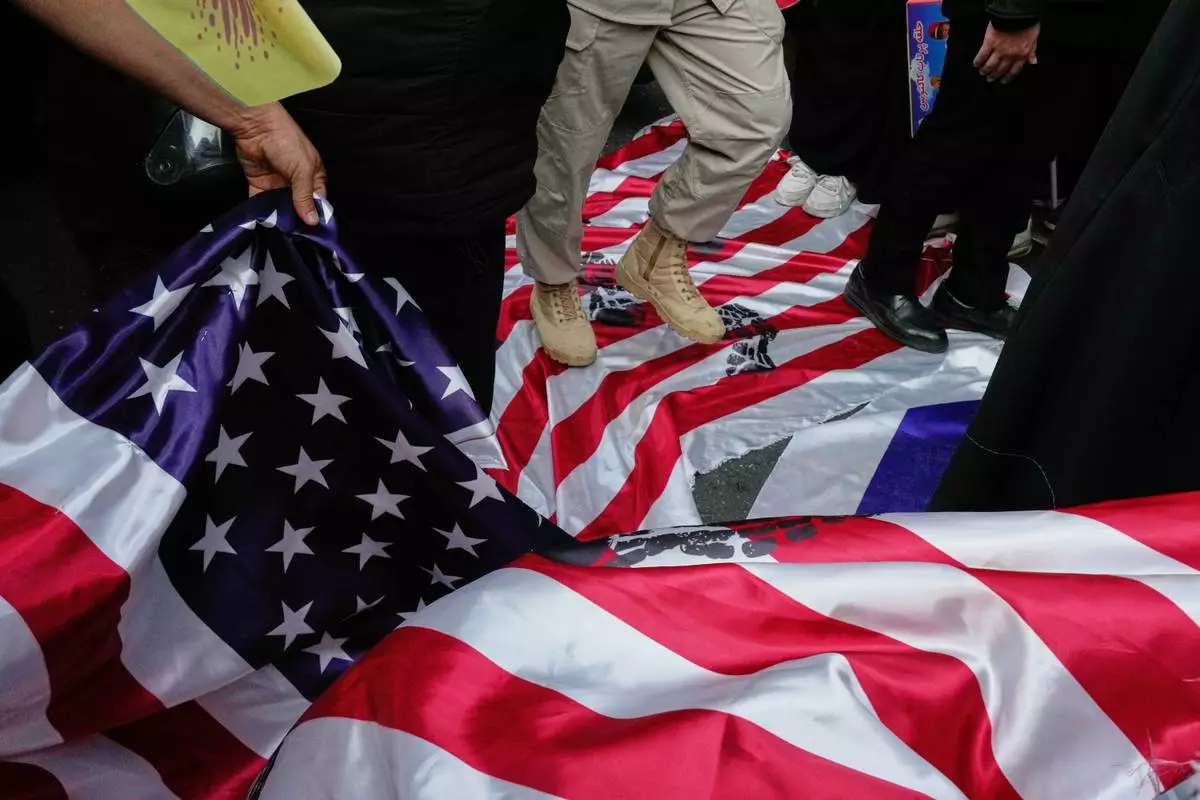
Iranian government supporters step on U.S. and Israeli flags during the annual rally marking the anniversary of the 1979 U.S. Embassy takeover, outside the former embassy in Tehran, Iran, Wednesday, Nov. 4, 2026. (AP Photo/Vahid Salemi)
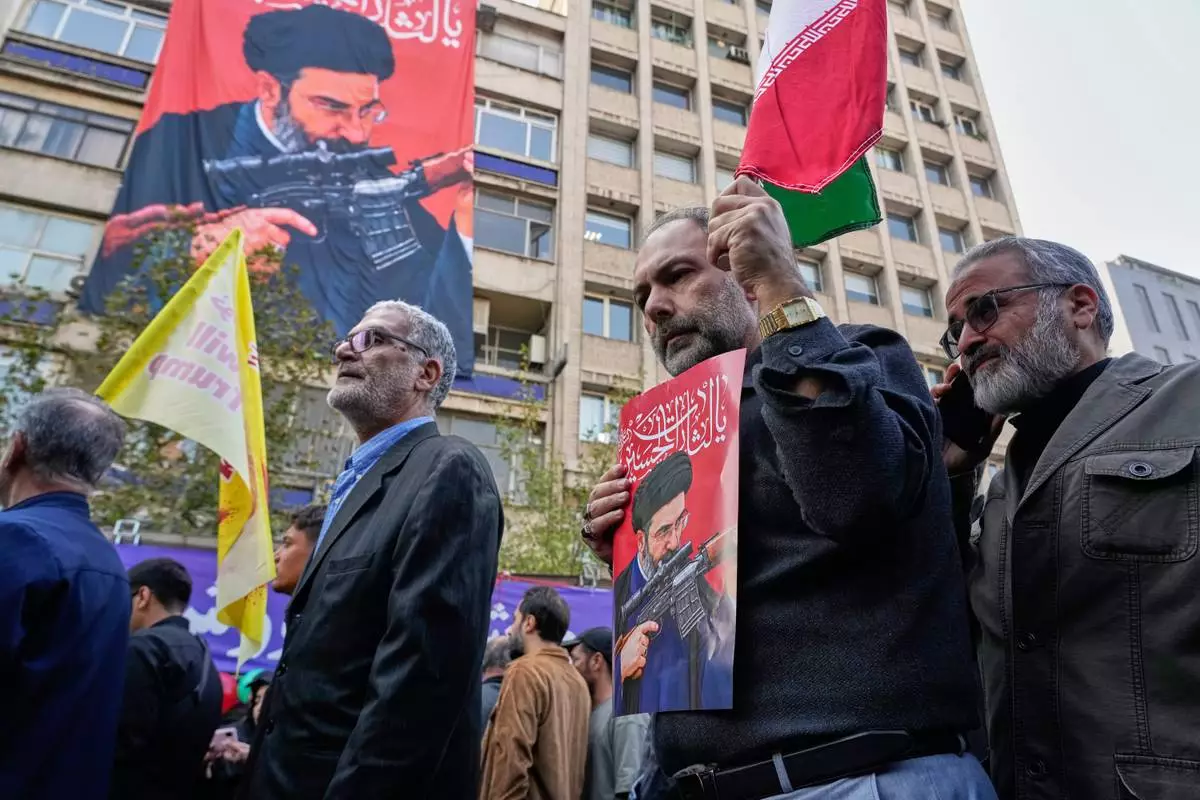
An Iranian government supporter carries an Iranian flag and a poster depicting Iran's Supreme Leader Mojtaba Khamenei with a rifle as he walks beneath a matching banner during the annual rally marking the anniversary of the 1979 U.S. Embassy takeover, outside the former embassy in Tehran, Iran, Wednesday, Nov. 4, 2026. (AP Photo/Vahid Salemi)
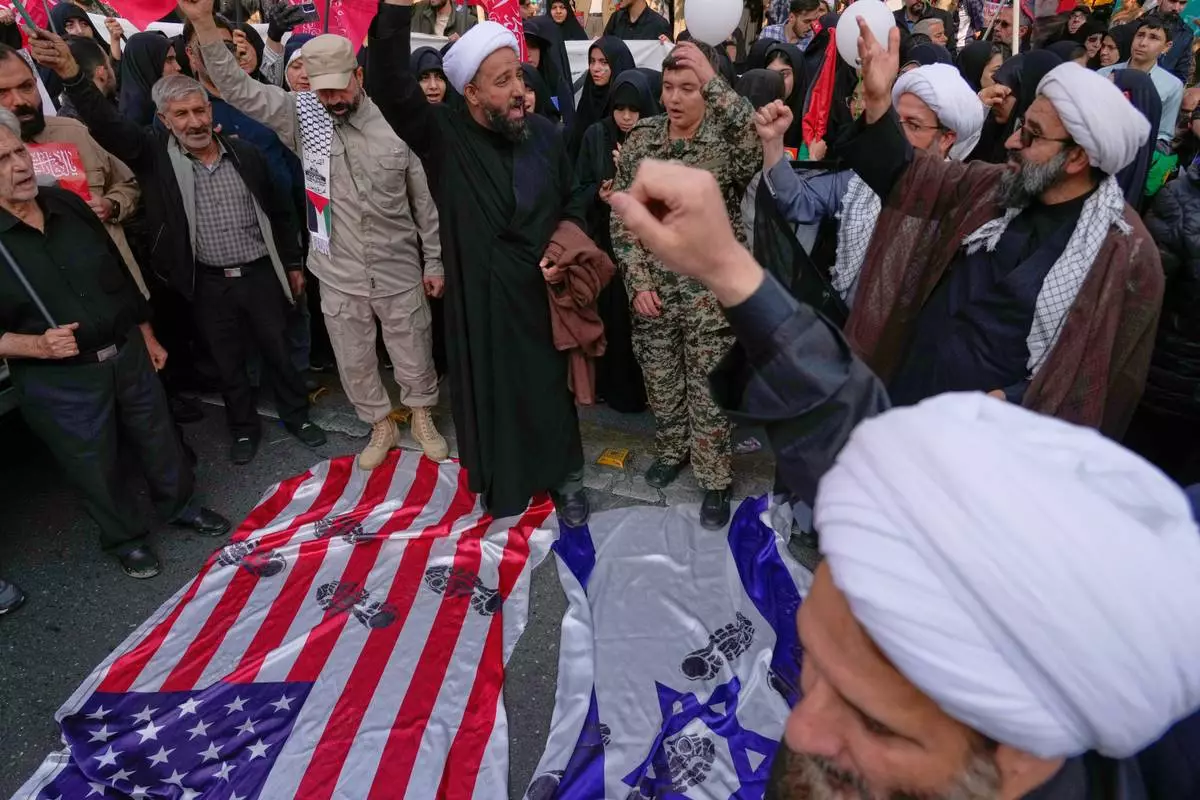
Iranian government supporters, including clerics, raise their fists as they stand on U.S. and Israeli flags during the annual rally marking the anniversary of the 1979 U.S. Embassy takeover, outside the former embassy in Tehran, Iran, Wednesday, Nov. 4, 2026. (AP Photo/Vahid Salemi)
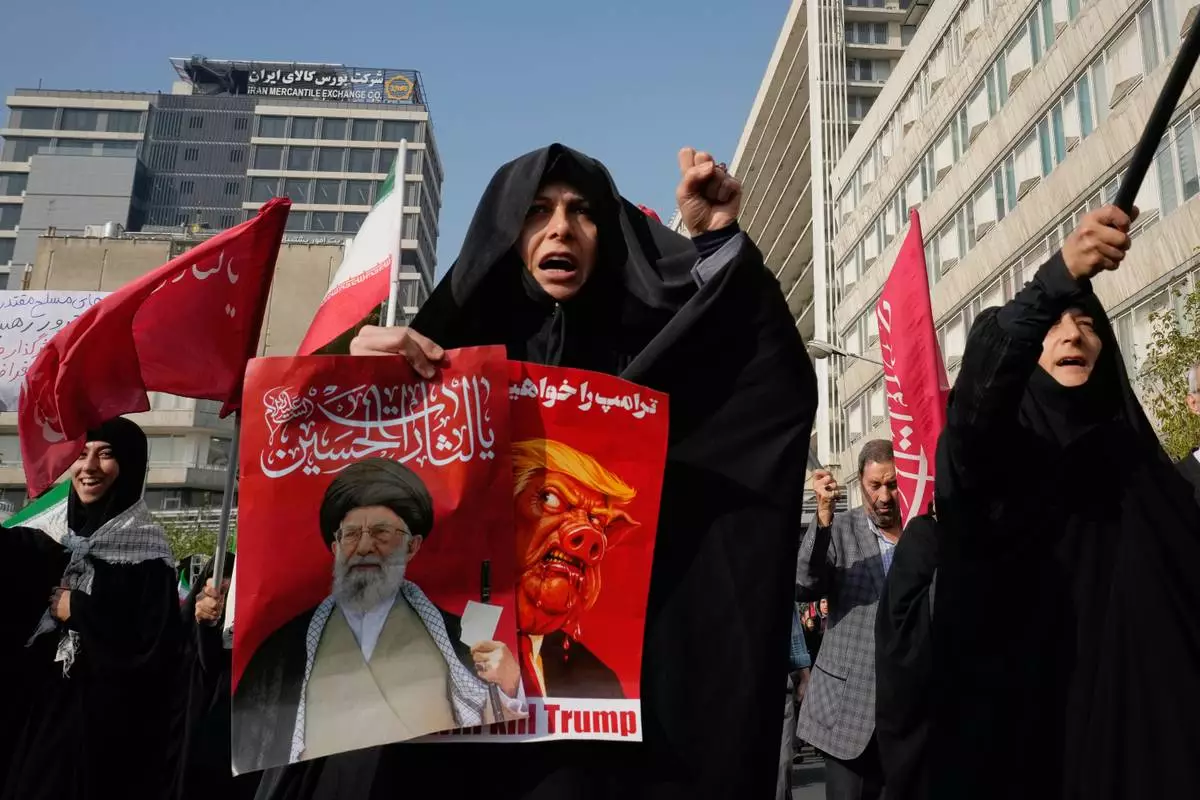
Iranian government supporters raise their fists, one holding a portrait of Iran's late Supreme Leader Ayatollah Ali Khamenei and a caricature of U.S. President Donald Trump, during the annual rally marking the anniversary of the 1979 U.S. Embassy takeover, outside the former embassy in Tehran, Iran, Wednesday, Nov. 4, 2026. (AP Photo/Vahid Salemi)
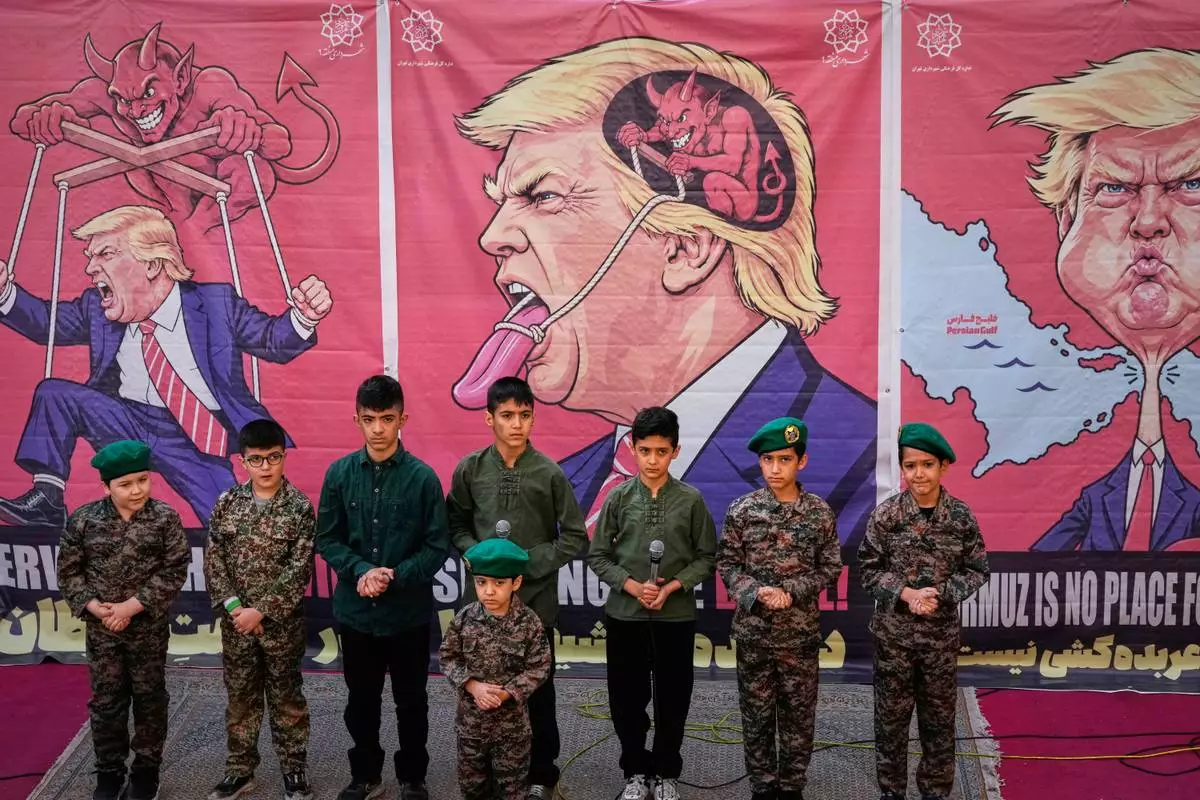
Boys, some wearing camouflage uniforms and green berets, stand in front of caricatures of U.S. President Donald Trump during the annual rally marking the anniversary of the 1979 U.S. Embassy takeover, outside the former embassy in Tehran, Iran, Wednesday, Nov. 4, 2026. (AP Photo/Vahid Salemi)
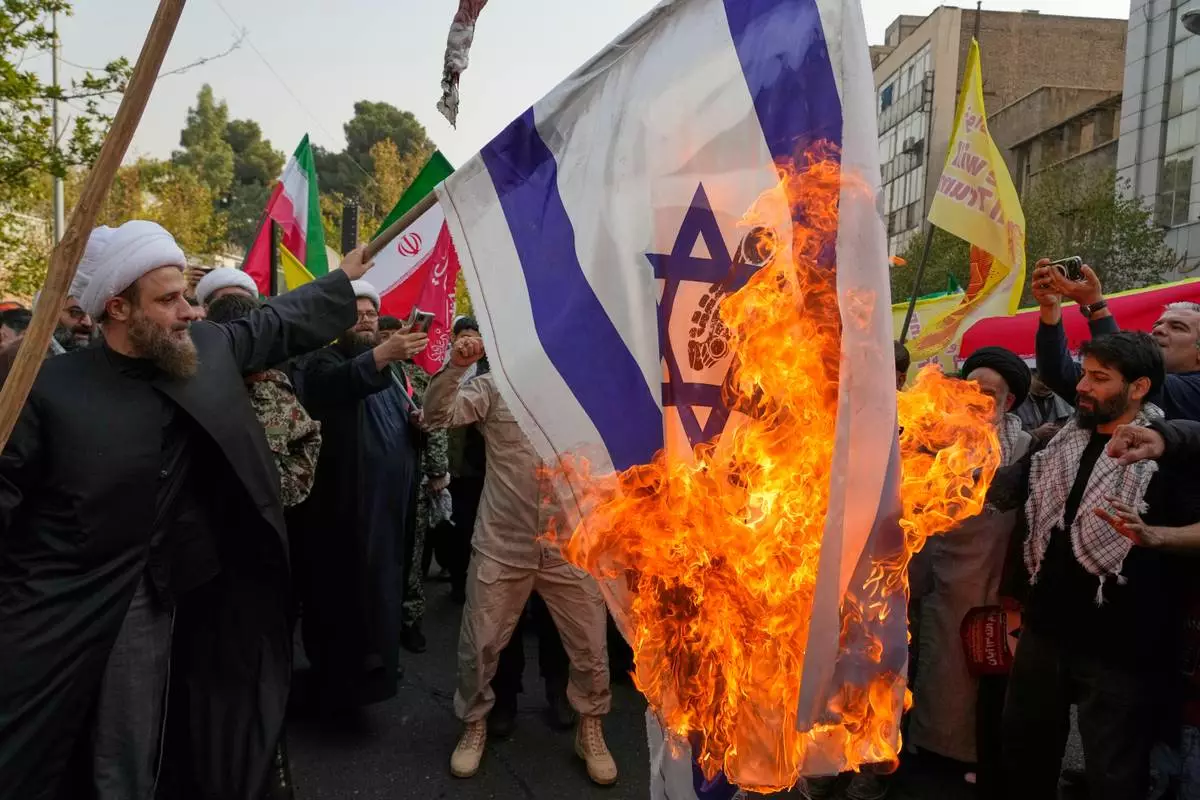
Iranian government supporters burn an Israeli flag during the annual rally marking the anniversary of the 1979 U.S. Embassy takeover, outside the former embassy in Tehran, Iran, Wednesday, Nov. 4, 2026. (AP Photo/Vahid Salemi)
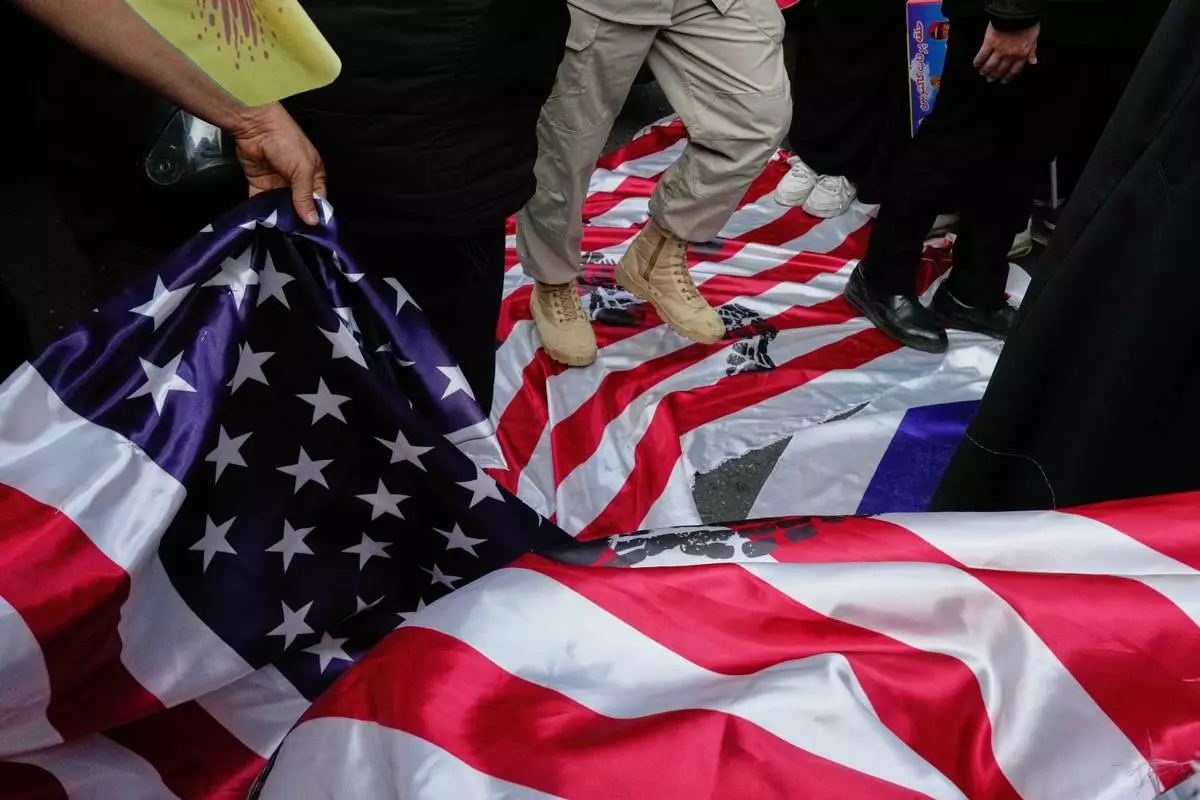
Iranian government supporters step on U.S. and Israeli flags during the annual rally marking the anniversary of the 1979 U.S. Embassy takeover, outside the former embassy in Tehran, Iran, Wednesday, Nov. 4, 2026. (AP Photo/Vahid Salemi)