Voters casting their ballots in the U.S. midterm elections on Tuesday expressed their dissatisfaction with the Trump administration, with many pointing to the economic woes brought by the Iran war, as the Republican party braced for a potentially bruising set of results with the rival Democrats poised to take control of the U.S. Senate.
As results trickled in early on Wednesday, the Democrats are projected to win a crushing majority in the U.S. House of Representatives, with a number of key battlegrounds in the Senate race flipping in their favor.
Among the closely watched states is Georgia, where more than 2.8 million people voted early, a record for a midterm.
Some say the huge voter engagement comes as many have simply had enough of the divisive policies of U.S. President Donald Trump.
"People are fed up, and they're more engaged than ever," said Jamal Thorne, a voter from Atlanta, the capital of Georgia.
The top of the ballot saw a race for governor that was a largely neck-and-neck affair throughout the hard-fought election campaign. Republican Rick Jackson, a healthcare billionaire, poured a fortune of his own money into the contest, with Trump in his corner. However, Atlanta's former mayor Keisha Lance Bottoms was widely tipped to secure victory for the Democrats and become the first Black woman elected as a governor in the United States.
Prior to the result's confirmation, many voters were already hailing the potentially seismic significance of what it would mean in banishing the painful history of racial segregation.
"This never would have been a possibility 50 years ago. And for this to happen is huge," said Daniel Marconi, another Atlanta voter.
Persistently high inflation and rising living costs were among the top concerns for voters across the nation, while immigration, healthcare and corruption also drew widespread attention.
"Affordability and, I guess, the war in Iran. Yeah, those are kind of like the big two things," said Atharva, a student at the Georgia Institute of Technology.
While the picture becomes clearer as results pour in, there were reports that some polling stations ran into technical problems during Tuesday's vote. According to ABC News, ballot-scanning equipment malfunctioned at multiple polling stations in Westchester County, New York, with some scanners unable to properly read ballots.
In addition, Chicago media reported that polling stations in several parts of the city ran short of paper ballots, forcing voters to line up at electronic voting machines.
Prior to the midterms, Republicans controlled both chambers of Congress. Based on pre-election seat counts, Democrats needed a net gain of three seats to win control of the House, and a net gain of four seats in the Senate to reach a 51-seat majority.
Republicans and Democrats were competing for all 435 seats in the House of Representatives and 35 of the 100 Senate seats. Voters also elected governors in 36 states, as well as state legislators and other local officials in various states.

Voters express dissatisfaction with Trump as Republicans brace for rough US midterm results

Voters express dissatisfaction with Trump as Republicans brace for rough US midterm results
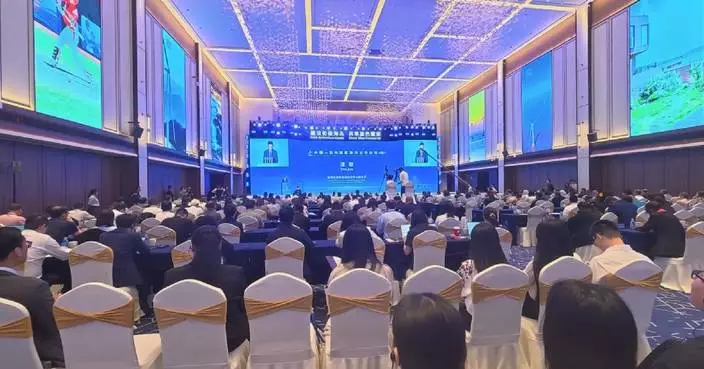
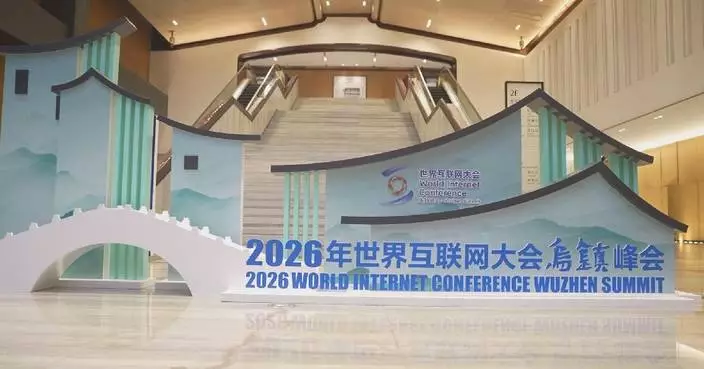
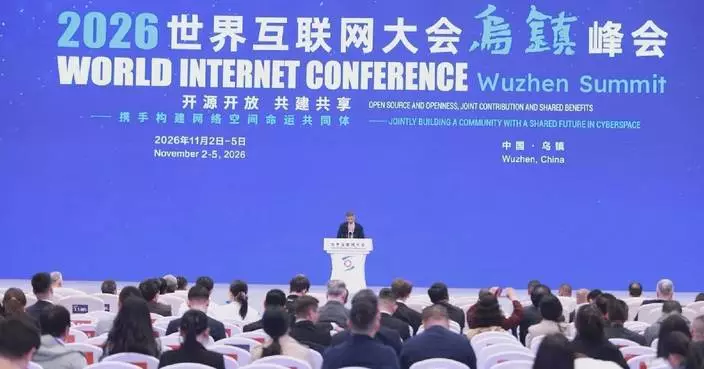
The 2026 World Internet Conference (WIC) Wuzhen Summit opened on Tuesday in Wuzhen, east China's Zhejiang Province, with open-source technologies and human-centered artificial intelligence (AI) taking center stage.
The event, running through Thursday, has drawn about 1,800 delegates from 138 countries and regions under the theme "Open Source and Openness, Joint Contribution and Shared Benefits -- Jointly Building a Community with a Shared Future in Cyberspace."
At the Wuzhen Dialogue on Artificial Intelligence held on Tuesday afternoon, guests said that open-source technologies allow more countries and regions to develop AI according to their needs. They called for joint efforts -- spanning chips, systems, models, and algorithms -- to build an inclusive and vibrant digital innovation ecosystem and to advance technological development together.
On the sidelines of the event, industry observers also advocated openness and cooperation in AI development.
"Open-source development is a global endeavor," said Wang Jian, an academician of Chinese Academy of Engineering.
"In terms of open-source development, especially open-weight models such as DeepSeek and Qwen, they are very important for the development of developing countries," said Li Xiang, senior director of the Center for AI Excellence at World Economic Forum.
Li Bin, senior vice president of Chinese supercomputer manufacturer Sugon, pointed to the growing complexity of the industry chain.
"From chips, systems, models to algorithms, they are extremely complex, and the industry chain is getting longer and longer. Therefore, it's practically impossible for any single company or institution to excel in the entire chain. This necessitates open collaboration," he said.
Industry observers also stressed that technology should respond to people's needs, particularly those with physical challenges or mental disorders, and that a people-centered approach should guide development -- a direction some companies are already pursuing.
"We hope that within the next five to 10 years, we can help one million people with limb differences [who have lost hands or feet] to use neurally controlled prosthetics, and also help people with conditions such as Alzheimer's disease, autism, ADHD, and depression improve through non-invasive or invasive brain-computer interface technologies," said Han Bicheng, founder and CEO of Chinese neurotechnology company BrainCo.
Zhang Chaoyang, founder of Chinese portal Sohu, emphasized the need to rethink the human-technology relationship.
"We need to think about the relationship between humans and technology -- that is, a people-centered approach where technology serves people. We believe that many of the functions and advancements of internet technologies and products have not yet been fully explored, and there are still many opportunities," he said.
First held in 2014, the Wuzhen Summit brings together government officials, representatives of international organizations, technology executives, and researchers to discuss the development and governance of the internet.
This year's event comes as open-source AI models developed in China -- including DeepSeek and Alibaba's Qwen -- gain growing global traction, particularly among developing countries seeking affordable access to AI capabilities.

2026 World Internet Conference Wuzhen Summit spotlights open-source AI, human-centered tech