China on Wednesday slammed the UK's claim of facing AI-powered cyberattacks from China in an annual cybersecurity review, warning such assertions could damage mutual trust.
The UK's security agency claimed in an annual review that Britain would face a ransomware attack involving AI-powered malware by 2028, with "China best placed to launch AI-powered cyberattacks on Britain."
"China expresses grave concern over the UK's use of speculative language to smear China without evidence. The cybersecurity risks brought by artificial intelligence (AI) are common challenges facing all countries and should be addressed through the formulation of new international rules under the framework of the United Nations. Regrettably, the UK has long politicized cybersecurity issues and is now using "an old bottle to serve new wine" by recycling its past hacker threats in a new attempt to suppress China's AI development. Such erroneous practices will not help enhance mutual trust between China and the UK, and will also damage the UK's credibility in global cooperation on AI safety governance, Mao said.
"China has consistently maintained that AI development should be guided by the principles of pursuing progress, promoting good, openness and inclusiveness, while balancing security and development to ensure that AI remains safe, reliable and controllable," Mao said.
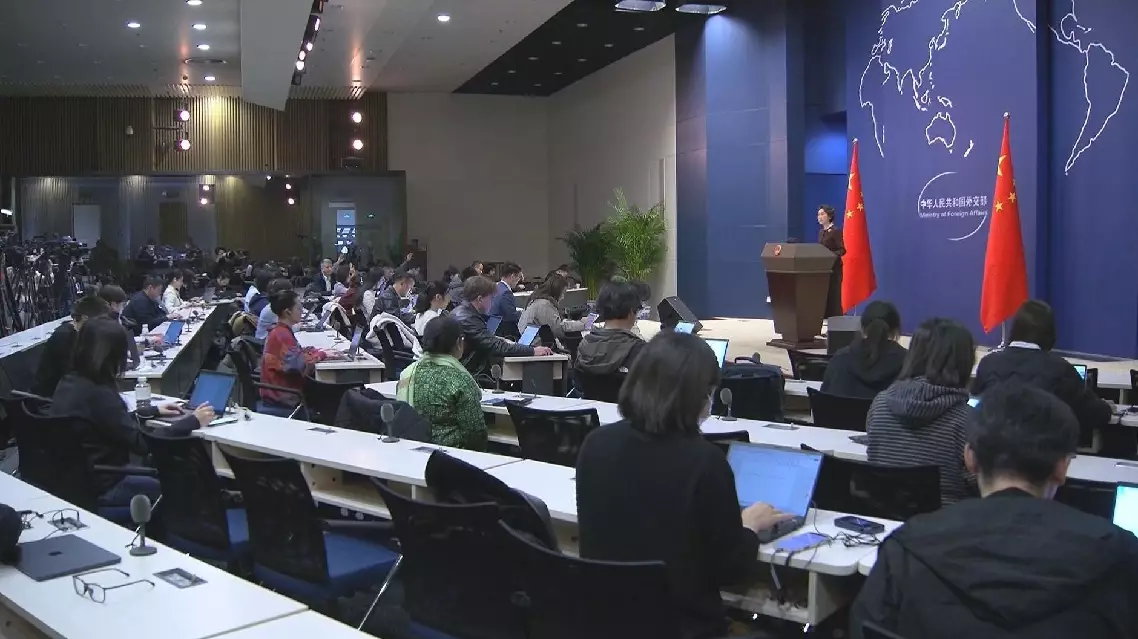
China slams UK's politicization of cybersecurity, warns against undermining trust
A fleet of delivery robots operating in the southern Chinese tech hub of Shenzhen are offering a glimpse into how AI can transform daily life through more real-world applications, with these tech topics expected to be high on the agenda of the upcoming 33rd APEC Economic Leaders' Meeting in the city.
The two-day meeting, which is scheduled to open in Shenzhen on Wednesday, will be held under the theme "Building an Asia-Pacific Community to Prosper Together," focusing on three priority areas identified by China, namely openness, innovation, and cooperation.
In anticipation of the event, APEC-themed banners line the so-called "Robot Avenue" in Shenzhen's Longgang District. The street is part of a larger robotics block, featuring more than a dozen themed stores that showcase the most advanced AI technologies available today.
Out on the street, visitors can enjoy an automated coffee delivery which is brought right to their position by the AI-powered robots who quietly make their way among the crowds of pedestrians.
"It feels smart and convenient, a lifesaver for lazy people! It's also really novel," said Zeng Yanling, a local resident.
The delivery robot doing the rounds here in Shenzhen is developed by Eventec Technology, a company based in Chengdu City of southwest China's Sichuan Province.
Already, this same model is handling regular deliveries within a residential community in Shenzhen, where residents use the service to drop off their takeaway meals, groceries, and other everyday essentials.
For some, this convenience gives them a peace of mind to collect their order with no fuss.
"When I'm home alone, sometimes I hear the delivery person arrive, and I'm reluctant to open the door because I don't want to meet them face-to-face. But with a delivery robot, I don't have that concern. There's no one outside, so I can just pick up my order directly. It's very convenient," said Wu Canyu, a female resident.
This sentiment is echoed at Zhen Apartment, a government-subsidized rental housing community, where young tenants appreciate how the robots satisfy their needs for speedy delivery and privacy.
Since its introduction to the community in July, the robot delivery service has been scaled up and now handles more than 200 orders per day.
"This is a government-subsidized rental housing community, and our tenants are mostly young people. They value fast delivery and privacy, which the robots can provide," said Liu Yunshan, a project manager of the Zhen Apartment complex.
While residential communities are a prime setting for delivery robots to get to work, their applications are rapidly extending into other facets of daily life, each presenting unique environmental conditions and service requirements.
Ou Qiang, co-founder and vice president of the Chengdu Eventec Technology company behind these bots, highlighted the challenges of adapting their machines to get around more easily and respond to any real-life situations they may encounter.
"Different scenarios need different robot models to conquer varying environmental conditions. Residential communities are characterized by heavy foot traffic, a large number of children, and doorways often cluttered with shoe racks and other miscellaneous items," said Ou.
As the APEC meeting in Shenzhen draws global attention to the future possibilities of AI and robotics, everyday delivery operations across China are already demonstrating how these transformative technologies are being put to practical, daily use.
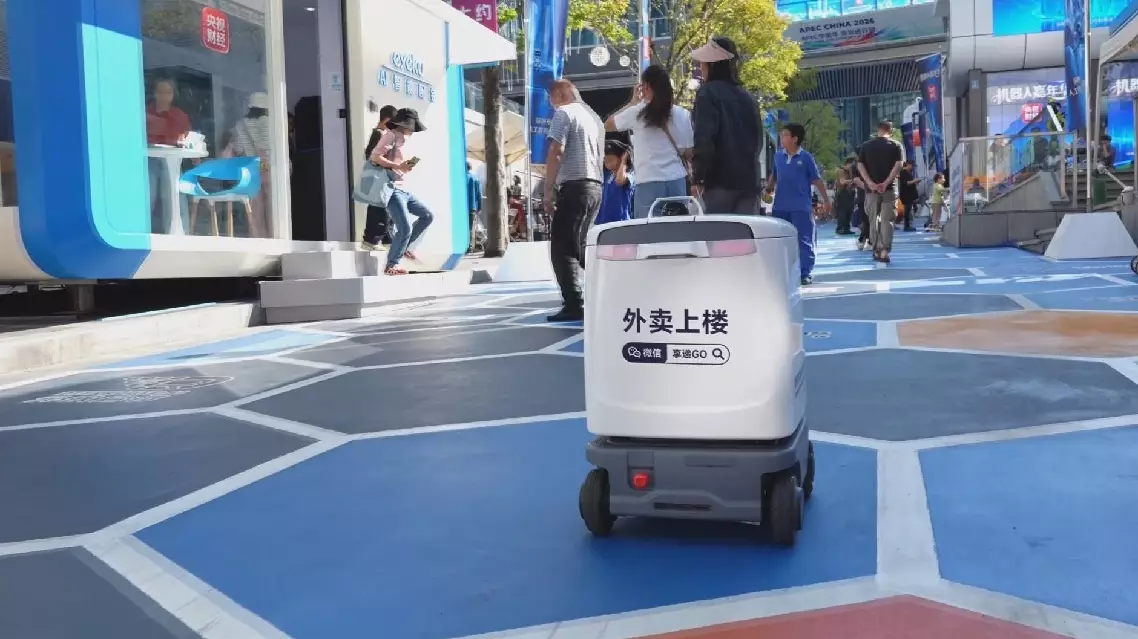
Delivery robots daily life in Shenzhen as AI tops APEC agenda