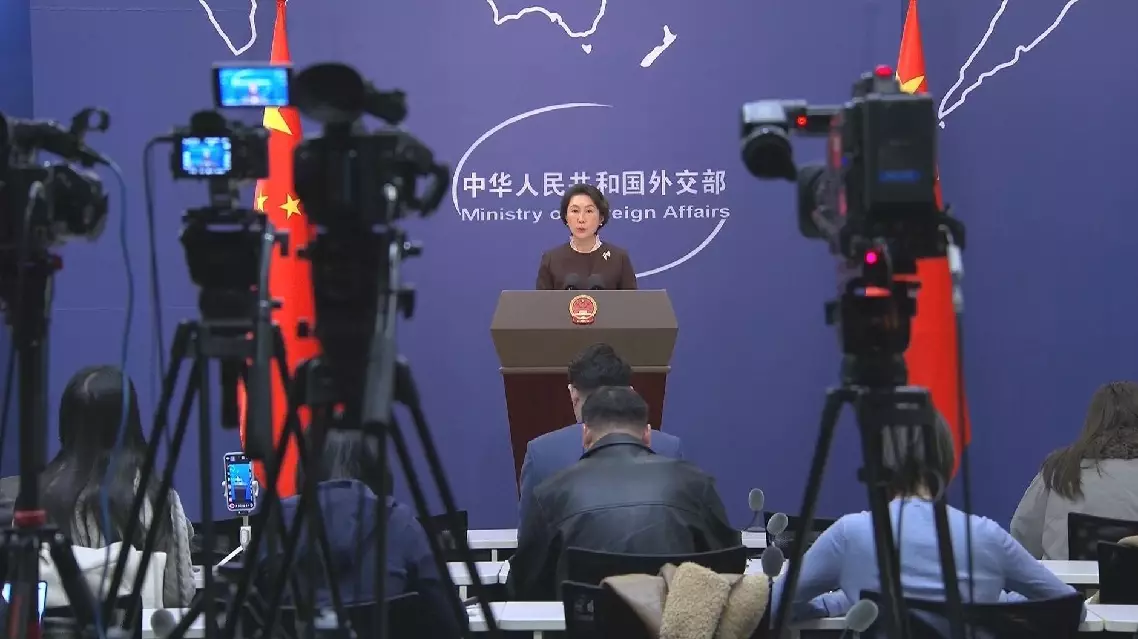
China is willing to strengthen communication and dialogue with Saudi Arabia, Iran and other regional countries to realize sustained security and stability in the Middle East, a Chinese Foreign Ministry spokeswoman said on Wednesday.
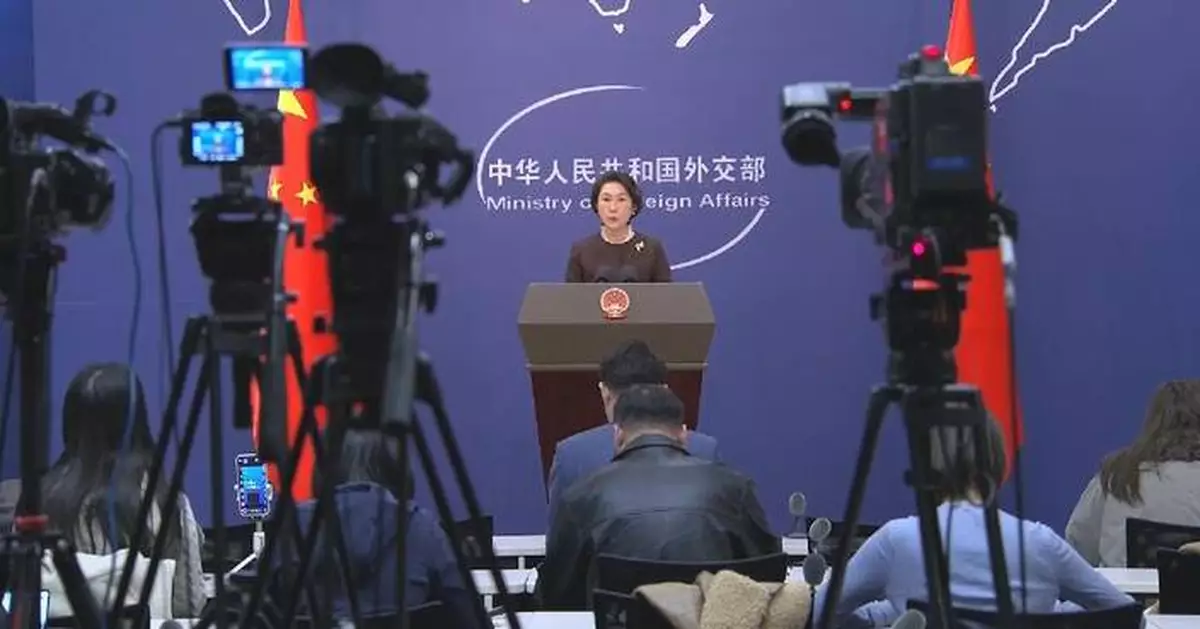
Mao Ning, the spokeswoman, made the statement at a press conference in Beijing in response to a question about recent visits to China by Saudi National Security Advisor Musaad bin Mohammed Al-Aiban and Ali Bagheri Kani, deputy secretary of Iran's Supreme National Security Council, and about China's views on Saudi-Iran relations and the situation in the Middle East and the Gulf region.
"Amid escalating tensions in the Middle East, China is ready to step up communication and dialogue with Saudi Arabia, Iran and other regional countries. The pressing priority is to avoid resumption of conflicts in the Middle East, which will inflict great suffering on the people in the region. China will continue to follow the guidance of the initiatives and propositions put forward by President Xi Jinping on promoting peace and security in the Middle East, uphold an objective and fair position, support Iran and the U.S. in resolving disputes through negotiations, promote the political settlement of the Yemen issue, and facilitate efforts to seek a proper and comprehensive settlement on the opening of the Strait of Hormuz," Mao said.
"It is our hope that regional countries will uphold the principles of mutual respect and good-neighborliness, jointly create a new regional architecture for common, comprehensive, cooperative and sustainable security, and realize lasting peace in the region," she said.
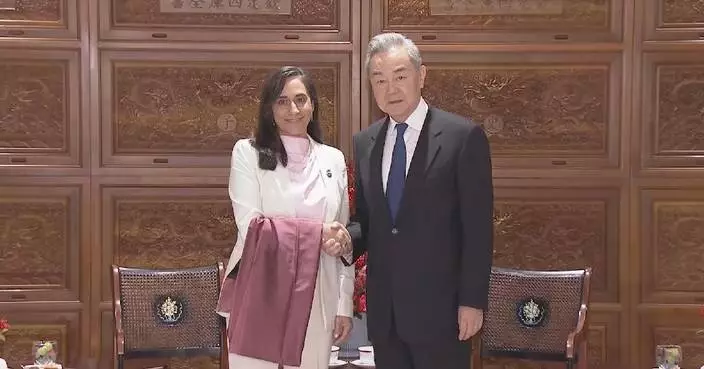
On Monday, Chinese Foreign Minister Wang, also a member of the Political Bureau of the Communist Party of China Central Committee and director of the Office of the Central Commission for Foreign Affairs, separately met with Musaad bin Mohammed Al-Aiban and Ali Bagheri Kani in Beijing, exchanging in-depth views with them on the situation in the Middle East and the Gulf region.
China ready to step up dialogue with Saudi, Iran to secure lasting regional stability: spokeswoman
China ready to step up dialogue with Saudi, Iran to secure lasting regional stability: spokeswoman
China ready to step up dialogue with Saudi, Iran to secure lasting regional stability: spokeswoman
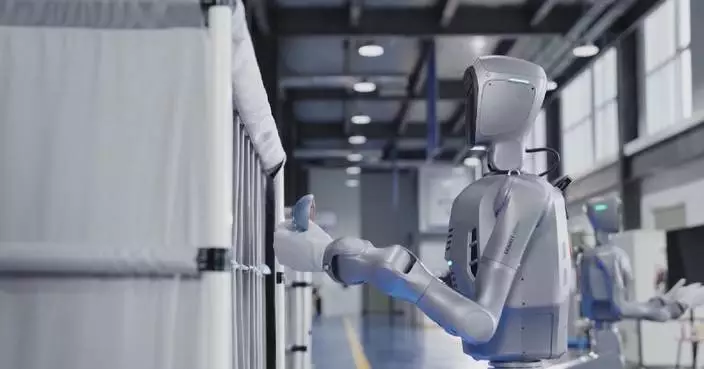
A fleet of delivery robots operating in the southern Chinese tech hub of Shenzhen are offering a glimpse into how AI can transform daily life through more real-world applications, with these tech topics expected to be high on the agenda of the upcoming 33rd APEC Economic Leaders' Meeting in the city.
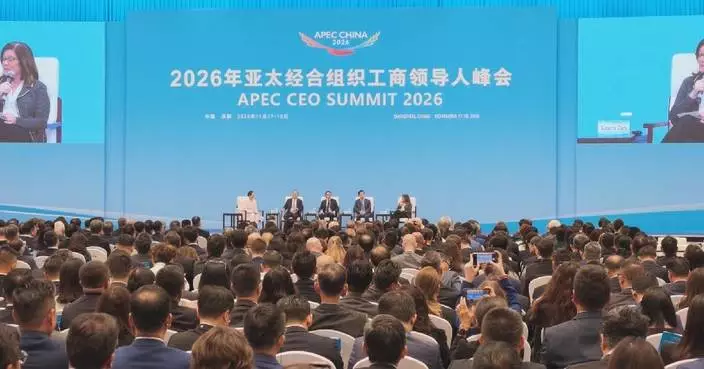
The two-day meeting, which is scheduled to open in Shenzhen on Wednesday, will be held under the theme "Building an Asia-Pacific Community to Prosper Together," focusing on three priority areas identified by China, namely openness, innovation, and cooperation.
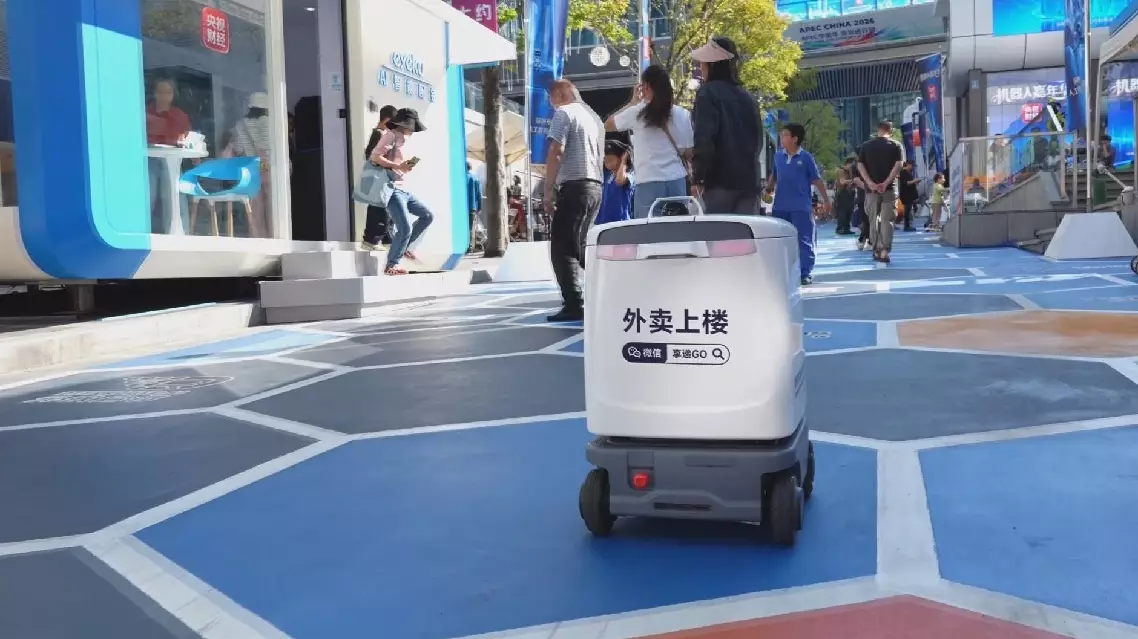
In anticipation of the event, APEC-themed banners line the so-called "Robot Avenue" in Shenzhen's Longgang District. The street is part of a larger robotics block, featuring more than a dozen themed stores that showcase the most advanced AI technologies available today.
Out on the street, visitors can enjoy an automated coffee delivery which is brought right to their position by the AI-powered robots who quietly make their way among the crowds of pedestrians.
"It feels smart and convenient, a lifesaver for lazy people! It's also really novel," said Zeng Yanling, a local resident.
The delivery robot doing the rounds here in Shenzhen is developed by Eventec Technology, a company based in Chengdu City of southwest China's Sichuan Province.
Already, this same model is handling regular deliveries within a residential community in Shenzhen, where residents use the service to drop off their takeaway meals, groceries, and other everyday essentials.
For some, this convenience gives them a peace of mind to collect their order with no fuss.
"When I'm home alone, sometimes I hear the delivery person arrive, and I'm reluctant to open the door because I don't want to meet them face-to-face. But with a delivery robot, I don't have that concern. There's no one outside, so I can just pick up my order directly. It's very convenient," said Wu Canyu, a female resident.
This sentiment is echoed at Zhen Apartment, a government-subsidized rental housing community, where young tenants appreciate how the robots satisfy their needs for speedy delivery and privacy.
Since its introduction to the community in July, the robot delivery service has been scaled up and now handles more than 200 orders per day.
"This is a government-subsidized rental housing community, and our tenants are mostly young people. They value fast delivery and privacy, which the robots can provide," said Liu Yunshan, a project manager of the Zhen Apartment complex.
While residential communities are a prime setting for delivery robots to get to work, their applications are rapidly extending into other facets of daily life, each presenting unique environmental conditions and service requirements.
Ou Qiang, co-founder and vice president of the Chengdu Eventec Technology company behind these bots, highlighted the challenges of adapting their machines to get around more easily and respond to any real-life situations they may encounter.
"Different scenarios need different robot models to conquer varying environmental conditions. Residential communities are characterized by heavy foot traffic, a large number of children, and doorways often cluttered with shoe racks and other miscellaneous items," said Ou.
As the APEC meeting in Shenzhen draws global attention to the future possibilities of AI and robotics, everyday delivery operations across China are already demonstrating how these transformative technologies are being put to practical, daily use.
Delivery robots daily life in Shenzhen as AI tops APEC agenda