Teams competing in the climbing event on Mount Tai in Tai'an City of east China's Shandong Province took the race as a valuable real-world testing ground to evaluate their robots' power, balance and autonomous perception capability.
The inaugural China Media Group (CMG) World Robot Mount Tai Challenge on Monday drew nearly 90 teams. The competition was divided into two main categories of speed races and specialized events, with five events in total for different robot forms, including humanoid, quadruped, and exoskeleton.
Competitors tackled the 3.9-kilometer ancient stone path from Hongmen to Zhongtianmen -- ascending more than 3,100 steps with an elevation gain of nearly 640 meters, while the morning mist and moss added extra layers of difficulty.
A humanoid robot developed by VSISLAB of Shandong University's School of Control Science and Engineering struggled at the start on the rugged terrain.
"At the beginning, there is a very steep section, which narrows to just 18 or 19 centimeters in width at its tightest point. The robot made two attempts to pass it, and it did not fall over," said Li Zhongzheng, a student of the university.
The team successfully finished the race and placed eighth.
The Beijing Lingyi Technology, a wholly owned subsidiary of Hangzhou-based Unitree Robotics, won the quadruped robot speed race. Its robots completed the demanding climb with a steady, mechanical ascent over uneven steps, stone ridges and narrow mountain paths.
"We have four robotic dogs in the competition. They secured both the first and second place in the racing event, as well as the second place in the weight-carrying event," said Chen Xiyun, leader of the Beijing Lingyi Technology Team.
For many participants, the event provided a rare opportunity to test their models in real-world scenarios, enabling products to improve more quickly than through laboratory trials alone.
"From a technical standpoint, there are many goals for us to pursue. I hope our team can continue to climb higher, step by step, just as the robots did during this competition," said Wang Jian, engineer of the Norinco Intelligent Innovation Research Institute (Shenzhen) Company.
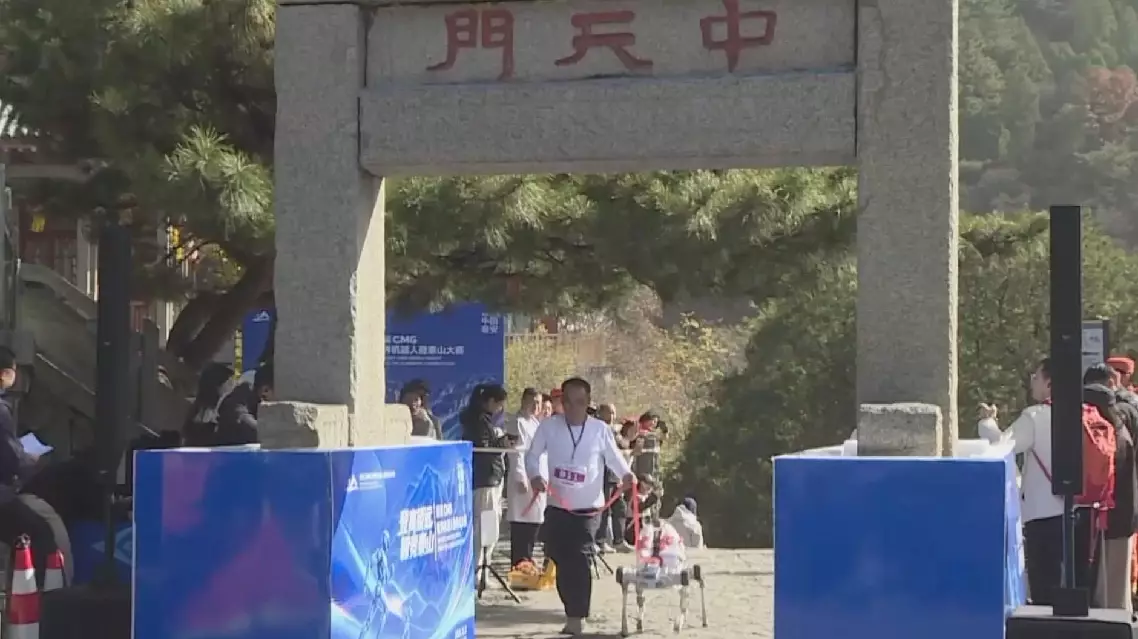
Robots test their limits at Mount Tai climbing competition
The upcoming Asia-Pacific Economic Cooperation (APEC) Leaders' Meeting in the Chinese tech hub of Shenzhen will give Canadian companies a key platform to engage with global businesses and deepen economic and trade cooperation with China, said David Perez-Des Rosiers, director of the Beijing Chapter of the Canada China Business Council (CCBC).
The meeting will take place in Shenzhen from November 18 to 19, under the theme "Building an Asia-Pacific Community to Prosper Together." Leaders from the 21 APEC member economies, which together account for around 60 percent of global GDP and nearly half of global trade, are expected to discuss ways to strengthen regional economic integration, promote open trade and foster shared prosperity across the Asia-Pacific.
Both Canada and China are key members of APEC.
"For us, it's a good opportunity for Canadian businesses to engage with other businesses and to engage with significant stakeholders, whether it's government, businesses, think tanks or people who are going to be attending APEC," said Perez-Des Rosiers.
In January of this year, Canadian Prime Minister Mark Carney paid an official visit to China. During the visit, the leaders of the two nations reached an important consensus on advancing a China-Canada new strategic partnership and issued a joint statement.
They also signed a China-Canada economic and trade cooperation roadmap setting what Perez-Des Rosiers described as "very ambitious targets."
"So it's going to be a great opportunity for Canada to advance the discussions in terms of the strategic partnerships that was announced earlier this year following the visit of Prime Minister Carney to Beijing. In terms of what we would like to see, it's also going to be a great opportunity to discuss the Canada-China trade and economic roadmap that was announced earlier this year that sets very ambitious targets," he said.
Beyond the leaders' agenda, APEC will serve as a working platform for companies on both sides, with the CCBC planning to bring Canadian businesses to Shenzhen to meet Chinese counterparts and explore new trade and investment opportunities.
"We're going to be at APEC. And we are looking forward also to help our members and Canadian businesses that are going to be on the ground to connect with Chinese businesses to help them find new opportunities of bilateral trade and investments to advance existing discussions," Perez-Des Rosiers said.
He said that he had visited Shenzhen several times and was impressed by the host city's rapid development and innovation capacity, saying he looked forward to fruitful outcomes from the meeting.
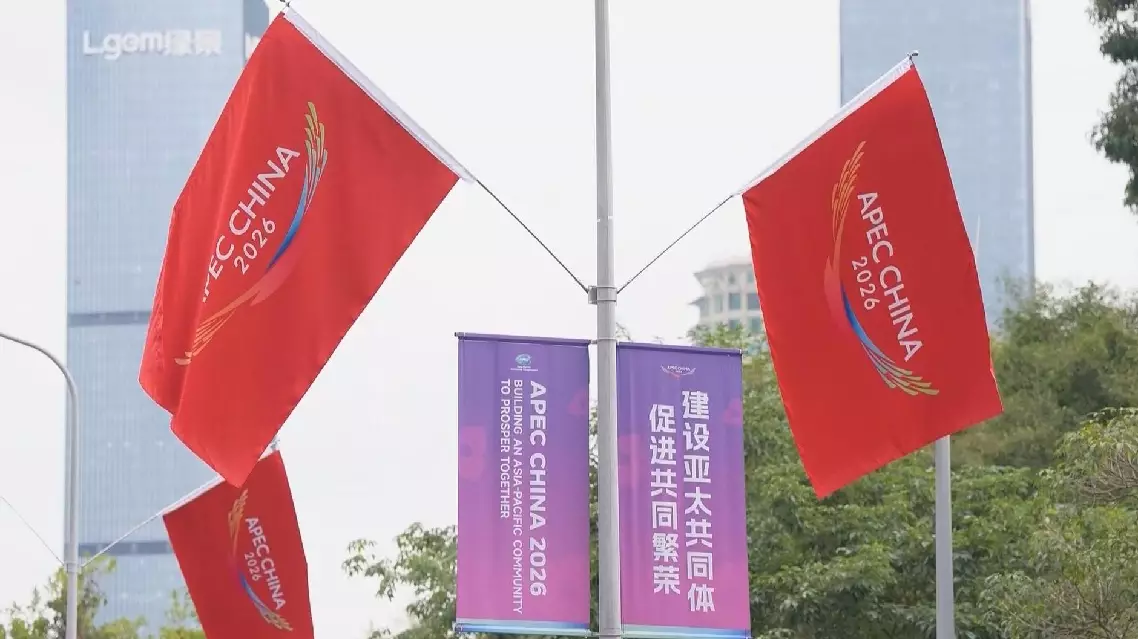
Canada business council eyes Shenzhen APEC to advance trade roadmap with China
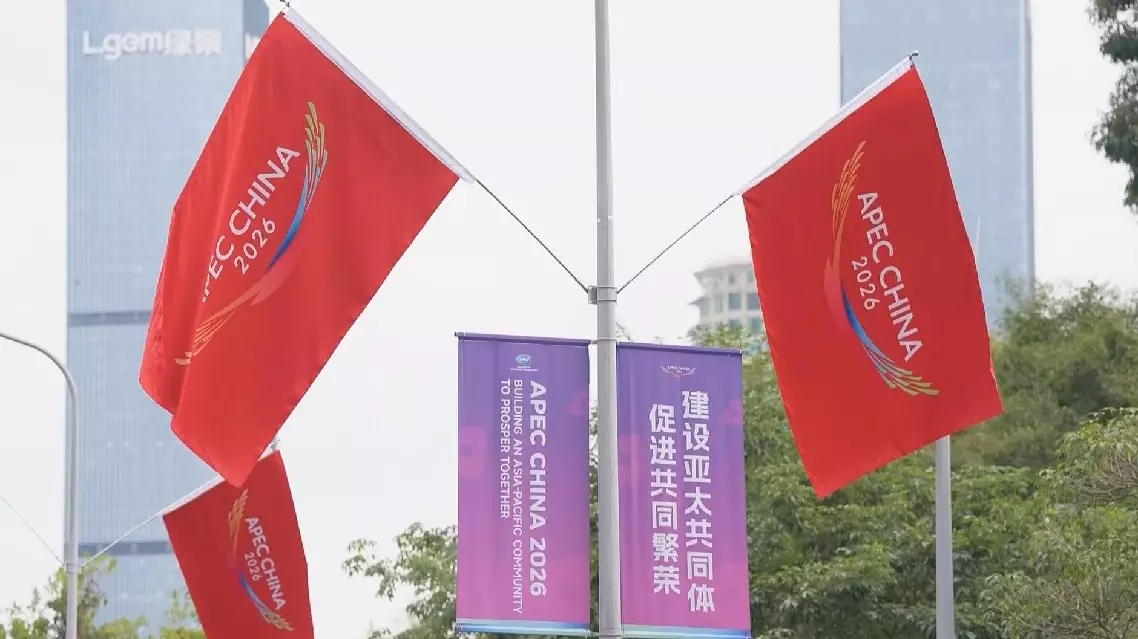
Canada business council eyes Shenzhen APEC to advance trade roadmap with China