China will make appropriate forward plans for infrastructure construction and accelerate the building of a modern infrastructure system that is advanced and applicable, intensive and efficient, and safe and green during the 15th Five-Year Plan period (2026-2030), the National Development and Reform Commission (NDRC), China's top economic planner, said on Wednesday.
During the past five years, China achieved breakthroughs in the development of infrastructure including transportation networks, power-generation installed capacity, and water conservancy projects, with relevant facility scales, service abilities, and sci-tech innovation all leading the world, said Xia Xin, head of the Department of Infrastructure Development under NDRC, at a press conference in Beijing.
"During the 15th Five-Year Plan period, China will make appropriate forward plans but avoid excessively advanced planning for infrastructure construction, take the promotion of connectivity and coordinated integration of infrastructure as the guide, strengthen overall planning, and accelerate the building of a modern infrastructure system that is advanced and applicable, systematic and complete, intensive and efficient, and safe and green," said Xia.
The country will expand the coverage and international connectivity of its infrastructure networks, promote digital and intelligent upgrading of traditional infrastructure, speed up the adjustment of the energy consumption structure and the green and low-carbon transition, and strengthen the construction of safety facilities in key areas to enhance the capabilities for prevention, resistance and rapid restoration in response to natural disasters, accidents and emergencies, said the official.
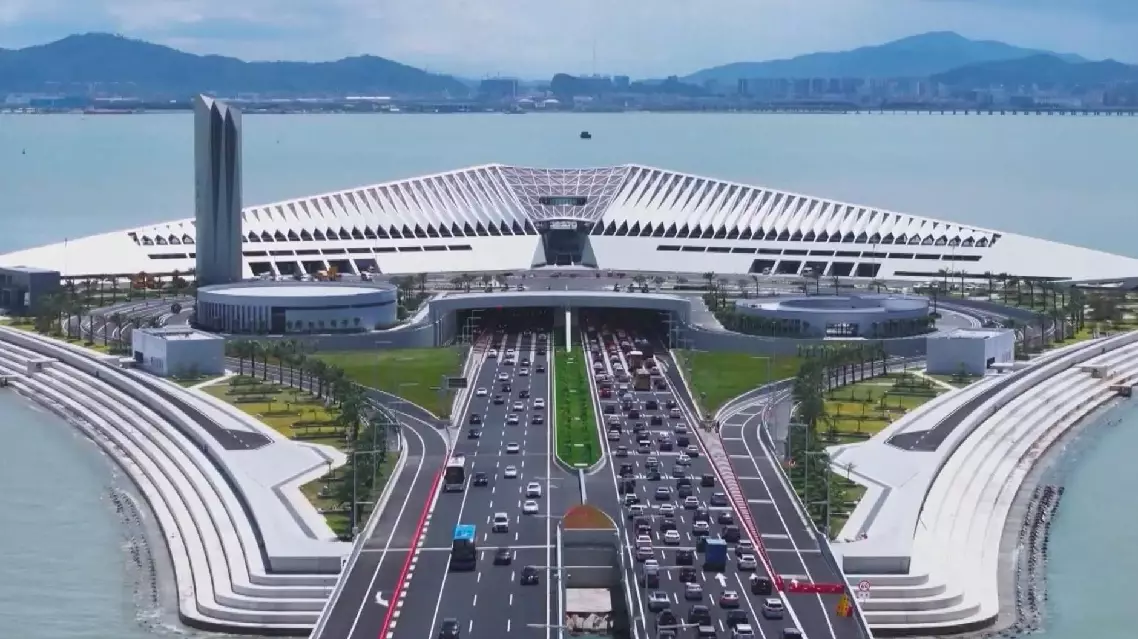
China to build intensive, efficient, safe, green infrastructure system in 15th Five Year Plan period: official
Teams competing in the climbing event on Mount Tai in Tai'an City of east China's Shandong Province took the race as a valuable real-world testing ground to evaluate their robots' power, balance and autonomous perception capability.
The inaugural China Media Group (CMG) World Robot Mount Tai Challenge on Monday drew nearly 90 teams. The competition was divided into two main categories of speed races and specialized events, with five events in total for different robot forms, including humanoid, quadruped, and exoskeleton.
Competitors tackled the 3.9-kilometer ancient stone path from Hongmen to Zhongtianmen -- ascending more than 3,100 steps with an elevation gain of nearly 640 meters, while the morning mist and moss added extra layers of difficulty.
A humanoid robot developed by VSISLAB of Shandong University's School of Control Science and Engineering struggled at the start on the rugged terrain.
"At the beginning, there is a very steep section, which narrows to just 18 or 19 centimeters in width at its tightest point. The robot made two attempts to pass it, and it did not fall over," said Li Zhongzheng, a student of the university.
The team successfully finished the race and placed eighth.
The Beijing Lingyi Technology, a wholly owned subsidiary of Hangzhou-based Unitree Robotics, won the quadruped robot speed race. Its robots completed the demanding climb with a steady, mechanical ascent over uneven steps, stone ridges and narrow mountain paths.
"We have four robotic dogs in the competition. They secured both the first and second place in the racing event, as well as the second place in the weight-carrying event," said Chen Xiyun, leader of the Beijing Lingyi Technology Team.
For many participants, the event provided a rare opportunity to test their models in real-world scenarios, enabling products to improve more quickly than through laboratory trials alone.
"From a technical standpoint, there are many goals for us to pursue. I hope our team can continue to climb higher, step by step, just as the robots did during this competition," said Wang Jian, engineer of the Norinco Intelligent Innovation Research Institute (Shenzhen) Company.
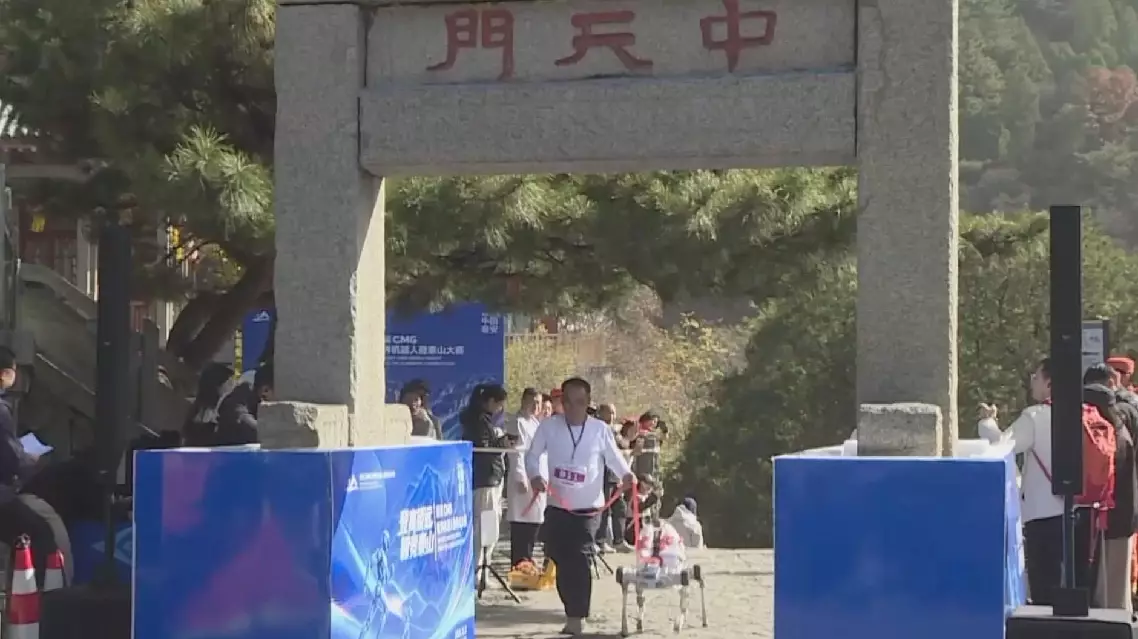
Robots test their limits at Mount Tai climbing competition