CAIRO (AP) — After participating in an anti-government protest on campus, the social sciences student was called into a disciplinary hearing at his university and faced an intimidating panel: It included a cleric representing Iran’s supreme leader and an official who refused to identify himself.
The questioning they gave him underscored Iranian officials' seriousness in rooting out dissenters at universities after crushing massive demonstrations in January and after the eruption of war with the United States.
Click to Gallery
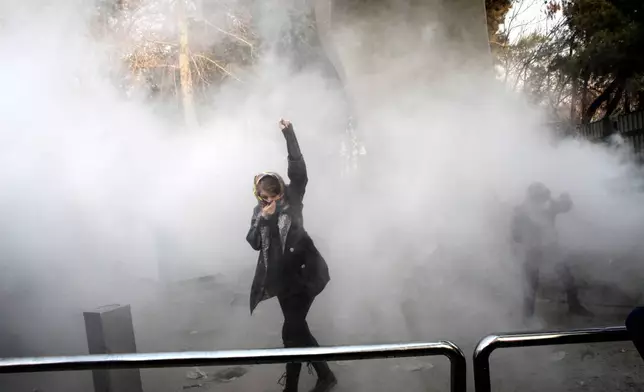
FILE - In this photo taken by a person not employed by The Associated Press and obtained by the AP outside Iran, a university student attends a protest inside Tehran University after a smoke grenade was thrown by anti-riot Iranian police, in Tehran, Iran, Dec. 30, 2017. (AP Photo, File)
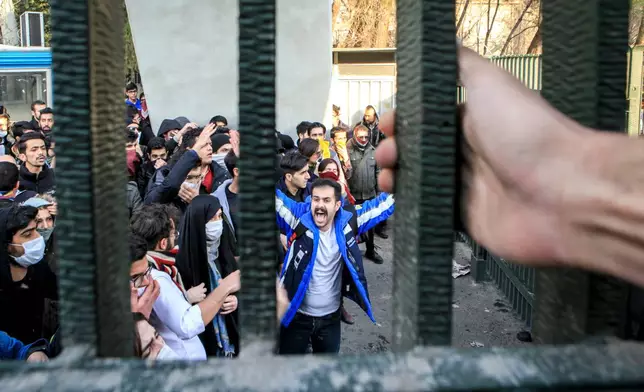
FILE - In this photo taken by an individual not employed by The Associated Press and obtained by the AP outside Iran, university students attend an anti-government protest inside Tehran University, in Tehran, Iran, Dec. 30, 2017.(AP Photo, File)
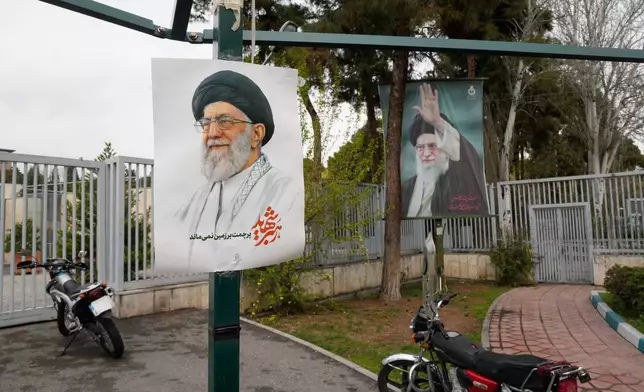
FILE - Pictures of the late Iranian Supreme Leader Ayatollah Ali Khamenei hang in front of the Iran University of Science and Technology in Tehran, Iran, March 31, 2026. (AP Photo/Vahid Salemi, File)
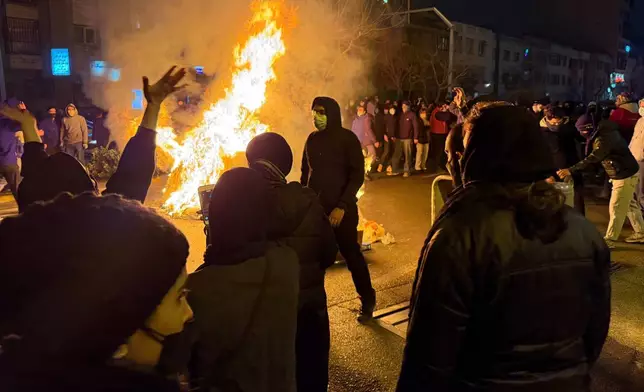
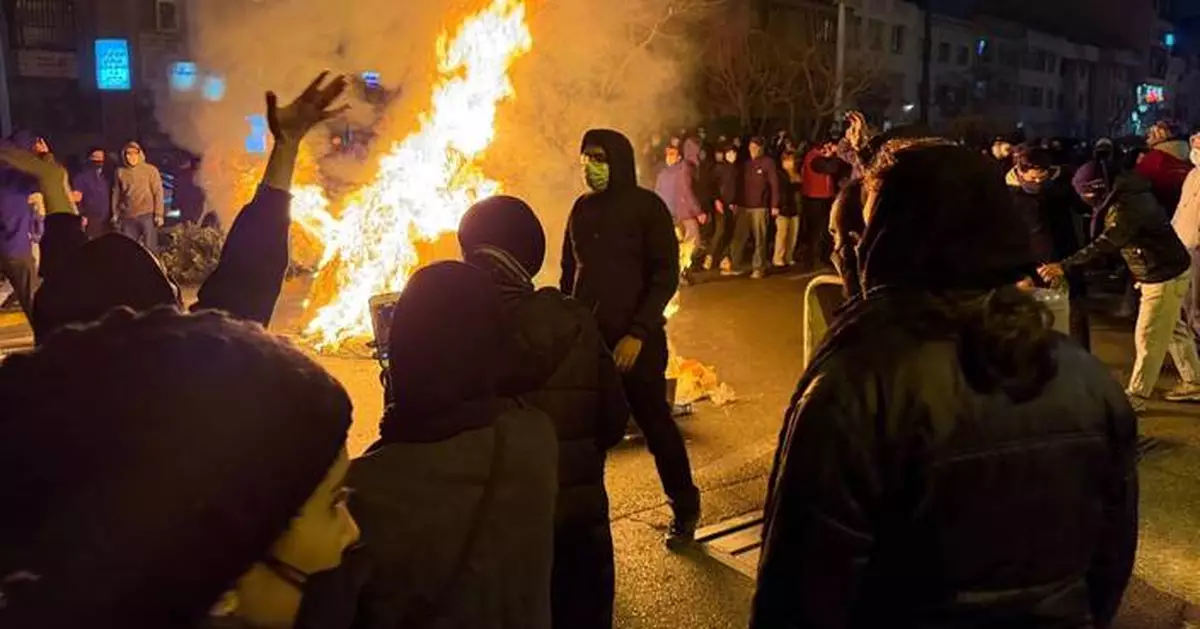
FILE - In this photo obtained by The Associated Press, Iranians attend an anti-government protest in Tehran, Iran, on Jan. 9, 2026. (UGC via AP, File)
The cleric and the official asked: When former Supreme Leader Ali Khamenei was killed in airstrikes at the beginning of the war on Feb. 28, “what did you feel?”
Scores of university students around Iran are facing similar hearings for joining protests, according to Iranian student unions and outside rights monitors. It’s another side of authorities’ campaign to silence dissent as the war and a monthslong U.S. naval blockade worsen Iran’s economic crisis. With Iranian leaders and U.S. President Donald Trump both threatening a possible return to escalated fighting, many students fear the heat on them will only increase.
The Associated Press spoke by phone and messaging apps with half a dozen student protesters in Iran facing disciplinary procedures, all of whom spoke on condition of anonymity out of fear of retribution.
Students brought before panels face potential expulsion or even a ban from further study at any university. The repercussions can extend beyond campus walls. Some have been fired from their jobs or have faced death threats or other harassment when details of their cases become public.
“It puts an extraordinary psychological pressure on people. I mean for me, it’s unspeakable,” said the social sciences student.
The disciplinary measures followed college protests that sprouted up parallel to the wave of demonstrations that began in late December, triggered by a currency crash. Those demonstrations quickly grew into the largest nationwide protests since the 1979 Iranian revolution. Security forces crushed them by opening fire, killing thousands and arresting thousands of others.
Even after that, smaller campus protests persisted, up to the eve of the Feb. 28 U.S.-Israeli attack on Iran that triggered the war.
In February, Gholamhossein Mohseni Ejei, Iran’s hard-line judiciary chief, said judicial authorities would get involved in prosecuting crimes on campuses if educational authorities were unable to control them.
The weeks of heavy U.S. and Israeli bombardment of Iran put university measures against students on hold. But since the summer, students began being called into hearings.
As universities reopened last month, a top cleric warned that campus dissent was a threat to Iran’s rulers that must be ended.
“The enemy wants to start internal pressure from the university environment and follow it throughout the country,” said Ahmad Alamolhoda, who is the Friday prayer leader in the eastern shrine city of Mashhad and the supreme leader’s representative in the province.
He called on universities to “track down any offending element in the university and prepare the ground for dealing with them.”
Iranian authorities are still arresting and prosecuting protesters tied to the January protests, with some facing the death penalty.
The number of expulsions and suspensions remains unclear. But the “severity of action” has risen compared with past crackdowns, explained Ali Taghipour, an exiled Iranian activist who tracks student protests. The process can take several months, with several levels of hearings before the ministry overseeing universities signs off on any punishments.
Shargh, a reformist newspaper, reported last month a growing tally of expulsions at half a dozen universities in the capital. At least 10 students have been expelled at the University of Tehran, another 10 at Amir Kabir University, and others have been handed suspensions. AP has been unable to independently verify these particular cases.
The procedures appear geared toward intimidating students into silence.
The social sciences student and another student both said administrators forced them to write out their defenses even before being told the charges against them — leaving them guessing about what to put down.
The social sciences student’s charges included participating in an “illegal gathering.” His personal contact details were also published on pro-government social media channels, and he now fears being attacked by government supporters.
Students describe pressure from university officials to recant anti-government stances in order to avoid punishment.
“The main emphasis in all the universities is that students admit they’ve done something wrong, and they’ve used all their efforts to make it into a psychological war,” said a humanities student in Tehran who has also faced disciplinary action.
He shared screenshots with the AP of phone messages calling him a “traitor” and threatening violence against him and his family. The messages came after pro-government social media channels published his identity and contact information.
At Sharif University, one of Iran’s most elite schools, administrators have reviewed action against some 250 students, its student union president Farzad Rahmani told the reformist media outlet Ensaf.
At least 40 of those students have faced hearings so far, and 10 have been expelled, he said.
Disciplinary hearings usually involve university administrators, faculty members, a representative of the supreme leader and the campus security agency, known as Harasat, which operates under the Intelligence Ministry and monitors political loyalty to Iran’s theocracy.
Members of the feared Basij volunteer militia, which maintains a presence on university campuses, also often participate.
“The role of the Basij and the Harasat is very strong,” Taghipour said, explaining that they typically identify suspect students and gather cases against them.
Some students have remained defiant despite growing pressures. A student union at one Tehran university said last week that administrators and campus Basij had threatened students who staged a gathering.
“Threatening a student with expulsion or suspension — solely for participating in a gathering or protesting against issued rulings — is not a sign of strength, but rather a sign of fear regarding the resurgence of student protests,” said a statement on the union's Telegram channel.
Iran’s college students have frequently propelled anti-government protests. Campus unrest played a key role in sustaining protests against the mandatory headscarf in 2022-23 that also turned into calls for the theocracy’s overthrow.
Hundreds of students were expelled or suspended over those protests, though some were later allowed to resume studies by President Masoud Pezeshkian’s government.
Since then, authorities severely curtailed campus associations, seeing them as a source of unrest, a graduate student and media worker said.
The 2022 protests forced authorities to relax headscarf enforcement, but hard-liners have been calling for a renewed clampdown. The University of Tehran said it will refer female students who persist in violating headscarf rules to disciplinary hearings, its president told a semiofficial student news agency, ISNA, on Oct. 19.
An undergraduate student in his early 20s in Tehran said campus security was stopping his female classmates more often over their dress, “putting them under pressure.”
Widespread disciplinary action by universities leaves students afraid that anyone could be expelled, he said. They're even more afraid they could be arrested, he added.
One Sharif University student was arrested from his home in April, the day he was scheduled to attend a disciplinary hearing, its student union reported this week.
Students who spoke with the AP described rising fears all-out war could erupt again.
“This war has made it easier for them to crack down, to securitize everything,” the undergraduate student said.
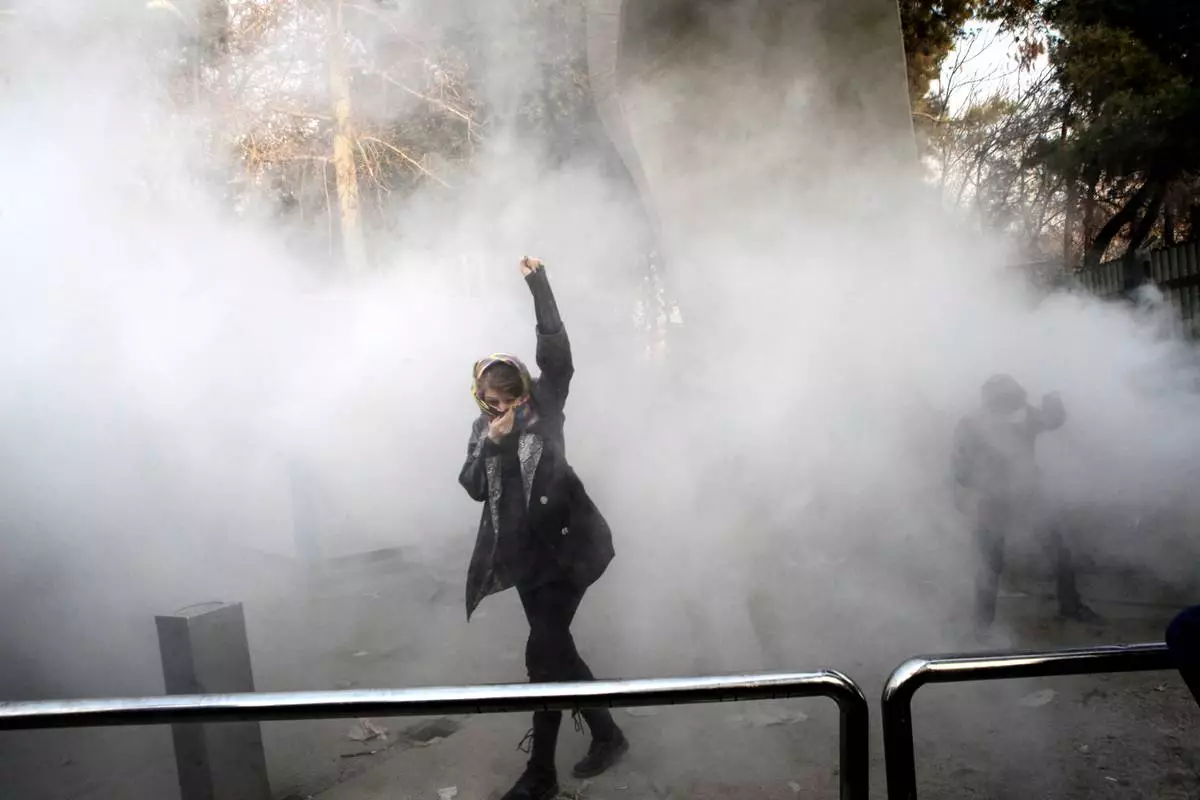
FILE - In this photo taken by a person not employed by The Associated Press and obtained by the AP outside Iran, a university student attends a protest inside Tehran University after a smoke grenade was thrown by anti-riot Iranian police, in Tehran, Iran, Dec. 30, 2017. (AP Photo, File)
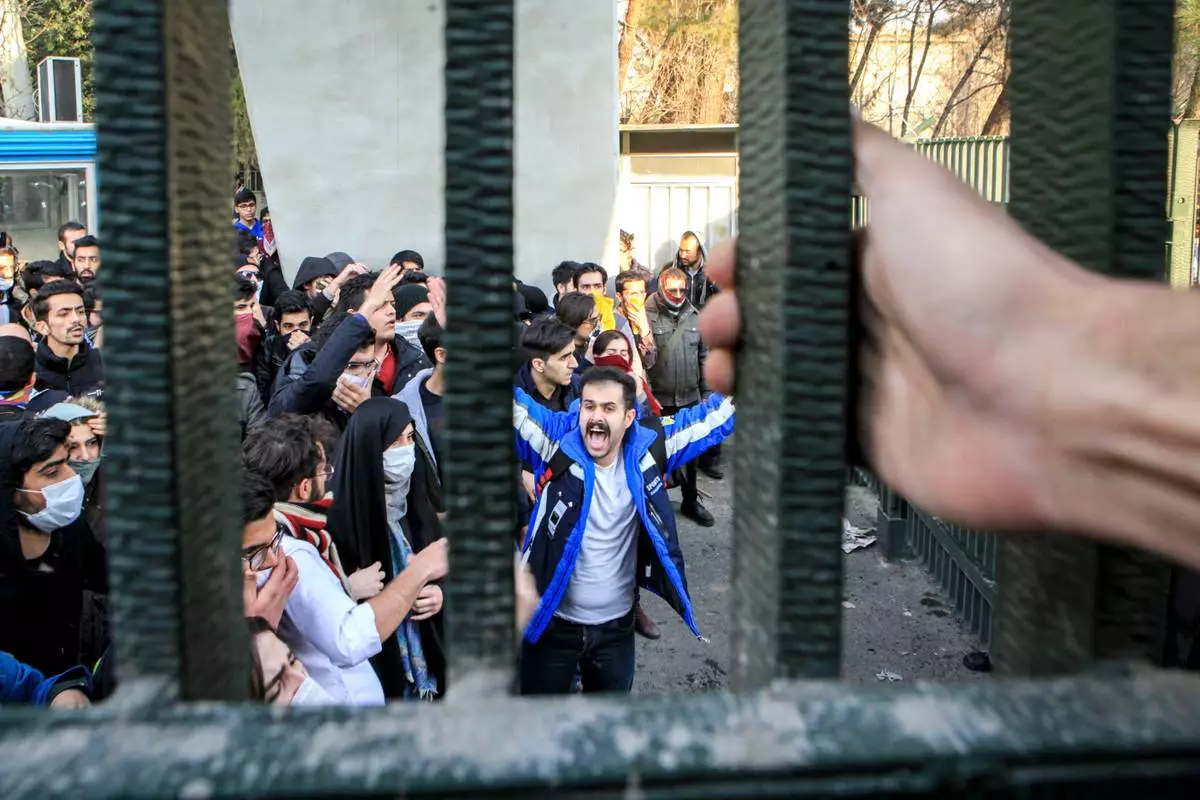
FILE - In this photo taken by an individual not employed by The Associated Press and obtained by the AP outside Iran, university students attend an anti-government protest inside Tehran University, in Tehran, Iran, Dec. 30, 2017.(AP Photo, File)
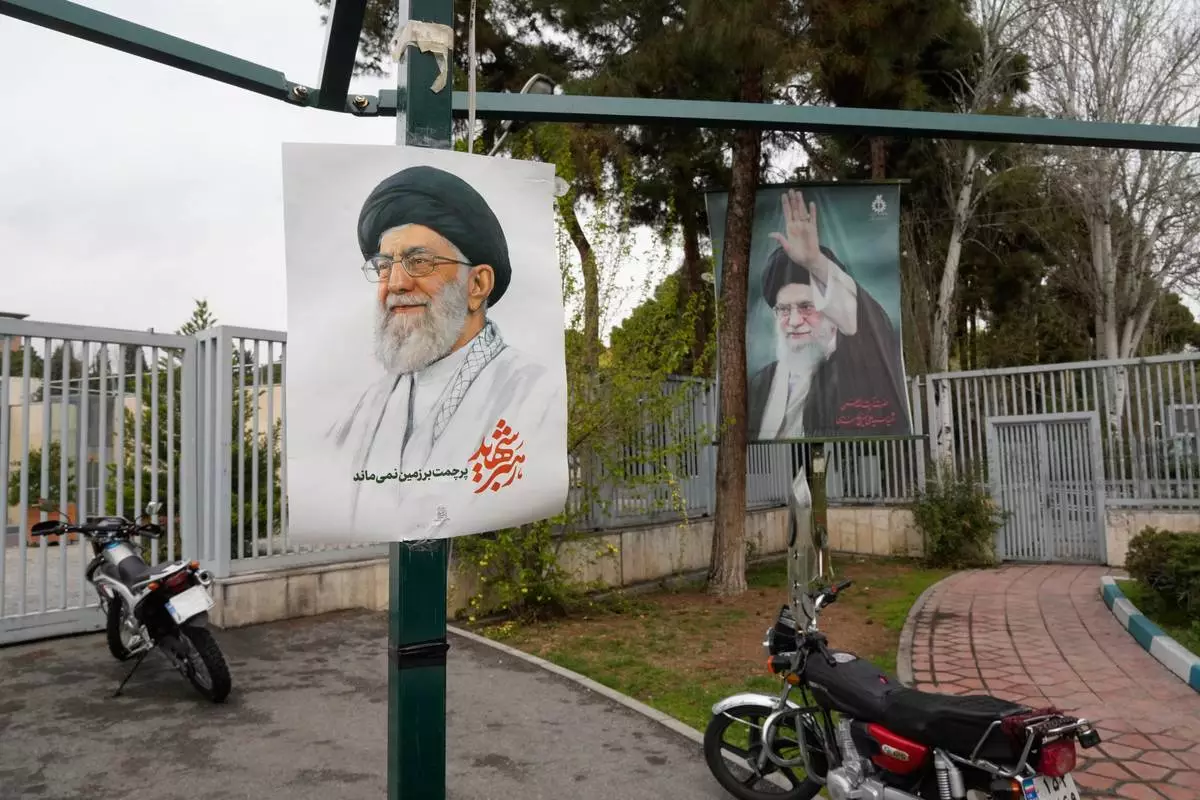
FILE - Pictures of the late Iranian Supreme Leader Ayatollah Ali Khamenei hang in front of the Iran University of Science and Technology in Tehran, Iran, March 31, 2026. (AP Photo/Vahid Salemi, File)
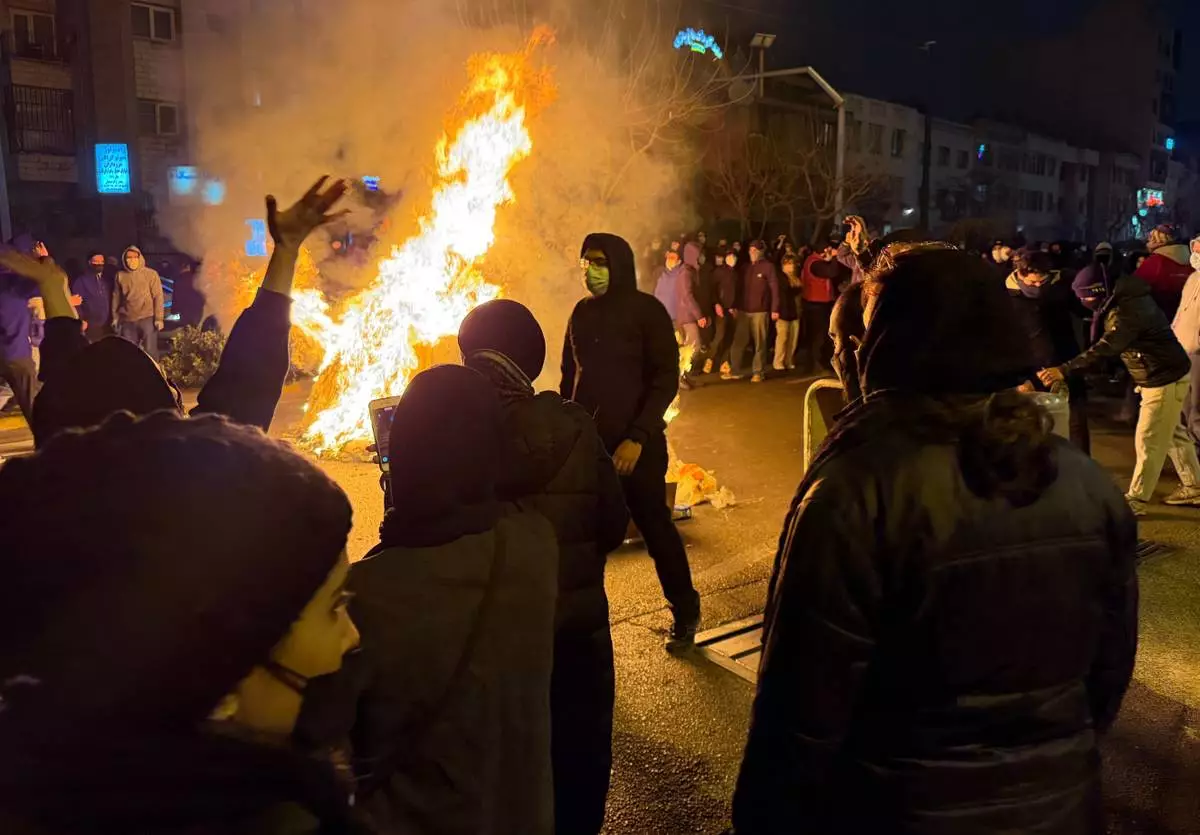
FILE - In this photo obtained by The Associated Press, Iranians attend an anti-government protest in Tehran, Iran, on Jan. 9, 2026. (UGC via AP, File)