SAN FRANCISCO (AP) — Anthropic is developing its artificial intelligence systems around twice as quickly as it was a year ago amid the CEO’s calls to slow down the technology’s pace of improvement, according to an analysis released Thursday by an independent monitoring group.
Anthropic invited researchers from the Berkeley, California-based nonprofit, Model Evaluation and Threat Research, to review its internal data and interview staff as it prepares for its Wall Street debut with debate swirling over the potential for AI models to elude human control with catastrophic consequences.
The findings are significant because details about the technology — and its risks — have been provided primarily by AI companies, which have been encouraged by President Donald Trump’s administration to police themselves on matters of safety.
It was during the research group’s assessment period that Anthropic CEO Dario Amodei called for the AI industry to slow its work so safety measures can catch up. In a Sept. 12 essay responding to mounting concerns about runaway AI, he urged the AI world to “slow the pace at which we improve the capabilities of AI models.”
Sam McCandlish, one of Anthropic’s co-founders, responded to the report Thursday in a lengthy post on X, writing that many of METR’s conclusions match his own. “AI is speeding up our research, but it’s hard to say exactly how much,” he wrote.
The San Francisco-based company is planning to go public later this month in what could be the biggest initial public offering of stock ever.
METR estimated that Anthropic is improving the capabilities of its models to do “well specified tasks” around twice as fast as it was a year earlier. The nonprofit’s researchers said they believed much of the reason for the faster development is the help of AI itself.
Anthropic has said its Claude chatbot increasingly is helping the company develop newer, more advanced versions of itself.
METR has conducted evaluations on model capabilities for Anthropic, OpenAI and other labs for years. The nonprofit is funded through donations and does not accept compensation for its work, but AI companies it has partnered with for evaluations have provided access and tokens, which METR uses for evaluations, research and engineering.
One of its two reports was based on analysis of Anthropic’s internal data provided by the company over a period of about 11 weeks, from mid-August through late October, as well as employee interviews.
METR said its assessment focused on a few key questions, including whether the growth rate of Anthropic’s internal capabilities has accelerated and how much of that was attributable to AI. The group said it was given “unprecedented access to internal data” at Anthropic.
METR also reviewed both a public risk report Anthropic published in August and a private version, as well as other nonpublic data, and the organization said the public report “overall understates the level of acceleration that was occurring.”
Anthropic’s redactions to the report limited how METR could communicate more detailed estimates of acceleration, the nonprofit said.
McCandlish acknowledged in his statement that the redactions make it harder for others to “check METR’s work,” but added that the company decided that sharing “exactly what is driving the speedup isn’t the right thing to do,” because it’s both “commercially sensitive” and “risks handing out a road map for others to go faster.”
He said this work with METR is separate from the evaluators the company is welcoming as part of its “commitment to pacing the frontier,” and he said it shows why they are a good idea.
“How quickly AI progress is accelerating has many important safety implications, since it determines how quickly the risks from advanced models increase,” wrote McCandlish, who is also Anthropic’s responsible scaling officer. “But, because most research happens within the frontier labs, it’s difficult for external observers and policymakers to get a strong sense of what that rate is.”
The report was peppered with caveats. METR said it could be overstating its findings, because the acceleration might only be limited to “well-specified tasks.”
METR said it was able to “confidently” rule out the growth of computing power used in training AI models as the reason for the acceleration. Traditionally, the amount of computing power, known as compute, is directly related to how well an AI model performs. The researchers said their guess was that the improvement owed to using AI itself to improve AI.
A key concern, METR said, is that using AI to improve itself could start to compound the acceleration. Researchers found there were no “bottlenecks” such as restrictions on computing power or data holding back Anthropic’s AI progress.
“We understand that AI is not yet able to make highly significant and fully autonomous contributions to the most important parts of the model training process,” the report said. However, Anthropic researchers described significant “signs of life” implying that could happen soon, METR said.
Amodei touched on this issue in his September essay, saying AI advances have been driven primarily by the concept of recursive self-improvement, or what he defined as “AI’s growing ability to build the next generation of AI.”
In that same essay, Amodei championed the idea of having external evaluators embedded within the leading AI labs and specifically highlighted METR as an appropriate third-party evaluator. OpenAI CEO Sam Altman said at the time that he also supported the idea of independent evaluators with employee-like access.

FILE - Dario Amodei, CEO and co-founder of Anthropic, attends the annual meeting of the World Economic Forum in Davos, Switzerland, Jan. 23, 2025. (AP Photo/Markus Schreiber, File)

FILE - Pages from the Anthropic website and the company's logo are displayed on a computer screen in New York, Feb. 26, 2026. (AP Photo/Patrick Sison, File)
MILAN (AP) — Bomb threats targeted more than a dozen flights in Europe on Thursday, leading to a slew of emergency landings and military escorts in some cases, authorities said. No hazardous or suspicious materials have been found in what a British official called “malicious" hoaxes.
Several similar threats targeted planes earlier this week, prompting searches and diversions, with at least 25 flights targeted, officials said. Europe has experienced a slew of other disruptions recently, such as attacks on supermarket refrigeration systems, drone incursions and mysterious triggers to alert apps.
While fake bomb threats are relatively common, it is unusual to see so many in a single day. They come at a time of increased geopolitical tensions and warnings from authorities that Russia may be ramping up so-called hybrid threats in Europe.
It wasn't known whether this week's threats were linked, who sent them or what they hoped to achieve.
An email containing the threat to Rome-bound planes was sent on behalf of a group that described itself as anti-feminist, according to a copy provided by an airport official and reviewed by The Associated Press. An official from another European airport said the threat they received also came from a group calling itself anti-feminist, and used some of the same language. It wasn't clear if the same group sent the two threats. Both officials spoke on condition of anonymity because they weren’t authorized to share the information.
At Rome's airport, travelers whose flights weren't affected seemed to take the threats in stride.
“As of now, I am not scared of being in an airport or getting on board a plane," said Alessia Strada, a 19-year-old Italian returning from Kenya. "Probably this idea I have about traveling in Europe will change in the near future, but let’s see how it goes.”
Alex Langenkamper, a 38-year-old German headed to Munich, said “crazy people” exist and will in the future.
Meanwhile, Michael Romano, a 54-year-old traveler headed to Colombia, expressed concern about the world moving toward war.
“These things never used to happen here in Europe,” he said. "This is all new, so it is a little bit scary.”
Jacob Funk Kirkegaard, senior fellow at the Bruegel think tank in Brussels, said the threats were “stress-testing” how European governments and airport officials respond, and whether their responses were coordinated.
The idea behind the threats “appears to be to sow chaos, uncertainty, about the reliability of air traffic across Europe” and could have “cascading effects” — like economic damage and costs related to inspection, investigation and cleaning aircraft.
Joji Waites, who heads flight safety at the British Airline Pilots’ Association, said the industry has put in place “proved mechanisms” for dealing with such threats, including a team of assessors to grade the level of threat in a red-amber-green color-coding system, quick notification of flight crews, and the evacuation of planes on the ground.
Each flight disruption could cost airlines as much as $250,000, on a par with the possible costs of dealing with an unruly passenger, said Philip Baum, a visiting professor of aviation security at Coventry University in England.
“And that’s because you might end up with the crew going out of hours. You might need replacement crew. You have got passengers that miss their flight connections," Baum said. "It knocks everything out of sync for the rest of the day for the airline in question.”
Military escorts cost money, too, which would be borne by governments rather than airlines, he added.
Britain's transport secretary, Heidi Alexander, told British broadcasters that flights across Europe have been hit by “malicious hoax threats.”
European Union Transport Commissioner Apostolos Tzitzikostas told reporters in Dublin that it was “too early to draw conclusions on whether the reported incidents are linked.”
“National investigations remain ongoing,” he said, adding that an EU information-sharing mechanism on aviation security had been activated.
An Aer Lingus flight from Dublin to Rome was diverted to a military air base in France after receiving a threat, French Prime Minister Sébastien Lecornu’s office said. The flight landed safely at the base in Evreux, which was under high alert, and military bomb disposal teams were examining the plane, the office said.
Lecornu ordered warplanes to intercept the plane because the pilot “didn’t cooperate as expected with the authorities,” his office said. It declined to comment further.
Hours after the flight landed, the plane was sitting on the tarmac with a Red Cross vehicle nearby while explosive experts with dogs examined it.
An investigation was opened by French aviation security authorities. The regional prosecutor, Remi Coutin, said in a statement that the pilot and co-pilot were questioned about what happened.
Aer Lingus later said its pilots fully cooperated with the French authorities and “the engagement of the pilots with the authorities has now concluded.”
Italian air force fighter jets escorted a Finnair flight that departed Helsinki bound for Rome after a threat was received by email, the air force said in a statement. Croatia's defense ministry said one of its fighter planes first intercepted the commercial jet in Croatian airspace before handing it off to the Italians.
Finnair said that two of its flights, including the one that received the military escort and landed safely in Rome, “faced unfounded hoax bomb scares.” The other flight, operated by Jettime from Helsinki to Vienna, landed safely at its destination, and was expected to return to service after an inspection, Finnair said.
Three Ryanair flights bound for Sofia, Bulgaria, meanwhile, also received military escorts and made emergency landings after bomb threats, officials said. Two of the flights — one from Copenhagen, Denmark, and the other from Madrid — landed safely in Sofia, airport officials said. The third, from London, was diverted and landed safely in Plovdiv, Bulgaria's Plovdiv Airport, CEO Krassimir Peshev said.
Several flights across Europe received bomb threats earlier this week, officials said.
The flights included ones operated by Polish airline LOT, Scandinavian Airlines, Wizz Air and Ryanair. The hoax threats came after a plane headed for Bulgaria was diverted to Hungary upon receiving a similar bomb threat while in the air. No one was injured.
A slew of other flights were disrupted Thursday. Among those incidents:
— Czech police said searches of four planes that landed in Prague after being targeted by bomb threats turned up nothing. They haven't given details on where the flights originated, and said they took precautions despite not finding the threats credible.
— A LOT Polish Airlines flight from Warsaw to Brussels landed at its destination, where inspections found no hazardous or suspicious items, the airline said.
— A Wizz Air flight from Milan to Bucharest landed safely in the Romanian capital following a bomb threat, airport spokesman Teo Postelnicu said. Checks turned up no bomb.
— A flight to Warsaw landed in Vienna after Polish authorities received a threatening email, said Stefan Loidl, a police spokesperson in the Lower Austria province. Nothing was found and the plane continued to Warsaw. He said there was also an abstract threat to Vienna Airport concerning four other flights, which he declined to identify, but operations weren't disrupted.
——-
Charlton reported from Paris and Biller from Rome. Associated Press writers throughout Europe contributed.
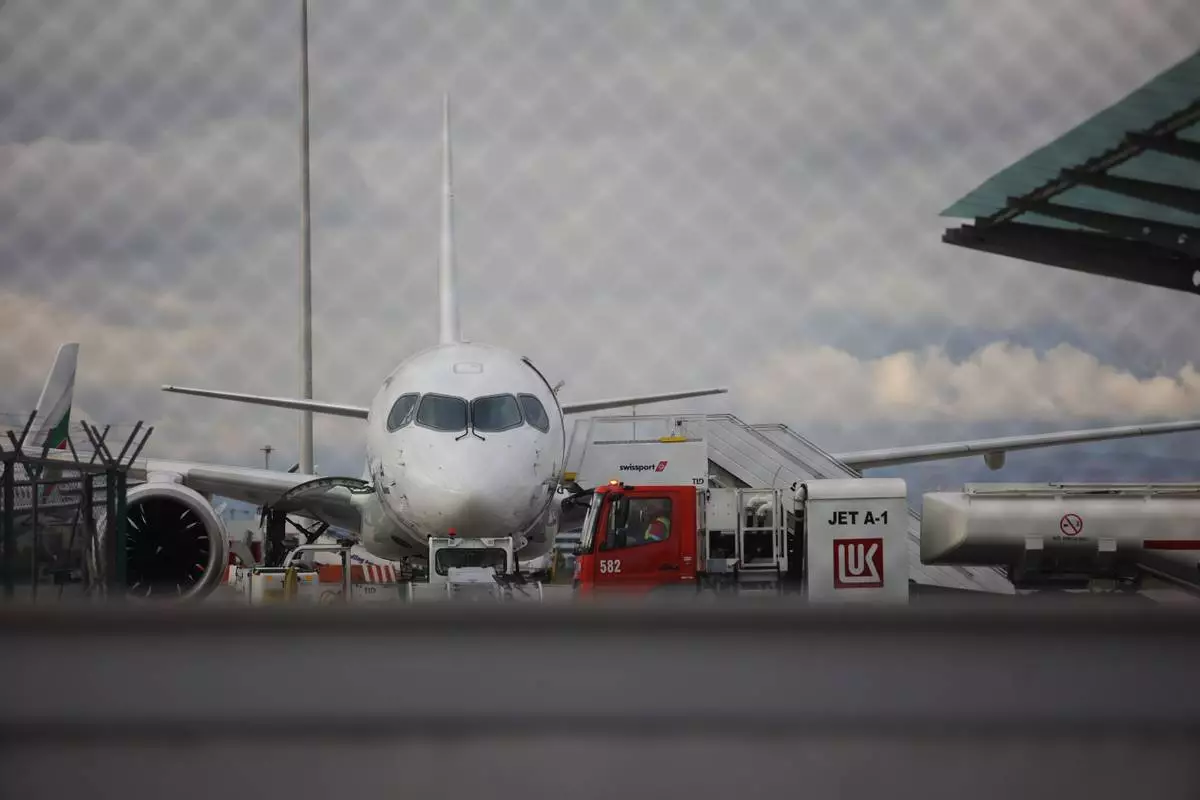
An airplane seen at Sofia's Vasil Levski Airport in Bulgaria, Thursday, Nov. 5, 2026, as three Ryanair flights bound for Sofia, had to make emergency landings because of bomb threats on board. (AP Photo/Valentina Petrova)
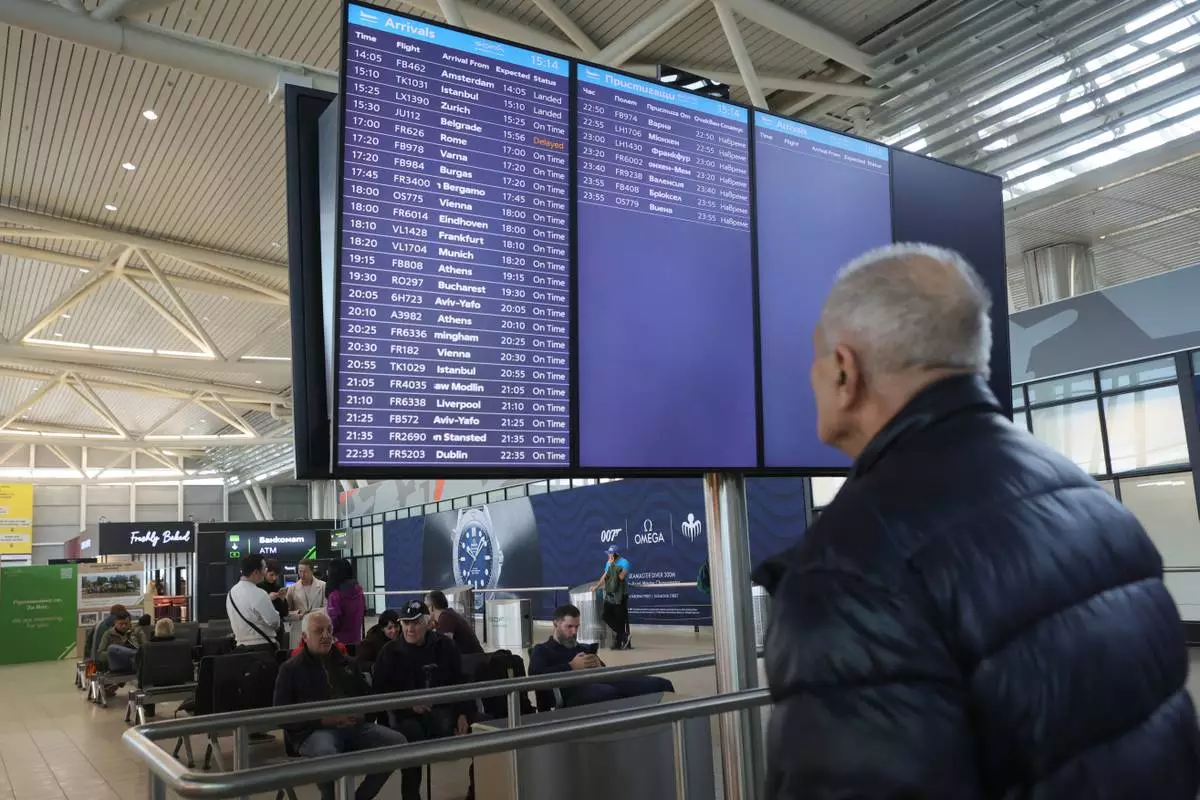
A man looks at flight arrival board at Sofia's Vasil Levski Airport in Bulgaria, Thursday, Nov. 5, 2026, as three Ryanair flights bound for Sofia, Bulgaria, had to make emergency landings because of bomb threats on board. (AP Photo/Valentina Petrova)
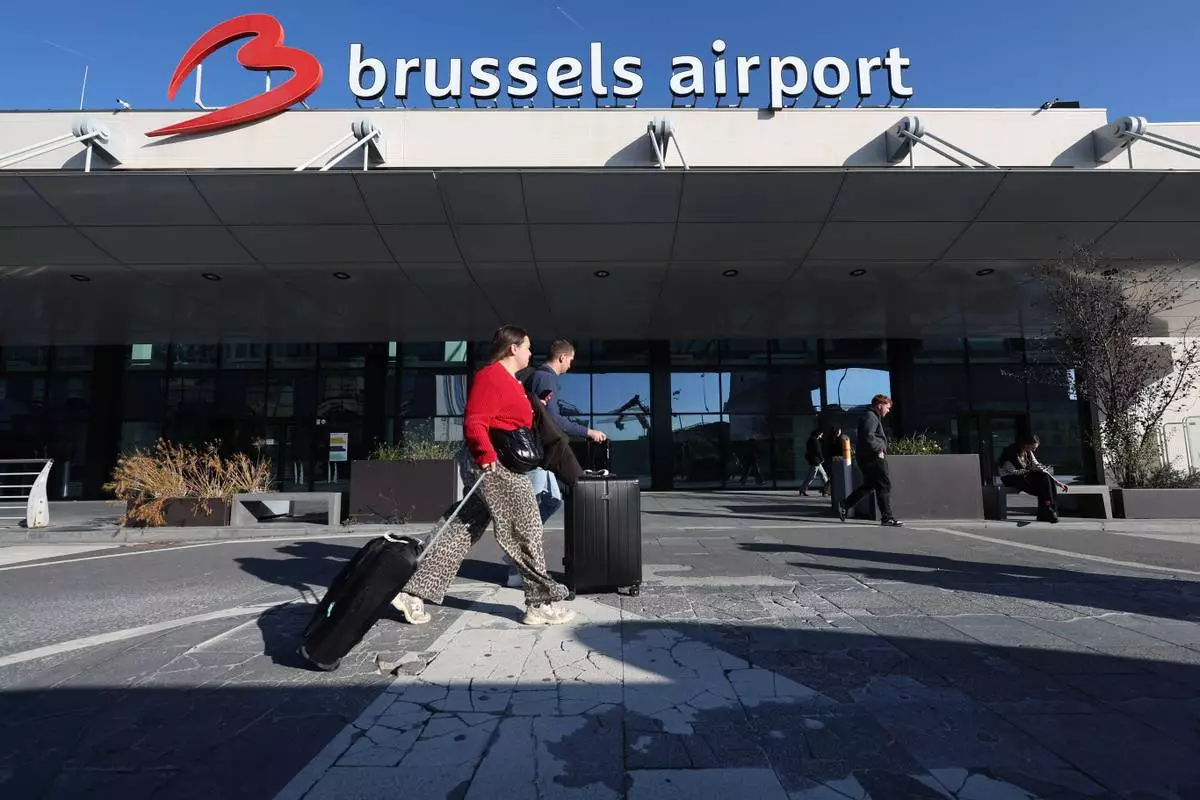
Passengers wheel their luggage outside the main entrance to departures at Brussels international airport in Zaventem, Belgium, Thursday, Nov. 5, 2026. (AP Photo/Omar Havana)
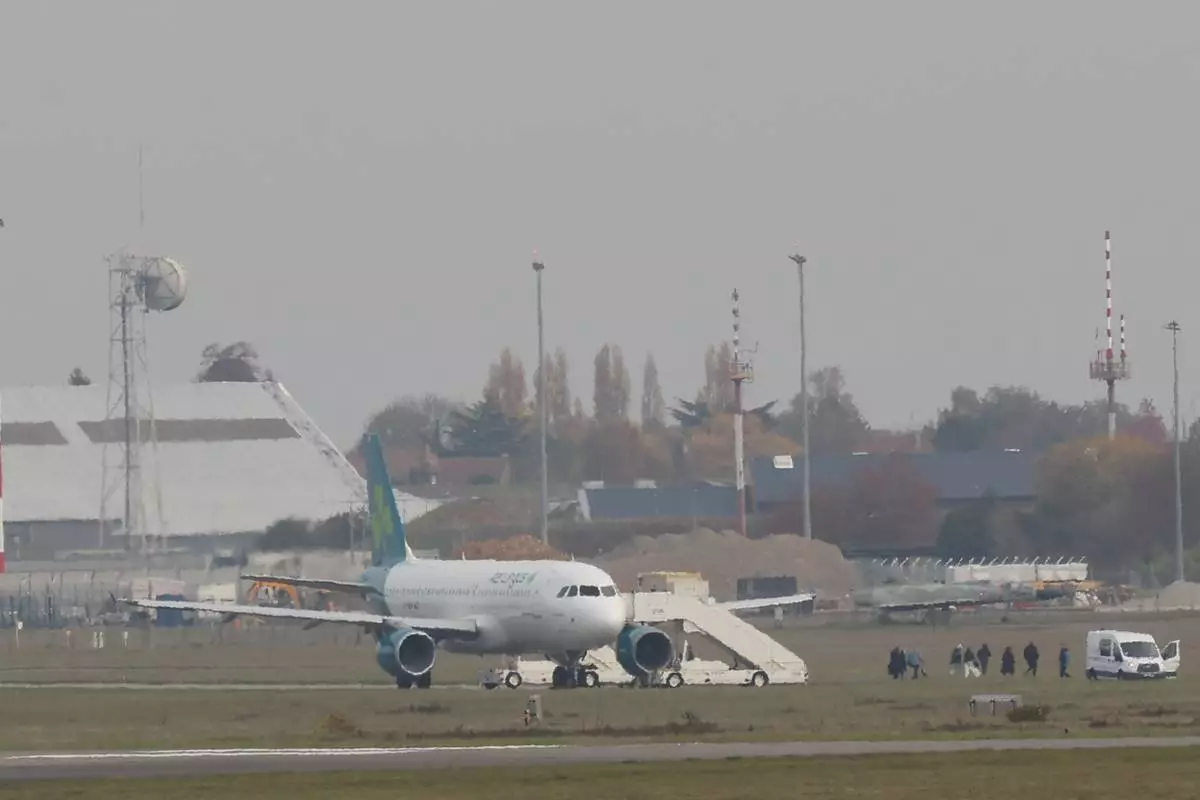
An Aer Lingus Airbus A320 aircraft is seen at Evreux military air base after a flight from Dublin to Rome was diverted to France amid reports of bomb threats targeting multiple flights across Europe, in Evreux, France, Thursday, Nov. 5, 2026. (AP Photo/Thomas Padilla)
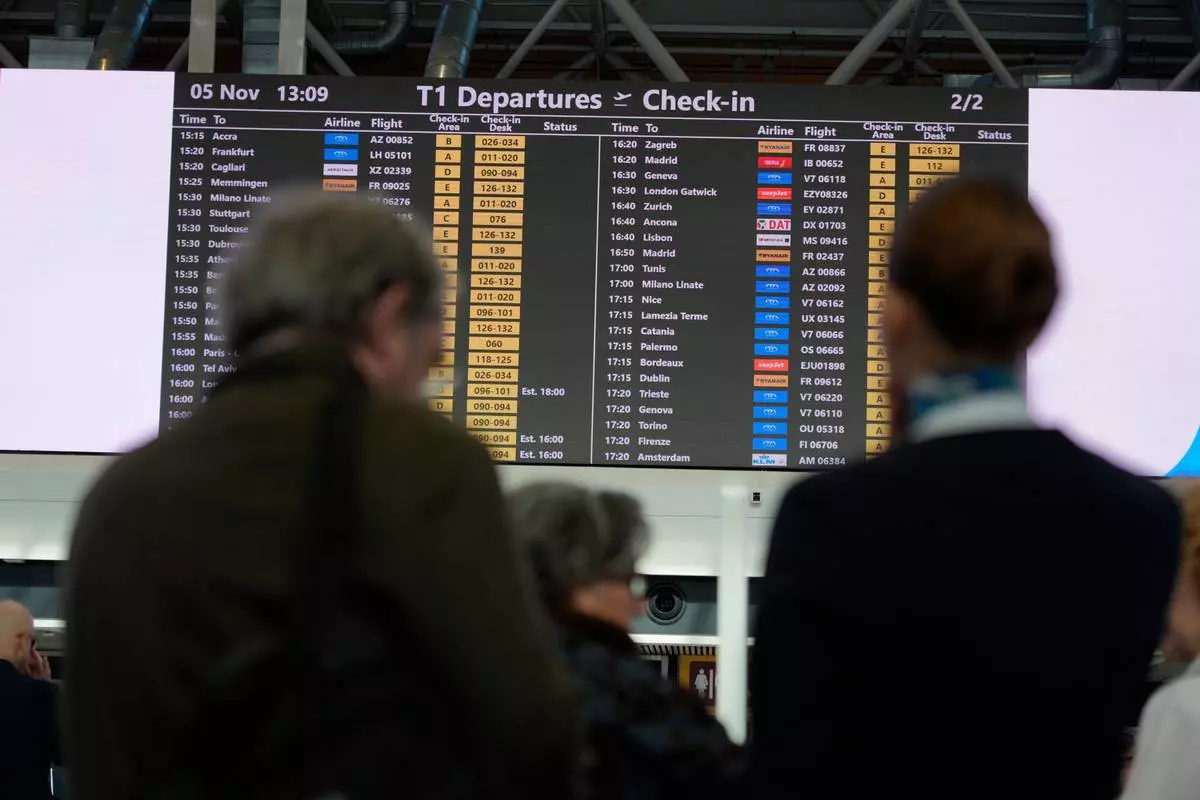
Passengers check their flight at Leonardo da Vinci International Airport in Fiumicino, near Rome, Thursday, Nov. 5, 2026, after a flight from Dublin to Rome was diverted to France amid reports of bomb threats targeting multiple flights across Europe. (AP Photo/Gregorio Borgia)
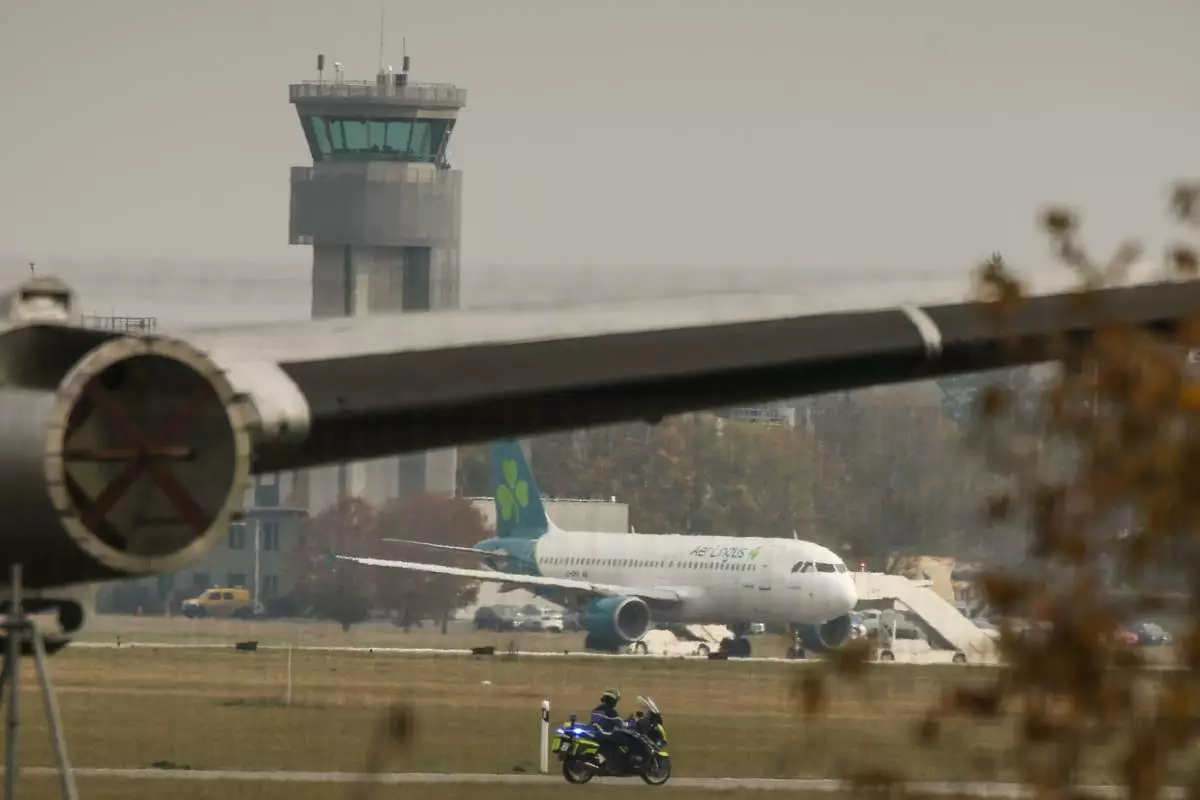
An Aer Lingus Airbus A320 aircraft is seen at Evreux military air base after a flight from Dublin to Rome was diverted to France amid reports of bomb threats targeting multiple flights across Europe, in Evreux, France, Thursday, Nov. 5, 2026. (AP Photo/Thomas Padilla)
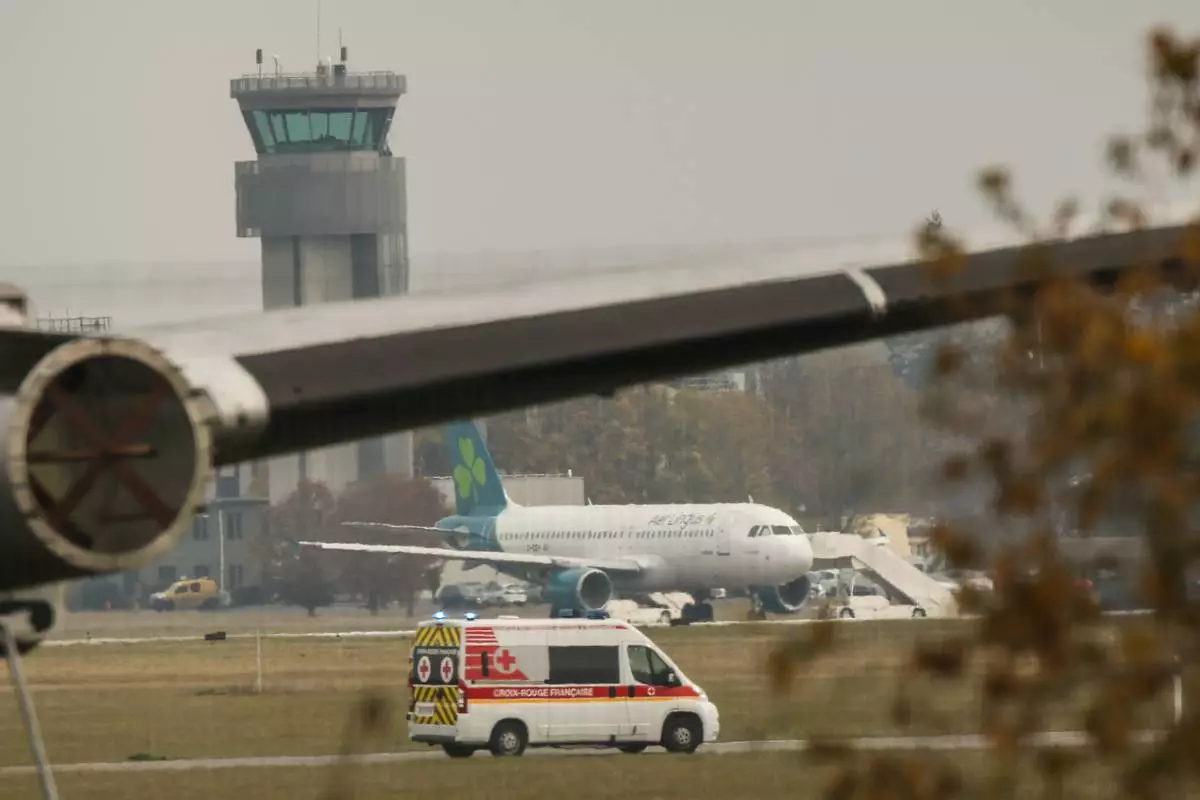
An Aer Lingus Airbus A320 aircraft is seen at Evreux military air base after a flight from Dublin to Rome was diverted to France amid reports of bomb threats targeting multiple flights across Europe, in Evreux, France, Thursday, Nov. 5, 2026. (AP Photo/Thomas Padilla)