WASHINGTON (AP) — The sweeping victories that led Democrats to their largest congressional majority in decades did little to resolve the party’s long-term debate over its identity and what it should stand for.
Tuesday's winners spanned the ideological spectrum and ranged from establishment veterans to political outsiders. Progressives achieved breakthrough victories in Senate races in Michigan and Maine, along with wins in competitive House races. More moderate Democrats scored stunning upsets in Republican strongholds such as Kansas and South Carolina, while flipping North Carolina and holding Georgia.
Click to Gallery
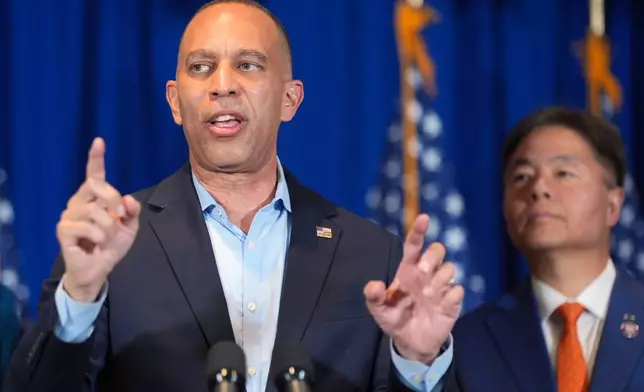
House Democratic Leader Hakeem Jeffries, D-N.Y., speaks at a news conference in Washington, Wednesday, Nov. 4, 2026, as Rep. Ted Lieu, D-Calif., vice chair of the House Democratic Caucus, listens. (AP Photo/J. Scott Applewhite)
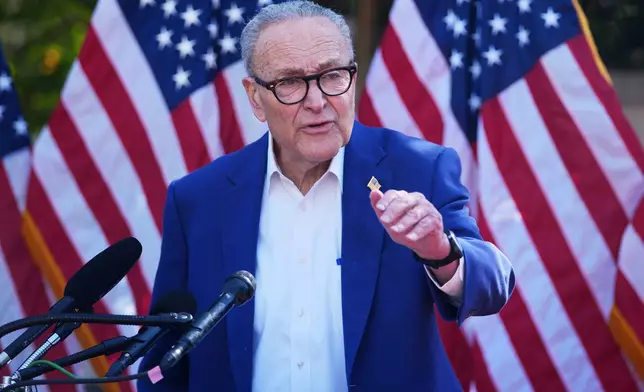
Senate Minority Leader Chuck Schumer, D-N.Y., speaks at the Democratic Senatorial Campaign Committee office, Wednesday, Nov. 4, 2026, in Washington. (AP Photo/Allison Robbert)
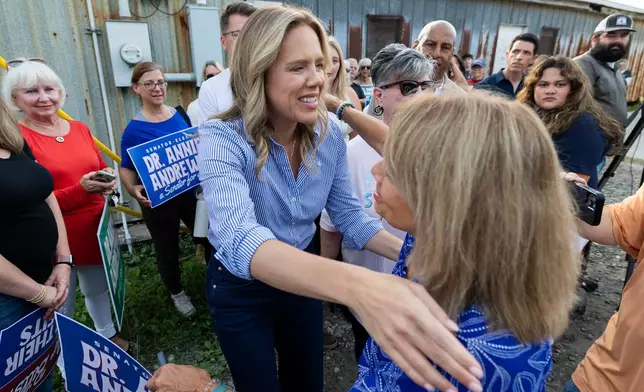
Dr. Annie Andrews, Democratic U.S. senator-elect, thanks her supporters during a news conference on Shem Creek in Mount Pleasant, S.C., Wednesday, Nov. 4, 2026. (AP Photo/Mic Smith)
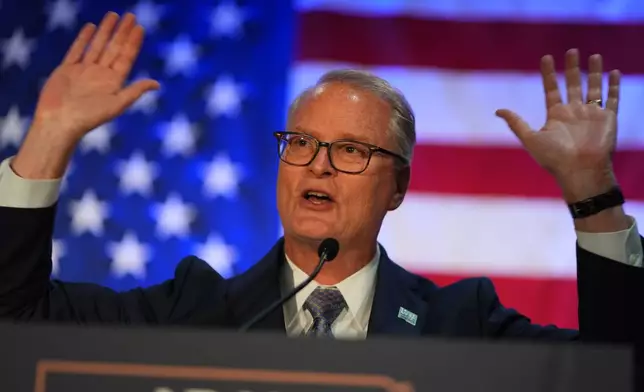
Democratic Senate candidate Adam Hamilton speaks at an election night event, Tuesday, Nov. 3, 2026, in Overland Park, Kansas. (AP Photo/Charlie Riedel)
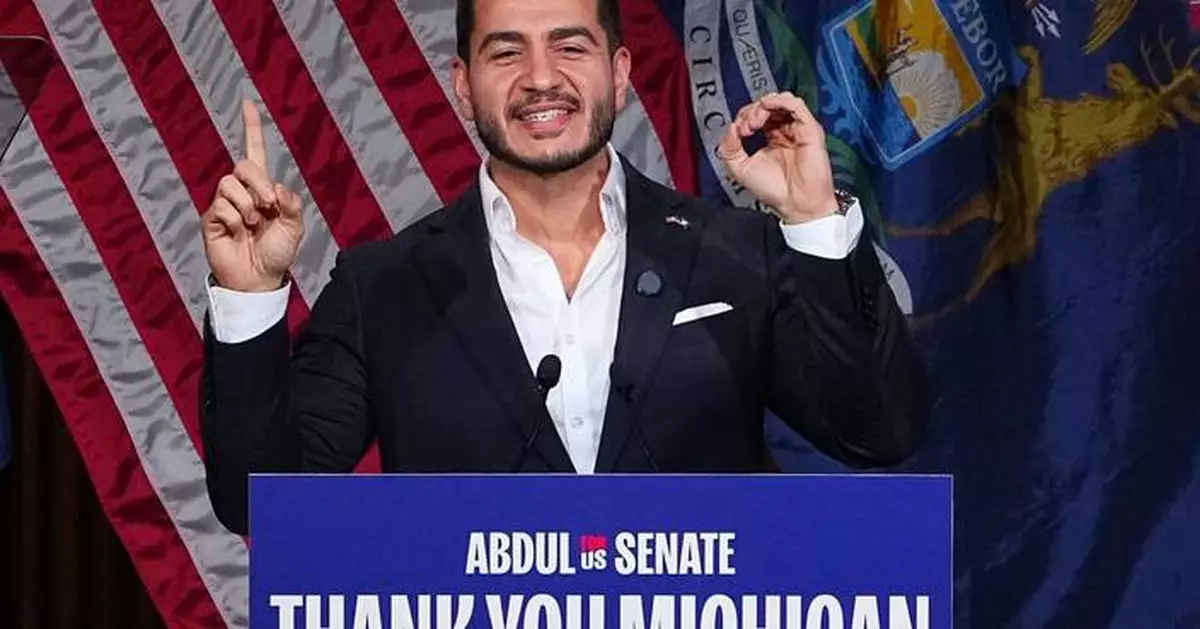
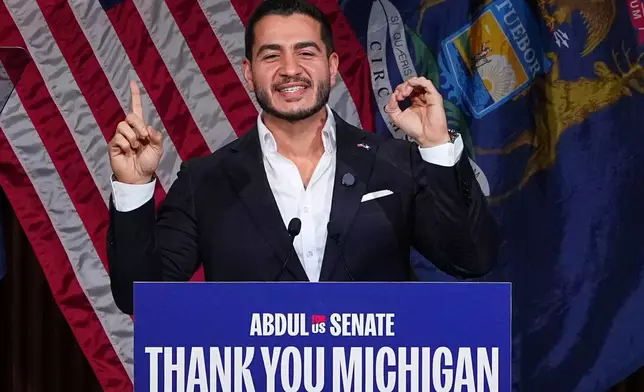
Michigan Democratic Senate candidate Abdul El-Sayed speaks at an election night event, early Wednesday, Nov. 4, 2026, in Detroit. (AP Photo/Julia Demaree Nikhinson)
The results gave competing factions within the party reason to believe their approach was the right one, potentially deepening a debate over how Democrats should govern their new congressional majorities and position themselves for the 2028 presidential election.
“Midterm elections are primarily a referendum on the party in power,” Sen. Chris Van Hollen, a progressive Maryland Democrat, told The Associated Press. “But we should be clear that that doesn’t translate automatically into support for Democrats. We need to earn the support of voters.”
The larger fight over the party’s direction is expected to be central to the upcoming presidential primary, when a potentially crowded field of candidates will compete to define what Democrats should stand for after Trump’s second term.
“I think that debate will play out in 2028, and there should be an ideological brawl,” said California Rep. Ro Khanna, who said he would spend the holidays considering his own presidential ambitions.
Progressives had a lot on the line in the midterms, especially in the Senate races in Michigan and Maine, where candidates were running on unapologetically progressive platforms in what were expected to be the most crucial Senate races.
In Michigan, Abdul El-Sayed — who was backed early by Sen. Bernie Sanders and joined late on the campaign trail by Rep. Alexandria Ocasio-Cortez — won in convincing fashion in one of the nation's premier swing states. Much of his campaign was run against the Democratic establishment, with his primary opponent backed by Senate Democratic leader Chuck Schumer. He also was significantly outspent in both the primary and general election.
In Maine, progressive Troy Jackson defeated longtime GOP Sen. Susan Collins after a late entry in the race. Other progressives also won across the country in battleground House races, including Michigan's Will Lawrence and California's Randy Villegas, who also won tough Democratic primaries.
Both El-Sayed and Villegas made clear in interviews with the AP that they don't intend to stand down when they get to Washington.
“I intend to be the kind of senator I have been as a candidate. To go and force the conversation about who we are and who we want to be,” El-Sayed said.
Villegas noted that progressives “had to beat our own party,” saying it shows that “when I get to Congress, I am not going there to do the bidding of any political party or leader.”
More moderate Democrats also scored big victories, particularly in swing state governor’s races. David Crowley defeated Republican Tom Tiffany by about 8 percentage points in Wisconsin, while Jocelyn Benson won Michigan’s governor’s race by nearly 11 points — almost four points more than El-Sayed's margin of victory.
The AP Voter Poll found that moderates made up a larger share of Democrats’ winning coalition than in recent elections. About half of voters who backed Democratic House candidates identified as moderates, compared with roughly 4 in 10 in the 2024, 2022 and 2018 elections. In key Senate races that flipped for Democrats, including Kansas, Iowa and North Carolina, moderates made up about half of the winning candidates’ voters.
But the poll also showed an ideological divide within the Democratic coalition. About one-third of voters who backed Democratic candidates identified as democratic socialists, including just under half of those ages 18 to 29, compared with about one-quarter of voters ages 65 and older.
Rahm Emanuel, the former congressman and White House chief of staff who is openly considering a 2028 presidential bid, argued that Democrats should pay particular attention to the candidates who flipped Republican-held seats.
“The people that flip red to blue, they’re the majority makers,” Emanuel said in an interview. “So you better be paying attention to them.”
House Democratic leader Hakeem Jeffries and Schumer both got the majorities they sought. But those victories come with the challenge of leading ideologically diverse caucuses that include some members who campaigned against their leadership.
While Schumer and Jeffries are both expected to win another term as leader, the surrounding debate has already begun.
“My view is we need to have a full and honest discussion,” Van Hollen said when asked about supporting Schumer. “Whoever runs for leader should be able to lay out a clear vision about how we're going to use this power.”
El-Sayed similarly wouldn't commit either way, saying he would wait to see "what the options look like." He added that “we need new leadership.”
Even with control of both chambers, Democrats will face limits on their power. Trump retains veto authority, which he has already threatened to use, while Democrats will gain broad oversight and subpoena powers. But congressional leaders will also have to reconcile demands from an expanded progressive wing with those of the more moderate New Democrat Coalition and fiscally conservative Blue Dog Coalition.
Asked Wednesday about calls from the left to advance Medicare for All, Jeffries instead pointed to areas of agreement.
“What I think we all support — progressives, New Dems and Blue Dogs — is to move forward aggressively to reverse the Medicaid cuts and to move forward aggressively to extend the Affordable Care Act tax credits,” he said.
Incoming Rep. Christina Bohannan, who defeated Republican Rep. Mariannette Miller-Meeks in a competitive House district, said Wednesday that she’s pleased to hear most of the Democrats joining the new House majority focused on lowering costs rather than “political games.” As long as fellow Democratic members stay focused on affordability “we’re going to get along great,” she said.
“People in districts like mine that are very mixed politically — they are so tired of the politics as usual,” Bohannan said.
Even before Senate races in Alaska and Mississippi had been decided, potential 2028 presidential contenders were holding calls with reporters to outline their visions for the party’s future — or, in the case of Illinois Gov. JB Pritzker, heading to Washington to make their case.
Pritzker was scheduled to speak Thursday at the Center for American Progress, a day after unveiling a 200-point policy agenda for the incoming Democratic Congress that calls for reversing Trump administration policies and expanding access to health care.
Van Hollen similarly said he was “kicking the tires” on a 2028 run and said the election revealed a “desire to unite behind a more populist agenda.”
“This debate that is kicking off with these elections about the future of the Democratic Party will determine whether Democrats are elected to the White House,” Van Hollen said.
Associated Press writers Hannah Fingerhut in Des Moines, Iowa, and Jonathan J. Cooper in Washington contributed to this report.
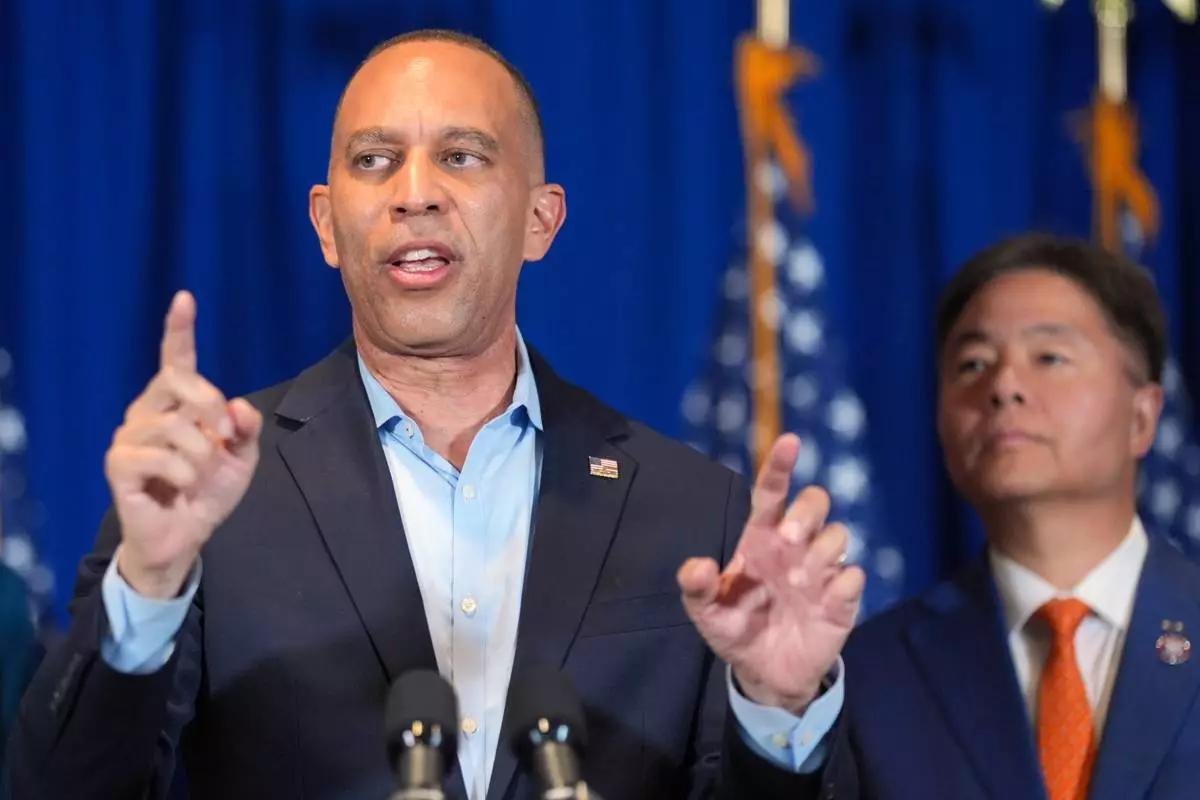
House Democratic Leader Hakeem Jeffries, D-N.Y., speaks at a news conference in Washington, Wednesday, Nov. 4, 2026, as Rep. Ted Lieu, D-Calif., vice chair of the House Democratic Caucus, listens. (AP Photo/J. Scott Applewhite)
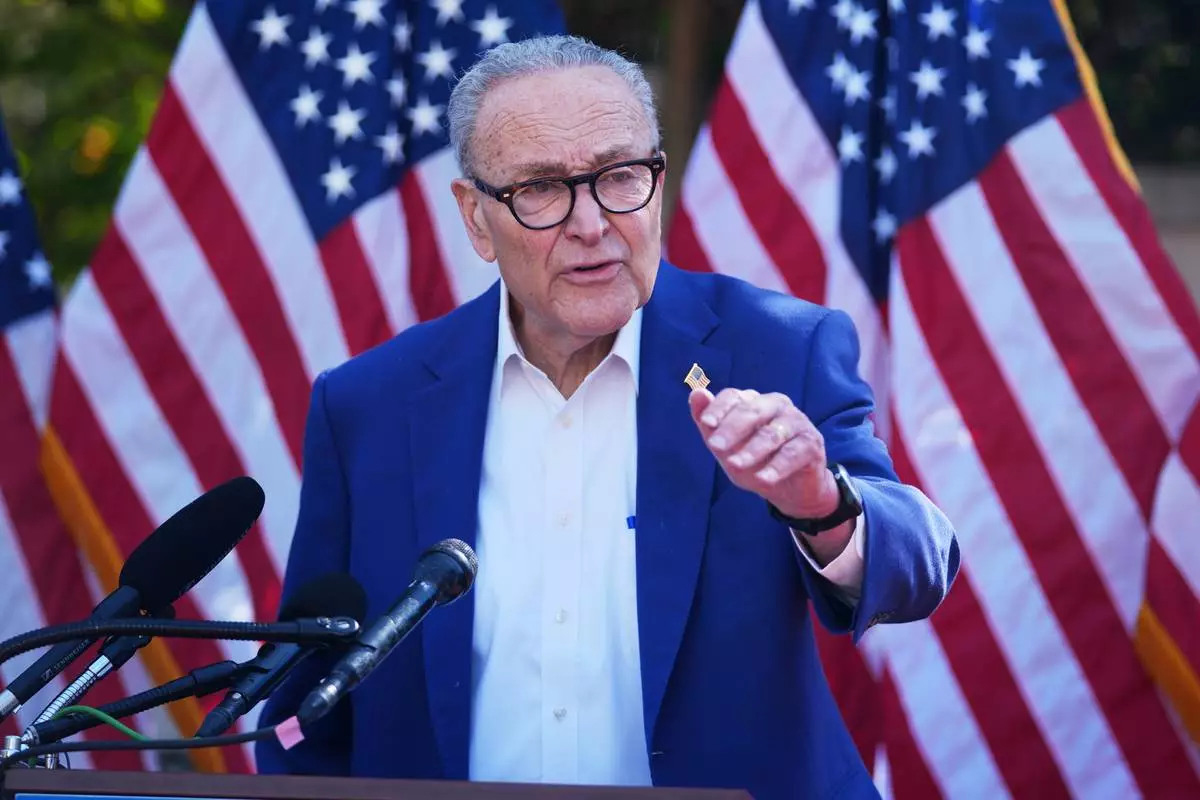
Senate Minority Leader Chuck Schumer, D-N.Y., speaks at the Democratic Senatorial Campaign Committee office, Wednesday, Nov. 4, 2026, in Washington. (AP Photo/Allison Robbert)
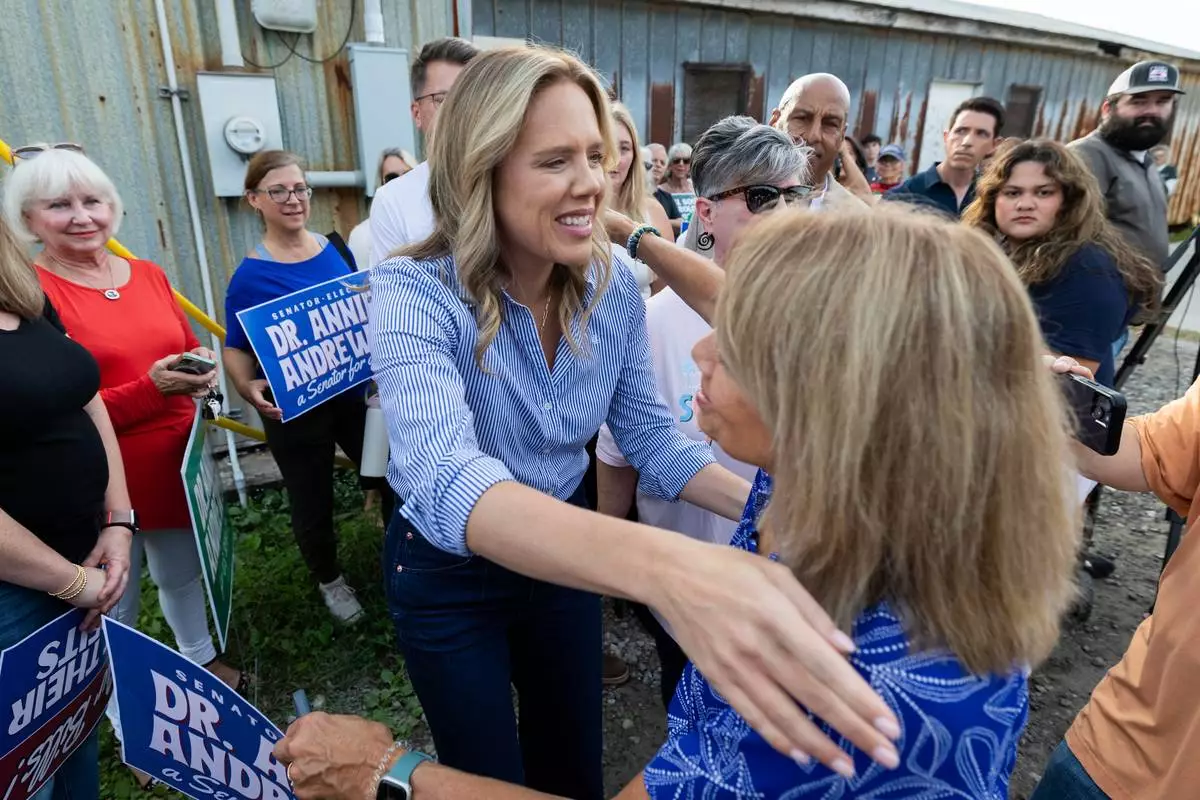
Dr. Annie Andrews, Democratic U.S. senator-elect, thanks her supporters during a news conference on Shem Creek in Mount Pleasant, S.C., Wednesday, Nov. 4, 2026. (AP Photo/Mic Smith)
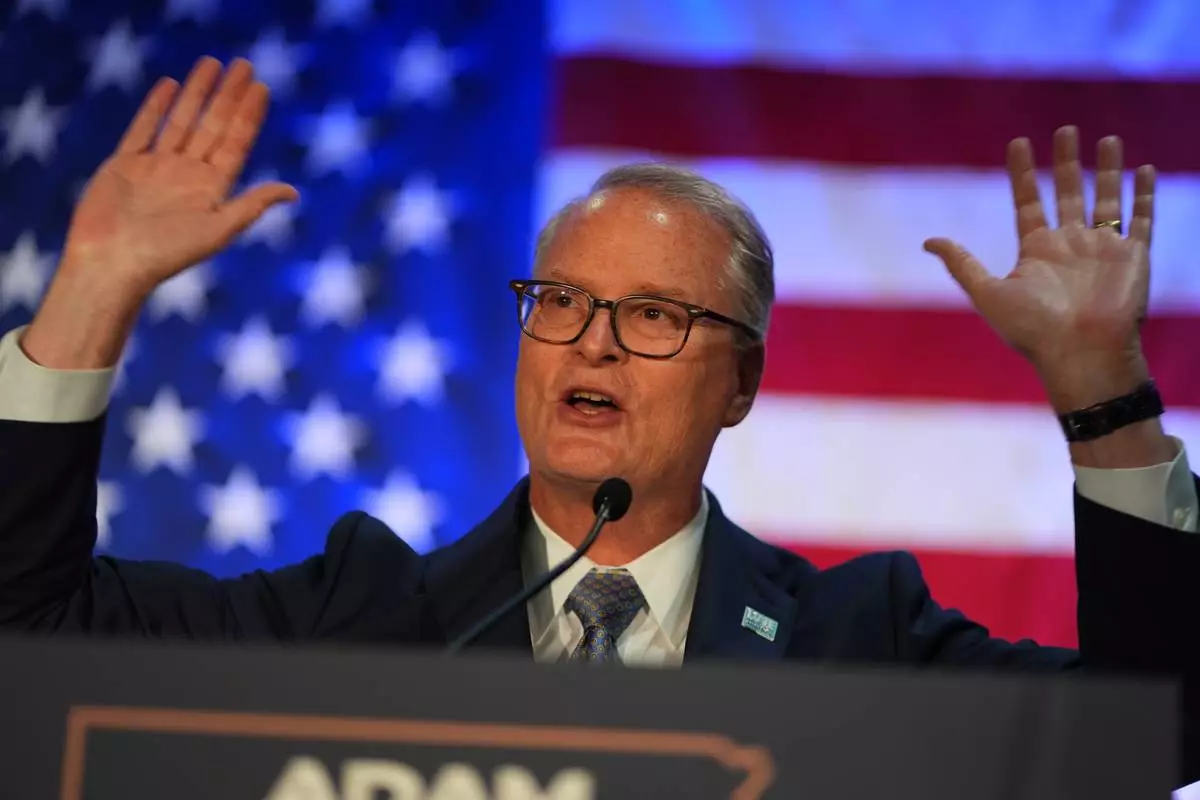
Democratic Senate candidate Adam Hamilton speaks at an election night event, Tuesday, Nov. 3, 2026, in Overland Park, Kansas. (AP Photo/Charlie Riedel)
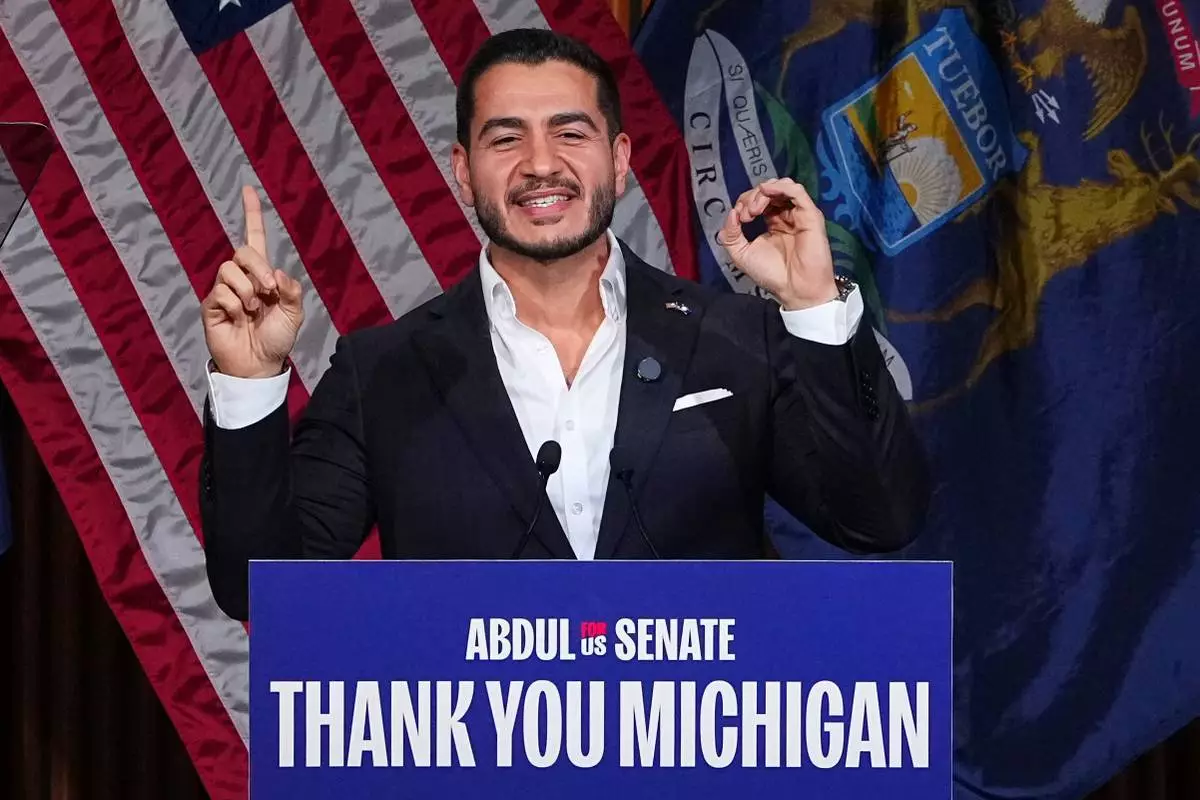
Michigan Democratic Senate candidate Abdul El-Sayed speaks at an election night event, early Wednesday, Nov. 4, 2026, in Detroit. (AP Photo/Julia Demaree Nikhinson)
Alaskans are awaiting more results from key races on the general election ballot, including a bitterly fought U.S. Senate campaign and an open seat for governor. A ballot measure seeking to repeal Alaska’s unique system of open primaries and ranked vote general elections was also too early to call.
The midterm election blowout has set up a new era in Washington, with Democrats eager to meet voter demands for change, while Republicans watched their congressional majorities evaporate in a revolt against President Donald Trump’s policies. Democrats triumphed in several surprise upsets, marking a decisive rejection of unified GOP control of the House and Senate. See the full election results.
Trump acknowledged the Iran war affected the midterms, suggesting voters were frustrated by surging gas prices that have been a byproduct of the more than 8-month-old conflict. He struck a conciliatory tone earlier, suggesting he could work with the Democrats but later threatened to use his veto power to strike down their agenda.
The fallout for Republicans is only beginning. Vice President JD Vance, a 2028 presidential contender, blamed the war in Iran for Republicans’ midterm wipeout. And Mike Johnson of Louisiana will not seek reelection as House speaker, according to two people familiar with the matter.
Here's the latest:
Hinojosa made that pledge in her first press conference since beating Republican Gov. Greg Abbott, becoming one of several Democrats who won statewide in Texas for the first time in more than 30 years.
“People are tired of the divisions, tired of the fighting, tired of the culture wars,” said Hinojosa, “I’m going to be a governor for all of Texas.”
She then introduced Ernest Bailes, who described himself as a conservative Republican who would be part of her transition team.
“I believe in Gina and I have faith that we will be able to do good things for the state of Texas,” he said. “We will put partisanship aside.”
Crowley, a Democrat, is the first Black person elected governor in Wisconsin.
He deflected questions about the historic nature of his win at a news conference the day after the election. But in an interview with The Associated Press on Thursday, Crowley said “it has sunk in a little bit more.”
“For me, it’s about making sure I’m not the last,” he said. “What I’m going to be remembered for is what I do in the seat and the results that we deliver.”
Crowley referenced the song from the musical “Hamilton” about the importance of being “in the room where it happens.”
“Being in a room where it happens doesn’t mean anything unless you can actually make an impact,” he said. “And that’s really my focus.”
Nithya Raman, a little-known Los Angeles City Council member backed by the Democratic Socialists of America, has defeated Mayor Karen Bass, an upset that will alter the trajectory of the nation’s second largest city.
The India-born Raman’s upstart campaign marked a generational shift at City Hall as voters followed the lead of New York, where democratic socialist Zohran Mamdani was elected last year. Raman, though, never attracted the same level of national attention and stressed her willingness to break with the progressive party at times during the campaign.
Her entry into the race marked a stunning change of heart after she had initially endorsed Bass, once her ally. She said the city had reached a “breaking point” and announced her own candidacy just before the filing deadline.
▶ Read more
Senate Democratic leader Chuck Schumer is vowing that Democrats will not allow President Donald Trump to put “a right-winger” on the Supreme Court once they take power, raising the possibility that his party could block a presidential nominee if there is a vacancy in the next two years.
In an interview with The Associated Press on Thursday, Schumer would not say if he would hold a Supreme Court vacancy open until after the next presidential election, as former Senate Republican Leader Mitch McConnell did in 2016. But he said that Democrats are “not going to allow any crappy nominees” to be confirmed to the Supreme Court — or to the lower courts or Trump’s Cabinet, either.
“The bottom line is we’re not going to allow a right-winger on the court,” Schumer said.
Schumer’s pledge came two days after Democrats won a decisive Senate majority in the midterm elections.
▶ Read more
The embattled incumbent said in a statement Thursday that she called Raman, a fellow Democrat, to congratulate her on her victory.
The Associated Press has not called the race.
“While this is not the outcome we hoped for, the people of Los Angeles have spoken,” Bass said. “I have committed to ensuring a smooth and seamless transition. Moving this city forward is what Los Angeles needs from all of us.”
Rep. Jamie Raskin, the incoming House Judiciary Committee chairman, noted Thursday at a Center for American Progress forum that he’s written 200-plus investigative letters to the Department of Justice and White House during Trump’s second presidency.
Anyone wondering what his committee will prioritize next year can consult that public record, he said.
“It’s a pretty good trail of crumbs of what we’re going to do,” Raskin said. “This is not a game of surprise or gotcha. We’re talking about trying to defend our system of government against authoritarians here.”
Asked about Trump potentially pardoning his lieutenants, Raskin noted any recipient still would be subject to civil liability and state criminal prosecution. He also argued that Trump issuing any pardon related to criminal activity he was involved in personally could constitute an impeachable offense under the Constitution’s “high crimes and misdemeanors” standard.
The Trump administration on Thursday escalated its economic campaign against Cuba, issuing a determination that clears the path for sanctions on several crucial sectors of the island’s economy.
Those sectors include electronics, manufacturing, marine and technology. The State Department also ordered penalties on China-based suppliers of Cuba’s military forces.
“The identification of these new sectors targets the regime and those who enable it, not the Cuban people,” Secretary of State Marco Rubio said in a statement, insisting that humanitarian aid is still authorized to enter.
A ballot measure approved Tuesday by Washington voters will prohibit transgender athletes from participating in girls’ school sports.
Proponents say the new law will increase fairness and safety in girls’ sports. Opponents had argued the measure could require invasive exams of many athletes to weed out a small number of transgender ones.
Similar laws are common in Republican-controlled states. But lawmakers in Washington and other Democratic-dominated states have not previously advanced them.
Republicans have emphasized the issue in recent years — and a growing number of Democratic politicians have aligned with them, at least partly.
The measure was placed on the Washington ballot through a citizens’ initiative. The state Legislature could change or repeal the law after two years with a simple majority, or sooner with support of two-thirds of both the House and Senate.
Fresh off winning a third term, the potential Democratic presidential contender said Thursday he wants to see the new Congress “walk and chew gum at the same time” by helping lower consumer costs and still conducting accountability hearings and investigations into the Trump administration.
“That could lead possibly to impeachment,” Pritzker said at a Center for American Progress forum, but that shouldn’t be the initial point.
The long-term goal, Pritzker argued, is to gather details about Trump’s and his associates’ activity so “the American public could understand what it is, then we could actually take action to prevent it next time.”
Without calling names, Pritzker added, “There are certain officials other than the president that ought to be targets.”
Republican congressional candidate David Flippo has conceded the race for Nevada’s 2nd Congressional District and congratulated Teresa Benitez-Thompson, the first Democrat to win the historically red seat in northern Nevada.
“The voters have spoken, and I respect their decision,” he said in a Wednesday night statement.
The Air Force veteran and businessowner campaigned as a major Trump ally with strong conservative values. He faced major scrutiny since he moved from southern Nevada to join the race after longtime Republican Rep. Mark Amodei announced his retirement.
Flippo was accused of exaggerating his military awards and had delayed filing required financial disclosures. Amodei refused to endorse Flippo, calling him a fraud.
In his concession statement, Flippo said establishment Republicans and “their allies in the media in Nevada, Montana, and Texas turned against their own party, costing races across the country.”
The likely incoming majority leader said the battle over Democratic Party identity is a distraction and that any governing majority requires a coalition of “different voices.”
“Populism and moderation are not mutually exclusive,” Schumer said, arguing that all victorious Democrats on Tuesday agreed on the fundamental tasks of lowering costs, stopping the Iran war, standing up to Trump and addressing corruption.
“Unity does not mean blind fealty to a party line,” Schumer said. “Just look at what that’s done to the GOP. Unity means linking arms with people you will not agree with on every issue so that you can make progress on the more important areas where you agree.”
Schumer said Democrats flipped so many Senate seats by having “candidates who fit their states, who ran the gamut from proud progressives to lifelong moderates, all united by one simple mission: make the government work for the people.”
A Democratic candidate has conceded in a U.S. House race in Maine that was slated to go to ranked choice voting.
The Associated Press has not yet called the race between Republican Paul LePage and Democrat Matt Dunlap in the Maine 2nd Congressional District. State officials said Thursday the race would proceed to a ranked count because neither candidate broke 50% of the popular vote.
Dunlap’s campaign said Thursday that it does not “currently believe that ranked choice voting will change the results of this race.” LePage said in a statement that he was confident he had won.
A win by LePage would be a rare blue seat that flipped red this year. Democratic Rep. Jared Golden did not seek reelection.
LePage is a former governor of the state and an ally of President Donald Trump. Dunlap is a former Maine Secretary of State.
The New York Democrat and likely Senate majority leader said Thursday that the new Congress will work to answer voters’ concerns on “costs, chaos and corruption” regardless of whether Trump plays along.
“Will Trump sign all of it into law? Knowing Trump’s and Republicans’ intransigence, of course not,” Schumer said at the Center for American Progress.
Schumer said Democrats will try to curb Trump’s tariffs, the Iran war, ban federal elected officials from stock trades, and limit consumer costs from data center expansion.
Schumer said Republicans have to choose whether to participate or ensure another drubbing at the polls.
“If Donald Trump does spend the next year vetoing common sense legislation to lower costs and end corruption, this election,” Schumer said, “this absolute Republican catastrophe on election night 2026 will look like a good day compared to what will come down on Republicans in the 2028 election.”
A Maine race in which Republicans have a rare chance to flip a blue seat this year is headed to a ranked choice count, the state announced.
Republican Paul LePage and Democrat Matt Dunlap ran against each other to fill the seat that Democratic Rep. Jared Golden is vacating. The 2nd Congressional District covers much of rural Maine and is typically very competitive.
The secretary of state’s office said Thursday that neither candidate broke 50% of the vote, so the ranked second choices will come into play. There were only two candidates on the ballot, but use of write-in candidates allowed voters to pick second choices.
LePage declared victory in the race Wednesday. Dunlap’s campaign has said it is awaiting full results.
Ohio Gov. Mike DeWine says “a mighty wind” was responsible for sweeping so many fellow Republicans out of office Tuesday, brushing aside whether GOP gubernatorial nominee Vivek Ramaswamy’s controversial attack ad against Democratic Gov.-elect Amy Acton played a role.
The 79-year-old DeWine joked during the Impact Ohio postelection conference that “the elephant in the room” was now “the donkey in the room.”
When people didn’t laugh or applaud, he nudged the room, “Oh, c’mon.”
DeWine predicted that Acton, who previously served in his cabinet, would uphold Ohio’s tradition of governing from the middle. He said Ohio has a history of moderate Republican and moderate Democratic governors and he expects Acton to be one, too.
On Tuesday, Acton became the first Democrat in 20 years to win Ohio’s governor’s office and the first woman elected to the post.
Another wipeout for stocks tied to the build-out of AI data centers is overwhelming Wall Street and erasing gains from the day before, which marked the stock market’s best day in three months.
The S&P 500 fell 3.2% Thursday and is on track for its worst loss since President Donald Trump shook markets worldwide in 2025 with his “Liberation Day” tariffs. The Dow Jones Industrial Average dropped 1,079 points, and the Nasdaq composite tumbled 4.9%.
Stock markets worldwide felt pressure from continued drops for AI stocks as worries rose about possible moratoriums on further data centers following Democratic victories in the U.S. midterm elections.
Texas will send 14 Democrats to the U.S. House, a net gain of one seat that squashed Republicans’ hopes of gaining five seats through redistricting. Each congressional district voted more Democratic than its estimated 2024 presidential margin under the new boundaries, with shifts of more than 30 percentage points in the 9th, 15th and 28th Districts.
Curtis Hertel, chair of the state’s Democratic Party, said narratives about divisions among voters were false and that consistent messaging about affordability contributed to a “blue tsunami.”
“I don’t know how you could watch the election results and say that there are rifts,” Hertel told reporters during a virtual news conference.
Michigan Democratic Sen.-elect Abdul El-Sayed’s race was widely seen as a referendum on whether a progressive candidate could win a national seat. His campaign was driven in part by dissatisfaction with the political establishment.
Hertel said Democratic candidates in Michigan don’t have to be “one size fits all.”
“The difference for people is not which part of the party you come from. The difference is, are you going to fight for my family?” Hertel said.
More drops for AI chip stocks are dragging the U.S. market lower, even as much of Wall Street rises following strong profit reports from AppLovin, Tapestry and other companies.
The S&P 500 fell 1.8% Thursday and erased all of its gain from the prior day, which was its best in three months.
The Dow Jones Industrial Average dropped 403 points, and the Nasdaq composite fell 3%. AI-related stocks worldwide felt pressure from worries that Tuesday’s U.S. midterm elections could mean moratoriums for data centers in some areas, and South Korea’s Kospi index tumbled 5.3%.
In other markets, though, the initial knee-jerk reaction to the midterms faded. Oil prices recovered some of their sharp slides.
The Bank of England indicated Thursday that the sharp decline in energy prices after the U.S. midterm elections — if sustained — could limit the prospect of further interest rate hikes in the coming months.
After raising its main interest rate for the first time in more than three years to 4% from 3.75%, the bank said the outlook for U.K. borrowing costs largely hinges on what happens with the Iran war.
The heavy losses suffered by the Republican Party in the midterm elections have been followed by a sharp drop in energy prices. Many believe it’s now less likely Trump will launch fresh strikes on Iran, with Democrats gaining control of Congress early next year after their big wins this week. Many Republicans, including Vice President JD Vance on Wednesday, blamed the war for the party’s poor performance at the ballot box.
▶ Read more
__
This post has been updated to clarify that it's the first interest hike in three years, not nearly three years.
After President Donald Trump said he would accept the results of his party’s midterm rout, many of his loyalists followed suit even though they, too, are always a hair trigger away from branding a losing election rigged.
Across the country, great numbers of defeated Republican candidates conceded, congratulated their Democratic opponents in moments of grace and bowed to their fate.
Misinformation experts have multiple theories about why election denial claims have not spread as widely this time. One is the scale of the Democrats’ success.
People see “a lot of enthusiasm on the left,” said Jen Golbeck, a professor at the University of Maryland who studies conspiracy theories. “They see all of these races moving that way across the country in places that you never would have expected.” And it’s “really hard to say every single place cheated.”
It’s also possible Trump’s acceptance of the results set the tone for others.
▶ Read more
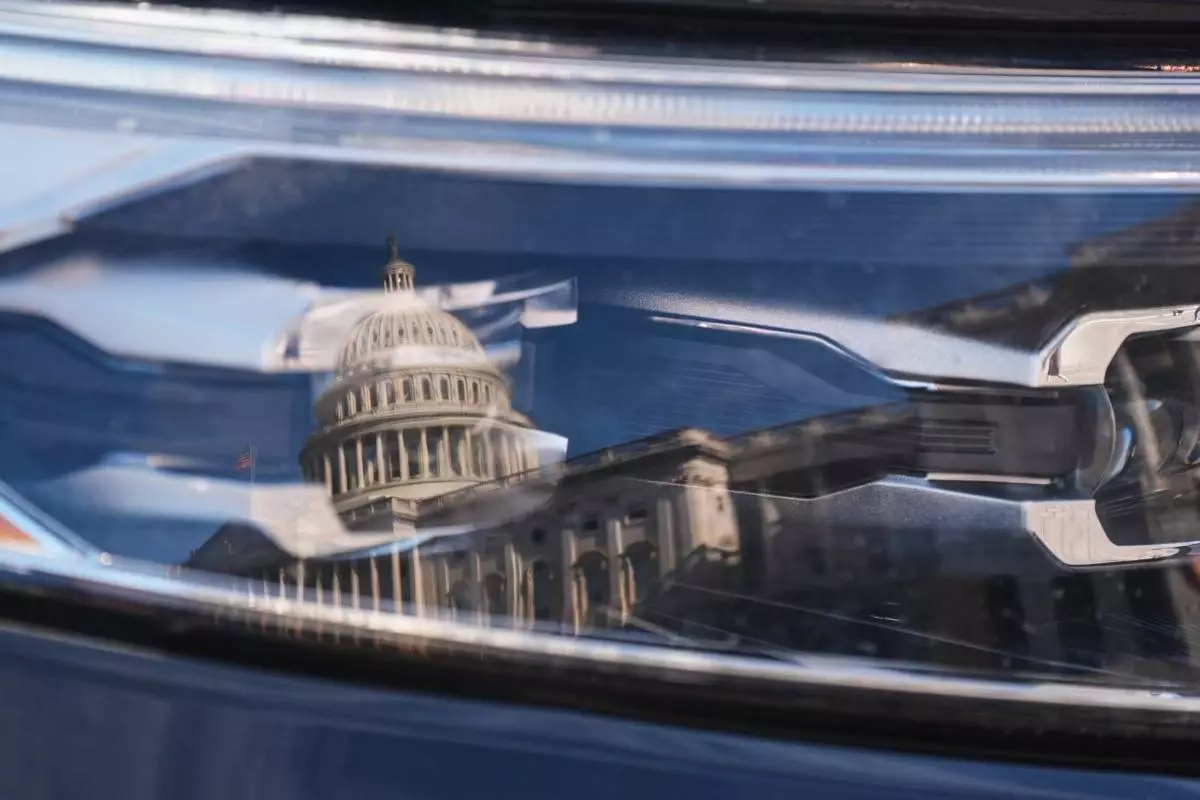
The U.S. Capitol dome is reflected in the body of a parked car, Wednesday Nov. 4, 2026, in Washington. (AP Photo/Mariam Zuhaib)
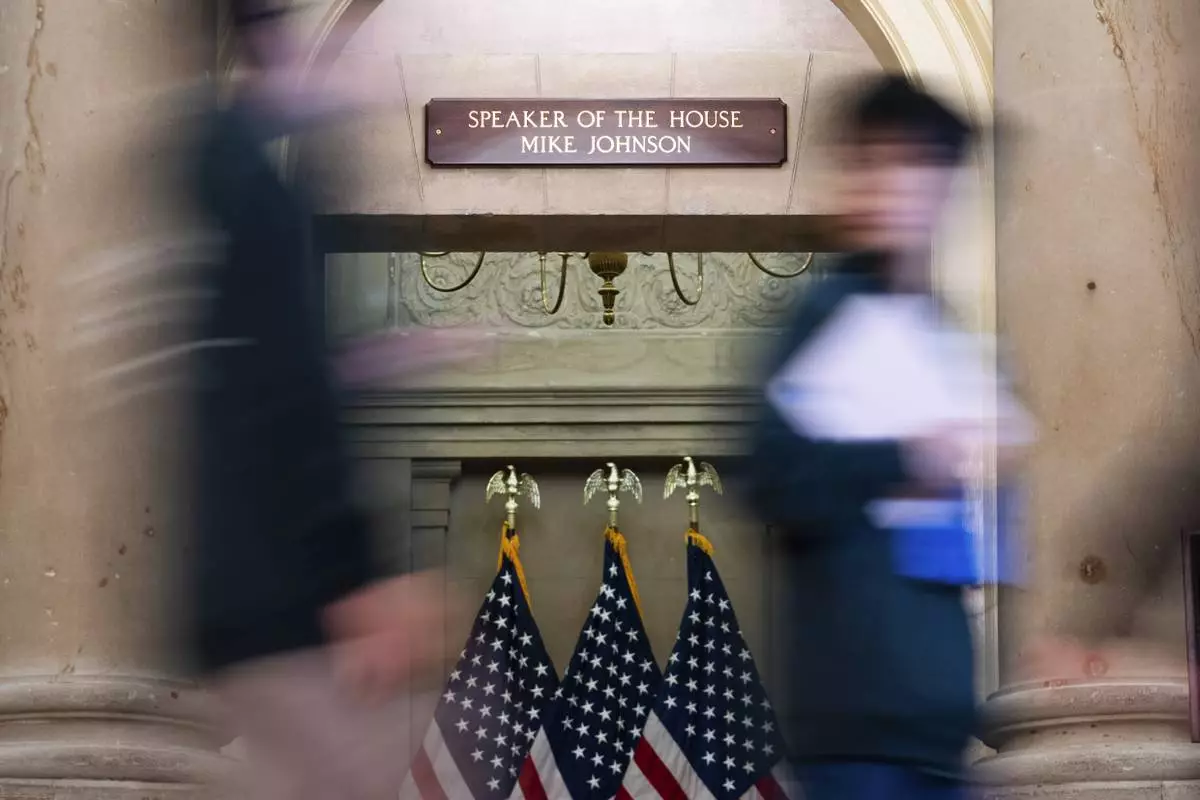
Scenes outside the office of House Speaker Mike Johnson, R-La., at the Capitol, Wednesday, Nov. 4, 2026, in Washington. (AP Photo/Allison Robbert)