Skip to Content Facebook Feature Image

In ‘Possible Love,’ a South Korean auteur returns with a story of marriage, labor and class

ENT

In ‘Possible Love,’ a South Korean auteur returns with a story of marriage, labor and class
ENT

ENT

In ‘Possible Love,’ a South Korean auteur returns with a story of marriage, labor and class

2026-11-06 13:04 Last Updated At:13:20

VENICE, Italy (AP) — There are some filmmakers who churn movies out like clockwork. And then there are others, like South Korean auteur Lee Chang-dong, who wait until they have something worthwhile to say. For movie lovers, it makes the arrival of his latest film “Possible Love,” now streaming on Netflix, something like an event.

His last film, “Burning,” a meditative thriller about three young people, was the first South Korean feature to be shortlisted for an Oscar, and was singled out by many critics as the best of 2018. And though South Korean cinema has soared at the Oscars since, Lee didn't feel rushed to get back in the mix as quickly as possible. This, he said, is not patience, exactly, but more of a pathological timidness.

“This is a big problem of mine,” the 72-year-old filmmaker told The Associated Press earlier this year, with the help of a translator. “With every film I do, I constantly ask myself, what meaning does this have? Is this a story worth telling?”

This time, he found himself drawn to the story of mass layoffs in his home country. In 2009, the Ssangyong Motor Co. laid off about one-third of its workforce, which led to a high-profile confrontation between police and workers who occupied the company’s plant south of Seoul for more than two months. A spate of suicides among Ssangyong workers and family members also followed the automaker’s restructuring.

“I thought that that particular event not only was going to change the labor market of Korea, but also Korean society as a whole,” Lee said. “I thought that it was going to be, indeed, a significant turning point, and I thought it was going to fundamentally change not only the lives of those laid off workers, but also just everyday ordinary people’s lives as well.”

Others have taken on the effects of the mounting debt, unemployment and desperation in the country in fiction before, including the brutally violent “Squid Game," and Park Chan-wook's satirical “No Other Choice.”

Lee's approach wasn't going to be either of those, but he couldn’t run away from the nagging question of whether or not he was worthy to tell this story. Was there meaning, he wondered, in making it a dramatic film and not a documentary? Then, about two years ago, his cowriter Oh Jung-mi had a breakthrough: Why not connect this story with the story of a filmmaker trying to capture it? And suddenly, it started to make sense.

But he’d been talking about it for so long that actor Jeon Do-yeon was a little suspicious when he reached out and asked if she wanted to be in the film. Jeon had starred in his 2007 drama “Secret Sunshine,” playing a young widow consumed by grief and anger after her son is murdered that would win her a best actress prize at the Cannes Film Festival.

“I’m personally such a big fan of his. I adore his films and I think his films are really precious,” Jeon said. “When he suggested that we work together on this film, we had been having discussions about it for about 10 years so I couldn’t actually really believe him … I kept asking for the script and only by reading the script would I truly believe that he was going to make this film.”

The script, she was happy to discover, was real, and her part was another special one: This time she would be playing Mi-ok, the optimistic spouse of a laid off autoworker, Ho-seok (Sul Kyung-gu). When a well-heeled documentary filmmaker Ye-ji ( “Parasite's” Cho Yeo-jeong ) approaches them about capturing their life and telling the story of laid off workers, she’s openhearted and eager to talk. Ho-seok, who is dealing with depression, is less open.

“She’s not able to get her husband the psychological help that she wants him to have in order for him to heal and recover, so she’s hoping by getting the help of the documentary filmmaker that he will get better in this way,” Jeon said.

Mi-ok is also entranced by Ye-ji’s husband, Sang-woo (Zo In-sung), a handsome and wealthy businessperson who, at least on the surface, seems to be a kind of ideal. At one point, Mi-ok fawningly compares him to Steve Jobs. And while Ye-ji and Mi-ok might appear to be developing a friendship, the fact that it’s in service of a documentary makes it less pure.

Lee, though in part telling a story about himself telling a story, made his filmmaker character a woman. In South Korea, he said there are many female documentary filmmakers.

“I think they also have a stronger sense of empathy and great emotional intelligence,” he said. “I also wanted her husband to be representing that force, that power of wealth and capital.”

The film also provided a chance to talk about masculinity through two different characters. Ho-seok, Lee said, “embodies a masculinity that really belongs to the typical Korean male. He has a very heavy sense of responsibility for his family. He treats his co-workers as his brothers.”

When he’s laid off from his job and beaten by the police, his loss of identity is profound and intense.

“He finds himself feeling completely empty, that he has nothing to offer,” Lee said. “On the other hand, Sang-woo represents a new kind of masculinity, one that maybe belongs to the new era, I would say. He is very kind, very humane. He’s also very soft. He’s the ever-helpful husband to Ye-ji, he’s also a good listener. However, all of that with a very, very tightly masked sense of violence.”

“Possible Love” has been racking up accolades and acclaim since the Venice Film Festival, where it won the runner-up prize. South Korea has also selected it as its official submission for best international feature at the 99th Academy Awards.

But before the film’s premiere in Venice, Lee brushed off the suggestion that people are eagerly awaiting new films from him, saying he doesn’t think that people place that much interest in his work.

“He really said that?” Jeon asked later.

When I assure her that he did, she paused and smiled and switched, ever so briefly, to English for the first time in the interview: “Liar,” she said.
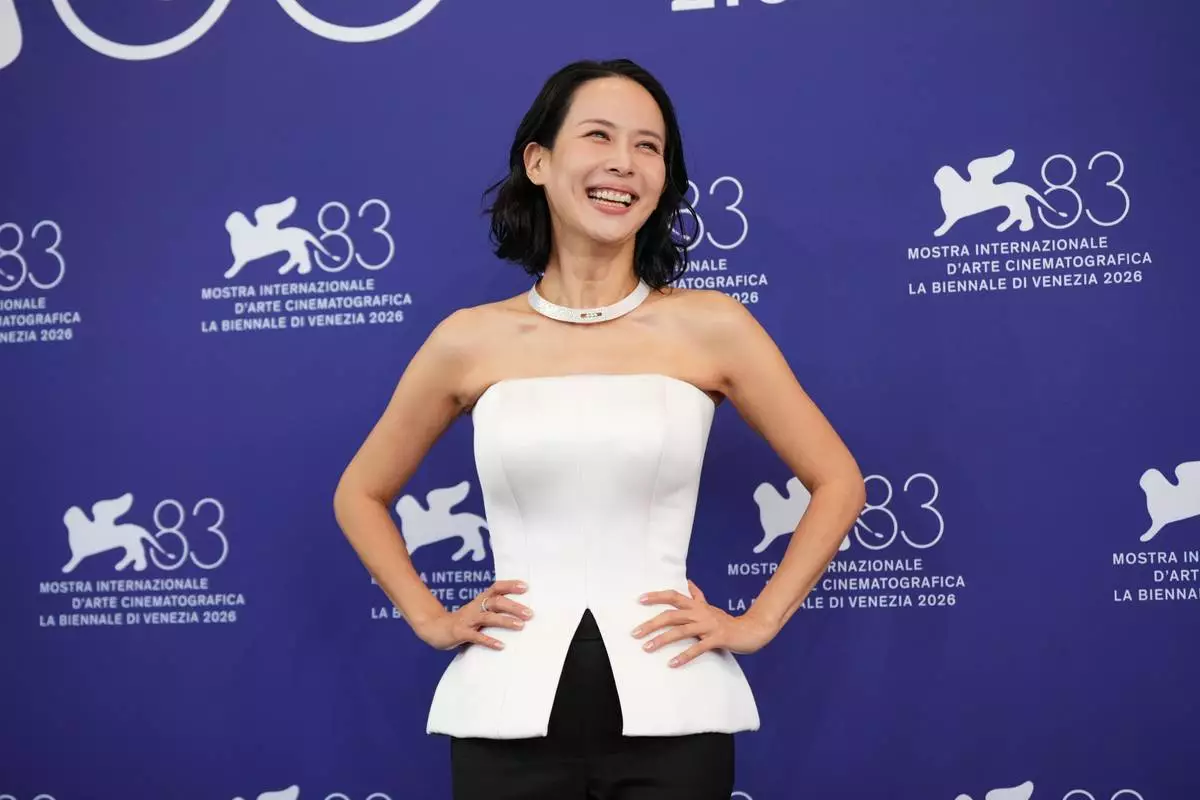
FILE - Cho Yeo-jeong poses for photographers at the photo call for the film "Possible Love" during the 83rd edition of the Venice Film Festival in Venice, Italy, on Sept. 6, 2026. (Photo by Alessandra Tarantino/Invision/AP, File)
FILE - Cho Yeo-jeong poses for photographers at the photo call for the film "Possible Love" during the 83rd edition of the Venice Film Festival in Venice, Italy, on Sept. 6, 2026. (Photo by Alessandra Tarantino/Invision/AP, File)

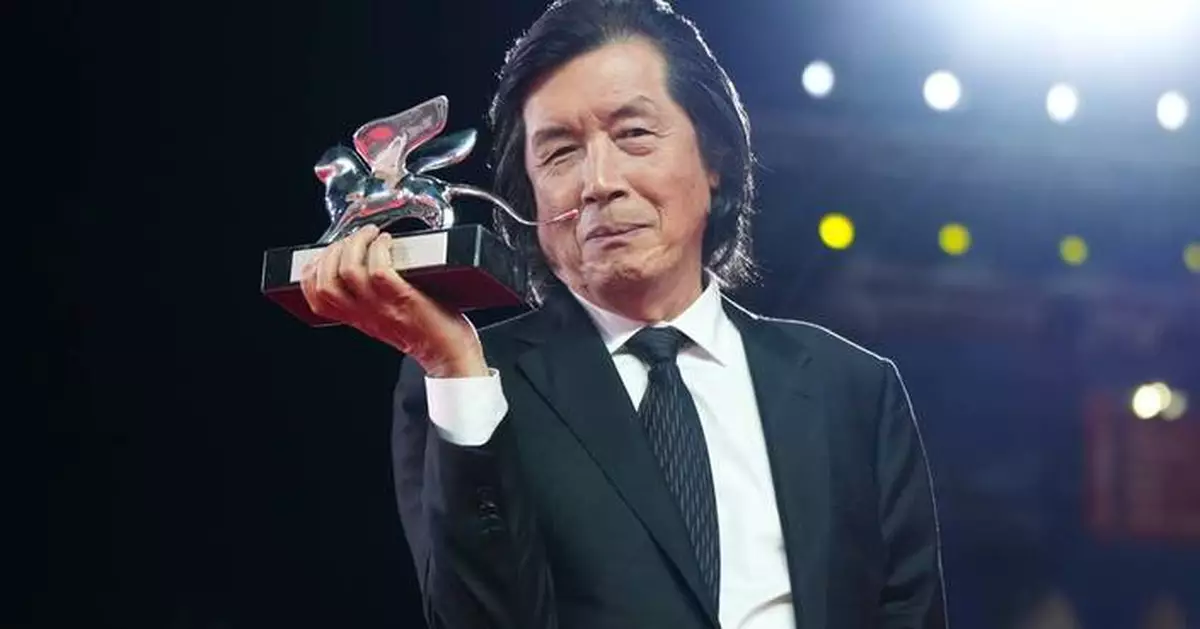
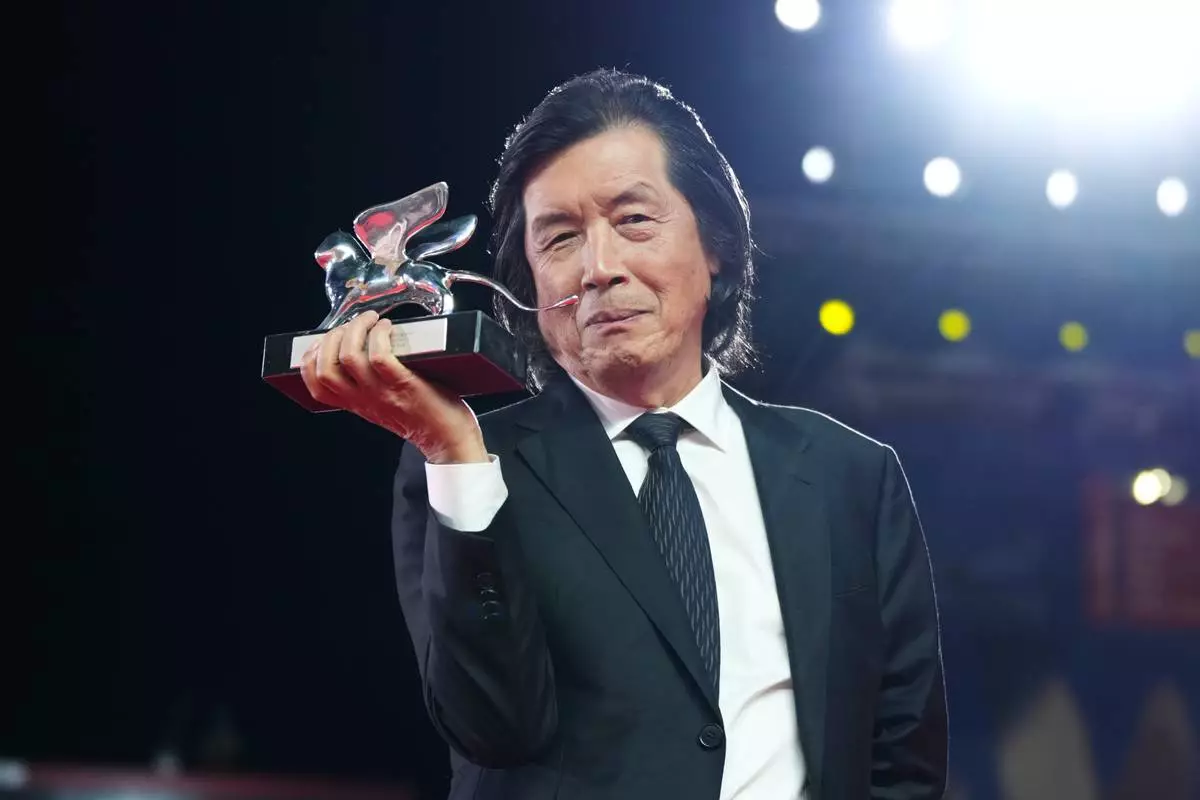
FILE - Director Lee Chang-dong, winner of the grand jury prize for the film "Possible Love," poses for photographers during the closing ceremony of the 83rd edition of the Venice Film Festival in Venice, Italy, on Sept. 12, 2026. (Photo by Scott A Garfitt/Invision/AP, File)

FILE - Director Lee Chang-dong, winner of the grand jury prize for the film "Possible Love," poses for photographers during the closing ceremony of the 83rd edition of the Venice Film Festival in Venice, Italy, on Sept. 12, 2026. (Photo by Scott A Garfitt/Invision/AP, File)
ROME (AP) — Pope Leo XIV is kicking off a three-nation tour of Latin America with a visit to Uruguay, the region’s least Catholic and most secular country, three weeks after undergoing lung cancer surgery that had put the entire trip into question.

Leo is due to arrive in Montevideo after a 13-and-a-half hour flight from Rome. He has a packed three-day itinerary in Uruguay including a visit to a neighborhood plagued by gang violence, a Mass in Paysandú, some 375 kilometers (230 miles) from the capital, and another Mass in the city of Florida, about 100 kilometers (60 miles) away.

The Uruguay leg is the first stop on what will be the longest and farthest trip of his pontificate, all being undertaken as the 71-year-old pope continues his recovery. The trip will also bring him to neighboring Argentina and finally back home to Peru, where Leo served as a missionary priest and bishop for two decades.

"His stamina is fantastic. The way that he's singing is incredible. And you can only sing if your lungs are really strong," said Maria Montserrat Alvar, the Vatican's new communications chief. She noted that Leo has passed the 14-day convalescence period required by doctors after his Oct. 13 surgery and is eager to get on the road.

“His doctors are very confident and he'll have plenty of medical care on board should something happen, but we don't see that in his prognosis or even in the way that he's acting,” she said.

In Uruguay, which hasn’t had a papal visit since 1988, Leo is expected to try to remind the 3.5 million people of their strong Catholic heritage stemming from the times of Spanish colonial rule. He is likely to propose the faith anew as an answer to today’s challenges and problems.

Upon arrival, Leo will meet with President Yamandú Orsi, leader of the center-left alliance that assumed power in Uruguay in March 2025, and then deliver his welcome address to government officials and diplomats. He finishes the long day with a vespers service at the city's cathedral.

Leo will find in Uruguay a country unlike any other in Latin America, which is home to around 40% of the world's 1.4 billion Catholics. Uruguay is considered the most secular country in the region, where only a fraction of people who identify as Catholic actually go to Mass regularly.

Uruguay was the first country in the world to legalize marijuana for recreational use, the second country in Latin America to decriminalize abortion, and the third country in the Americas to legalize same-sex marriage.

More recently, it became the first country in the region to approve assisted dying legislation over the strong opposition of the Catholic Church, evidence of Uruguay’s entrenched, church-state separation that prohibits any mention of God in oaths of office.

Leo is expected to recall the church's opposition to abortion and euthanasia as part of his broader argument about upholding human dignity in all phases of life.

Uruguayan church officials have marveled at the apparent enthusiasm the visit has provoked, with reports that tickets to Leo’s prayer vigil at Montevideo’s Centenario Stadium were snapped up after two days.

“It seems that the pope’s presence is shifting something here and is gradually breaking down this veil that has always sought to obscure and diminish the presence of the Catholic tradition that lies at the country’s foundation,” said Guzmán Carriquiry, the Uruguayan former head of the Vatican’s pontifical commission for Latin America.

“I believe this pope will stir up questions in the hearts of Uruguayans -- disturbing questions -- questions about meaning and, we hope, questions about faith,” he said.

Carriquiry said he expects Leo will seek to revive the Catholic roots of Uruguay, especially when he travels to Florida on Sunday to mark an important Catholic feast day.

The Nov. 8 feast commemorates the Virgin of the Thirty-three, a small wooden icon of the Virgin Mary that is intricately connected to Uruguay’s independence movement. According to tradition, 33 independence patriots acquired the Guaraní statue and had it with them when independence was declared from the Brazilian empire in Florida on Aug. 25, 1825.

“So the number 33 is an ecclesiastical symbol, a national symbol,” said Carriquiry, who was also Uruguay’s ambassador to the Holy See. “And so the pope will speak there about the Catholic tradition that lies at the origin of Uruguay—that stems from Uruguay and gave rise to Uruguay—in order to revive and renew the Catholic tradition in the hearts of Uruguayans.”

Andrew Chesnut, chair of Catholic studies and an expert in the Latin American church at Virginia Commonwealth University, said he wasn’t surprised that Leo’s visit had generated enthusiasm and that he will be welcomed warmly.

“But that’s not necessarily going to translate into folks in the pews,” he said. “If the overarching goal is trying to revitalize Catholicism in the most Catholic region on Earth, Uruguay is kind of a lost cause, and it has been for decades.”

Associated Press religion coverage receives support through the AP’s collaboration with The Conversation US, with funding from Lilly Endowment Inc. The AP is solely responsible for this content.

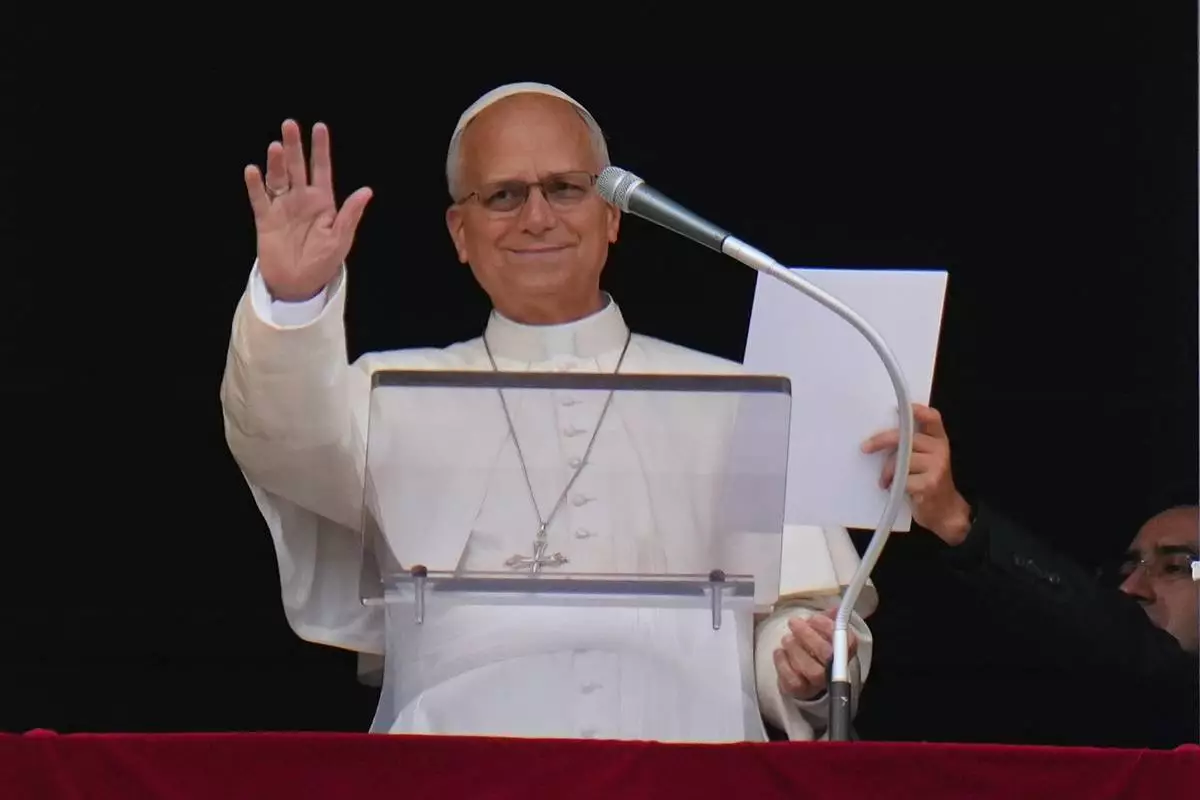
Pope Leo XIV appears at the window of the Apostolic Palace overlooking St. Peter's Square at the Vatican for the Angelus noon prayer on All Saints' Day, a feast celebrated across much of the Christian world, Sunday, Nov. 1, 2026. (AP Photo/Alessandra Tarantino)

Pope Leo XIV appears at the window of the Apostolic Palace overlooking St. Peter's Square at the Vatican for the Angelus noon prayer on All Saints' Day, a feast celebrated across much of the Christian world, Sunday, Nov. 1, 2026. (AP Photo/Alessandra Tarantino)

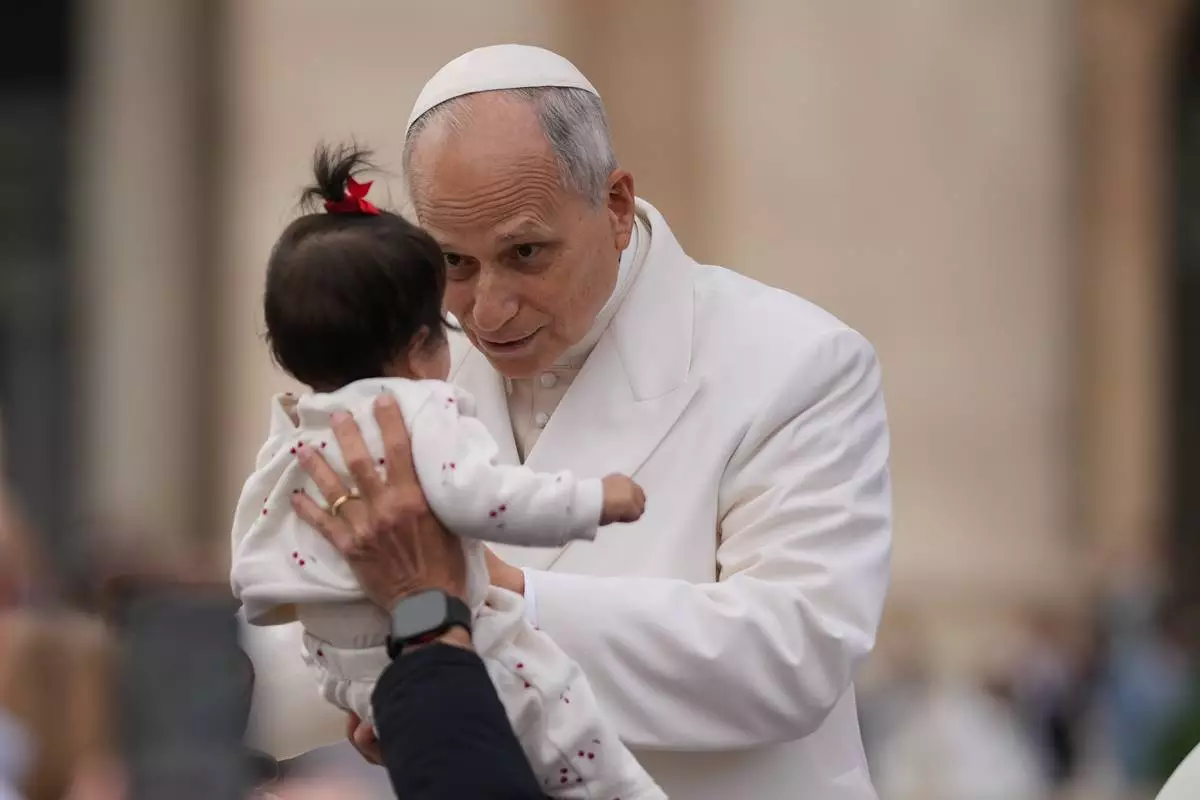
Pope Leo XIV blesses a new born after his weekly general audience in St. Peter's Square at The Vatican, Wednesday, Nov. 4, 2026. (AP Photo/Andrew Medichini)

Pope Leo XIV blesses a new born after his weekly general audience in St. Peter's Square at The Vatican, Wednesday, Nov. 4, 2026. (AP Photo/Andrew Medichini)

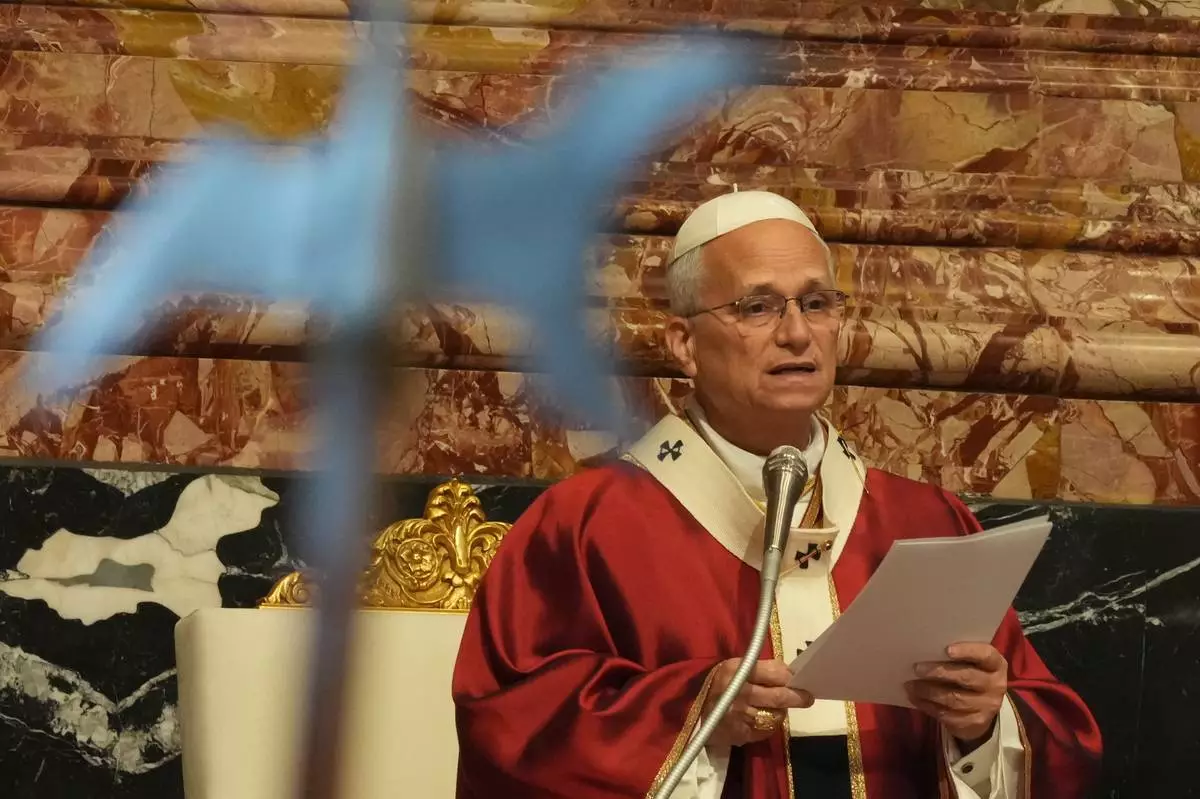
Pope Leo XIV celebrates a mass in memory of cardinals and bishops who died during the past year, in St. Peter's Basilica, at the Vatican, Thursday, Nov. 5, 2026. (AP Photo/Andrew Medichini)

Pope Leo XIV celebrates a mass in memory of cardinals and bishops who died during the past year, in St. Peter's Basilica, at the Vatican, Thursday, Nov. 5, 2026. (AP Photo/Andrew Medichini)

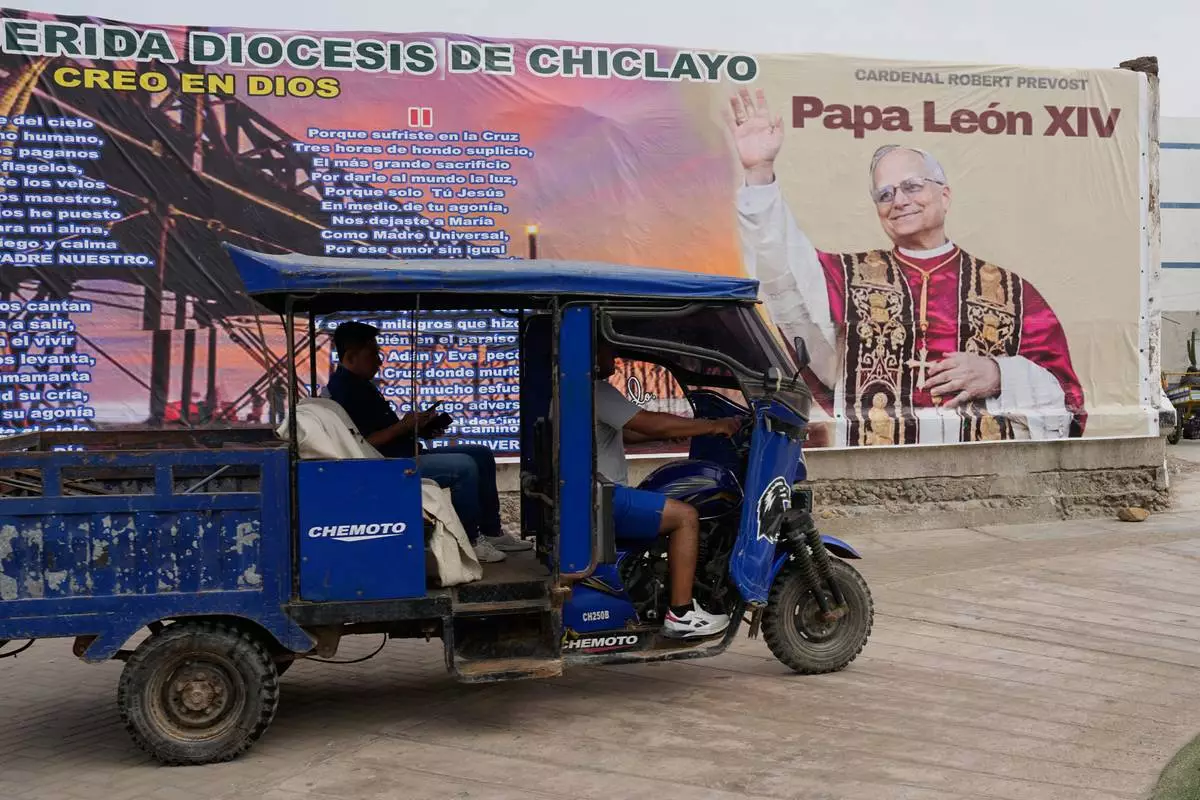
A mototaxi pass drives past a banner of Pope Leo XIV at Pimentel beach in Chiclayo, Peru, Thursday, Nov. 5, 2026, ahead of his planned trip to Uruguay, Argentina, and Peru from November 6 to 17. (AP Photo/Martin Mejia)

A mototaxi pass drives past a banner of Pope Leo XIV at Pimentel beach in Chiclayo, Peru, Thursday, Nov. 5, 2026, ahead of his planned trip to Uruguay, Argentina, and Peru from November 6 to 17. (AP Photo/Martin Mejia)

Recommended Articles