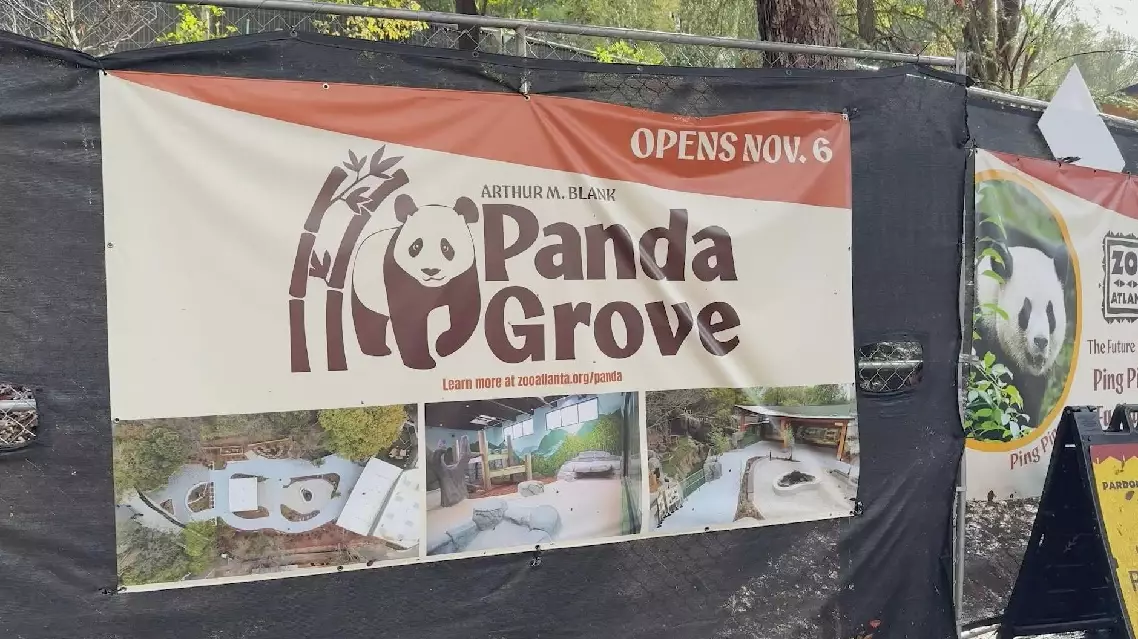
Ping Ping and Fu Shuang, two giant pandas from China, are ready to make their highly anticipated public debut at Zoo Atlanta on Friday, six weeks after landing in the U.S. state.
Male Ping Ping was born on March 17, 2020, and female Fu Shuang on Oct. 18, 2020. They arrived in Atlanta on Sept. 27 after departing from the Chengdu Shuangliu International Airport in southwest China's Sichuan Province.
Their new home is the newly renovated Arthur M. Blank Panda Grove, a six-million-dollar habitat specially designed for the new pair.
Local people welcomed the debut with enthusiasm as the new pair follows a 25-year chapter in Zoo Atlanta's panda history.
Zoo Atlanta had previously entered into a 25-year giant panda lease agreement with the Chinese side. The agreement's final four giant pandas, Lun Lun, Yang Yang, and their offspring born in the zoo, Ya Lun and Xi Lun, returned to China in October 2024.
"e were sad when they left and we're happy to see them back," said a local named Brenda.
In October 2024, Lun Lun, Yang Yang and their twin daughters, Ya Lun and Xi Lun, returned to China from Zoo Atlanta.
"I love pandas myself. I'm a bear person. I have bear tattoos and everything, so I love panda bears," said another local named Jay.
The two pandas are expected to stay at Zoo Atlanta for 10 years under a conservation agreement with the China Wildlife Conservation Association.
New giant pandas ready to debut at Zoo Atlanta
China will ramp up domestic oil and gas supply capacity while expanding its global energy cooperation network during the 15th Five-Year Plan period (2026-2030) to consolidate its energy security, an official with the National Energy Administration (NEA) said Friday.
China will also thoroughly implement its 10-year action plan for oil and gas exploration and development, increasing investment and operational efforts to consolidate its resource foundation, said Ge Ju, deputy director of the NEA's Department of Development Planning, at a press conference in Beijing.
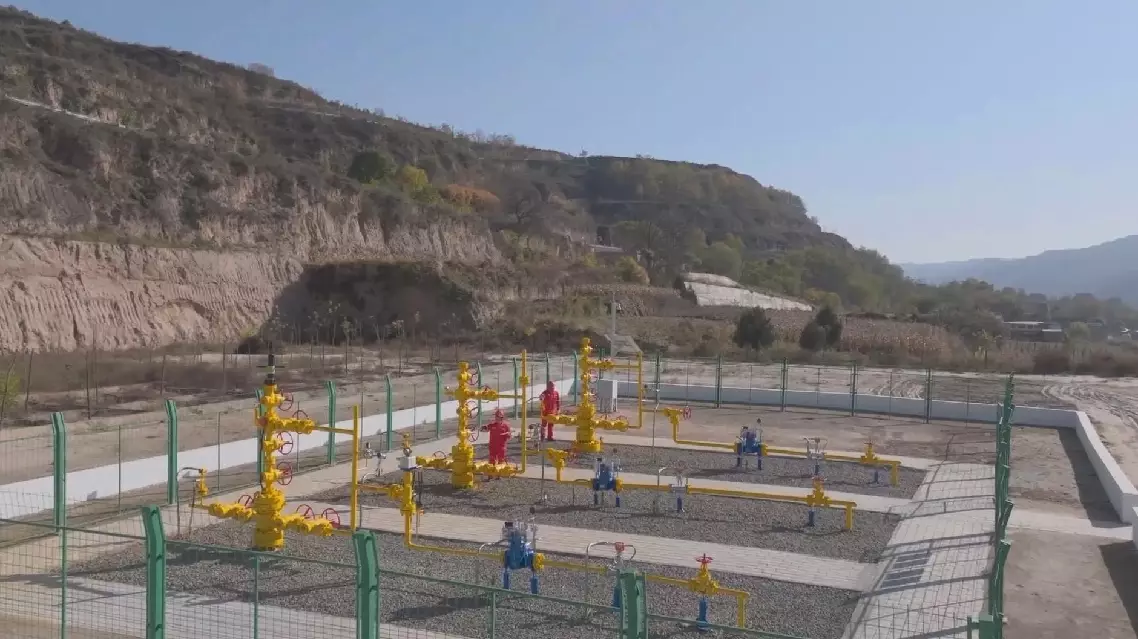
The country will focus on key sedimentary basins, including the Ordos, Bohai Bay, Sichuan-Chongqing region, Tarim, and Songliao basins, and accelerate the construction of a batch of national strategic oil and gas production bases. It will also seek to boost output from deep-sea and deep-earth resources, unconventional reserves and mature oilfields.
China will also develop a number of major natural gas storage projects to strengthen its capacity to meet peak demand and ensure stable supplies during periods of high consumption.
China currently engages in oil and gas trade with nearly 50 countries, with imports sourced from all major global oil and gas exporters, helping ensure stable and reliable international energy cooperation.
"During the 15th Five-Year Plan period, China will further expand its circle of friends in oil and gas cooperation. Meanwhile, we will consolidate and expand overland strategic import corridors, safeguard maritime shipping lanes, and ensure that oil and gas can be procured and transported back safely," said Ge.
China to boost energy security via domestic, import diversification: NEA