LONDON (AP) — The European Union accused TikTok of breaching the bloc's digital rules because its algorithm recommends a nonstop stream of personalized videos to users including those that it says could hurt mental health and body image.
The short-video sharing platform must change the design of its “For You” feed so that users have more control over opting out of seeing certain content, the 27-nation bloc’s executive arm said Friday.
The platform failed to assess how its recommendation systems could lead people into “rabbit holes” that threaten their well-being, regulators said, by feeding them similar video clips based on what they've previously viewed or liked even if they are "triggering" such as clips about weight loss and mental health struggles.
TikTok said the European Commission's findings are “fundamentally inaccurate and distort our platform’s architecture and our commitment to user safety.”
“We have a strong record of protecting our community while giving users direct and intuitive control over their content experience,” the company said in a statement.
The company will have a chance to respond before the European Commission issues its final decision, which could include a fine of up to 6% of TikTok's total annual revenue.
“Every time a user scrolls or likes a video on TikTok, the algorithm serves more of the same, leading users down rabbit holes they cannot easily escape from,” European Commission Executive Vice-President Henna Virkkunen, who oversees tech sovereignty, said in a statement.
"Today’s preliminary findings show again that TikTok needs to step up its efforts to protect users’ well-being, including those of minors.”
TikTok has added some measures, such as a “not interested” button to reduce the “rabbit hole effect,” but the commission said they're ineffective in reducing how often harmful content is recommended.
European regulators said they want TikTok to make changes to its “For You” feed, including giving more weight to ‘explicit preferences’ of people using the platform, stopping reliance on viewing time as a metric for recommending content, and making user controls more accessible.
It's the latest in a series of enforcement actions targeting TikTok by EU regulators using the bloc's Digital Services Act, a wide-ranging rule book that requires tech companies to adhere to a framework under threat of hefty financial penalties.
The commission opened its investigation into whether TikTok violated the DSA more than two years ago. This year, it has already issued two other sets of preliminary findings, accusing the platform of breaching the rules with “ addictive design ” features that lead to compulsive use by children and charging it with failing to adequately protect children's privacy rights.

FILE - The TikTok Inc. building is seen in Culver City, Calif., Friday, March 17, 2023. (AP Photo/Damian Dovarganes, file)
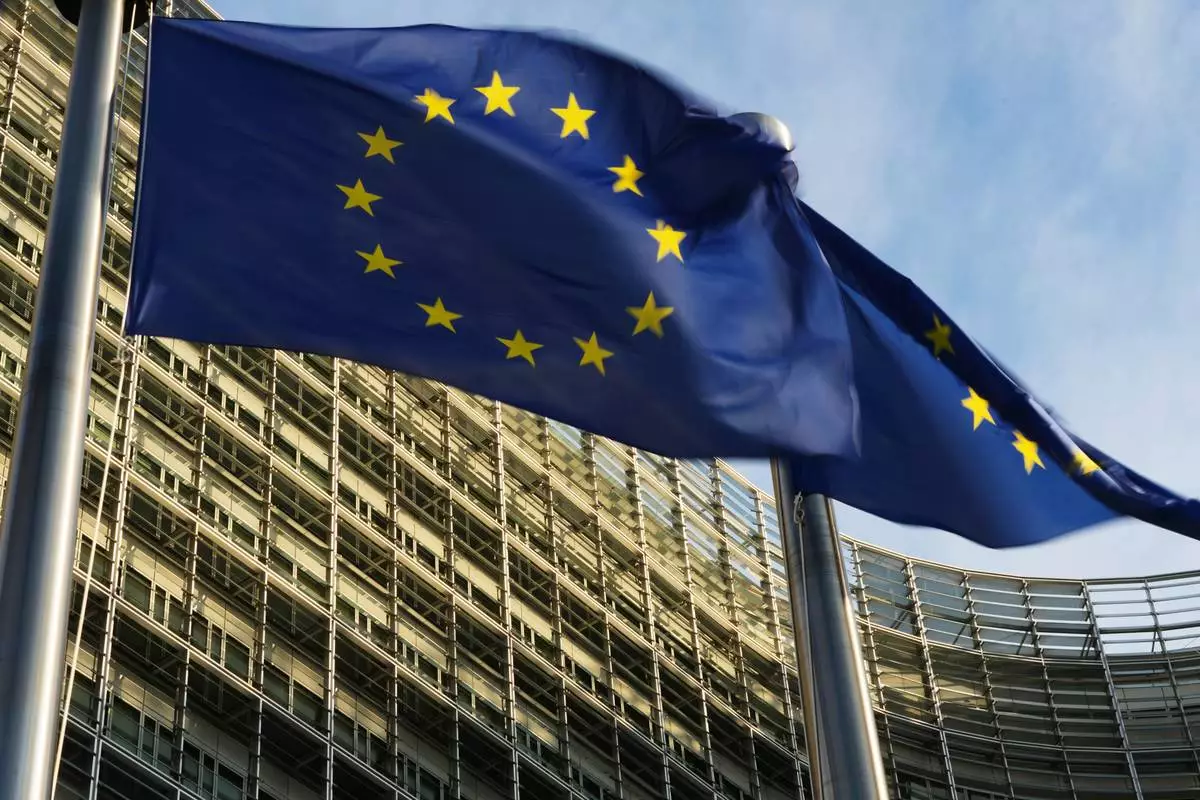
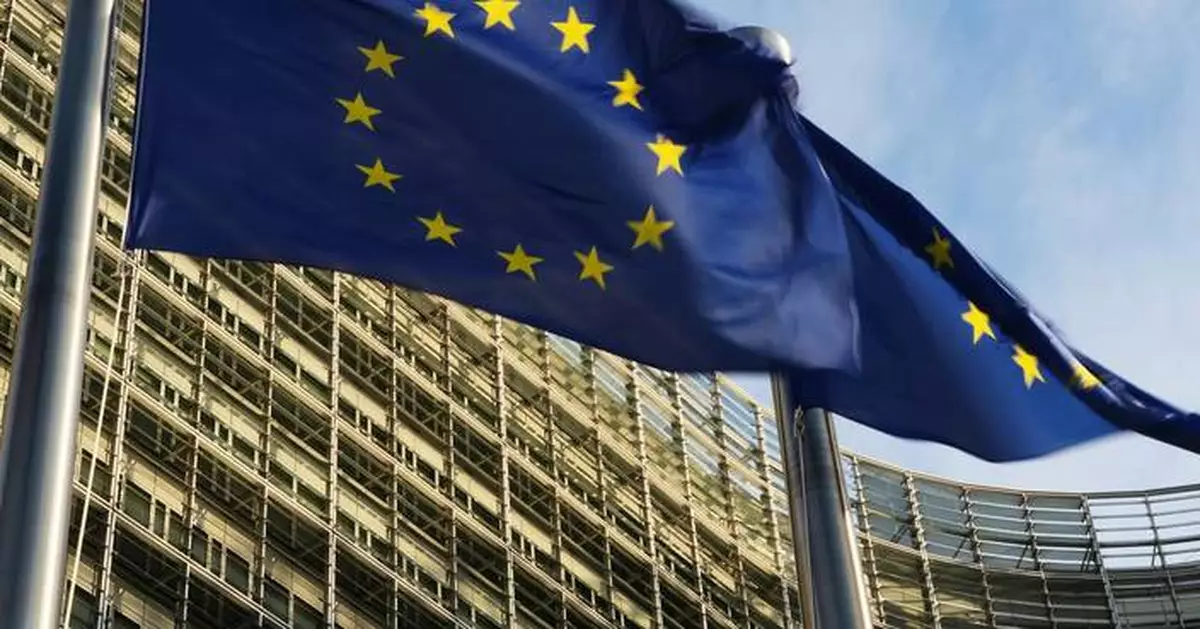
European Union flags flap in the wind outside EU headquarters in Brussels, Wednesday, Nov. 4, 2026. (AP Photo/Virginia Mayo)
BERLIN (AP) — Officials across Europe reported a fresh slew of bomb threats against multiple flights on Friday, following a string of hoaxes that have caused flight diversions this week. Two broadcasters also received security threats.
No suspicious items were found and no one was injured, but the threats have raised concern because they came as Europe digests other recent disruptions — including attacks on supermarket refrigeration systems and drone incursions.
In Hungary, the defense minister said military fighter jets escorted three separate passenger planes across the country's airspace within an hour after each received bomb threats. Romulusz Ruszin-Szendi said they were flights from Brussels to Sofia and from Prague to Cyprus and Romania.
French Prime Minister Sebastien Lecornu’s office said Friday that “four new bomb threats were made today against aircraft flying over French territory.” The planes landed safely at Paris’ Orly Airport and bomb disposal experts were conducting inspections. The office didn’t give details of the flights affected.
Other incidents included threats against a Prague to Bucharest flight operated by Romanian carrier Tarom, and a Ryanair flight traveling from Lisbon to Rome. Security inspections were carried out and no explosives were found.
A WizzAir flight from Prague to Rome was diverted to Venice after a bomb alert, and passengers were evacuated after the aircraft landed. Air traffic at the airport was briefly suspended, but police searches turned up nothing.
At Prague's Vaclav Havel Airport, spokesperson Denisa Hejtmánková said a total of nine flights were threatened, including arriving flights from Denmark, Spain and Britain, and departing flights to the Netherlands, Cyprus, Romania, Italy and Britain. Czech police said security measures were taken that had “a minimal impact on the normal operations at the airport.”
In the Danish capital, Copenhagen, police said Friday they went to the airport for a second consecutive day “in connection with threats directed at air traffic” as a precautionary measure. They said they assessed that there had been no danger to passengers or to others at the airport.
More than two dozen flights were affected by threats earlier in the week, with some diverted as authorities scrambled to rule out any danger.
Fake bomb threats are relatively common but it is unusual to see so many in such a short period.
It remains unclear who is behind the wave of airline hoaxes, which come at a time of increased geopolitical tensions and warnings from authorities that Russia may be ramping up so-called hybrid threats in Europe.
Authorities have not attributed the threats to any group or state actor, and no evidence has emerged linking the hoaxes to a government. An email containing the threat sent Thursday to airport authorities in Rome and reviewed by The Associated Press purported to come from a group describing itself as anti-feminist and claiming it was targeting a “feminist regime.” Another European airport received a threat with similar wording, but it was unclear if it came from the same sender.
Bomb threats are on pilots’ minds and create unnecessary tension, but crews are prepared to respond professionally, said Paul Reuter, vice president of the European Cockpit Association. Pilots review procedures with cabin crews, identify airports where they could divert and may carry extra fuel, he said.
Reuter called the use of civil aviation for geopolitical disruption or hoaxes “totally unacceptable.”
In Ireland, the Dublin headquarters of national broadcaster RTE was evacuated Friday after a bomb threat, and live broadcasts were replaced with pre-recorded programs.
Ireland’s police force, An Garda Síochána, said it was ”aware of a threat made against media organisations here and in Europe.” It said that it has been liaising with Irish media organizations and the threat will be investigated.
U.K.-based broadcaster Sky said it had also received a “security threat.” In a statement reported by its Sky News channel, it said that “we are working closely with authorities to ensure our people and operations remain secure.” Sky News remained on air.
It's not clear if the incidents were linked.
Irish Prime Minister Micheál Martin said the threats to RTE and others “just illustrates how relatively simple it can be to cause disruption and to undermine the normal operation of society through unconventional activities of this kind, which are designed to cause fear and anxiety.”
He said there would be a “very significant security operation” in place next week when Dublin hosts meetings of the European Political Community and European Union leaders.
Jill Lawless in London, Suman Naishadham in Madrid, Stephen McGrath in Leamington Spa, England, Giada Zampano in Rome, Karel Janicek in Prague, Sylvie Corbet in Paris and Mark Carlson in Brussels contributed to this report.
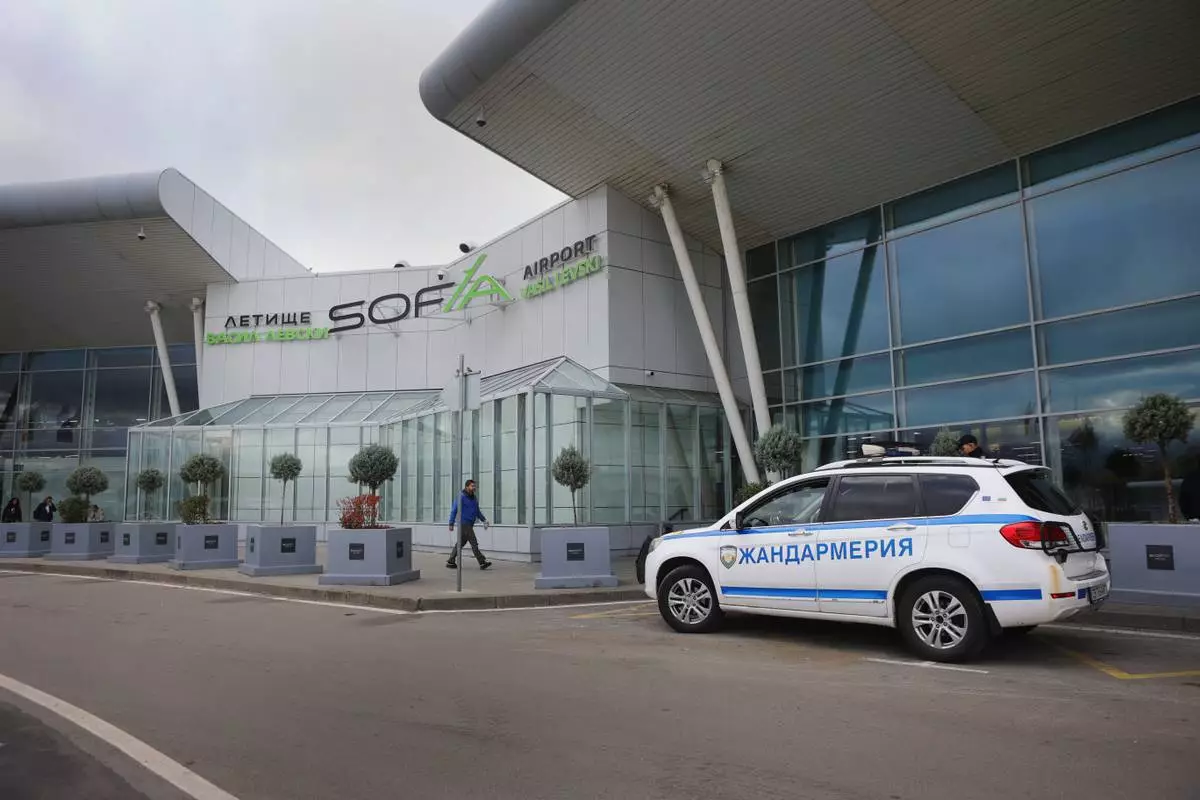
A police car is seen in front of Vasil Levski Sofia Airport after three Ryanair flights bound for Sofia, Bulgaria, made emergency landings following bomb threats on board, Thursday, Nov. 5, 2026. (AP Photo/Valentina Petrova)
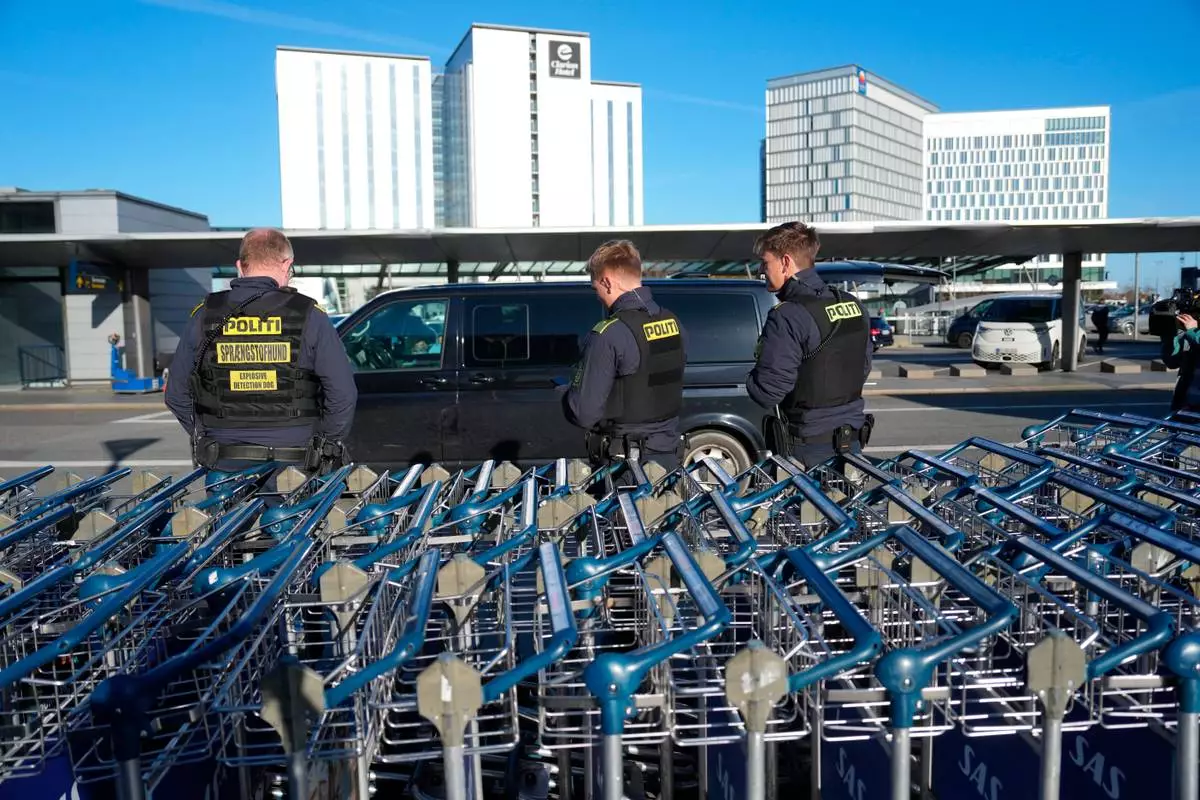
Police patrol the Copenhagen Airport, Denmark, Friday, Nov. 6, 2026. (Liselotte Sabroe/Ritzau Scanpix via AP)
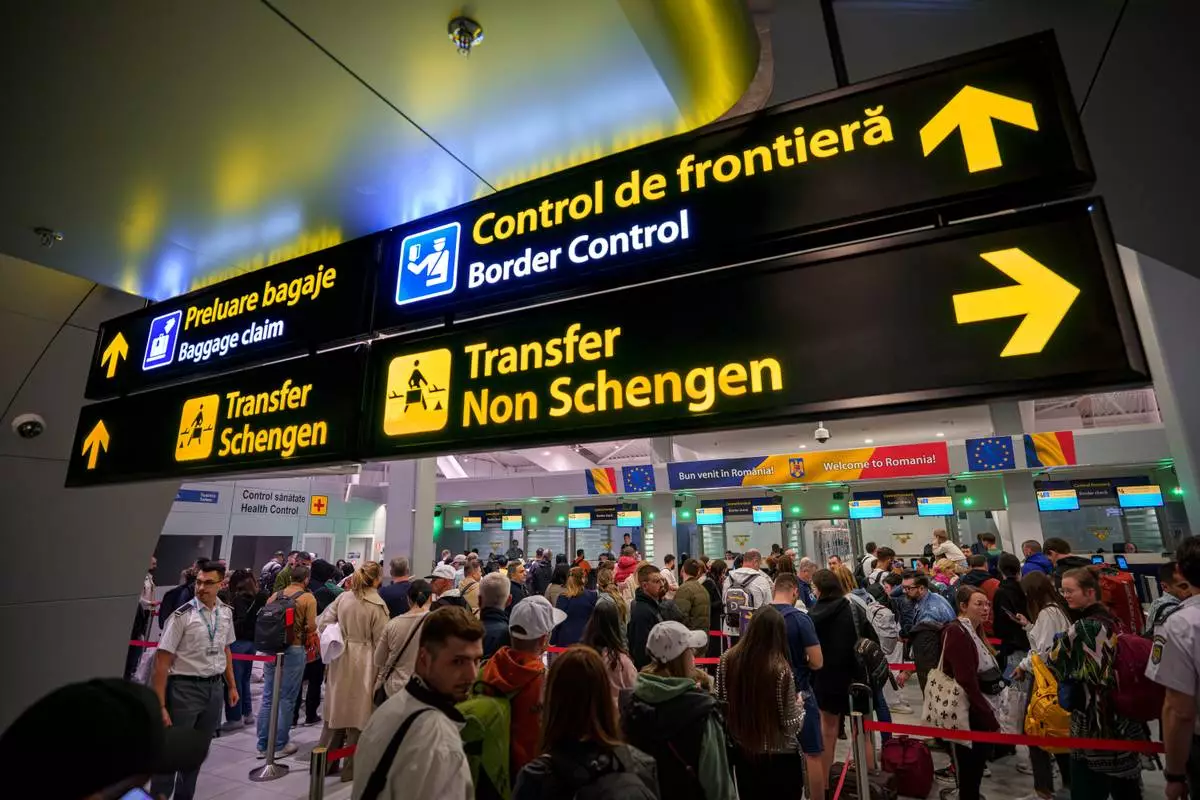
FILE - Passengers arriving at the Henri Coanda International Airport pass under a Schengen Information sign, in Otopeni, near Bucharest, Romania, on March 31, 2024. (AP Photo/Andreea Alexandru, File)

Police patrol the Copenhagen Airport, Denmark, Friday, Nov. 6, 2026. (Liselotte Sabroe/Ritzau Scanpix via AP)