KANSAS CITY, Kan.--(BUSINESS WIRE)--Nov 6, 2026--
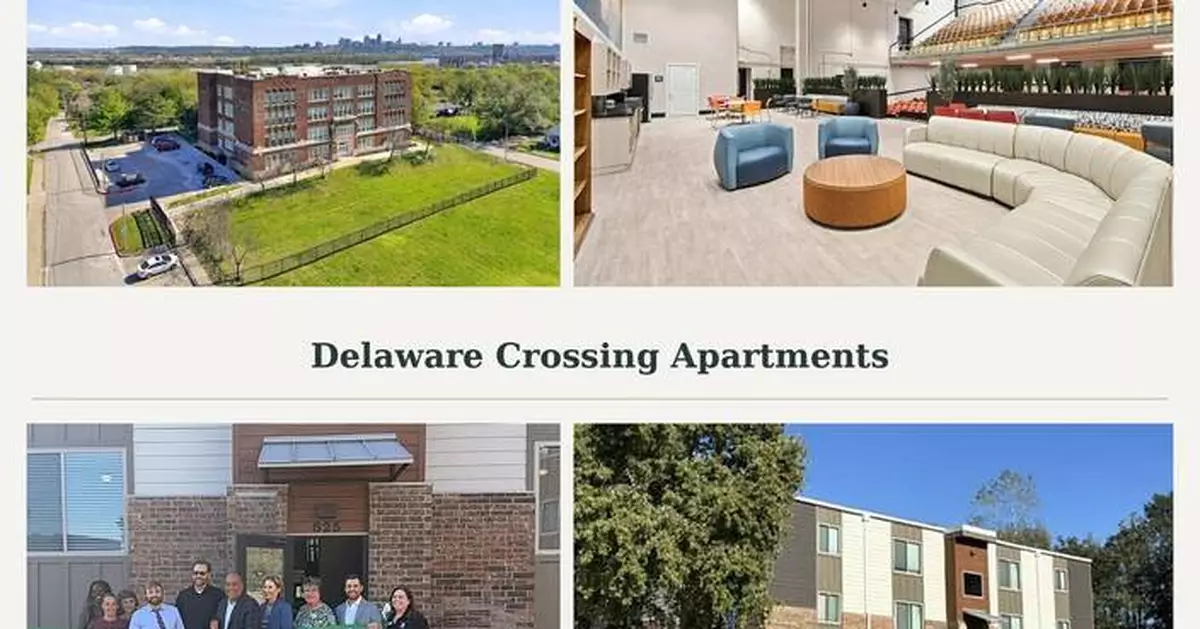
Hunt Capital Partners, in partnership with Fulson Housing Group, recently celebrated grand openings for two affordable housing rehabilitations in Wyandotte County, Kansas: Delaware Crossing and Legacy at Northeast Apartments.
This press release features multimedia. View the full release here: https://www.businesswire.com/news/home/20261105065773/en/
“Rehabilitating Delaware Crossing Apartments and Legacy at Northeast Apartments is about more than improving buildings — it’s about investing in the people who call them home,” said James Baker, Development Analyst at Fulson Housing Group. “Through this work, Fulson Housing Group is strengthening affordable housing in Kansas City, Kansas, and helping build a lasting legacy of quality, stability, and opportunity for residents.”
Delaware Crossing Apartments
Delaware Crossing is located at 657 South 71st Terrace in Kansas City, Kansas, and the development is a $33 million rehabilitation of an existing family property originally built in 1974. Today, it introduces 125 revitalized homes for Wyandotte County families, 100% of which are designated for families earning up to 60% of Area Median Income (AMI). The community offers 20 one-bedroom, 70 two-bedroom, 31 three-bedroom, and four four-bedroom homes in a single three-story garden-style building. The community benefits from a 20-year project-based Section 8 Housing Assistance Payments (HAP) contract.
Financing for Delaware Crossing included $14 million of Federal Low-Income Housing Tax Credits and $14 million of State Low-Income Tax Credits, both syndicated by Hunt Capital Partners, and $26 million in construction financing from UMB Bank.
Legacy at Northeast Apartments
The partners also recently gathered for the grand opening of Legacy at Northeast, located at 400 Troup Avenue in Kansas City, Kansas. The $15 million historic rehabilitation transformed a four-story building constructed in 1923 as Northeast Junior High School, which served Kansas City’s African American community during segregation. The building now provides 40 homes for seniors ages 55+ and preserves its historic character while modernizing living spaces and common areas. The community offers 31 one-bedroom, six two-bedroom, and three studio homes, all reserved for seniors earning up to 50% and 60% of AMI. Like Delaware Crossing, it benefits from a 20-year project-based Section 8 HAP contract.
“We are very proud of the development at Legacy at Northeast. Our entire team at Fulson played critical roles in the work that went into it, and I want to thank them publicly. We don’t arrive at this point without our whole team. This development breaks the cardinal rule of development, ‘don’t fall in love with a deal,’” said Matt Fulson, President of Fulson Housing Group. “This development is located in a neighborhood that has seen disinvestment for years and years. The history of the school, as the only junior high school to educate African American students in the area during segregation, should not be lost through disinvestment. My father and his 10 siblings attended this school and lived in this neighborhood, and these are the reasons for its new name. This is a legacy. A legacy for my family, for our company and for the northeast area of Kansas City, Kansas.”
Financing for Legacy at Northeast included $8 million in tax-exempt and $2 million in taxable construction financing from UMB Bank. Hunt Capital Partners syndicated $6 million of Federal Low-Income Housing Tax Credits, $6 million of State Low-Income Tax Credits, $2 million of Federal Historic Tax Credits, and $4 million of State Historic Tax Credits.
“Restoring both Delaware Crossing and Legacy at Northeast is exactly the kind of work that drives us,” said Jeff Weiss, President of Hunt Capital Partners. “We’re proud to have helped finance the rehabilitation of these communities, and we look forward to welcoming residents through their doors for decades to come.”
“Seeing Delaware Crossing and Legacy at Northeast reach their grand openings is an incredibly rewarding milestone. Each development presented its own unique challenges and opportunities, but both reflect the importance of investing in existing communities, preserving quality affordable housing, and creating places where residents can feel at home,” said Melissa Burke, Development Analyst at Fulson Housing Group. “It takes an enormous amount of coordination, persistence, and teamwork to bring these projects from an initial vision to a finished development. I am proud to have played a part in that process and grateful to everyone who helped make these properties possible. Most importantly, I hope the lasting impact of these developments will be felt by the residents and the surrounding communities for generations to come.”
About Hunt Capital Partners
Hunt Capital Partners (HCP) is the tax credit syndication division of Hunt Companies, Inc. (Hunt). HCP specializes in the sponsorship of Federal and State Low-Income Housing, Historic, and Solar Tax Credit Investment funds. Since its inception in 2010, HCP has raised over $4.5 billion in tax credit equity in 55 proprietary and multi-investor funds, financing development in 48 states and territories. Founded in 1947, Hunt is a privately held company that invests in businesses focused on the real estate and infrastructure markets. The activities of Hunt’s affiliates and investors include investment management, asset management, property management, development, construction, consulting and advisory. For more information on HCP, please visit www.huntcapitalpartners.com, or for Hunt, please visit www.huntcompanies.com.
Fulson Housing Group
Fulson Housing Group is a group of companies dedicated to providing quality affordable housing to communities and families. Through the use of Low-Income Housing Tax Credits and many federal, state, and HUD administered loan and subsidy programs, we are able to develop, construct, and manage Low-Income communities that directly impact the lives of its residents. Our firm is vertically integrated and offers a wide range of development partnership and development consulting services. Whether it is a new construction apartment complex in a rural setting, or a rehabilitation of an existing housing development in a metropolitan area, we strive to build and re-build communities that residents are proud to call home.
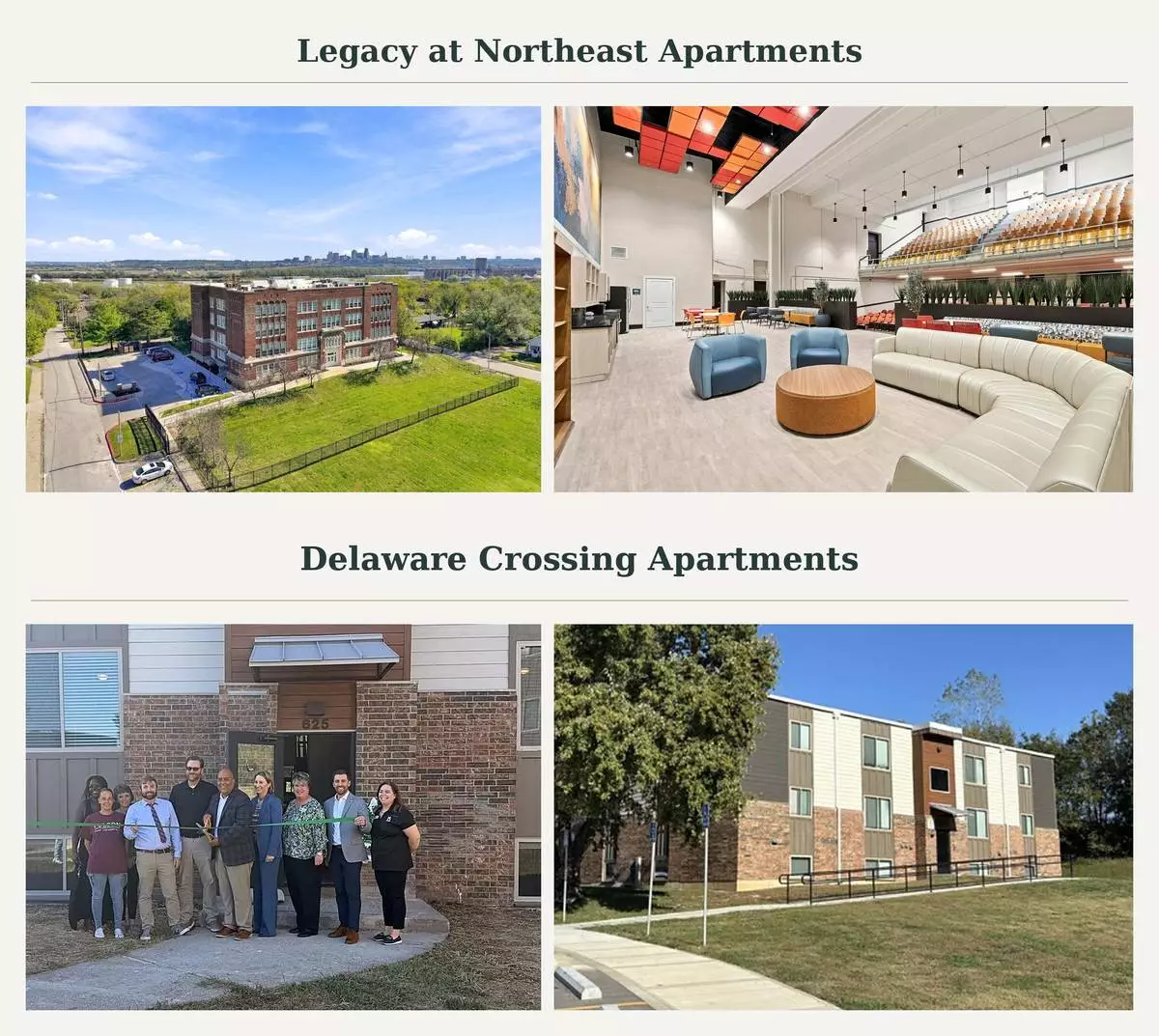
Athena Rice (from left), Randi Jones, Cheryl Downes, James Baker, Frank Bandelow, and Matt Fulson of Fulson Housing Group. Amy Dickerson of Hunt Capital Partners, Terri Bradshaw of Kansas Housing Resources Corporation, Brady Ridnour of UMB Bank, and Deanne Engstrom of Kansas Housing Resources Corporation. (photo credit: Fulson Housing Group)
MONTEVIDEO, Uruguay (AP) — Pope Leo XIV arrived in Uruguay on Friday to begin a three-nation South American tour, less than a month after lung surgery and eight years after a pope last visited the continent.
With Uruguay’s President Yamandú Orsi on hand at Carrasco International Airport to welcome him, the pontiff landed in Montevideo after a nearly 14-hour flight from Rome. It is the first papal visit in nearly four decades to Uruguay, Latin America’s most secular country; Pope John Paul II last visited in 1988.
After Uruguay, Leo will travel to Argentina, the homeland of the late Pope Francis, who never visited during his 12-year papacy. His last stop is Peru, where Leo holds citizenship and spent two decades as a missionary and bishop.
The packed three-day itinerary in Uruguay includes a visit to a neighborhood plagued by gang violence, a Mass in Paysandú, around 375 kilometers (230 miles) from the capital, and another Mass in the city of Florida, about 100 kilometers (60 miles) from Montevideo.
The atmosphere at the airport before Leo’s arrival was calm and unhurried, much like the rest of Uruguay’s capital. Gradually, however, people began gathering at Plaza Independencia, one of the country’s most prominent public spaces and the site of Leo's first public event.
“It’s definitely a major event, which is great, even though I’m not a believer myself. It’s wonderful to see so many people coming together,” said musician Diego Vázquez, 28. “I think it’s a lovely initiative that has also put Uruguay, to some extent, in the eyes of the world.”
The Uruguay leg is the first stop on what will be the longest and farthest trip of his pontificate, all being undertaken as the 71-year-old pope continues his recovery. The trip will also bring him to neighboring Argentina and finally back home to Peru, where Leo served as a missionary priest and bishop for two decades.
“His stamina is fantastic. The way that he's singing is incredible. And you can only sing if your lungs are really strong,” said María Montserrat Alvarado, the Vatican's new communications chief. She noted that Leo has passed the 14-day convalescence period required by doctors after his Oct. 13 surgery and is eager to get on the road.
“His doctors are very confident and he'll have plenty of medical care on board should something happen, but we don't see that in his prognosis or even in the way that he's acting,” she said.
In Uruguay, which hasn’t had a papal visit since 1988, Leo is expected to try to remind the 3.5 million people of their strong Catholic heritage stemming from the times of Spanish colonial rule. He's likely to propose the faith anew as an answer to today’s challenges and problems.
Leo will meet with Orsi, leader of the center-left alliance that assumed power in March 2025, and then deliver his welcome address to government officials and diplomats. He finishes the long day with a vespers service at the city's cathedral.
Leo will find in Uruguay a country unlike any other in Latin America, which is home to around 40% of the world's 1.4 billion Catholics. Uruguay is considered the most secular country in the region, where only a fraction of people who identify as Catholic actually go to Mass regularly.
Uruguay’s secularism has roots in the weakness of its colonial church. With no gold or silver to mine, Spain valued the land of cattle ranches mainly as a buffer against Portuguese Brazil and left it largely unsettled. Montevideo was founded only in the 1720s, roughly two centuries after Mexico City and Lima.
With few priests and no local bishop, the church never became the powerful institution it was elsewhere in the empire. “Uruguay was colonized late, and that made Catholicism weaker,” said Gerardo Caetano, a Uruguayan historian.
Montevideo awoke to its usual calm. Along the waterfront, joggers were out for their morning runs and residents walked their dogs along the very same promenade that the pope is set to visit just a few hours later.
“We still don’t understand why he chose Uruguay, given that it’s a secular country, but we hope he leaves something positive behind," said Mary Fernández while drinking mate, Uruguay's beloved beverage.
The origins of the separation between church and state can be traced back to the 19th century, particularly to the spread of liberal ideas promoted by European intellectuals, who viewed religion as a symptom of backwardness or a lack of rationality, said Luis Bahamondes, a professor at the Center for Judaic Studies at the University of Chile.
“While Latin America also experienced a separation of church and state, the Catholic Church has nonetheless maintained strong ties with the various states in the region,” he said. “In this context, Uruguay stands out as a paradigmatic example of how secularism can be implemented.”
This process went so far as to include the renaming of certain holidays to reflect their secular character — such as “Family Day” and “Tourism Week” — signaling that the “inherent weight of Catholicism had no place within the State’s official framework,” Bahamondes added.
Since then, Uruguay has become the first country in the world to legalize marijuana for recreational use, the second country in Latin America to decriminalize abortion, and the third country in the Americas to legalize same-sex marriage.
More recently, it became the first country in the region to approve assisted dying legislation despite the strong opposition of the Catholic Church.
Uruguayan church officials have marveled at the apparent enthusiasm that the visit has provoked, with reports that tickets to Leo’s prayer vigil at Montevideo’s Centenario Stadium were snapped up after two days.
“It seems that the pope’s presence is shifting something here and is gradually breaking down this veil that has always sought to obscure and diminish the presence of the Catholic tradition that lies at the country’s foundation,” said Guzmán Carriquiry, the Uruguayan former head of the Vatican’s pontifical commission for Latin America.
Carriquiry said that he expects Leo will seek to revive the Catholic roots of Uruguay, especially when he travels to the city of Florida on Sunday to mark an important Catholic feast day.
The Nov. 8 feast commemorates the Virgin of the Thirty-three, a small wooden icon of the Virgin Mary that is intricately connected to Uruguay’s independence movement. According to tradition, 33 independence patriots acquired the Guaraní statue and had it with them when independence was declared from the Brazilian empire in Florida on Aug. 25, 1825.
“So the number 33 is an ecclesiastical symbol, a national symbol,” said Carriquiry. “And so the pope will speak there about the Catholic tradition that lies at the origin of Uruguay — that stems from Uruguay and gave rise to Uruguay — in order to revive and renew the Catholic tradition in the hearts of Uruguayans.”
Andrew Chesnut, chair of Catholic studies and an expert in the Latin American church at Virginia Commonwealth University, said that he wasn’t surprised that Leo’s visit had generated enthusiasm and that he will be welcomed warmly.
“But that’s not necessarily going to translate into folks in the pews,” he said. “If the overarching goal is trying to revitalize Catholicism in the most Catholic region on Earth, Uruguay is kind of a lost cause, and it has been for decades.”
Associated Press religion coverage receives support through the AP’s collaboration with The Conversation US, with funding from Lilly Endowment Inc. The AP is solely responsible for this content.
This story has been corrected to show that the last name of the Vatican’s new communications chief is Alvarado, not Alvar.
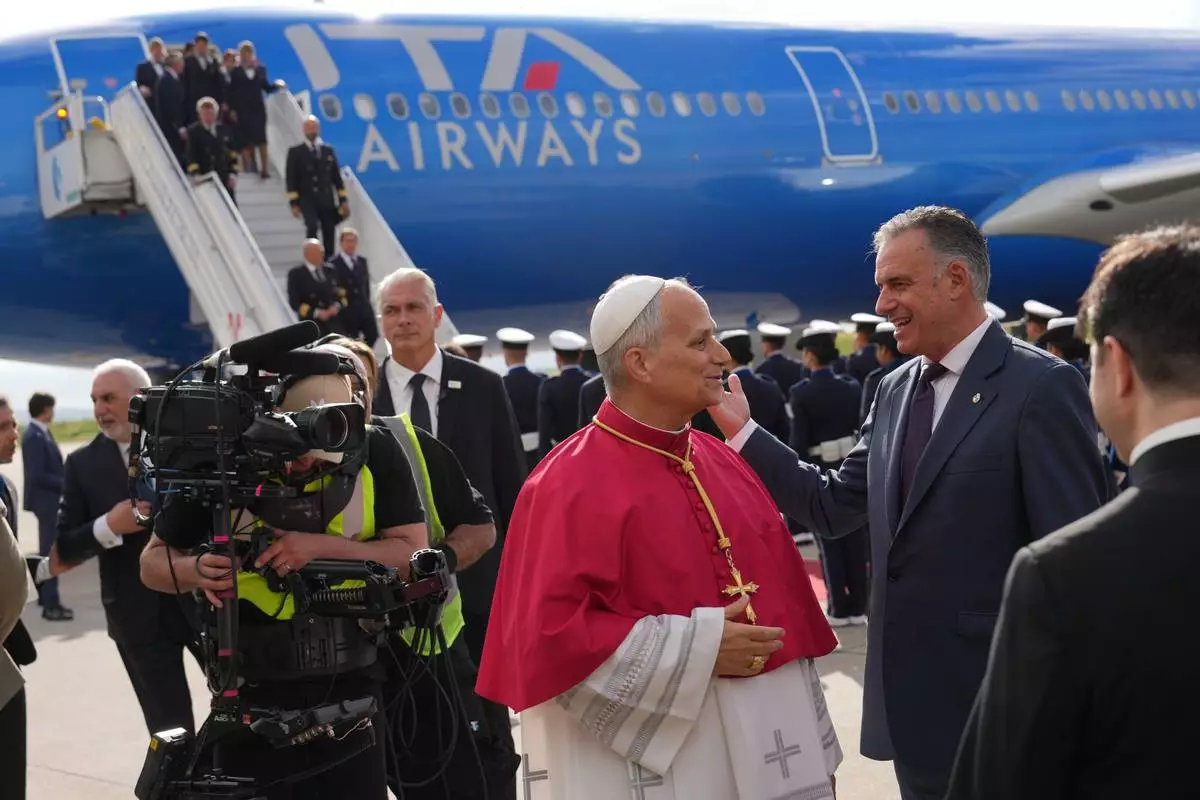
Pope Leo XIV is welcomed by Uruguay's President Yamandú Orsi, right as he arrives at General Cesáreo L. Berisso Montevideo-Carrasco International Airport in Montevideo, on the first day of his twelve-day apostolic journey to South America, Friday, Nov. 6, 2026. (AP Photo/Andrew Medichini)
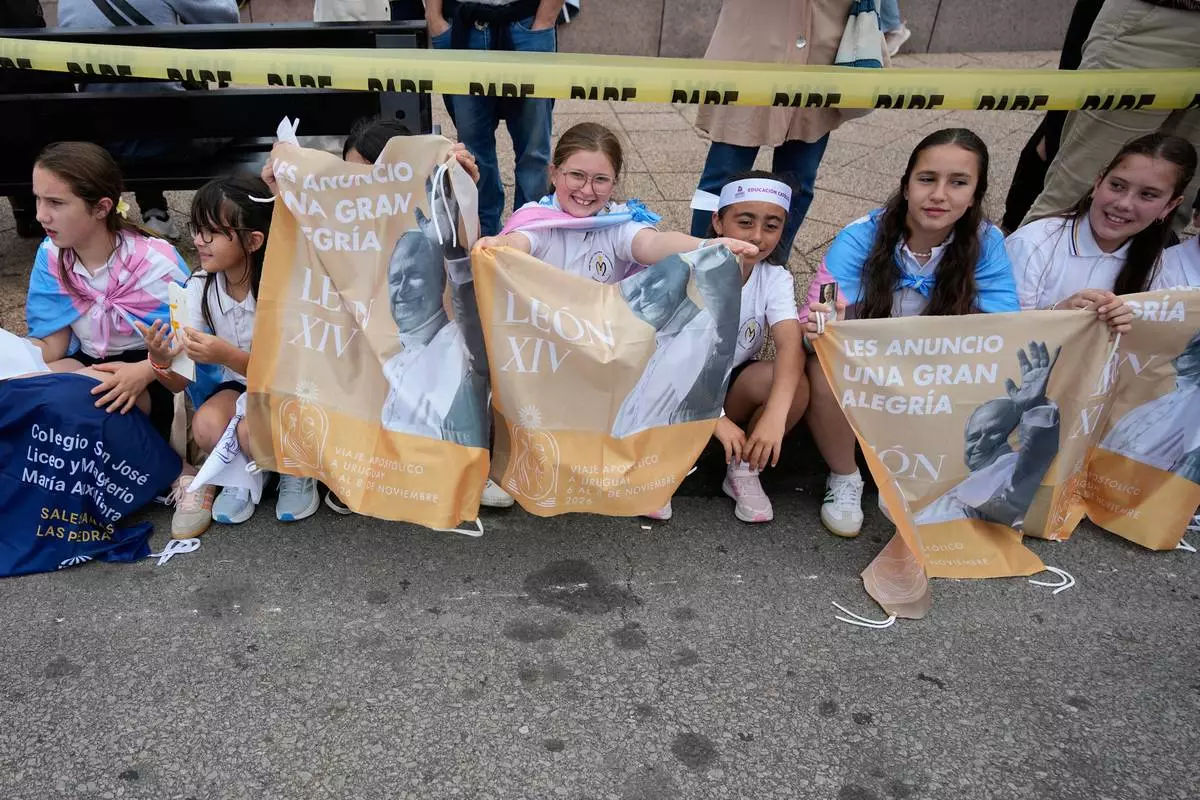
Children wait for the arrival of Pope Leo XIV in Montevideo, Uruguay, Friday, Nov. 6, 2026. (AP Photo/Natacha Pisarenko)
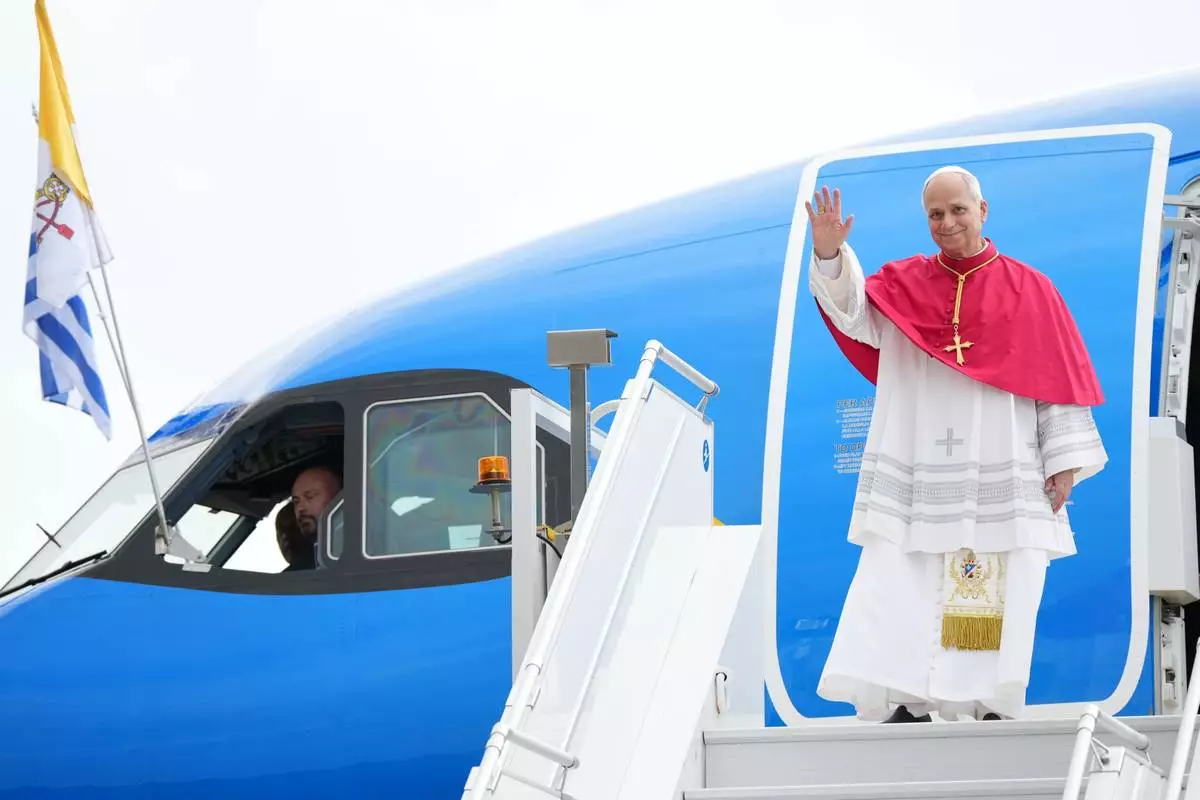
Pope Leo XIV arrives at General Cesáreo L. Berisso Montevideo-Carrasco International Airport in Montevideo, on the first day of his twelve-day apostolic journey to South America, Friday, Nov. 6, 2026. (AP Photo/Andrew Medichini)
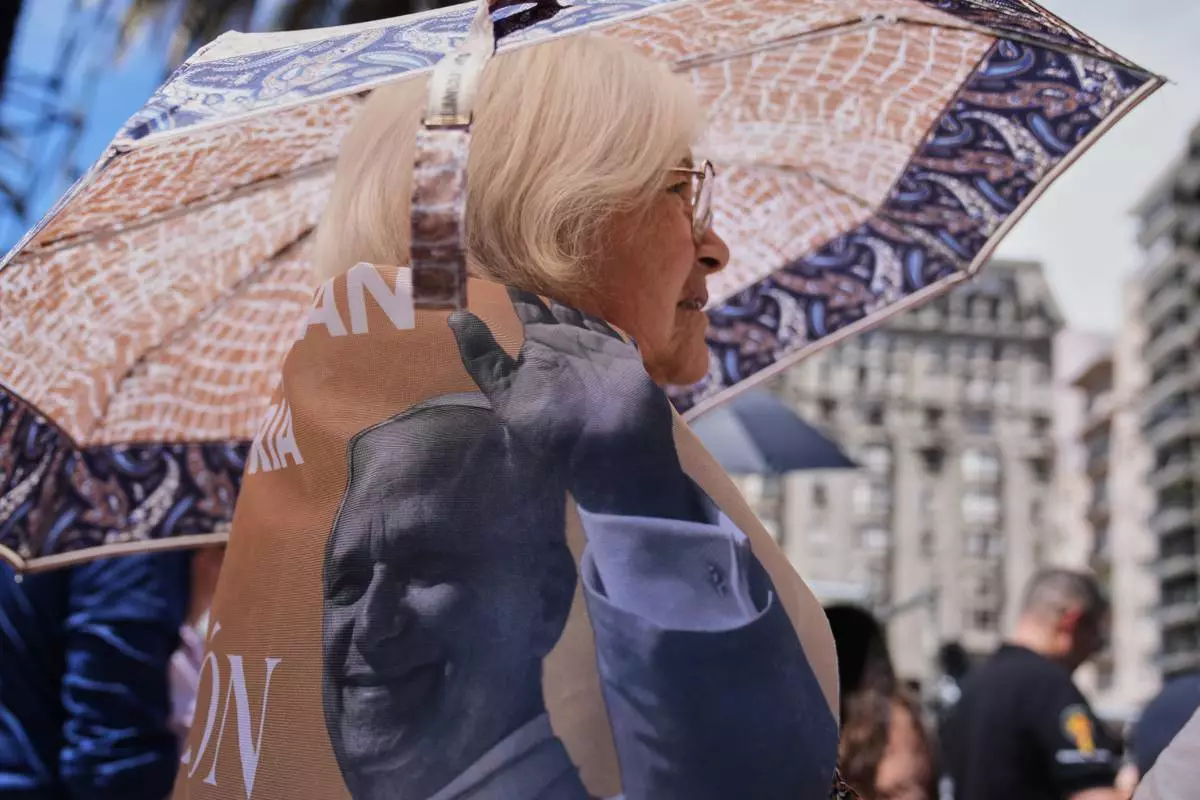
A faithful wears a scarf featuring Pope Leo XIV in Montevideo, Uruguay, Friday, Nov. 6, 2026. (AP Photo/Matilde Campodonico)
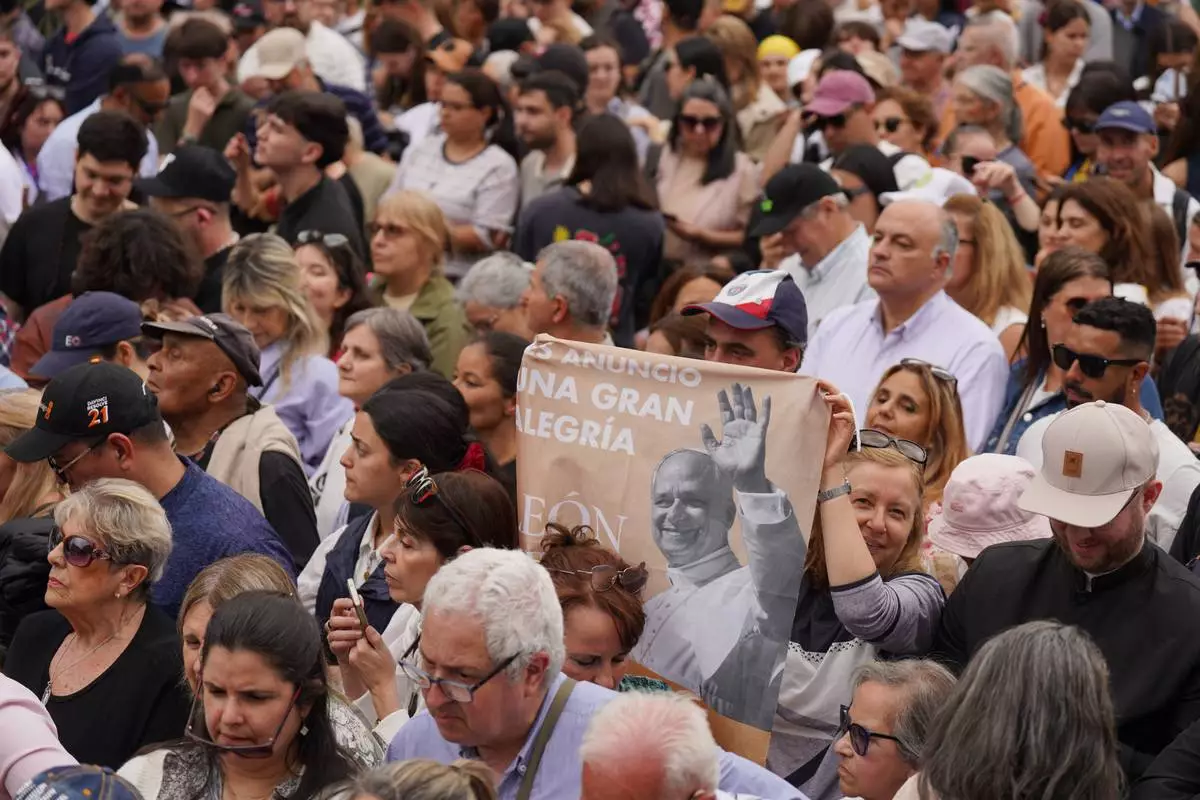
Faithful wait for the arrival of Pope Leo XIV in Montevideo, Uruguay, Friday, Nov. 6, 2026. (AP Photo/Matilde Campodonico)
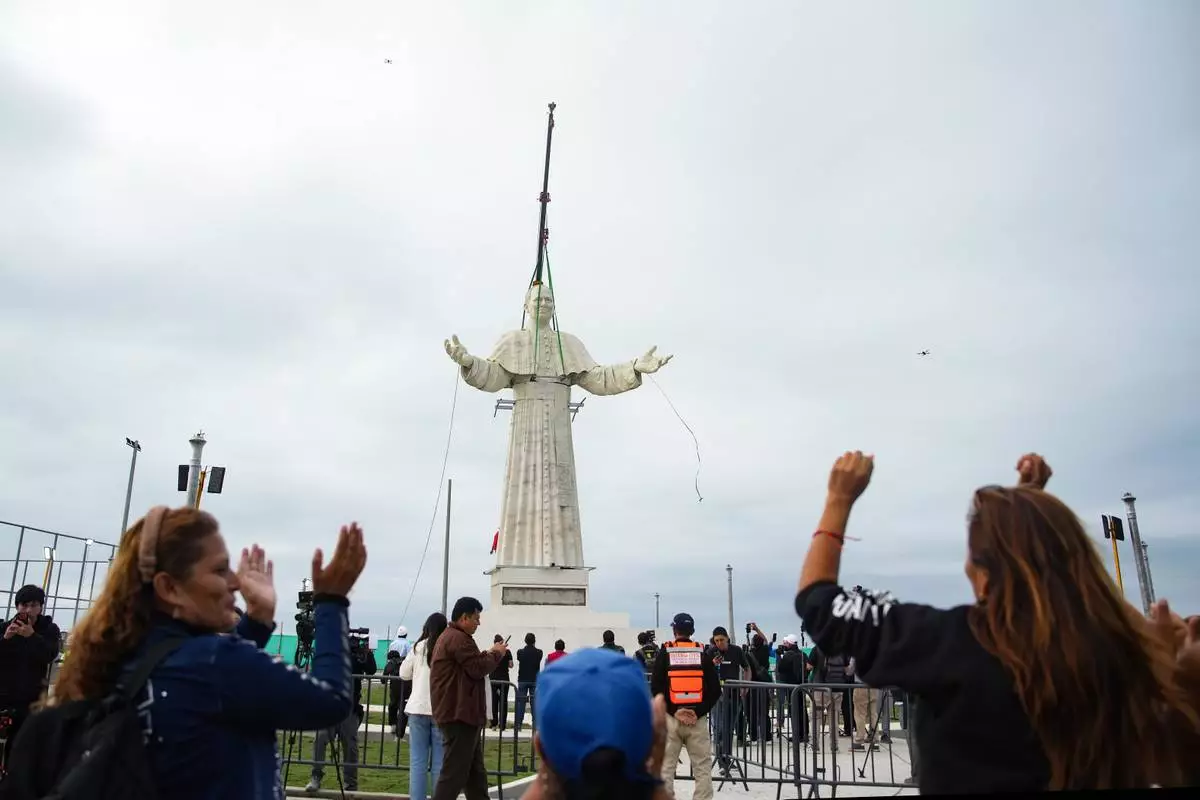
People cheer as a statue of Pope Leo XIV is installed in 'El Niño' park in Callao, Peru, Friday, Nov. 6, 2026, ahead of his planned trip to Uruguay, Argentina, and Peru from November 6 to17. (AP Photo/Guadalupe Pardo)
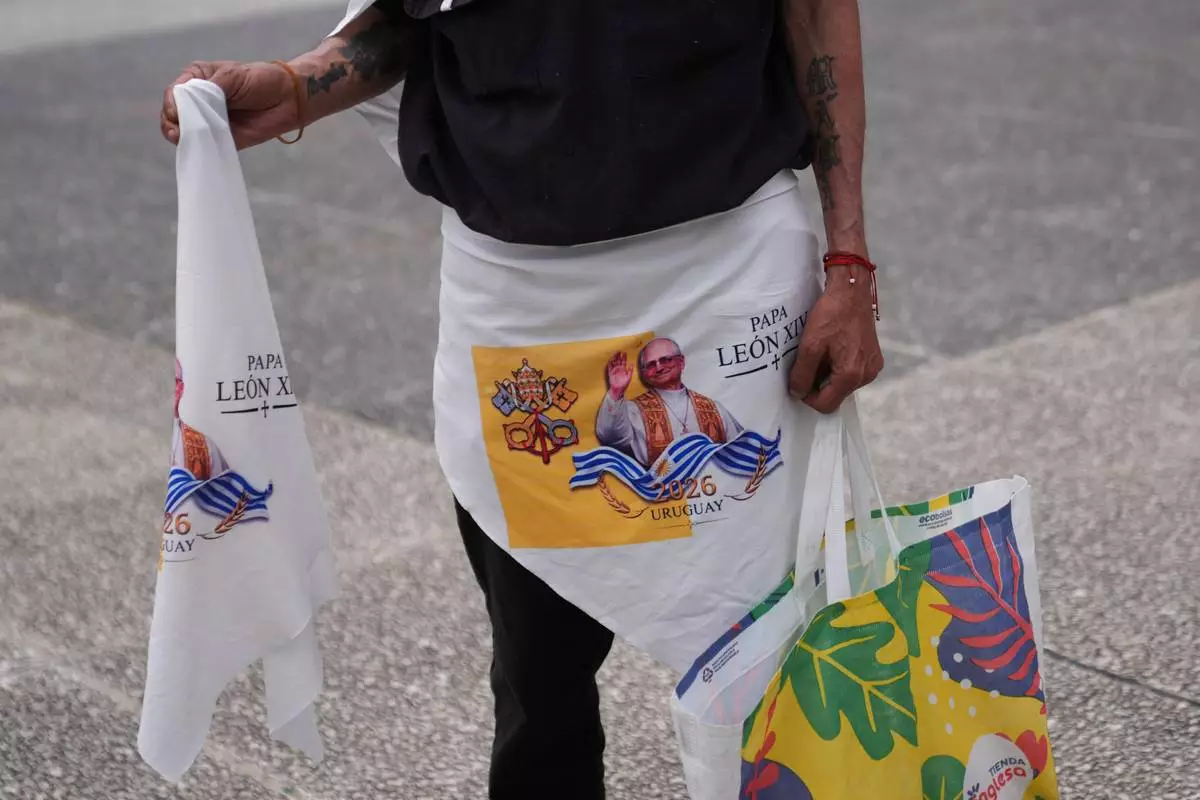
A vendor sells scarves featuring Pope Leo XIV's image ahead of his arrival in Montevideo, Uruguay, Friday, Nov. 6, 2026. (AP Photo/Matilde Campodonico)
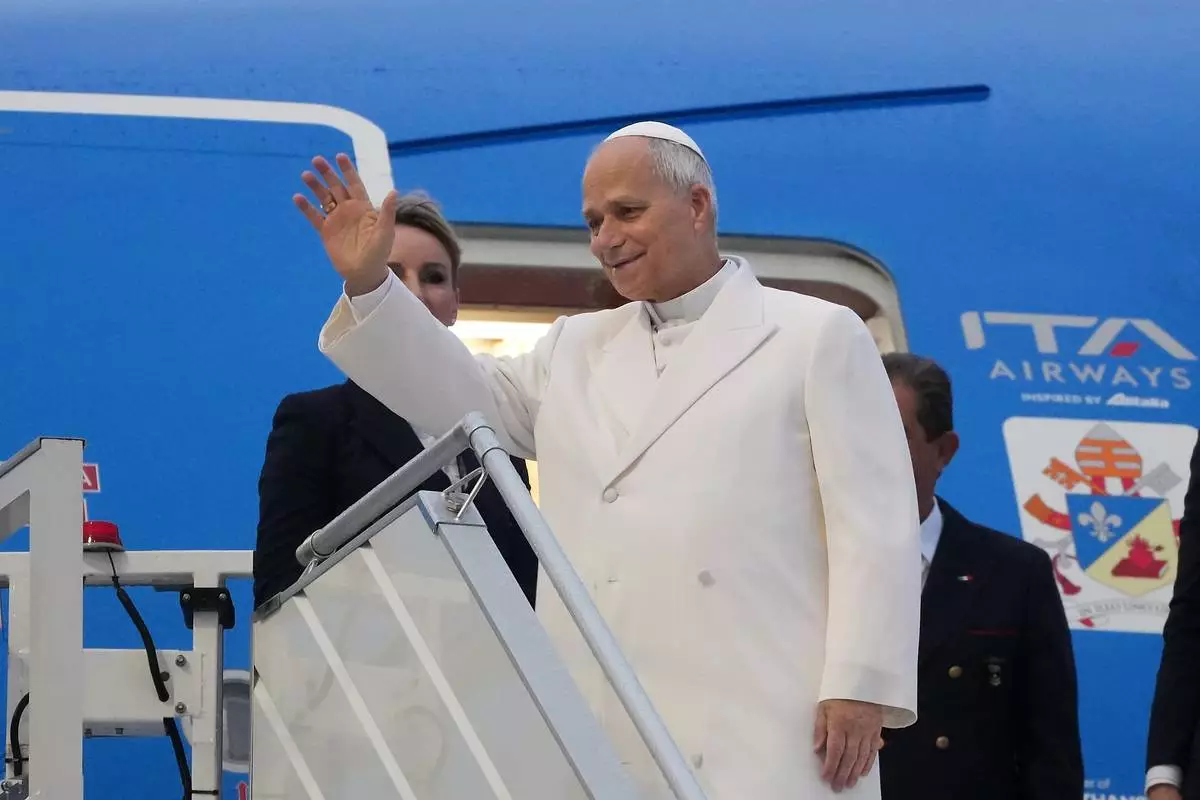
Pope Leo XIV departs from Rome's Leonardo da Vinci International Airport in Fiumicino, near Rome, for Montevideo, Uruguay, at the start of his twelve-day apostolic journey to South America, Friday, Nov. 6, 2026. (AP Photo/Gregorio Borgia)
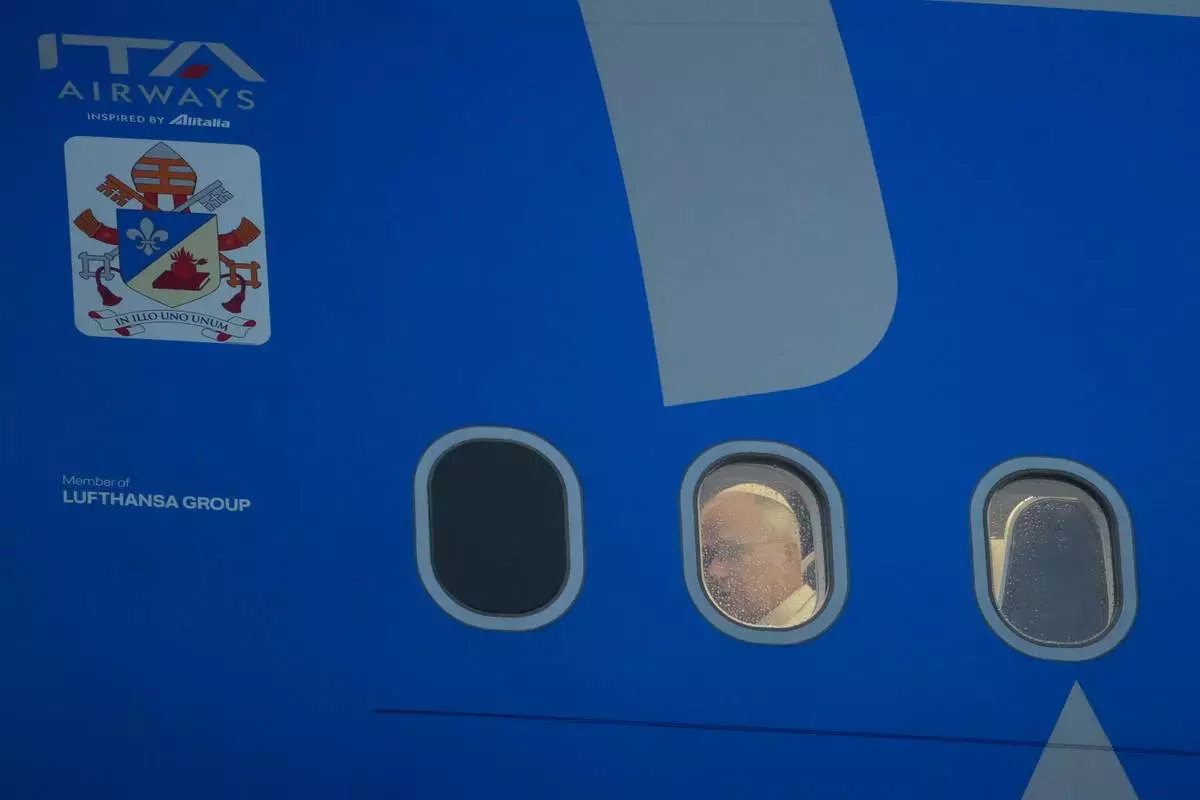
Pope Leo XIV departs from Rome's Leonardo da Vinci International Airport in Fiumicino, near Rome, for Montevideo, Uruguay, at the start of his twelve-day apostolic journey to South America, Friday, Nov. 6, 2026. (AP Photo/Gregorio Borgia)
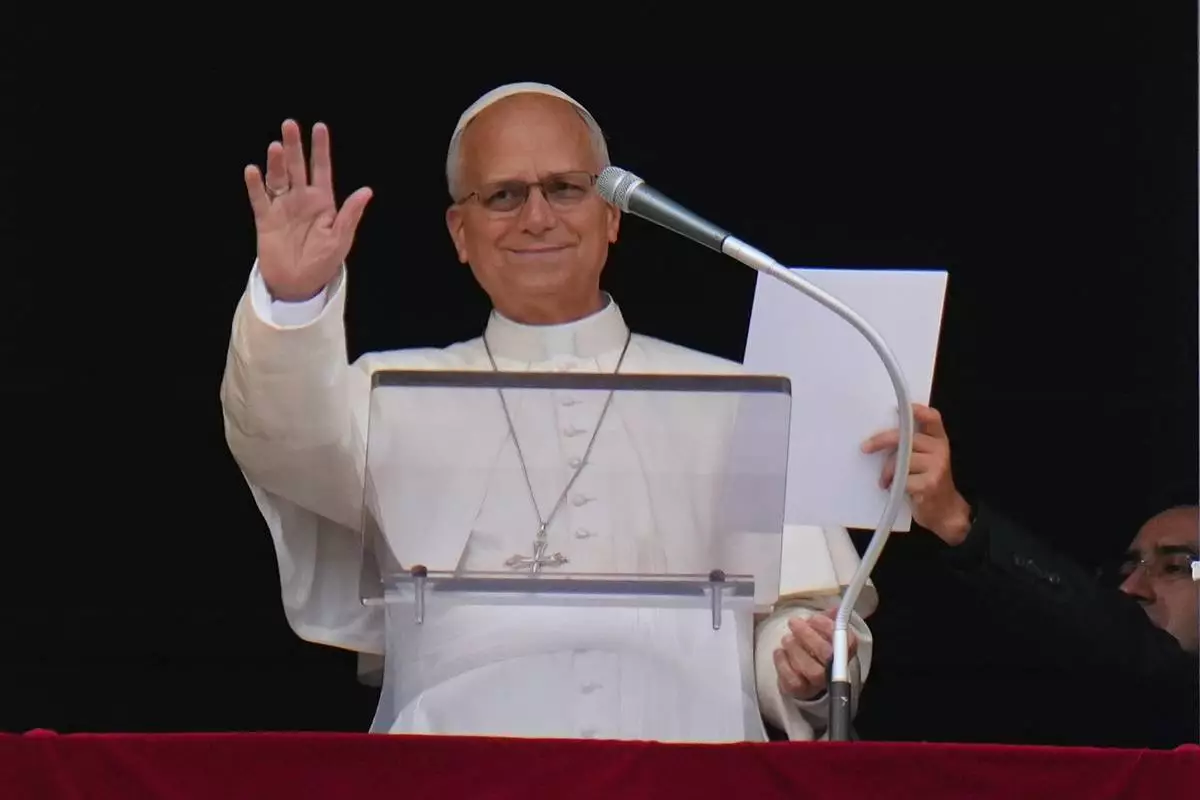
Pope Leo XIV appears at the window of the Apostolic Palace overlooking St. Peter's Square at the Vatican for the Angelus noon prayer on All Saints' Day, a feast celebrated across much of the Christian world, Sunday, Nov. 1, 2026. (AP Photo/Alessandra Tarantino)
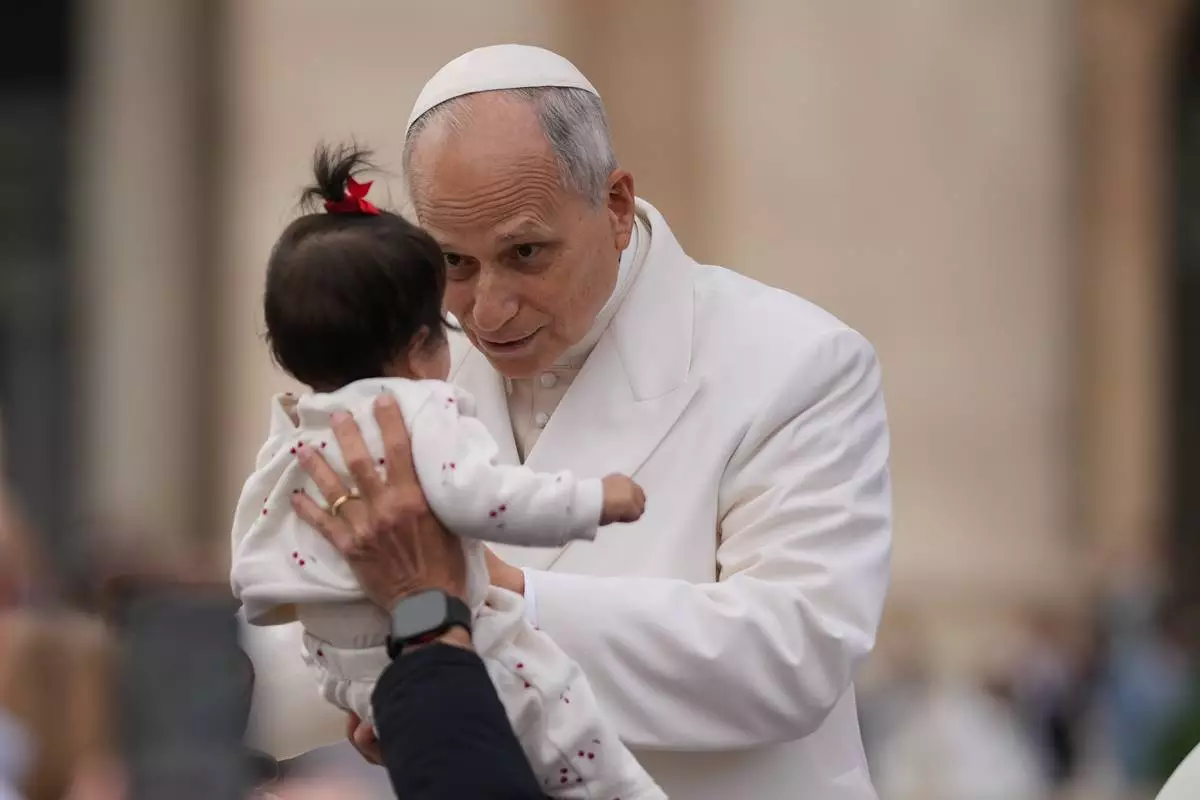
Pope Leo XIV blesses a new born after his weekly general audience in St. Peter's Square at The Vatican, Wednesday, Nov. 4, 2026. (AP Photo/Andrew Medichini)
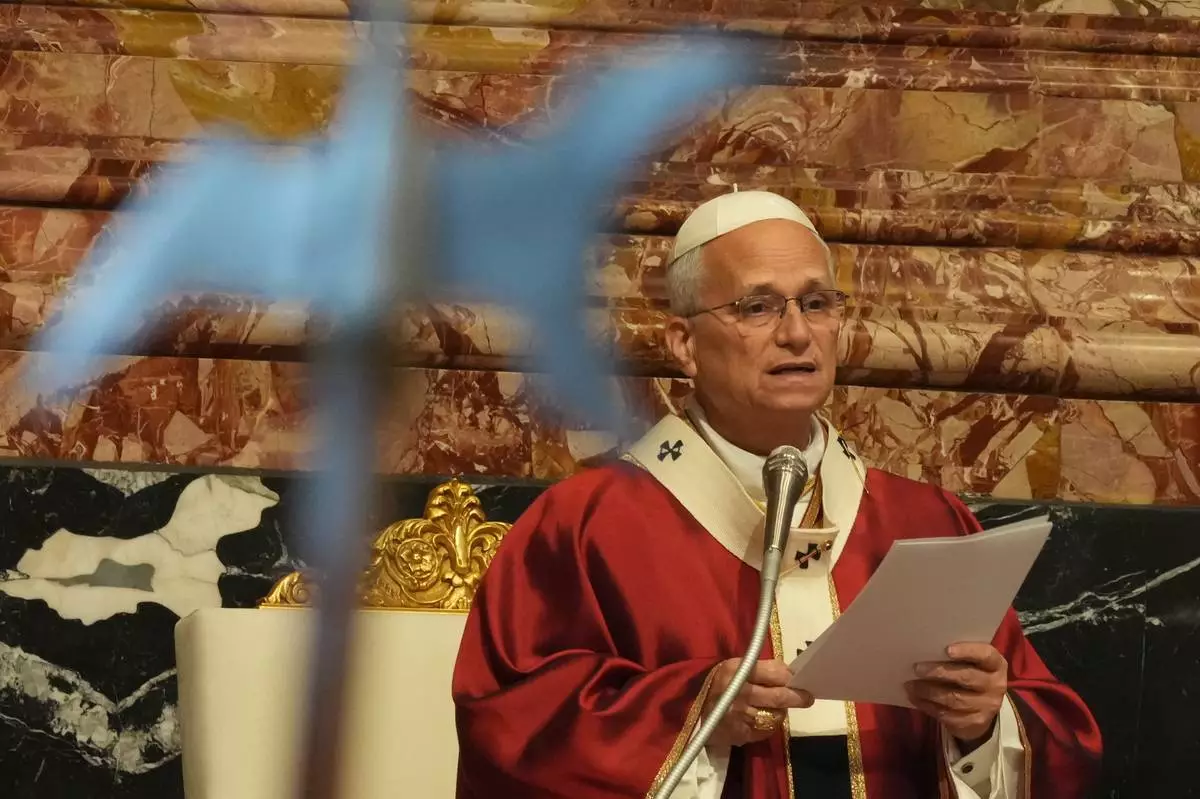
Pope Leo XIV celebrates a mass in memory of cardinals and bishops who died during the past year, in St. Peter's Basilica, at the Vatican, Thursday, Nov. 5, 2026. (AP Photo/Andrew Medichini)
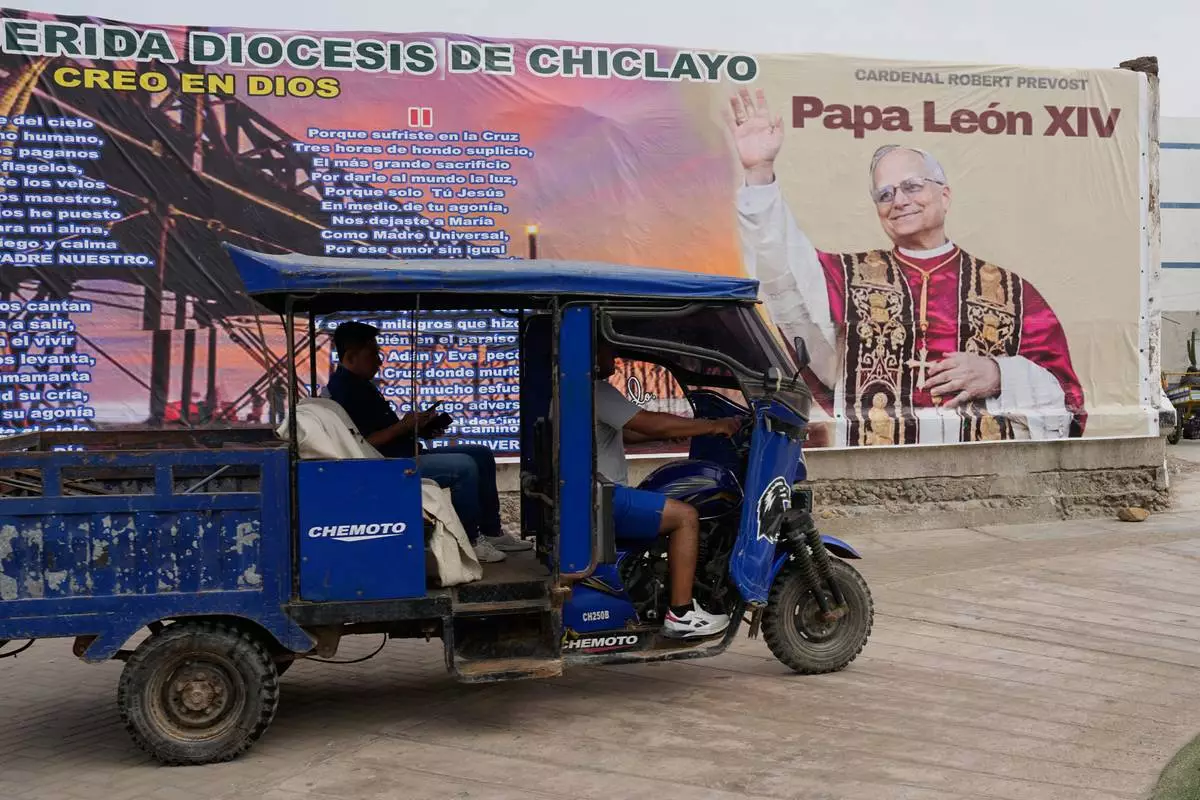
A mototaxi pass drives past a banner of Pope Leo XIV at Pimentel beach in Chiclayo, Peru, Thursday, Nov. 5, 2026, ahead of his planned trip to Uruguay, Argentina, and Peru from November 6 to 17. (AP Photo/Martin Mejia)