WASHINGTON (AP) — Democratic Sen. Chris Murphy of Connecticut said on Friday that he has been discharged from the hospital after suffering a stroke last weekend and will miss “several weeks” of votes in the Senate as he recovers in a rehabilitation facility.
Murphy, 53, said in a statement that doctors are “very encouraged by the progress I've made so far" and that the stay at the rehabilitation center will get him back to work on the quickest timeline possible.
Murphy said doctors diagnosed him with a small hemorrhagic stroke, which is a bleed in the brain. He said he called 911 on Oct. 31 out of an abundance of caution after feeling that “something was not right” with his body.
“This has been a scary experience for me and my family, and I appreciate the continued respect for our privacy,” he said.
The press release updating Murphy's condition included a statement from Dr. Jose Suarez, chief of neurosciences critical care at the Johns Hopkins Hospital. Suarez said the senator has shown tremendous progress and “we expect that he will make a full recovery following rehabilitation.”
In the Senate, Murphy serves on the Appropriations Committee and is a leading voice on immigration and gun policy. He is considered a contender for more senior leadership positions in the Senate and among the many Democrats seen as potential 2028 candidates for the White House.
Murphy said that he has been staying engaged with his team and colleagues remotely and that his staff continues to ensure the work of his office continues uninterrupted.
“I want to extend my deepest thanks to the excellent doctors and staff at Johns Hopkins who have treated me and cared for my family,” Murphy said.
Murphy had been traveling the country in support of House and Senate candidates as his party raced for majority control, which it secured in Tuesday’s midterm elections. A day before the stroke, he posted that he had been campaigning in his home state for Gov. Ned Lamont. The week before, he posted from Minnesota campaigning with Lt. Gov. Peggy Flanagan, the Democratic nominee for the Senate.
Lamont won reelection on Tuesday, and Flanagan won her race, becoming the first Native American female U.S. senator.
The final sprint before Election Day capped Murphy’s whirlwind trip to the Middle East at the start of October for meetings with several leaders, including Saudi Crown Prince Mohammed bin Salman. In early September, Murphy completed his annual “walk across Connecticut,” covering about 70 miles (113 kilometers) over four days, talking with residents about their concerns along the way.
Three other Senate Democrats have had strokes in recent years.
Sens. Ben Ray Lujan of New Mexico and Chris Van Hollen of Maryland had strokes in 2022 and have since recovered. Pennsylvania Sen. John Fetterman had a stroke while campaigning for his seat that year and now uses adaptive technology in the Senate, including live captioning on a phone or tablet that transcribes words as people speak to him and helps him process the conversation.
Fetterman said on social media the day after Murphy's stroke that his family was “rooting for Chris and his family for a full and speedy recovery.”
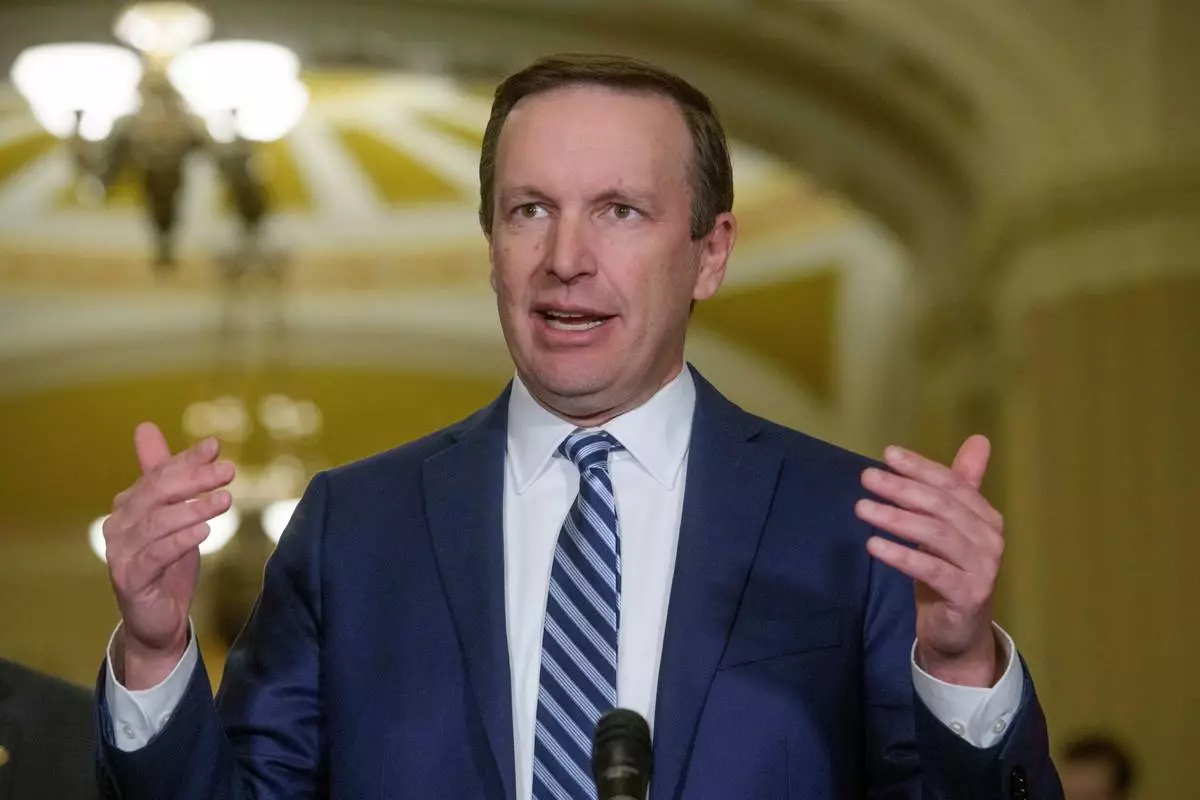
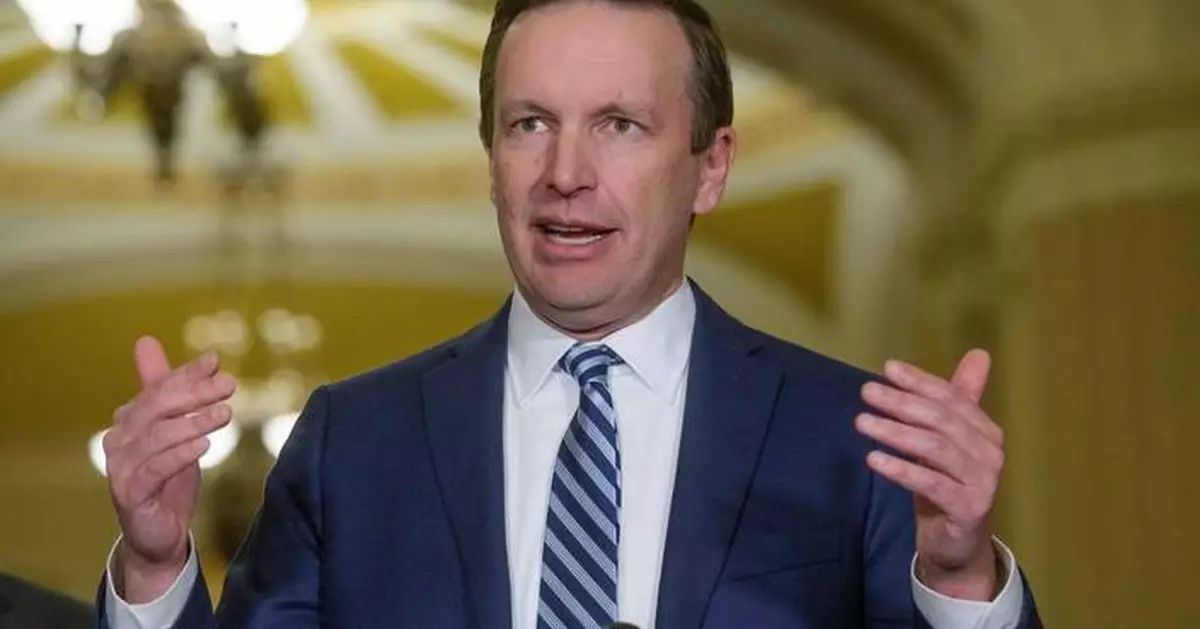
FILE - Sen. Chris Murphy, D-Conn., speaks at the Capitol, Jan. 21, 2025, in Washington. (AP Photo/Rod Lamkey, Jr., File)
WASHINGTON (AP) — President Donald Trump said Friday that Stephen Miller was replacing Susie Wiles as White House chief of staff, mere days after Republicans lost control of Congress in the midterm elections.
Miller, long a key member of Trump’s inner circle, is a key architect of the administration’s hard-line immigration policies. He is one of Trump’s closest and longest-serving advisers, joining his long-shot 2016 presidential campaign as a speechwriter. He currently serves as White House deputy chief of staff for policy and oversees a broad portfolio, though he is best known for his role in Trump’s immigration policy.
The staff shuffle signals that Trump, now staring down a combative Congress that will soon be controlled by Democrats, is resisting a conciliatory approach after the GOP's midterm thrashing on Tuesday. Miller is a dogged defender of Trump and his “America First” principles, and has built a deep and sophisticated understanding of a president's executive power and how the federal government operates, portending a potential burst of executive actions in the final two years of Trump's presidency.
Wiles gave Trump her resignation on Thursday night, a person familiar with the events said, speaking on condition of anonymity to describe the private conversation. Trump praised Wiles in a Truth Social post and said she’d continue to work for his political organization.
“Serving President Trump in the White House has been the honor of a lifetime. I’m so proud to have been a part of what we’ve accomplished together from securing our border and cutting taxes to strengthening our economy and putting America First,” Wiles said in a social media post shortly after Trump’s announcement. She added that her commitment to “the President and the mission” will not change.
Wiles, the steely political operator and longtime adviser to Trump, was the first woman to ever serve in that post and the longest-serving White House chief of staff for Trump, who cycled through four of them during his first four-year term.
The departure also came months after Wiles indicated she no longer showed evidence of breast cancer after she underwent months of treatment for the disease, a diagnosis she went public with in March 2026.
During the midterm campaign, Miller took frequent partisan swipes at Democrats, calling them “extremists, freaks and America-hating lunatics” on social media and promoted unfounded theories about election fraud in California and Alaska.
He has been a major part of the Trump administration’s anti-fraud task force targeting benefit programs and a decision to suspend Microsoft and others from a green card program. He also served as homeland security adviser at the White House, giving him a perch from which to coordinate with other agencies across the government.
Miller was a veteran Senate aide who worked for former Sen. Jeff Sessions, R-Ala., before he joined Trump's nascent presidential campaign in 2016. Sessions was the first senator to endorse Trump in his first run and later served as his attorney general.
But the immigration policies that Miller is so closely allied with were a major liability for Republicans during the just-wrapped election. The midterm AP Voter Poll found that most voters, about 6 in 10, said the administration’s immigration enforcement actions had gone too far and that they “somewhat” or “strongly” disapproved of how Immigration and Customs Enforcement had handled its responsibilities.
“Just days after the American people rejected his corrupt and lawless presidency, Donald Trump is doubling down,” said Rep. Robert Garcia, D-Calif., who is set to become chairman of the powerful House Oversight Committee. “Stephen Miller is the architect of the unconstitutional ICE raids that have terrorized our communities and kidnapped and killed American citizens and immigrant families.”
In a statement, Garcia added: “Stephen Miller should lawyer up.”
The veteran Florida operative joined Trump’s team during his 2016 presidential bid to run the campaign in his adopted home state. She performed the same role again in 2020 before overseeing the entire 50-state effort in 2024. She is the second woman to lead Trump’s presidential campaign to victory, although she never embraced the formal title of campaign manager.
Wiles, 69, has been credited with steering the most disciplined of his three presidential bids, and Trump himself has said he was often told that Wiles led his “best-run campaign.” Often called the “ice maiden” by the president, she was seen as the no-brainer choice to serve as White House chief of staff at the start of his second term.
She cut her reputation as someone who brought discipline to the president’s chaotic style and shunned the spotlight, so much so that at Trump’s 2024 election night victory party, she repeatedly shook her head and avoided the microphone as Trump tried to coax her to speak to the crowd.
But in December 2025, nearing the end of Trump’s first year back as president, Wiles became the headline when Vanity Fair magazine published a series of interviews with her and other top Trump administration officials conducted by the author Chris Whipple, an expert on White House chiefs of staff.
The Wiles interviews stuck out for their candor, which is unusual for a sitting White House chief of staff. She said Trump has an “alcoholic’s personality,” although the president does not drink, and said then-Attorney General Pam Bondi had “whiffed” in her handling of the Jeffrey Epstein files while remarking that Vice President JD Vance has been a “conspiracy theorist for about a decade.”
Trump and other administration aides rushed to defend Wiles, who, in turn, disparaged Vanity Fair for publishing what she called a “disingenuously framed hit piece,” though she did not deny making the comments.
In the interviews, which were conducted over a period of several months, Wiles also revealed a bit of her management style, saying she was “not an enabler.”
“I try to be thoughtful about what I even engage in,” Wiles said. “I guess time will tell whether I’ve been effective.”
Trump went through four chiefs of staff in his first term: Reince Priebus, who Trump fired after just six months; John Kelly, who served the longest at 17 months; Mick Mulvaney, who held the role for a little over a year in an “acting” capacity; and Mark Meadows, who served as gatekeeper for the 10 months before Trump left office.
Six months after her diagnosis, Wiles revealed she was “cancer-free," indicating she no longer showed evidence of cancer after her pathology results came back clear. She thanked her family, friends, doctors, and gave special thanks to Trump for his “unwavering support" in a statement.
“She’s tough,” Trump said at a White House event in October. “She’s a tremendous fighter.”
In a rare interview, Wiles told Fox News Digital last month that she hadn’t been planning on getting the mammogram that ultimately detected her cancer. Her doctor suggested she do the exam anyway, because a mammogram machine was available that day and her schedule was too busy and unpredictable.
“Had he not encouraged me to do it that day, I would have gone back to work and probably not thought about it again until July,” Wiles told the outlet. “We would be having a very different conversation in that case. Four months may not sound like a long time, but with cancer, early detection matters. I will always be grateful to my doctor for knowing me well enough to insist.”
In addition to Trump, Wiles also ran incumbent Sen. Rick Scott’s 2010 campaign for Florida governor and briefly served as manager of former Utah Gov. Jon Huntsman’s 2012 presidential campaign. She spearheaded Ron DeSantis ’ successful run for governor in 2018, but DeSantis would eventually urge the Trump campaign in 2020 to cut ties with Wiles, creating a rift that led to a particularly vicious effort by those in Trump’s orbit to mock DeSantis throughout his failed run for the Republican presidential nomination against Trump in 2024.
Wiles, the daughter of the late NFL player-turned-broadcaster Pat Summerall, also worked in the offices of former Jacksonville mayors John Delaney and John Peyton. Her first White House job was as a scheduler for President Ronald Reagan.
In addition to her government and campaign positions, Wiles has worked as a lobbyist. She was a partner at Florida-based Ballard Partners, which rose to prominence in Washington during Trump’s time in the White House. Her clients included General Motors, a trade group for children’s hospitals, homebuilders, and the city of Jacksonville.
She was also registered as a lobbyist for the Venezuelan television network Globovisión, which was owned by businessperson Raúl Gorrín, who was charged in Miami with money laundering. The firm later called its work for Gorrín a mistake and said Wiles had almost no role in managing the relationship with Gorrín.
Associated Press writer Michelle L. Price contributed to this report.
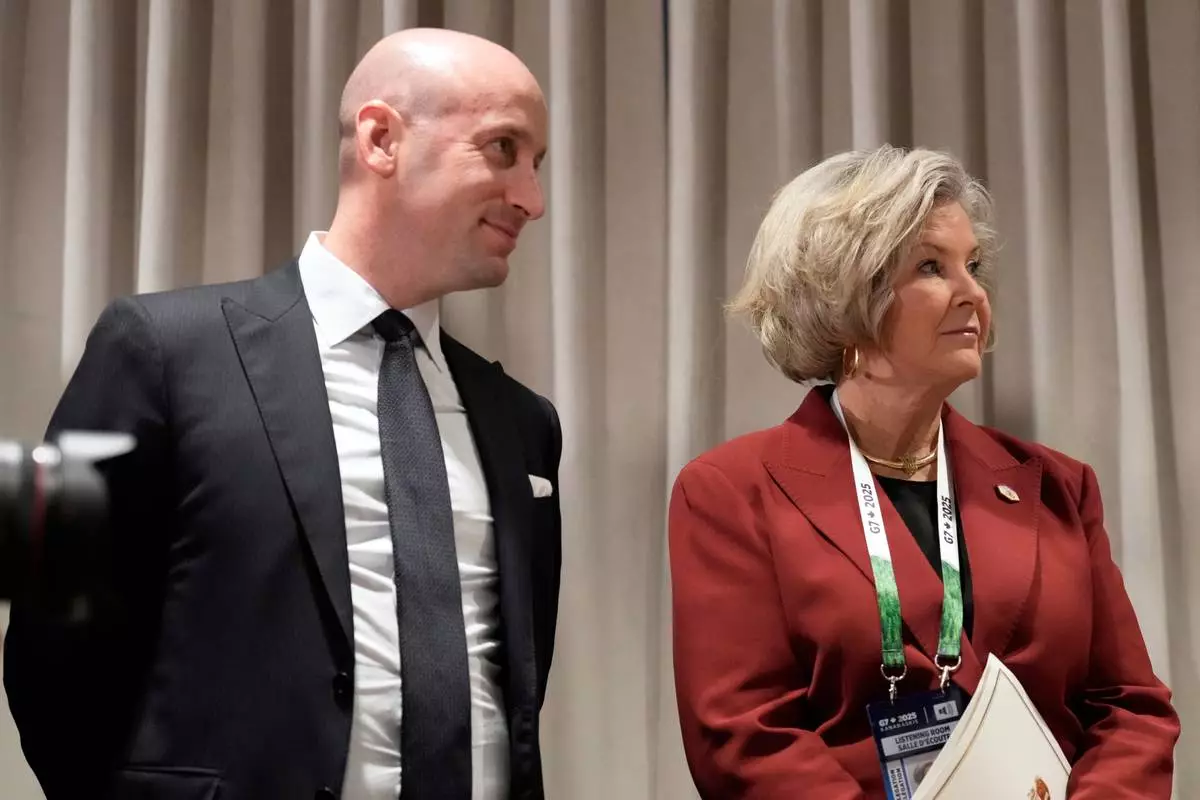
FILE - White House Deputy Chief of Staff Stephen Miller, left, and White House Chief of Staff Susie Wiles listen during a meeting with President Donald Trump and Canada's Prime Minister Mark Carney on the sidelines of the G7 Summit, June 16, 2025, in Kananaskis, Canada. (AP Photo/Mark Schiefelbein, File)