An extraordinary wave of fake bomb threats targeting European aviation this week is unprecedented in recent years, but the continent's transport system has avoided a systemic collapse, according to Serbian aviation analyst Petar Vojinovic.
European aviation faced multiple rounds of bomb threats this week, affecting flights across several countries and prompting some aircraft to divert or land under military jet escort. All affected flights were searched and no explosives were found, with the threats ultimately confirmed to be false alerts.
The latest wave came on Friday, following a series of threats reported on Tuesday and Thursday, with more than 20 flights affected on Thursday alone.
Speaking to China Media Group (CMG), Vojinovic noted that no evidence currently links the wave of false reports to any specific group, calling the sudden surge unprecedented.
"As far as I know, [this] hasn't been happening like for years earlier because such a concentrated level of reports, fake reports, because they didn't actually find anything, is really extraordinary. It still wasn't connected particularly to any organization," he said.
Vojinovic explained that upon receiving a bomb threat, airlines must follow established security protocols to implement response measures. They cannot independently judge the authenticity of a threat, nor can they lower their vigilance level simply because it might be a false alarm.
Consequently, even though all such threats have turned out to be fake, the mandatory handling procedures still cause flight delays, disrupt airport operations, increase security screening costs, and lead to issues regarding passenger accommodation and compensation, he noted.
"So that creates a delay of several hours. When an airline operates a single aircraft, that aircraft is used on several routes on that day. So the ones that had to be diverted, they had to be checked. They are not available for the next flight. And all of that is still being done because that's the only way that you can check and that you can double check and that you can clear that everything is safe," Vojinovic said.

European aviation withstands unprecedented wave of fake bomb threats: expert

European aviation withstands unprecedented wave of fake bomb threats: expert
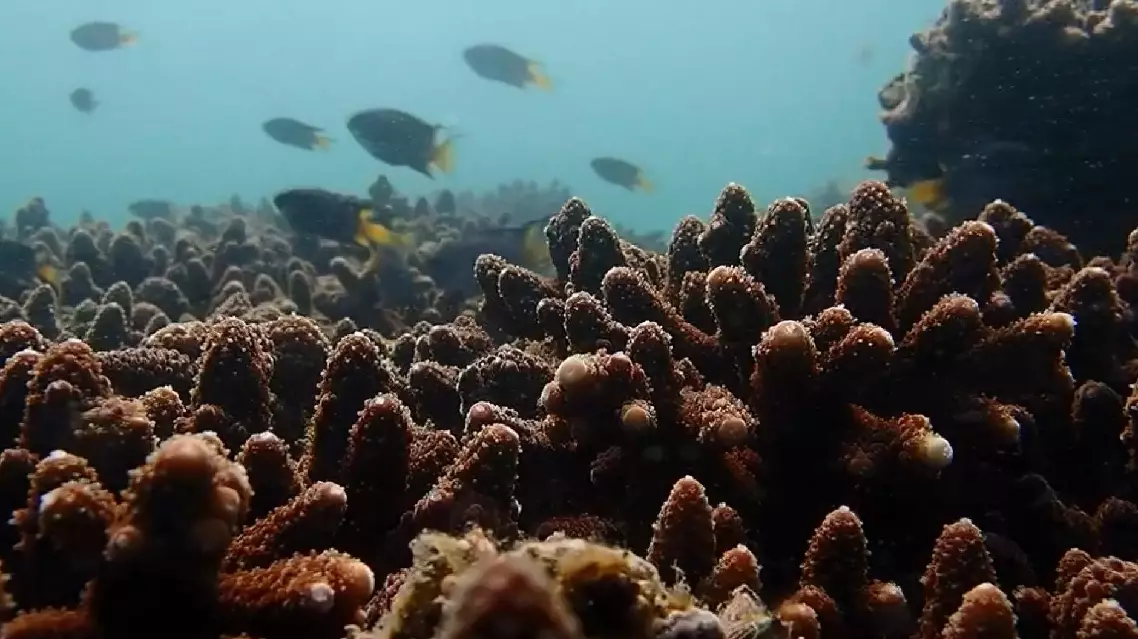
The 2026 World Ocean Week kicked off Thursday in the Chinese coastal city of Xiamen, welcoming officials, professionals and entrepreneurs in the maritime sector to discuss and advance marine ecosystem protections.
The event released five key outcomes. These include a new set of environmental data products designed to support biodiversity protection in international waters, a new action plan on ocean literacy developed by APEC economies, and a digital atlas of seamounts in the western Pacific.
"Drawing on decades of China's deep-sea survey data, the atlas uses different layers of information to bring these largely hidden underwater mountains into view. We integrated multi-beam data from the deep sea, fundamental data and physical deep-sea data, presenting a vivid and three-dimensional deep-sea seamounts to people. This makes deep-sea environments easier to understand, access and share. We hope these datasets can be used across a wide range of fields," said Tang Dongmei, deputy director-general of the Deep Ocean Affairs Administration under the Chinese Ministry of Natural Resources.
These efforts come as the world's oceans face mounting pressures, including climate change, ocean acidification and growing human activities in the deep sea.
With marine ecosystems connected across national boundaries, participants say conserving them requires cooperation beyond individual countries.
One key framework is the Biodiversity Beyond National Jurisdiction (BBNJ) Agreement, a legally binding international treaty under the United Nations Convention on the Law of the Sea.
It aims to protect marine biodiversity in areas beyond national jurisdiction, including the high seas and the international seabed.
Adopted in 2023 after 19 years of negotiations, the agreement entered into force in January this year, marking a new chapter in global ocean governance.
"I think the BBNJ Agreement is a big opportunity for many countries, especially for developing countries, like mine. It is an opportunity for us to strengthen this partnership, especially in the marine domain, with China, to gain this experience and implement it in our country. And this will also benefit the world at large, especially for the ocean," said Fernand Maxime Ahoyo, Maritime Prefect of the National Authority for Law Enforcement at Sea of Benin.
China, Belgium and Chile are now competing to host the BBNJ Secretariat, and China has formally submitted Xiamen's bid. The final decision is expected in January 2027.
"I think China has a lot of potential. It has a lot of technical and financial resources that can really benefit the Pacific, and it has been benefiting the Pacific for the last decades," said Arpana Pratap, secretary general of the Pacific Islands Development Forum.
"I think that Xiamen as the future headquarters of BBNJ here will demonstrate that China is going on the right track, and explaining to the rest of the world that there's a way forward and improving the marine condition through innovation, science, technology," said Pierre Erwes, chairman of the BioMarine Business Convention.
This year's Xiamen World Ocean Week, running through Nov. 11, features over 30 events, including international forums on ocean governance, exchanges on marine science and technology, and business matchmaking activities to promote the blue economy.
Exhibitions, public outreach programs and hands-on experiences also offer visitors a closer look at marine science and the efforts to protect our oceans.
2026 World Ocean Week in Xiamen yields fruitful outcomes