Skip to Content Facebook Feature Image

China’s intangible cultural heritage expo showcases innovative ways to integrate traditions into modern life

China

China

China

China’s intangible cultural heritage expo showcases innovative ways to integrate traditions into modern life

2026-11-07 17:00 Last Updated At:17:17

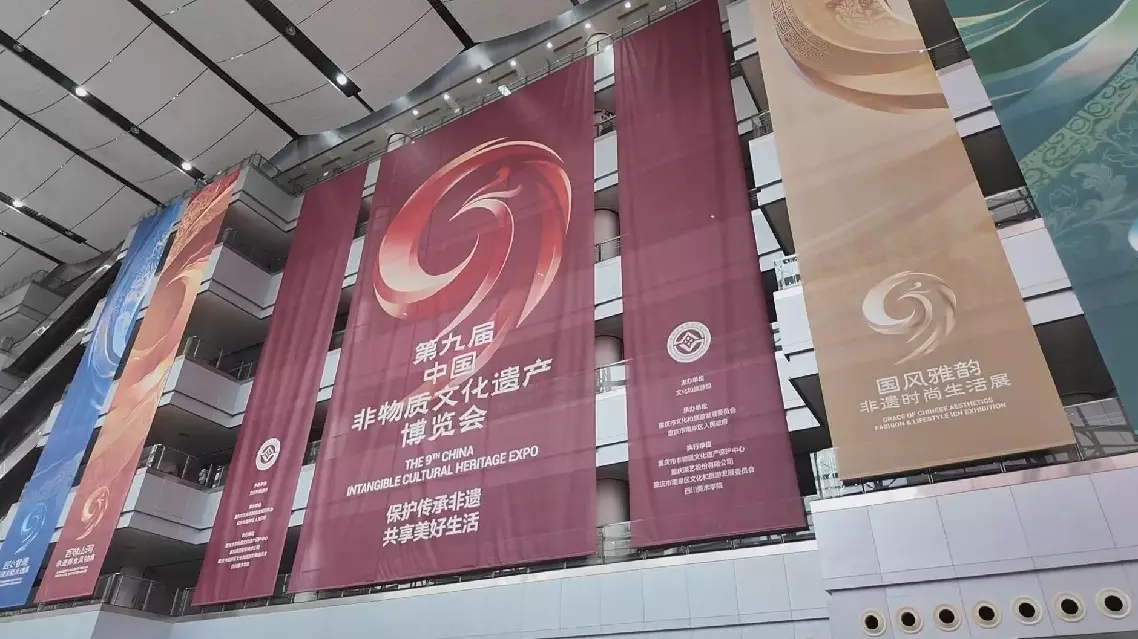
The ninth China Intangible Cultural Heritage Expo opened in southwest China's Chongqing Municipality on Friday, showcasing how traditional cultural practices are finding new ways to connect with modern lifestyles through interactive experiences and innovative settings.

At the exhibition area themed "Elegance of Chinese Style -- Intangible Cultural Heritage in Fashionable Living," visitors can explore more than 50 intangible cultural heritage projects presented through everyday life scenarios, including clothing, home decor and social activities.

Batik haute couture outfits are displayed alongside handcrafted porcelain and lacquerware, bringing traditional craftsmanship into contemporary living spaces.

One highlight is the "Children of the Stars" botanical dyeing workshop, which features cultural and creative products made by people with autism. The workshop provides opportunities for people with special needs to learn traditional crafts and develop their skills.

"We teach them traditional botanical dyeing techniques free of charge. We also give people with special needs an opportunity to realize their self-worth and let their lives shine," said Wang Yanqiu, founder of the "Children of the Stars" Botanical Dyeing Intangible Cultural Heritage Workshop.

At the exhibition showcasing technology-enabled intangible cultural heritage, digital innovations are making traditional crafts more interactive and immersive.

Visitors can wave a dragon pearl pole to make a virtual Tongliang dragon dance and leap across the screen. Traditional Chinese zodiac paper-cut designs also come to life in a digital landscape, with mythical creatures appearing in an animated world inspired by Chinese folklore.

A mobile exhibition vehicle, dubbed the "Intangible Cultural Heritage Caravan," brings digital exhibits to communities, schools and rural areas, making traditional culture more accessible to the public.

"We are highlighting more lifestyle-oriented, scenario-based and youth-friendly ways of presenting intangible cultural heritage, making it easier for people to understand, experience and engage with it. In addition, we will launch more than 30 special activities, including the first drone light show themed around intangible cultural heritage, a themed cruise ship and tours by the Intangible Cultural Heritage Caravan," said Gao Lin, director of Chongqing Municipal Commission of Culture and Tourism Development.

Organized by the Ministry of Culture and Tourism, the five-day expo features more than 890 intangible cultural heritage projects and over 930 inheritors from across the country.
China’s intangible cultural heritage expo showcases innovative ways to integrate traditions into modern life
China’s intangible cultural heritage expo showcases innovative ways to integrate traditions into modern life

New Zealand's ruling National-led coalition has secured a parliamentary majority in the general election, preliminary results showed early Sunday, putting Prime Minister Christopher Luxon on course to retain power for a second term.

The Election Commission's tally of all voting places has resulted in 11 "overhang" seats, increasing to 131 the total number of seats in parliament, which normally has 120.

Among the seats, the National Party, ACT New Zealand and New Zealand First collectively secured 67, giving the three-party coalition a narrow majority to continue governing, while the opposition bloc of the Labor Party, the Green Party and the Maori Party garnered 57 in total.

The contest between the National and the Labor, led by former prime minister Chris Hipkins, remained exceptionally close, with each securing over 29 percent, according to preliminary figures.

Addressing supporters in Auckland, Luxon said the election was "too close to call," with the final outcome hinging on special votes to be counted. He acknowledged that negotiations and compromise would be needed to form the next government.

The outcome could still change when 700,000 special votes are counted days later. These include ballots cast by overseas voters and people voting outside their electorates, and are not included in the preliminary results, according to the Electoral Commission, which is scheduled to release the final official results, including special votes, on Nov. 27.

The Green Party has won a record 16 seats in parliament. The centrist Opportunity Party has also made a parliamentary breakthrough, projected to win seven seats, preliminary results showed.

The country has nearly 3.8 million provisionally enrolled voters for the 2026 general election, representing 93.6 percent of the estimated eligible population, below the final enrolment rates of 94.7 percent in 2023 and 94.1 percent in 2020, the commission said.

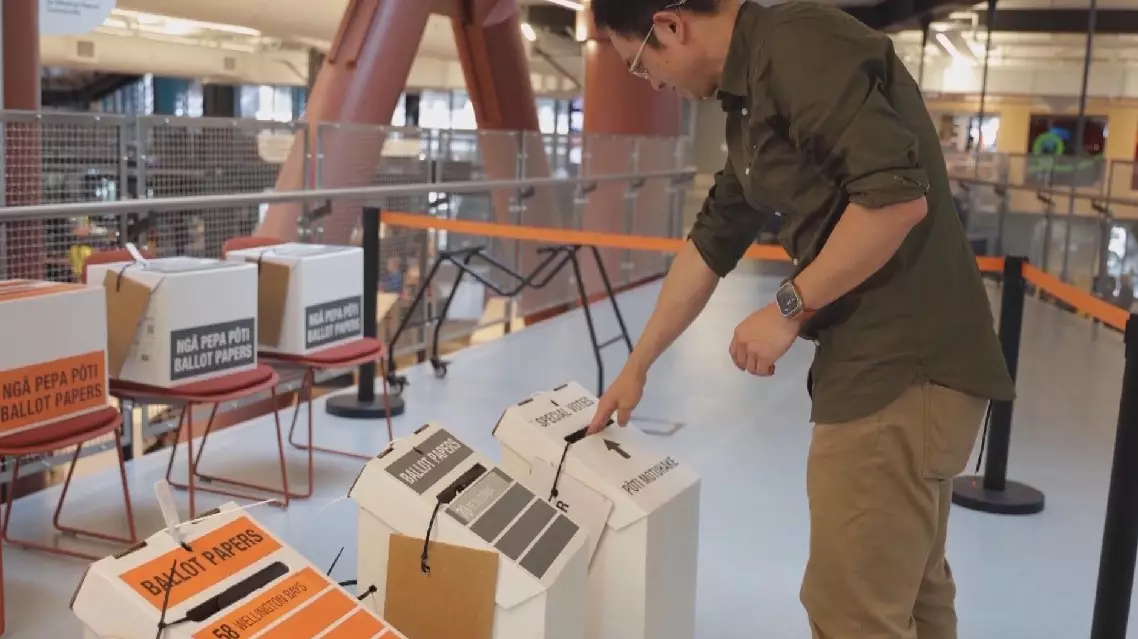
New Zealand uses the mixed-member proportional voting system to elect its parliament. Under this system, voters cast two ballots, one for a political party and another for their local electorate candidate. The government is usually formed by two or more parliamentary political parties.

New Zealand's National-led coalition wins majority parliamentary seats: preliminary results

New Zealand's National-led coalition wins majority parliamentary seats: preliminary results

Recommended Articles