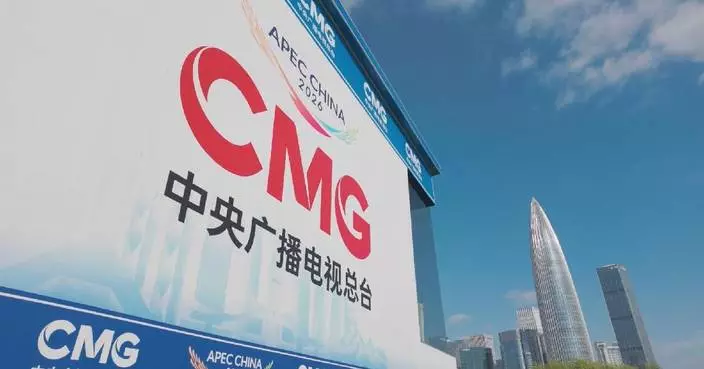
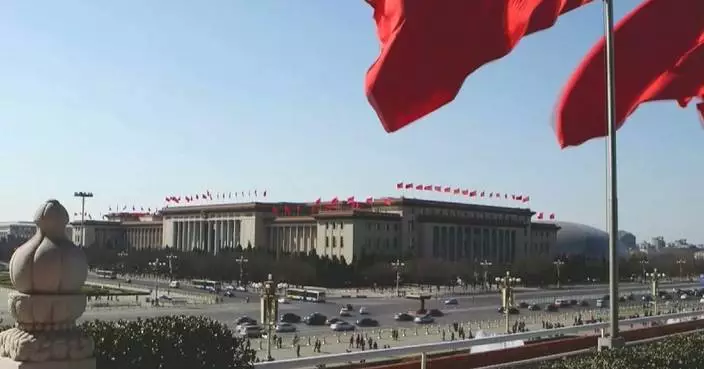
The 7th World Media Summit held its opening ceremony in Beijing on Saturday under the theme "Media in the Intelligent Age: From Consensus to Action."
The summit, which runs from Thursday to Monday, has drawn nearly 500 representatives from nearly 330 mainstream media outlets, think tanks and government bodies from 112 countries and regions, as well as the United Nations and other international organizations.
At the event, participants noted that global artificial intelligence technological innovation is currently entering an unprecedented period of vitality, bringing both opportunities and challenges to media development.
They emphasized that the more rapid the technological advancement, the more crucial it is to uphold the humanistic spirit and long-termism.
They called on media organizations worldwide to deepen practical cooperation, continuously enrich the supply of high-quality content, and accelerate digital and intelligent empowerment.
Furthermore, they stressed the need to work together to promote exchanges and mutual learning among civilizations, assist in improving AI governance, and contribute wisdom and strength to building a community with a shared future for mankind.
The World Media Summit was initiated in 2009 and is now a major global platform for media exchange and cooperation. The last summit was held in Urumqi, the capital city of northwest China's Xinjiang Uygur Autonomous Region, in 2024.
This year's summit is jointly organized by Xinhua News Agency and the Beijing Municipal People's Government.
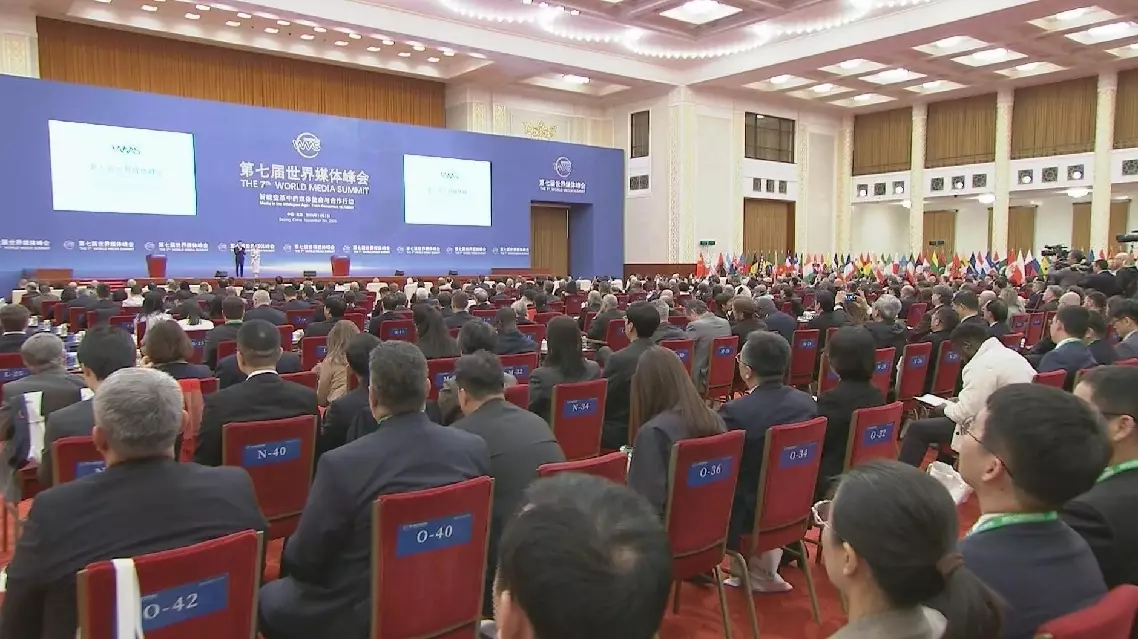
Seventh World Media Summit opens in Beijing
Japanese citizens gathered in Tokyo on Friday to protest against the government's attempt to breach the country's long-standing "Three Non-nuclear Principles," urging it to uphold its anti-nuclear commitment and oppose military expansion.
The protest came after Japanese media reported on Thursday that the government was considering explicitly including exceptions to the principles in its revised National Security Strategy, scheduled for the end of the year.
Japan's Three Non-Nuclear Principles stipulate that the country will not possess, produce, or permit the introduction of nuclear weapons. The current National Security Strategy, one of the country's three key security documents, explicitly states that Japan's basic policy of adhering to the principles will remain unchanged.
Protesters expressed concern that introducing exceptions would effectively undermine the principles and gradually weaken restrictions on nuclear weapons.
"Such a move is very machiavellian and disgraceful. I believe that under no circumstances should nuclear weapons be allowed into Japan. I also oppose incorporating such provisions as new clauses into the Three Non-nuclear Principles. Once this practice is accepted, the restrictions will gradually be loosened, eventually becoming uncontrollable," said a protester.
Other protesters said that the government's reported move to reconsider the non-nuclear principles is a deviation away from Japan's postwar pacifist commitment.
They also criticized the country's growing defense spending.
"Japan was defeated in the war and subsequently formulated the Constitution, which explicitly stipulates that Japan renounces the use of force. Japan thus became a country that will no longer wage a war. But now Japan's defense budget has increased by big margins every year, and there are moves to allow nuclear weapons into the country. Prime Minister Sanae Takaichi has even proposed reviewing the Three Non-nuclear Principles, a national policy that people across the country have upheld tighter all along. I find the current government's stance very disappointing," said another protester.
"Japan has always followed the Constitution of the country and formulated and adhered to the 'Three Non-Nuclear Principles' in accordance with it. But now the Takaichi administration is trying to breach this principle, and I oppose this. In the final analysis, I simply cannot feel at ease if Japan possesses nuclear weapons," said a protester.
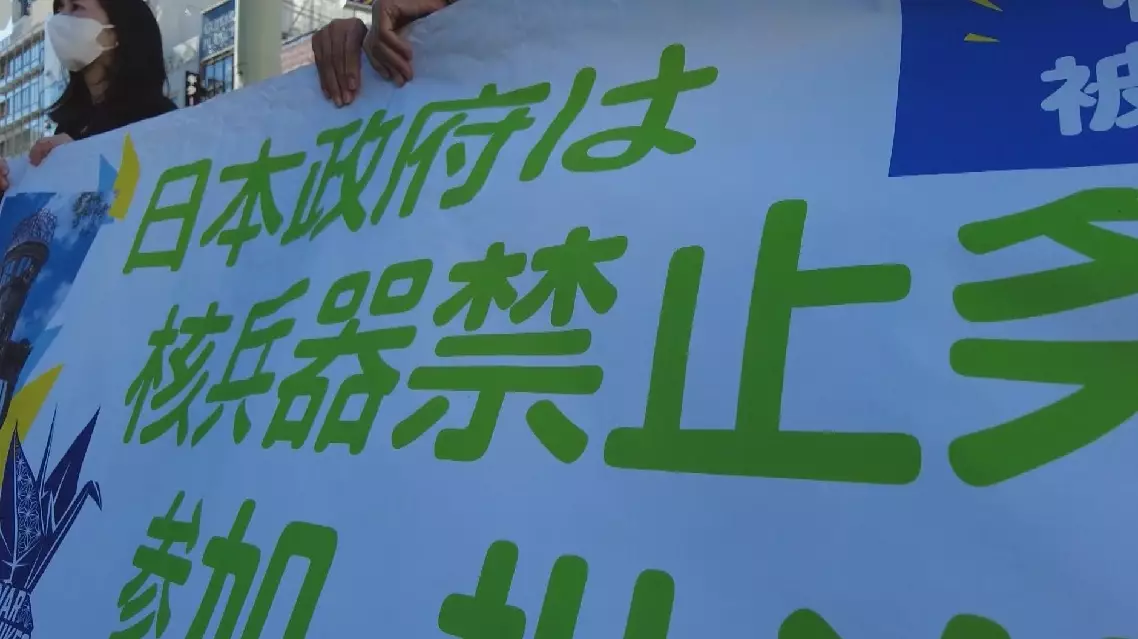
Japanese rally against attempt to breach "Three Non-Nuclear Principles"