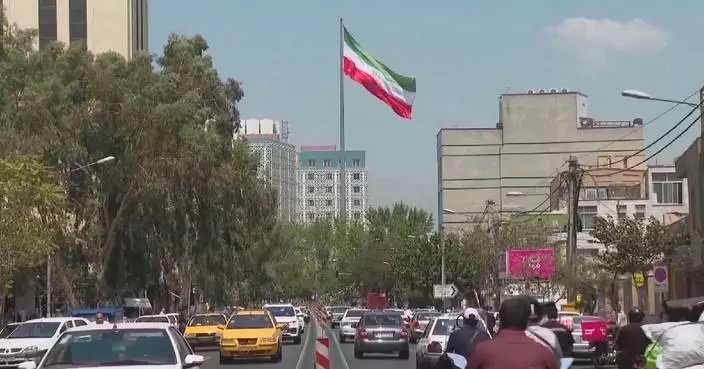
Many Iranian hardliners believe that Donald Trump's failure in the midterm election of the United States is due to his war with Iran, while other Iranians are worried about the potential of renewed military conflict.
"Anyone who takes on Iran will pay the price -- from the battlefield to their own doorstep," said Mohsen Rezaei, Secretary of Iran's Supreme National Security Council, following the U.S. Democrats' win in both houses of Congress.
For many Iranians, the Republicans' defeat reflects growing public frustration in the U.S. over the economic toll of the war.
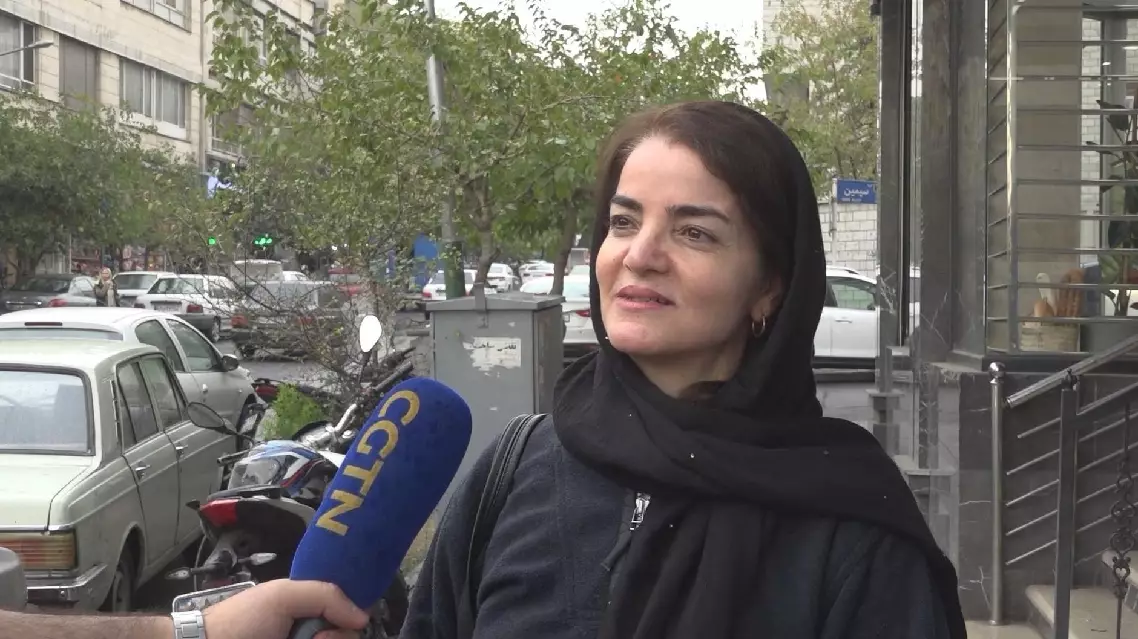
"The Republicans lost because of the war. It caused inflation to rise, oil prices to rise and made life harder for people, which led to a loss of public trust in Trump. Now that the Republicans have lost both houses of Congress, for this very reason, I think Trump has nothing left to lose and will wage war in order to declare victory," said Nahid, a Tehran citizen.
But there are Iranians who are concerned over a negative impact of the failure.
"The Republicans' defeat in the recent elections is undoubtedly linked to the recent conflict involving the United States and Iran, which had an impact," said Abdolsamad, another Tehran citizen.
Beyond public opinion, Iranian analysts are assessing the broader strategic implications of the election results. Akbar Masoumi, an international relations expert, argued that the dimensions of the war far exceeded U.S. expectations.
"It seems that the dimensions of the war with Iran were much broader and beyond the imagination of the United States and Trump himself. One could say that Trump made a miscalculation in attacking Iran. Things went in a direction that permanently diminished the United States' element of influence in Iran. Today, we are witnessing the influence of the Islamic Republic within the United States of America. My interpretation is that what happened in the election was not a victory for the Democrats, but rather a victory for Iran," said Masoumi.
Despite the political setback for the Republicans, concerns remain over Washington's next moves, with the possibility of renewed military action still being discussed.
"Look, the reality is that given the U.S. military assets in the region -- along with the fact that they have scaled back diplomatic missions in many countries to a semi-suspended status -- it seems the Americans are aiming for a high-intensity, yet limited, war inside Iran," said Masoumi.
Ultimately, for many Iranians, the U.S. midterm elections were never just about political shifts in states like Michigan or Texas. The central focus remains on what these results mean for the future of the conflict with Iran -- whether the region will face another round of confrontation or if diplomacy will ultimately prevail.
Hardliners believe US Republicans' defeat price of taking on Iran