A special session of the "China's Governance and Worldwide Development Global Dialogue" was held in Ghana on Friday, bringing together over 150 political, media, and academic leaders in the capital Accra.
Co-hosted by China Media Group and the Chinese Embassy in Ghana, the forum focused on how China's governance experience can offer practical references for developing nations.
Delegates noted that China's modernization achievements provide valuable insights for countries seeking development paths tailored to their own national conditions, especially during this year's China-Africa Year of People-to-People Exchanges.
"The Chinese have always provided inspiration for the African people. China has always been an example, and China will continue to be a great example for us," said Kwesi Pratt Jnr, General Secretary of the Socialist Movement of Ghana.
"We can adopt their steps. Development is a progress. Development or modernization isn't Westernization. It all depends on clarity of purpose, and it depends on our consistency, our understanding of who we are, what we want, and where we want to be," said Foyair Eduful, President of the Chinese Students Association at the University of Ghana.
"For me, cooperation between Ghana and China is mutually beneficial and win-win," said Eduful.
During the dialogue session, guests held in-depth discussions on topics including national governance experience, China-Africa development cooperation, and mutual learning among civilizations.
The event also screened promotional videos of CMG's programs, including "Chinese Craftsmanship: The Robots" and "China Flash Forward."
The event was covered by major African media outlets, including Ghana Television, the Ghana News Agency, South Africa's Independent Media, South Africa's The Diplomatic Society and Nigeria's The Authority.
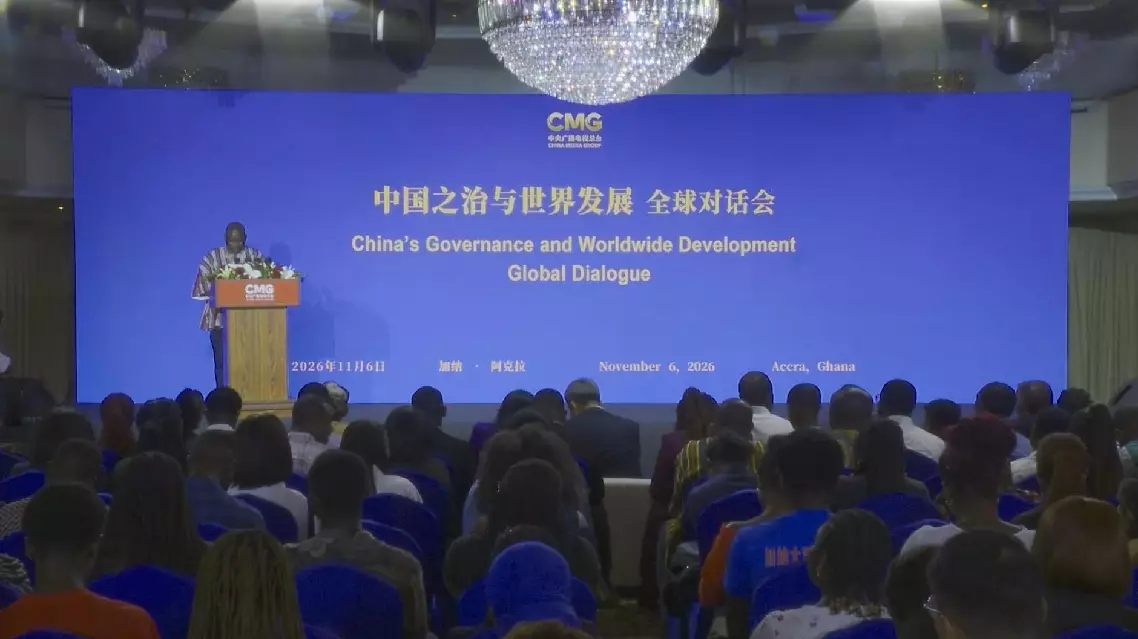
CMG hosts global dialogue in Ghana as delegates praise China-Africa modernization cooperation
New Zealand's ruling National-led coalition has secured a parliamentary majority in the general election, preliminary results showed early Sunday, putting Prime Minister Christopher Luxon on course to retain power for a second term.
The Election Commission's tally of all voting places has resulted in 11 "overhang" seats, increasing to 131 the total number of seats in parliament, which normally has 120.
Among the seats, the National Party, ACT New Zealand and New Zealand First collectively secured 67, giving the three-party coalition a narrow majority to continue governing, while the opposition bloc of the Labor Party, the Green Party and the Maori Party garnered 57 in total.
The contest between the National and the Labor, led by former prime minister Chris Hipkins, remained exceptionally close, with each securing over 29 percent, according to preliminary figures.
Addressing supporters in Auckland, Luxon said the election was "too close to call," with the final outcome hinging on special votes to be counted. He acknowledged that negotiations and compromise would be needed to form the next government.
The outcome could still change when 700,000 special votes are counted days later. These include ballots cast by overseas voters and people voting outside their electorates, and are not included in the preliminary results, according to the Electoral Commission, which is scheduled to release the final official results, including special votes, on Nov. 27.
The Green Party has won a record 16 seats in parliament. The centrist Opportunity Party has also made a parliamentary breakthrough, projected to win seven seats, preliminary results showed.
The country has nearly 3.8 million provisionally enrolled voters for the 2026 general election, representing 93.6 percent of the estimated eligible population, below the final enrolment rates of 94.7 percent in 2023 and 94.1 percent in 2020, the commission said.
New Zealand uses the mixed-member proportional voting system to elect its parliament. Under this system, voters cast two ballots, one for a political party and another for their local electorate candidate. The government is usually formed by two or more parliamentary political parties.
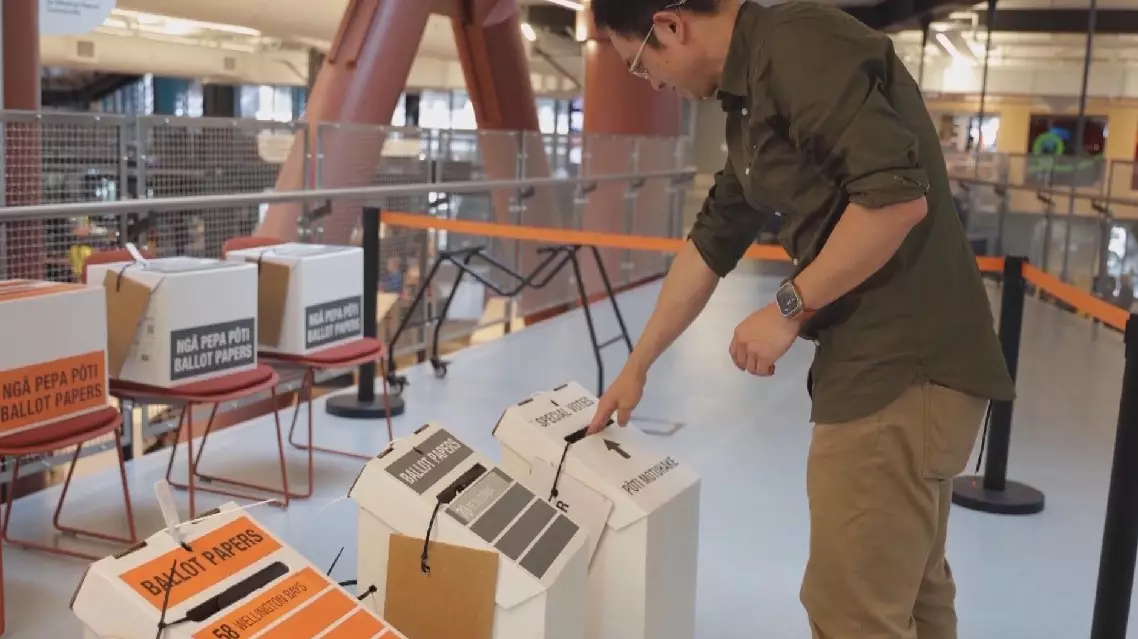
New Zealand's National-led coalition wins majority parliamentary seats: preliminary results