ZAPORIZHZHIA, Ukraine (AP) — A Russian drone struck emergency workers on rescue missions in southern Ukraine on Sunday, hitting a former school and nearby shelter that had been earlier blasted by multiple Russian guided bombs as residents waited for humanitarian aid, authorities said.
Ukraine said Monday's attack killed at least 55 people in the village of Komyshuvakha, near the front line in the Zaporizhzhia region.
Click to Gallery
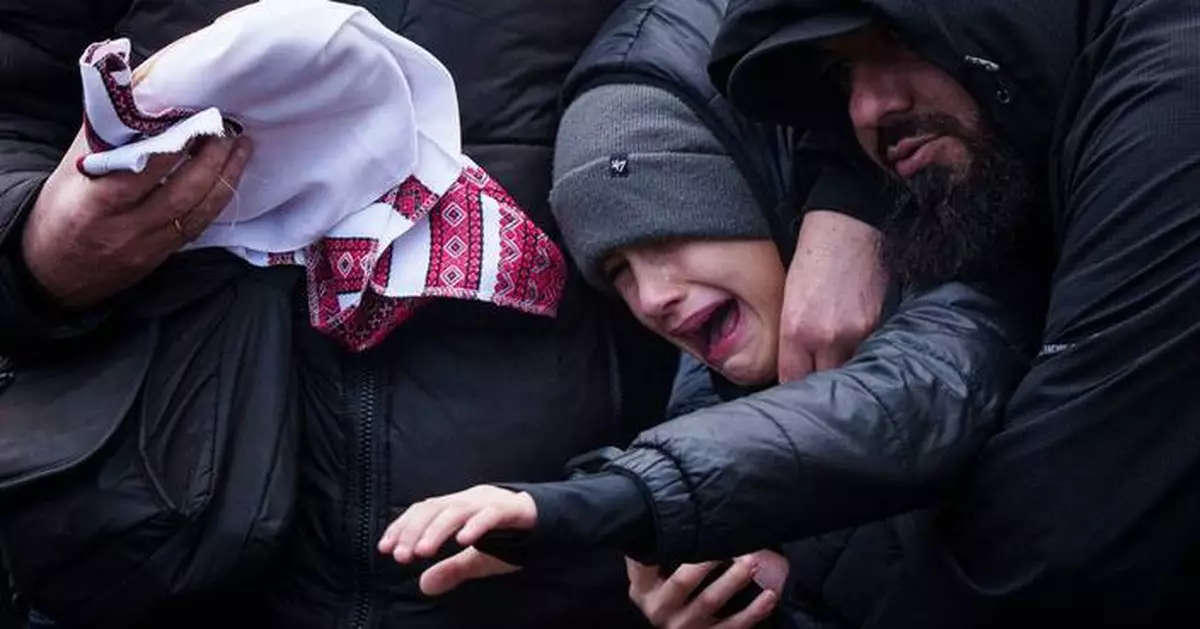
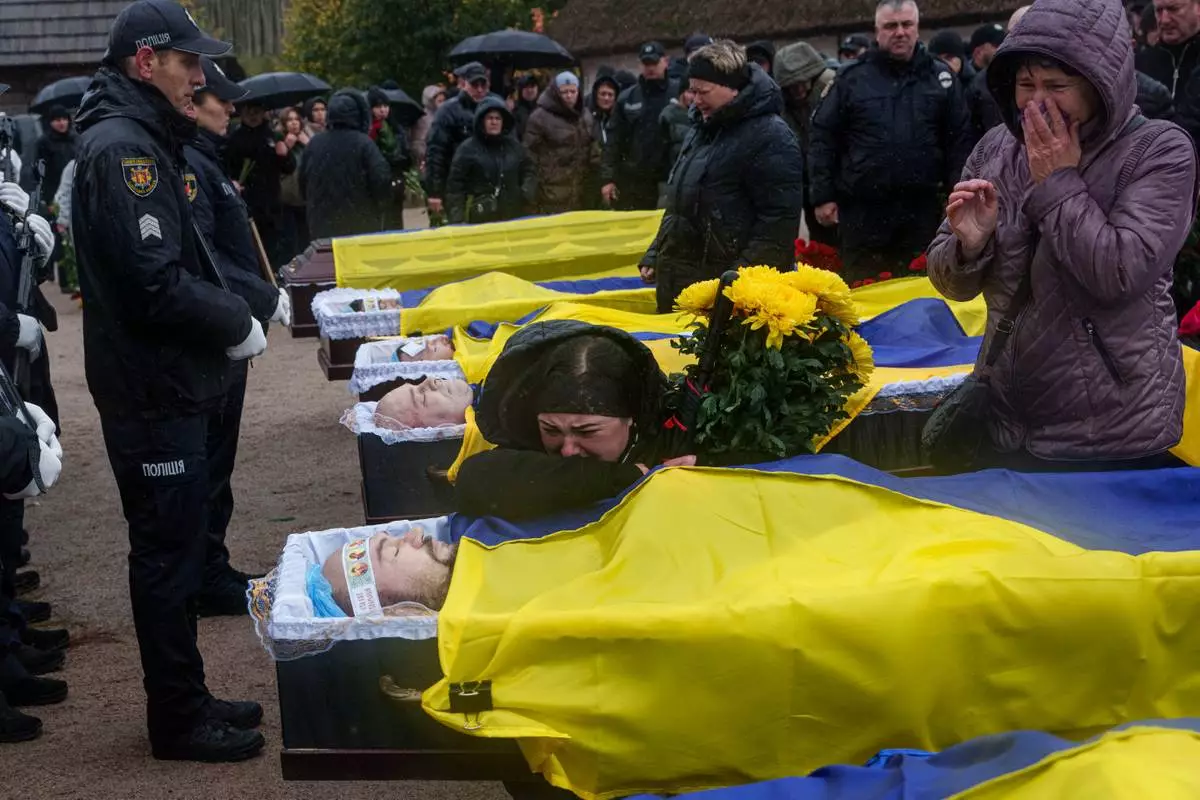
Family members cry beside the coffins of police officers Dmytro Besedin, Mykhailo Buzhenko, Mykola Balanda and Mykhailo Romanov, killed in a Russian airstrike that destroyed an underground school, and Serhii Berezhko and Oleg Dubetskyi, killed in an FPV drone attack in Komyshuvakha, during a farewell ceremony on Khortytsia Island in Zaporizhzhia, Ukraine, Saturday, Nov. 7, 2026. (AP Photo/Evgeniy Maloletka)
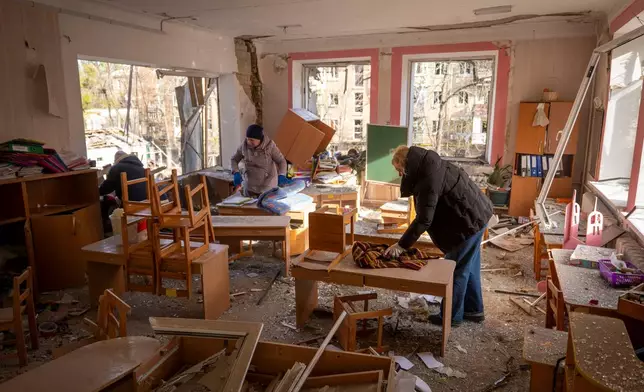
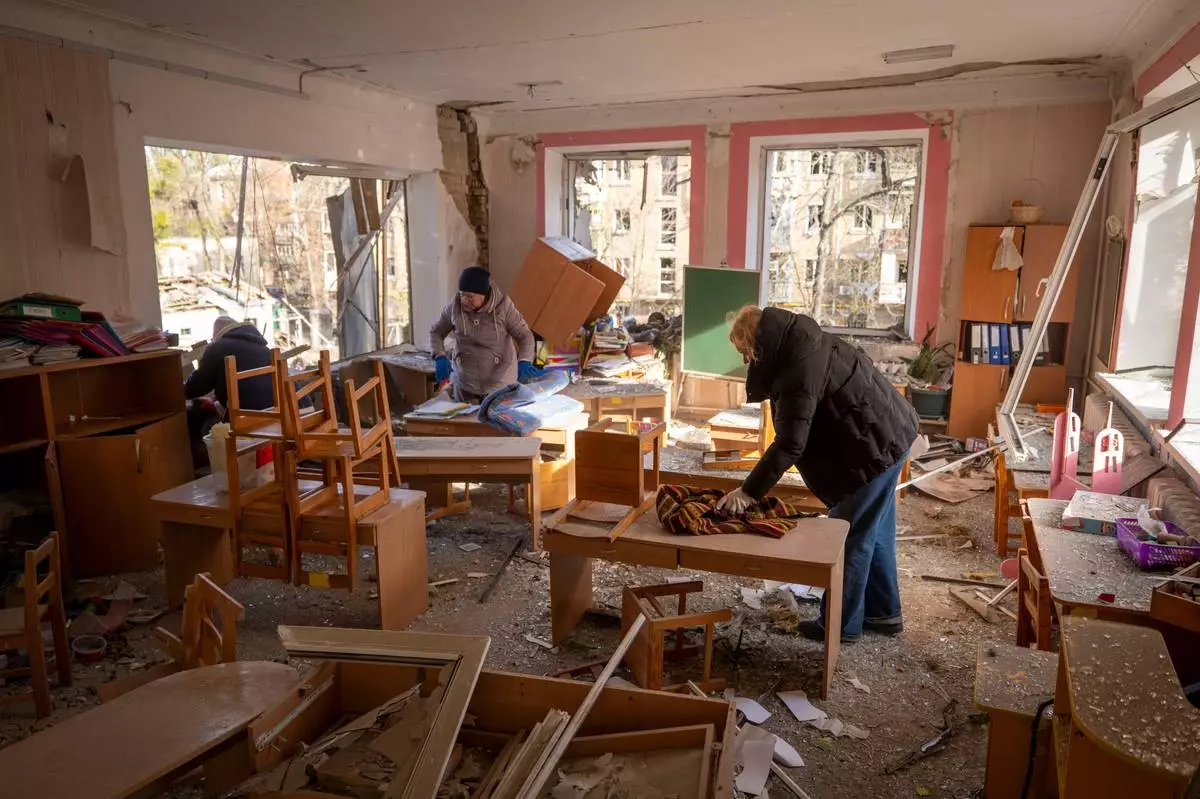
Kindergarten personnel cleaning debris inside a heavily damaged class following a missile attack on a residential area in Kyiv, Saturday, Nov. 7, 2026. (AP Photo/Dan Bashakov)
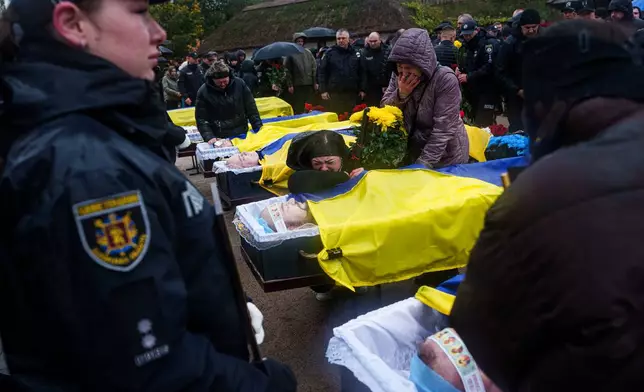
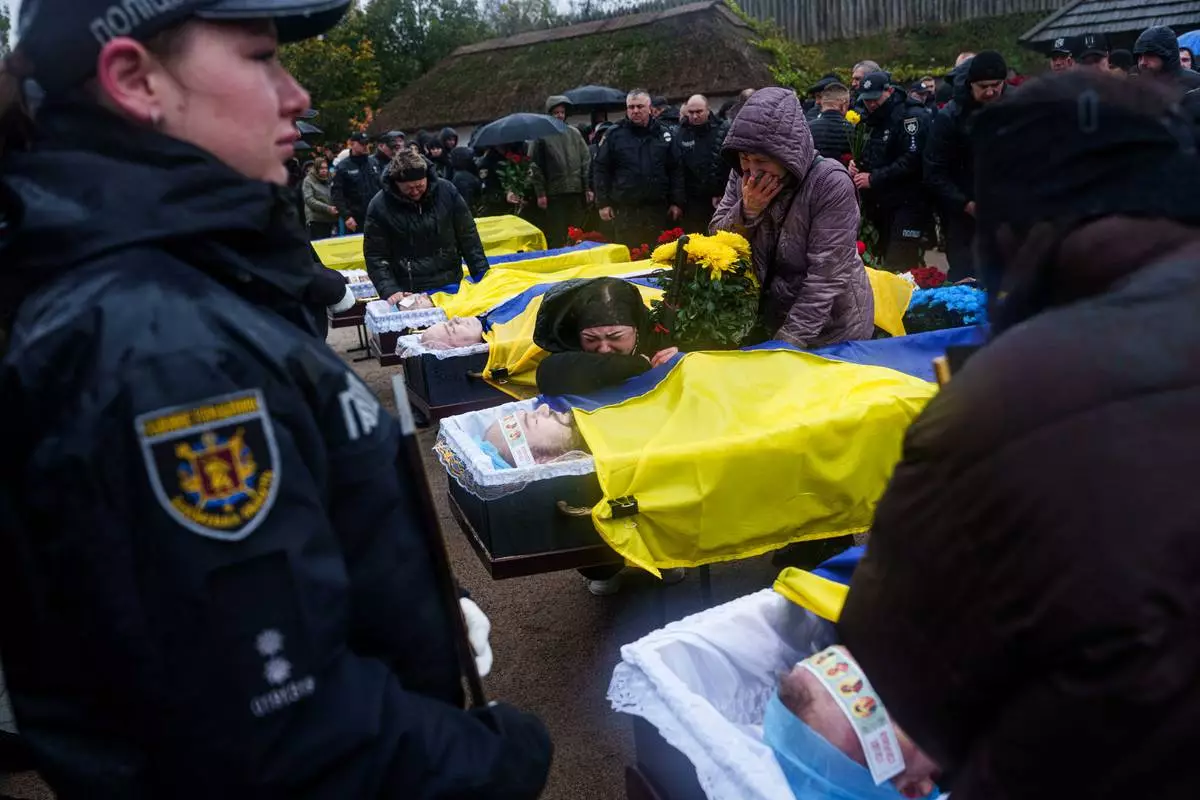
Family members cry beside the coffins of police officers Dmytro Besedin, Mykhailo Buzhenko, Mykola Balanda and Mykhailo Romanov, killed in a Russian airstrike that destroyed an underground school, and Serhii Berezhko and Oleg Dubetskyi, killed in an FPV drone attack in Komyshuvakha, during a farewell ceremony on Khortytsia Island in Zaporizhzhia, Ukraine, Saturday, Nov. 7, 2026. (AP Photo/Evgeniy Maloletka)
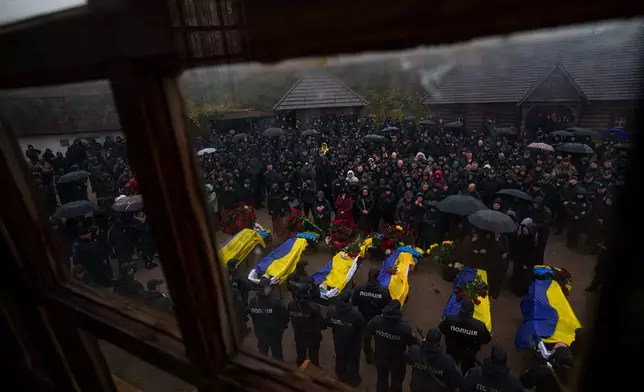
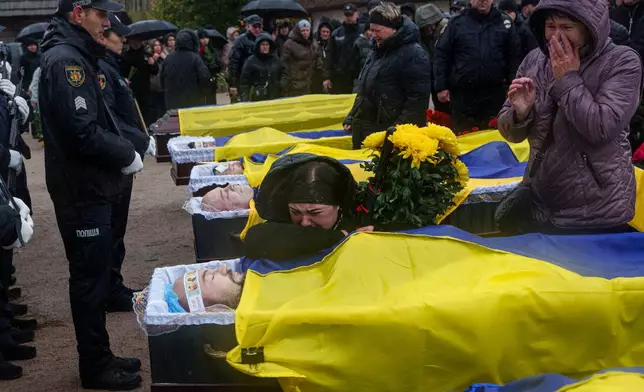
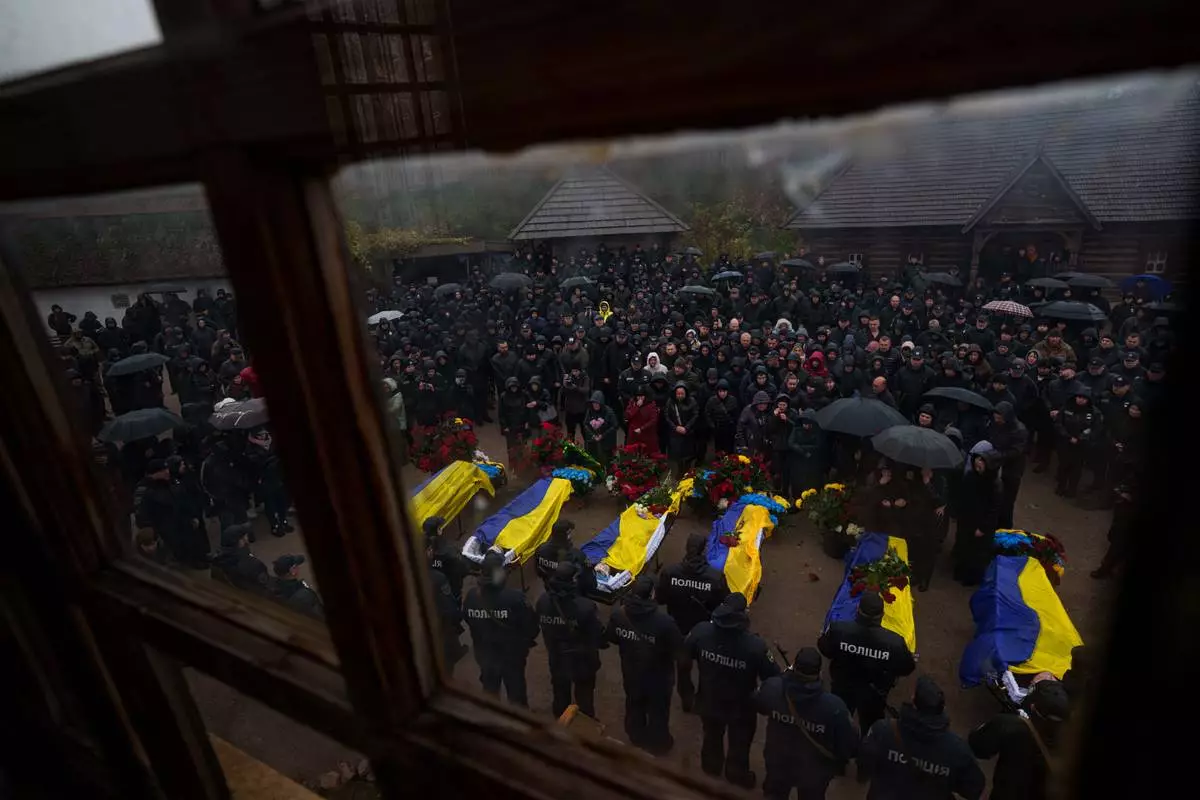
Colleagues, friends and family members pay their last respects to police officers Dmytro Besedin, Mykhailo Buzhenko, Mykola Balanda and Mykhailo Romanov, killed in a Russian airstrike that destroyed an underground school, and Serhii Berezhko and Oleg Dubetskyi, killed in an FPV drone attack in Komyshuvakha, during a farewell ceremony on Khortytsia Island in Zaporizhzhia, Ukraine, Saturday, Nov. 7, 2026. (AP Photo/Evgeniy Maloletka)
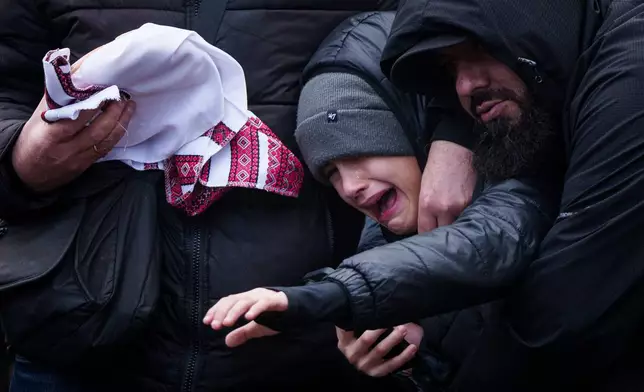
A family member cries beside the coffins of Viktor Fomenko, Natalia Karapetian and Andrii Anikin, killed in a Russian airstrike that destroyed an underground school in Komyshuvakha, during a farewell ceremony in Zaporizhzhia, Ukraine, Saturday, Nov. 7, 2026. (AP Photo/Evgeniy Maloletka)
No one was injured in Sunday's strike on the same location, but specialized rescue equipment was damaged, according to Ukraine’s State Emergency Service.
Around 50 people were still listed as missing, Ukraine’s military intelligence agency, HUR, said. Many of the bodies recovered have not been identified and DNA analysis is ongoing.
Village resident Mykola Krasnov, 72, told The Associated Press on Saturday that he was still looking for his wife, but had heard no word from rescuers.
“She went to get humanitarian aid, and a 3-ton bomb was dropped there. Where is she?” he said. “She didn’t come home, and they didn’t find her body there. She isn’t in the morgue, and she isn’t here alive.”
HUR said Saturday that it had identified some of the Russian service members involved in the “double tap" strike with aerial bombs, which destroyed the former school and underground facility used by residents as shelter.
Ukraine has routinely accused Russia of conducting multiple strikes at the same site in quick succession to target emergency crews responding to the initial attack.
On Saturday, police officers and relatives gathered in Zaporizhzhia for a farewell ceremony for six officers killed in Russian strikes on Komyshuvakha, including four who died near the former school.
Rain fell as families wept beside the coffins, and officers held portraits of their fallen colleagues.
“They used every skill at their disposal to protect themselves. But when the enemy deliberately gathered civilians in one place and then launched strikes against them, no skills could have helped,” said Andrii Khomenko, a police lieutenant colonel who had worked alongside the victims.
Yuliia Nykonenko, a senior police lieutenant, said the officers had risked their lives to save others, including children. She said they had once escaped a Russian FPV drone together.
The community also said goodbye to three residents among the dead. They were buried near one another, in a part of the Zaporizhzhia cemetery where authorities plan to create a memorial.
Among those mourning was Yurii Karapetian, a community leader whose wife, Natalia Karapetian, was killed. He said she was distributing bread to those in the shelter when the Russian bombs struck.
“This pain, I would say, is unbearable,” he said.
He said his wife chose to stay in Komyshuvakha to help other residents, many of them elderly and living alone. He also urged the international community to act.
“The whole world must understand that if (the Russians) are not stopped, they will not stop. They will not stop at Ukraine. They will not stop anywhere,” he said.
President Volodymyr Zelenskyy on Sunday called the attack on emergency crews in Komyshuvakha “absolute cynicism and brutality.”
In a post on X, Zelenskyy also said that overnight Russian strikes on energy infrastructure in Ukraine's Dnipropetrovsk region had left more than 600,000 people without power. Other regions also faced outages.
Russia launched 115 missiles, 1,900 guided aerial bombs and more than 3,000 drones against Ukraine in the past week, he said. Many of the missiles had been produced this year, he added, calling on Kyiv's partners to sanction entities involved in their production.
“If the world does not have enough anti-ballistic capabilities to protect Ukrainian skies, then the missiles must be stopped on the production lines," he said, urging the European Union to impose a strong 22nd package of sanctions against Russia.
The Russian-controlled Zaporizhzhia Nuclear Power Plant, the largest in Europe, has lost its external power supply after a damaged power line was disconnected for safety, the plant’s management reported Sunday.
It said the plant was powered by backup diesel generators since an automatic protection system shut down the damaged Ferosplavna line.
The plant went offline soon after being captured by Russia early in the war, but needs power to keep essential cooling systems running. Its external power supply has been periodically severed, raising fears of a nuclear accident in case of protracted outages, as Moscow and Kyiv blamed each other for strikes that damaged nearby power lines.
This story corrects the number of police officers killed in the strike on the former school.
Follow the AP’s coverage of the war in Ukraine at https://apnews.com/hub/russia-ukraine
Family members cry beside the coffins of police officers Dmytro Besedin, Mykhailo Buzhenko, Mykola Balanda and Mykhailo Romanov, killed in a Russian airstrike that destroyed an underground school, and Serhii Berezhko and Oleg Dubetskyi, killed in an FPV drone attack in Komyshuvakha, during a farewell ceremony on Khortytsia Island in Zaporizhzhia, Ukraine, Saturday, Nov. 7, 2026. (AP Photo/Evgeniy Maloletka)
Kindergarten personnel cleaning debris inside a heavily damaged class following a missile attack on a residential area in Kyiv, Saturday, Nov. 7, 2026. (AP Photo/Dan Bashakov)
Family members cry beside the coffins of police officers Dmytro Besedin, Mykhailo Buzhenko, Mykola Balanda and Mykhailo Romanov, killed in a Russian airstrike that destroyed an underground school, and Serhii Berezhko and Oleg Dubetskyi, killed in an FPV drone attack in Komyshuvakha, during a farewell ceremony on Khortytsia Island in Zaporizhzhia, Ukraine, Saturday, Nov. 7, 2026. (AP Photo/Evgeniy Maloletka)
Colleagues, friends and family members pay their last respects to police officers Dmytro Besedin, Mykhailo Buzhenko, Mykola Balanda and Mykhailo Romanov, killed in a Russian airstrike that destroyed an underground school, and Serhii Berezhko and Oleg Dubetskyi, killed in an FPV drone attack in Komyshuvakha, during a farewell ceremony on Khortytsia Island in Zaporizhzhia, Ukraine, Saturday, Nov. 7, 2026. (AP Photo/Evgeniy Maloletka)
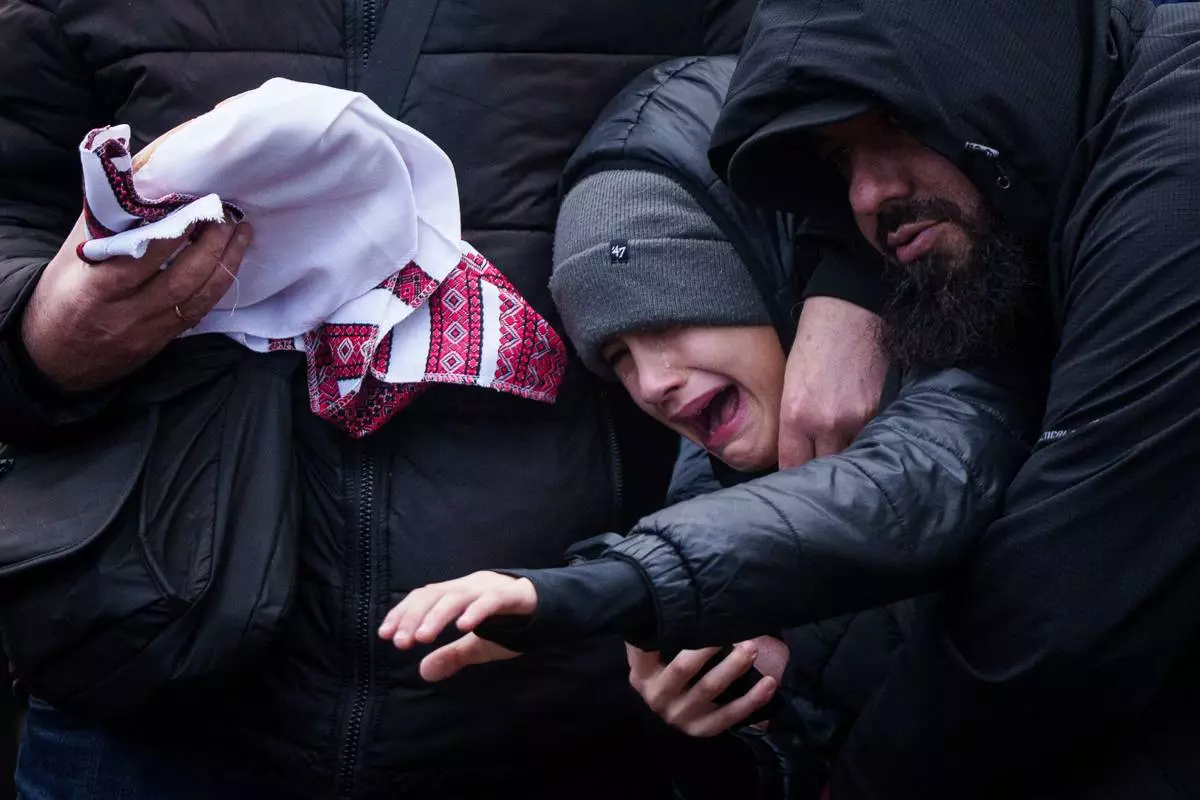
A family member cries beside the coffins of Viktor Fomenko, Natalia Karapetian and Andrii Anikin, killed in a Russian airstrike that destroyed an underground school in Komyshuvakha, during a farewell ceremony in Zaporizhzhia, Ukraine, Saturday, Nov. 7, 2026. (AP Photo/Evgeniy Maloletka)